
Buying a high-value home is an exciting milestone, but financing it often means navigating the world of jumbo loans. For buyers whose earnings come from commissions, bonuses, or overtime pay, the qualification process can feel more complex than it does for salaried workers. The good news is that lenders do recognize variable income — they just want to see it documented clearly and consistently. If you're wondering how to qualify for a jumbo loan with commission-based overtime, this guide walks you through everything you need to know, from income verification requirements to strategies that could strengthen your application.
What Makes Jumbo Loans Different From Conventional Mortgages
A jumbo loan is a mortgage that exceeds the conforming loan limits set by the Federal Housing Finance Agency (FHFA). Because these loans are larger than what Fannie Mae and Freddie Mac can purchase, they carry a different set of underwriting standards. Lenders assume more risk on these transactions, which is why qualification criteria tend to be stricter.
For borrowers with straightforward W-2 salaries, jumbo loan qualification is primarily a matter of meeting credit score thresholds, maintaining a low debt-to-income ratio, and showing sufficient assets. But for those with variable compensation — such as sales professionals earning commissions or workers relying on overtime pay — the process involves a closer look at income history, consistency, and documentation.
It's also worth noting that jumbo loan guidelines vary from lender to lender. Unlike conforming loans, which follow standardized agency rules, jumbo products are portfolio loans held by the lender. This means one lender might be more flexible about commission income than another. Shopping around and working with a lender experienced in non-traditional income structures can make a meaningful difference.
How Lenders View Commission-Based and Overtime Income
Commission income and overtime pay are both considered variable income because they aren't guaranteed from paycheck to paycheck. Lenders treat this type of income with more scrutiny than base salary because it can fluctuate — or disappear entirely — depending on market conditions, employer changes, or job performance.
That said, lenders don't dismiss commission-based or overtime income outright. They typically use a two-year average to determine how much of that income they'll count toward your qualifying amount. If your commission earnings or overtime pay have been consistent or growing over the past two years, lenders may be more willing to use the full average. If those earnings have been declining, lenders might use the lower figure — or exclude some of it altogether.
For jumbo loan purposes specifically, lenders may apply additional scrutiny because of the larger loan amounts involved. Some lenders require that commission or overtime income make up less than a certain percentage of your total qualifying income, while others may request additional employment verification. Understanding where your income falls in a lender's guidelines is a smart first step before applying.
Jumbo Loan Overtime Income Documentation You'll Likely Need
Documentation is at the heart of any jumbo loan application, and it becomes even more important when your earnings include commissions or overtime. Jumbo loan overtime income documentation requirements typically go beyond what a standard conforming loan might ask for. Here's what you should expect to gather:
- Two years of federal tax returns (1040s): These show your total reported income, including Schedule C earnings if you're self-employed, as well as any commission income reported on a W-2 or 1099.
- W-2 forms from the past two years: These confirm your employment history and total annual compensation, including overtime and bonuses where applicable.
- Recent pay stubs (typically covering 30 days): Pay stubs help lenders calculate your year-to-date earnings and compare them with previous years.
- Employer verification letter: Some lenders may request a letter from your employer confirming your position, length of employment, and the likelihood that your current income structure will continue.
- Bank statements (often two to three months): These support your income claims and show consistent deposits that align with your reported earnings.
- Profit and loss statement (if self-employed): For commission earners who are technically independent contractors or business owners, a current P&L may also be required.
The more organized and thorough your documentation, the smoother your underwriting process is likely to be. Starting this paperwork early can help you avoid delays when you're ready to make an offer on a home.
How to Qualify for a Jumbo Loan With Commission-Based Overtime: Key Qualification Factors
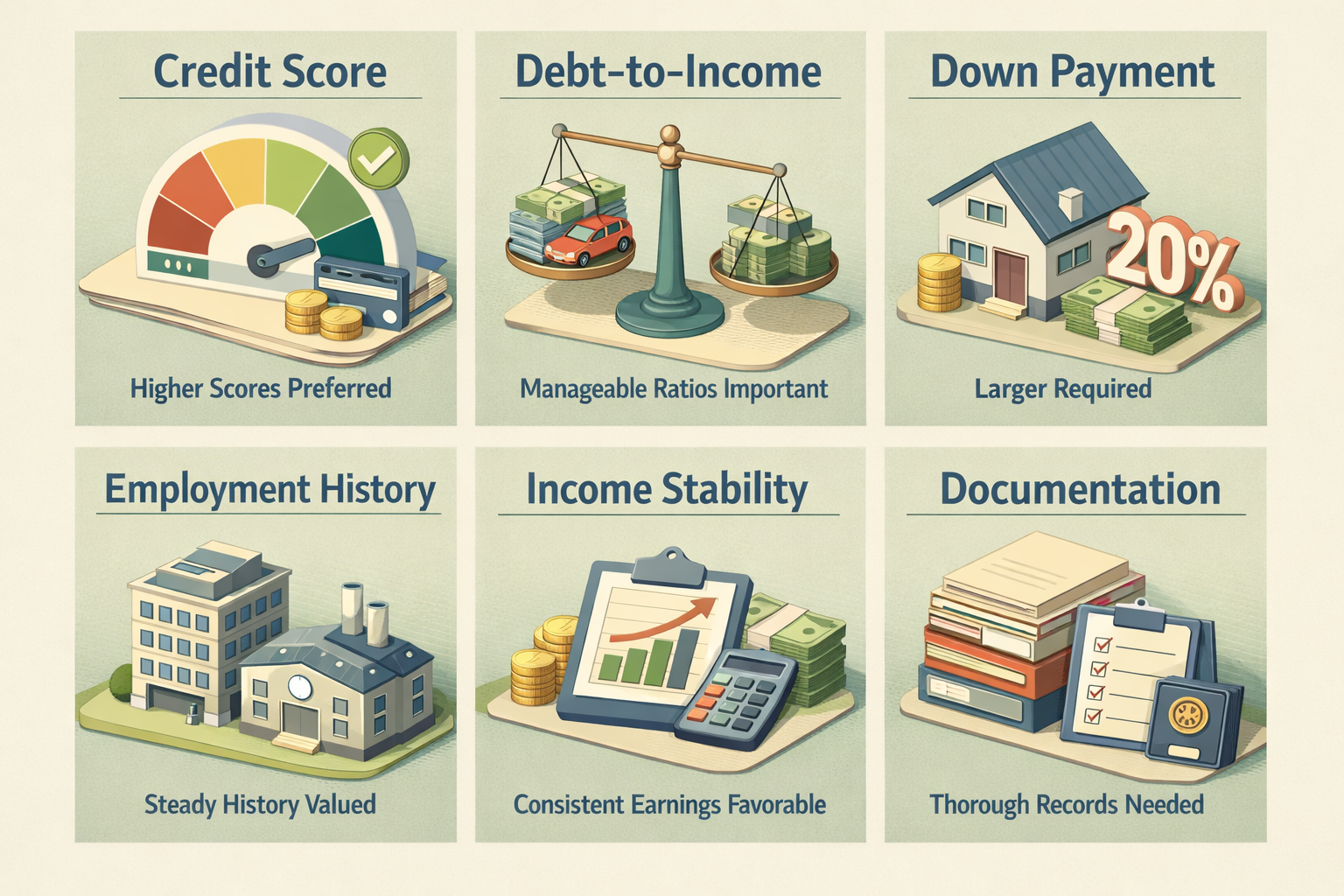
Understanding how to qualify for a jumbo loan with commission-based overtime income means knowing what lenders are evaluating beyond just your income. Several financial factors work together to build your overall borrower profile.
Credit Score Requirements
Jumbo loans typically require higher credit scores than conforming mortgages. While minimum thresholds vary by lender, scores in the 700s are commonly expected — and higher scores may help you access better interest rates. If your credit score is on the lower end, taking steps to reduce outstanding balances and address any errors on your credit report before applying could be beneficial.
Debt-to-Income Ratio
Your debt-to-income (DTI) ratio measures your monthly debt obligations against your gross monthly income. Jumbo lenders often prefer DTI ratios below 43%, though some may allow slightly higher ratios depending on other compensating factors like strong assets or a large down payment. Because commission and overtime income can lower your qualifying income figure, keeping your other monthly debts manageable is especially important.
Down Payment and Reserves
Jumbo loans often require larger down payments than conventional loans — commonly ranging from 10% to 20% or more, depending on the loan amount and lender. In addition, lenders typically want to see substantial cash reserves after closing. Having 6 to 12 months of mortgage payments in liquid assets may be required, and having more could strengthen your application further.
Employment History and Income Stability
A steady employment history — ideally two or more years with the same employer or in the same industry — helps demonstrate that your income, even if variable, is reliable. Lenders tend to view long-term commission earners more favorably than those who recently transitioned into a commission-based role, as longer history provides more data points for income averaging.
Strategies to Strengthen Your Jumbo Loan Application
If your income includes significant commission or overtime components, there are several proactive steps you can take to improve your chances of jumbo loan approval.
- Build a strong reserve cushion: Demonstrating that you have substantial liquid assets beyond the down payment reassures lenders that you can handle payments even if your variable income temporarily decreases.
- Reduce existing debt: Paying down credit card balances and eliminating smaller loans before applying can meaningfully lower your DTI ratio, which may help offset a variable income profile.
- Maintain consistent income trends: If your commission or overtime earnings have been growing year over year, that positive trend can work in your favor during underwriting. Avoid taking large, unexplained fluctuations in income if possible before applying.
- Get pre-qualified early: Speaking with a lender several months before you intend to purchase gives you time to address any gaps in your documentation or financial profile.
- Work with a lender experienced in variable income: Not all lenders handle commission and overtime income the same way. A lender familiar with these income types may know how to structure your application to present the strongest possible picture of your finances.
- Consider a larger down payment: Putting more money down reduces the lender's exposure and may result in a more favorable review of your variable income, particularly if your DTI is borderline.
Common Pitfalls to Avoid When Applying With Variable Income
Even well-prepared borrowers can run into trouble during the jumbo loan process if they're not careful. Here are some common mistakes to watch out for when your income includes commissions or overtime pay.
Overstating Income Expectations
It can be tempting to project your best earning year forward, but lenders calculate qualifying income based on documented history — not future projections. Using an income figure that doesn't align with your tax returns or pay stubs could create problems during underwriting or appraisal review.
Switching Jobs Shortly Before Applying
Changing employers or moving into a new commission structure right before applying for a jumbo loan can complicate your application significantly. Lenders prefer to see income continuity, and a recent job change may mean your commission history at the new position is too short to be fully counted.
Neglecting Tax Return Implications
Self-employed borrowers and independent contractors who take aggressive deductions to minimize taxable income may find that their reported earnings are lower than their actual cash flow. Since lenders base qualifying income on what's reported on tax returns, heavy deductions can reduce the income figure used to qualify for a jumbo loan — sometimes significantly. It may be worth speaking with both a tax advisor and a mortgage professional to understand how your tax strategy affects your borrowing power.
Missing or Incomplete Documentation
Incomplete paperwork is one of the most common reasons mortgage applications experience delays. For jumbo loans with variable income, every document counts. Organizing your records in advance and responding quickly to lender requests can help keep the process on track.
●Conclusion
Qualifying for a jumbo loan with commission-based or overtime income is absolutely achievable — it simply requires more preparation and documentation than a standard mortgage application might. Lenders want to see that your variable earnings are consistent, well-documented, and supported by a strong overall financial profile. By understanding how to qualify for a jumbo loan with commission-based overtime, gathering thorough jumbo loan overtime income documentation, and working with a knowledgeable lending partner, you can move forward with confidence toward financing the home you're aiming for. At LoanWise, we're here to help you navigate every step of the process — reach out today to explore your options and get personalized guidance tailored to your income situation.