
Receiving an inheritance can be life-changing — and for many homebuyers, it opens the door to purchasing a high-value property that might have otherwise been out of reach. If you're planning to use those inherited funds toward a luxury or high-priced home, you may be wondering how to qualify for a jumbo loan with a recent inheritance as down payment. The good news is that it's entirely possible. However, jumbo loans come with stricter guidelines than conventional financing, and lenders tend to scrutinize the source of large down payments very carefully. Understanding the process ahead of time can save you from unnecessary delays — and help you walk into the closing table with confidence.
What Is a Jumbo Loan and Who Needs One?
A jumbo loan is a type of mortgage that exceeds the conforming loan limits set by the Federal Housing Finance Agency (FHFA). These limits vary by location but generally apply to loan amounts above $766,550 in most parts of the United States, though the threshold may be higher in high-cost areas. Because jumbo loans can't be purchased by Fannie Mae or Freddie Mac, lenders carry the full risk of these loans — which is why they typically apply more rigorous qualification standards.
Homebuyers who need jumbo loans are often purchasing luxury properties, high-end primary residences, vacation homes, or investment properties in competitive real estate markets. If the purchase price of your target home exceeds conforming limits, a jumbo mortgage is likely the financing vehicle you'll need. And if you've recently received an inheritance, you may already have a sizable down payment ready — you just need to know how to document it properly.
Why Lenders Scrutinize Down Payment Sources So Closely on Jumbo Loans
One of the most important things to understand about jumbo lending is that lenders don't just look at how much you're putting down — they also want to know where the money came from. This is due in part to anti-money laundering regulations and lender risk management policies. Large, unexplained deposits in your bank account can raise red flags during the underwriting process, even if the funds are entirely legitimate.
An inheritance, while a perfectly valid source of funds, may trigger additional documentation requests because it's considered a non-recurring, non-employment income event. Lenders need to verify that the money truly belongs to you, that it has been properly received, and that it doesn't represent an undisclosed loan that would affect your debt-to-income ratio. This extra scrutiny is standard practice — it's not a judgment on your character, but rather a procedural requirement that protects both you and the lender.
- Source of funds verification: Lenders will typically want to trace where the inheritance came from and confirm it was legally received.
- Seasoning requirements: Some lenders may prefer that funds have been sitting in your account for 60 to 90 days before closing, though policies vary.
- Gift versus inheritance distinction: Unlike a gift, an inherited amount typically does not require a gift letter — but it does require different supporting documents.
Key Documents You'll Need to Use Inherited Funds as a Down Payment
Proper documentation is the cornerstone of a smooth jumbo loan application when your down payment comes from an estate. Lenders will want to see a clear paper trail that connects the inheritance to your bank account. While requirements can vary from lender to lender, here are the types of documents you may be asked to provide:
- Probate court documents or letters testamentary: These legal documents confirm your role as an heir or beneficiary and may be required to establish the legitimacy of the funds.
- A copy of the will or trust document: This helps verify that you were named as a beneficiary and that the distribution was made according to the deceased's wishes.
- Estate bank statements or distribution records: Documentation showing the transfer of funds from the estate account to your personal account can be very helpful.
- Personal bank statements: Lenders will want to see at least two to three months of statements showing the deposit of the inherited funds and your existing financial history.
- A signed statement explaining the source of funds: Some lenders may ask you to write a brief letter of explanation describing how you received the inheritance.
Gathering these documents early — ideally before you start house hunting — can significantly reduce underwriting delays and improve your overall experience with the mortgage process.
How to Qualify for a Jumbo Loan With a Recent Inheritance as Down Payment
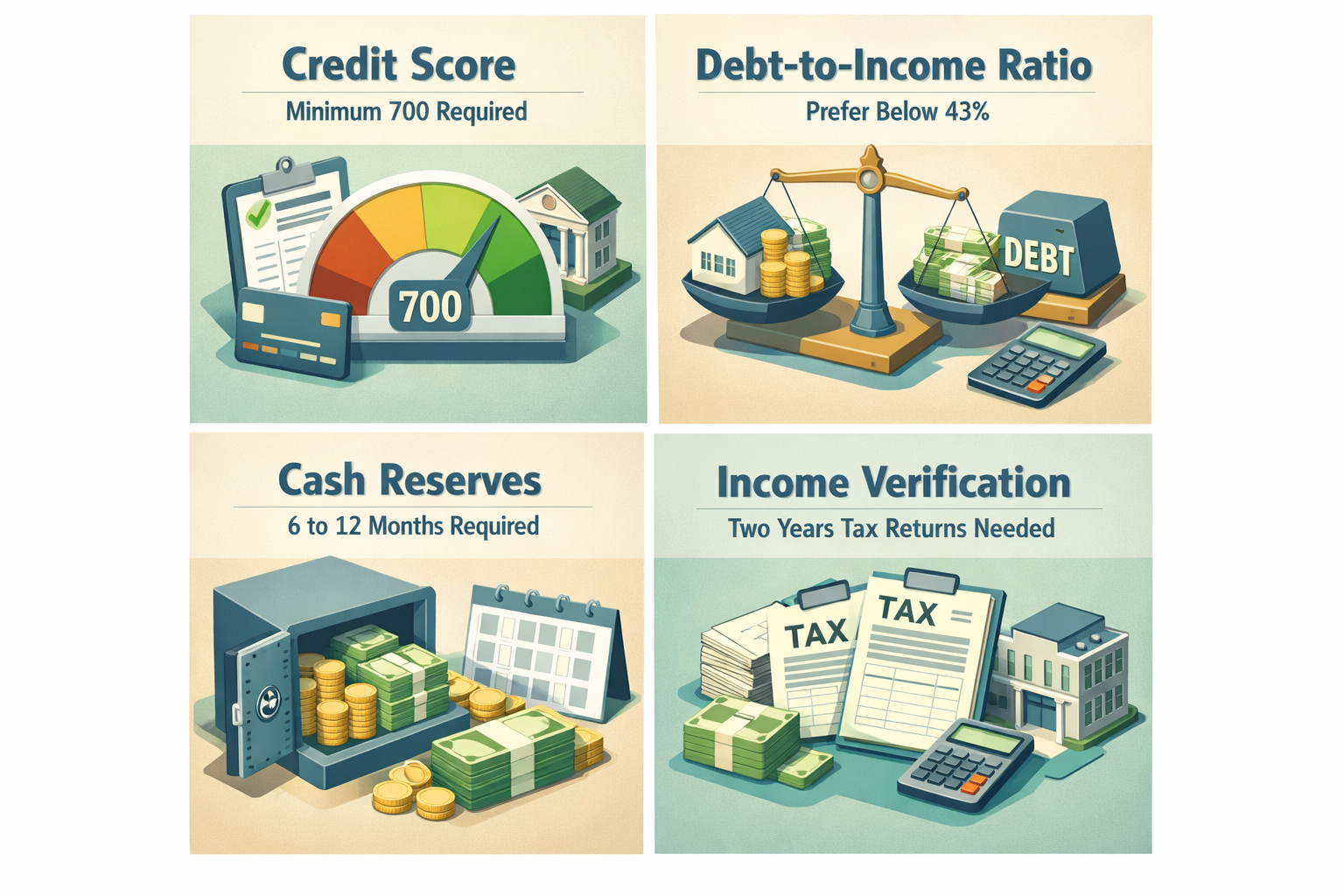
Beyond the down payment documentation, qualifying for a jumbo loan involves meeting several other financial benchmarks that tend to be more demanding than those for conventional loans. Here's what lenders typically evaluate:
Credit Score Requirements
Most jumbo lenders look for a credit score of at least 700, and many prefer scores in the 720 to 740 range or higher. A stronger credit score signals to the lender that you're a responsible borrower, which helps offset some of the risk associated with larger loan amounts. If your credit score needs improvement, it may be worth taking a few months to pay down balances and resolve any outstanding issues before applying.
Debt-to-Income Ratio
Your debt-to-income (DTI) ratio compares your monthly debt obligations to your gross monthly income. Jumbo lenders often prefer a DTI below 43%, and some may require it to be even lower — sometimes around 36% to 38%. This is particularly important if the inheritance represents most of your liquid assets, as lenders will want to see that your ongoing income comfortably supports the mortgage payment.
Cash Reserves After Closing
One area where jumbo loans differ significantly from conforming loans is the reserve requirement. After your down payment and closing costs are paid, lenders may require you to have anywhere from six to twelve months — or more — of mortgage payments remaining in liquid assets. This demonstrates financial staying power. If your inheritance is being used almost entirely for the down payment, you'll want to plan carefully to ensure you still meet reserve minimums.
Income Verification and Employment History
A strong, verifiable income history is typically essential for jumbo loan approval. Lenders may request two years of tax returns, W-2s, pay stubs, and bank statements. Self-employed borrowers may face additional documentation requirements. The inheritance itself is generally not counted as ongoing income — it's a one-time asset — so your regular earned income still needs to carry the loan.
Understanding the Jumbo Loan With Gifted Down Payment Inheritance Distinction
It's worth clarifying an important nuance: there's a meaningful difference between a gifted down payment and an inherited down payment, and lenders treat them differently. A gift typically comes from a living donor — such as a parent, relative, or close friend — and requires a signed gift letter confirming that the money doesn't need to be repaid. A jumbo loan with gifted down payment inheritance situation, where funds come from a deceased person's estate, is handled more like a documented asset transfer than a gift.
This distinction matters because:
- Inherited funds generally do not require a gift letter, which simplifies one part of the process.
- However, the estate documentation requirements may be more extensive than a simple gift letter scenario.
- Some lenders may treat an inheritance from a living relative who chose to give early as a gift — in which case, standard gift fund rules would apply instead.
If you're unsure how your specific situation will be categorized, speaking with a mortgage professional before you apply can help you prepare the right documentation from the start and avoid confusion during underwriting.
Strategies to Strengthen Your Jumbo Loan Application
Even with a solid inheritance-based down payment, there are several steps you can take to make your application as competitive as possible in the eyes of a jumbo lender.
Allow Time for the Funds to Season
If possible, try to give the inherited funds a few months to settle in your bank account before applying for the loan. While not all lenders require a specific seasoning period for inherited assets, having the funds clearly documented in your account history — with supporting estate documents — may make the underwriting process smoother.
Work With a Lender Experienced in Jumbo Financing
Not all lenders offer jumbo products, and those that do may have very different guidelines. Working with a lender or mortgage broker who specializes in high-balance and non-conforming loans could give you access to more flexible options, especially if your financial profile includes any complexity — such as self-employment income or multiple income streams.
Consider a Larger Down Payment If Possible
Jumbo loans often become more accessible — and may come with better interest rates — when the down payment is larger. While many lenders accept down payments in the 10% to 20% range for jumbo loans, putting down 25% or more can sometimes improve your rate and reduce lender concern about risk. If your inheritance is substantial, putting more down upfront might save you money over the life of the loan.
Get Pre-Approved Early
A pre-approval is a valuable tool in any home purchase, but it's especially useful when using non-traditional down payment sources. Starting the pre-approval process early gives your lender the opportunity to review your inheritance documentation and flag any potential issues before you're under contract on a property.
●Conclusion
Using an inheritance as a down payment on a jumbo loan is a legitimate and achievable path to homeownership — but it does require careful preparation and documentation. Understanding how to qualify for a jumbo loan with a recent inheritance as down payment means not only gathering the right paperwork but also ensuring your credit, income, reserves, and debt ratios meet the higher standards that jumbo lenders typically expect. The process may feel involved, but with the right mortgage partner and a proactive approach, many homebuyers successfully navigate this path every year. At LoanWise, we're here to help you understand your options, connect with experienced lenders, and move forward with confidence toward the home you've been envisioning.