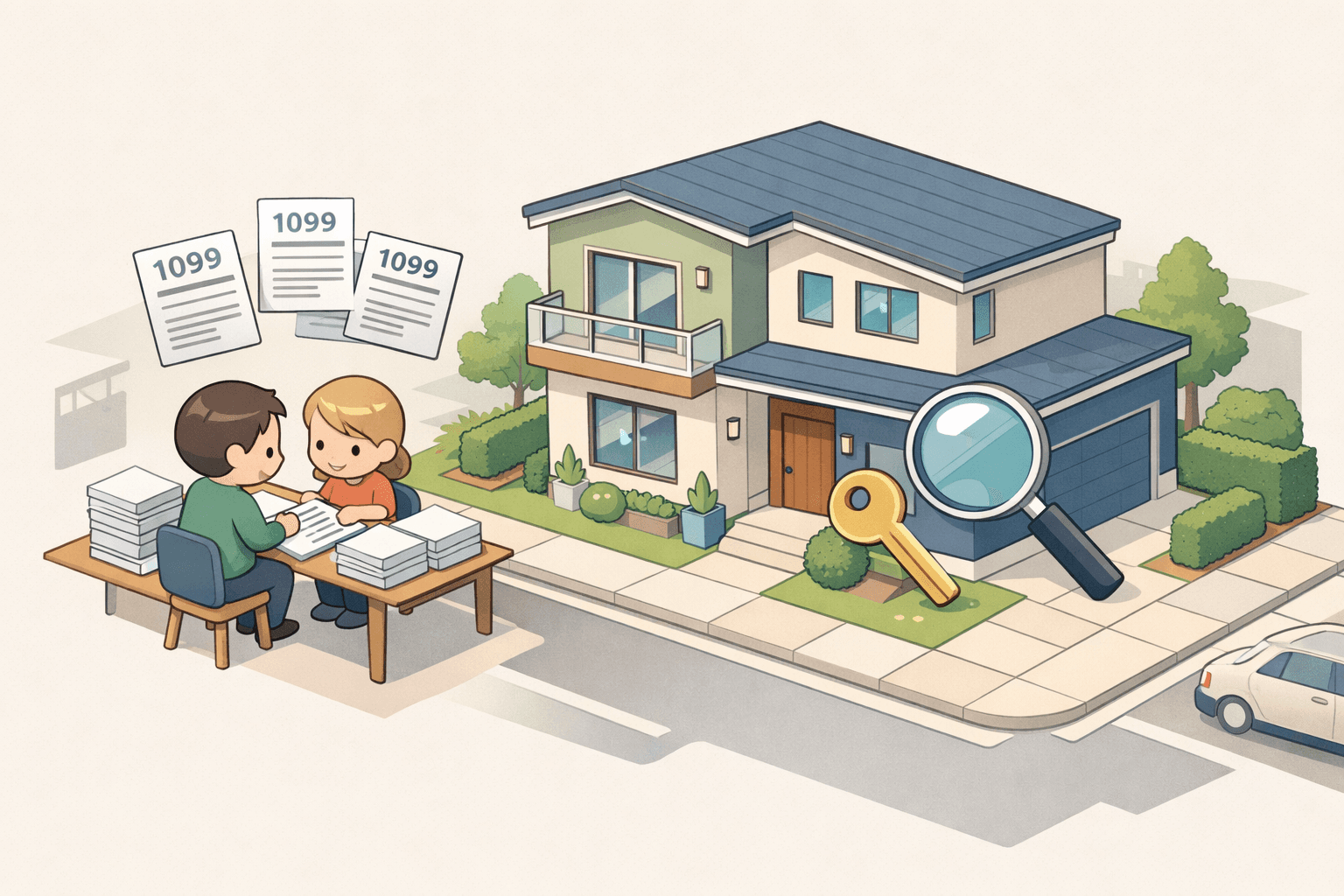
Buying a high-value home is an exciting milestone, but for freelancers and independent contractors, the mortgage process can feel more complicated than it needs to be. If you're wondering how to qualify for a jumbo loan with 1099 income from two freelance jobs, you're not alone. Many self-employed borrowers face extra scrutiny from lenders simply because their income doesn't arrive in the form of a traditional paycheck. The good news is that jumbo loan approval is absolutely possible for 1099 earners — it just requires a clear understanding of what lenders expect, careful preparation of your financial documents, and a strategic approach to presenting your income story. This guide breaks it all down in plain language so you can move forward with confidence.
What Is a Jumbo Loan and Why Does Income Type Matter
A jumbo loan is a type of mortgage that exceeds the conforming loan limits set by the Federal Housing Finance Agency (FHFA). Because these loans are too large to be purchased by Fannie Mae or Freddie Mac, lenders take on greater risk and typically apply stricter qualification standards. For the 2024 loan year, the conforming loan limit for most areas of the United States is $766,550, meaning any loan above that threshold is generally considered a jumbo mortgage.
Income type matters significantly in this context because jumbo loans aren't backed by government agencies, giving individual lenders more flexibility — but also more caution — in how they evaluate borrowers. When your income comes from 1099 contracts rather than W-2 employment, lenders can't simply verify a salary with an employer letter. Instead, they need to assess the stability, consistency, and continuity of your freelance earnings over time. This is why understanding lender expectations before you apply is so valuable for self-employed borrowers.
How Lenders View 1099 Income From Multiple Freelance Sources
When you earn income from two separate freelance jobs, lenders will typically look at both income streams together to assess your overall earning capacity. This can actually work in your favor, since diversified income may signal financial resilience. However, it also means you'll need thorough documentation for each source independently.
For jumbo loan self-employed 1099 income borrowers, lenders commonly use a two-year average of your net income as reported on your federal tax returns. This means that if your freelance business expenses are high and significantly reduce your taxable income, it could affect the loan amount you qualify for — even if your gross earnings are strong. Lenders focus on what the IRS considers your actual income after deductions, not just the total dollars flowing into your bank account.
- Two-year income history: Most lenders want to see at least two years of consistent 1099 income from the same general line of work.
- Income stability: Lenders may look for income that's either steady or increasing year over year. A sharp decline between years could raise questions.
- Business continuity: Demonstrating that both freelance positions are ongoing — not one-time contracts — strengthens your case considerably.
- Profit-and-loss statements: For more recent income verification, some lenders may request a year-to-date profit-and-loss statement prepared or reviewed by a CPA.
It's also worth noting that some non-QM (non-qualified mortgage) lenders offer bank statement loan programs specifically designed for self-employed borrowers. These programs may allow you to use 12 to 24 months of personal or business bank statements to verify income instead of tax returns — a potentially useful option if your tax write-offs have lowered your stated income significantly.
How to Qualify for a Jumbo Loan With 1099 Income From Two Freelance Jobs: Key Requirements
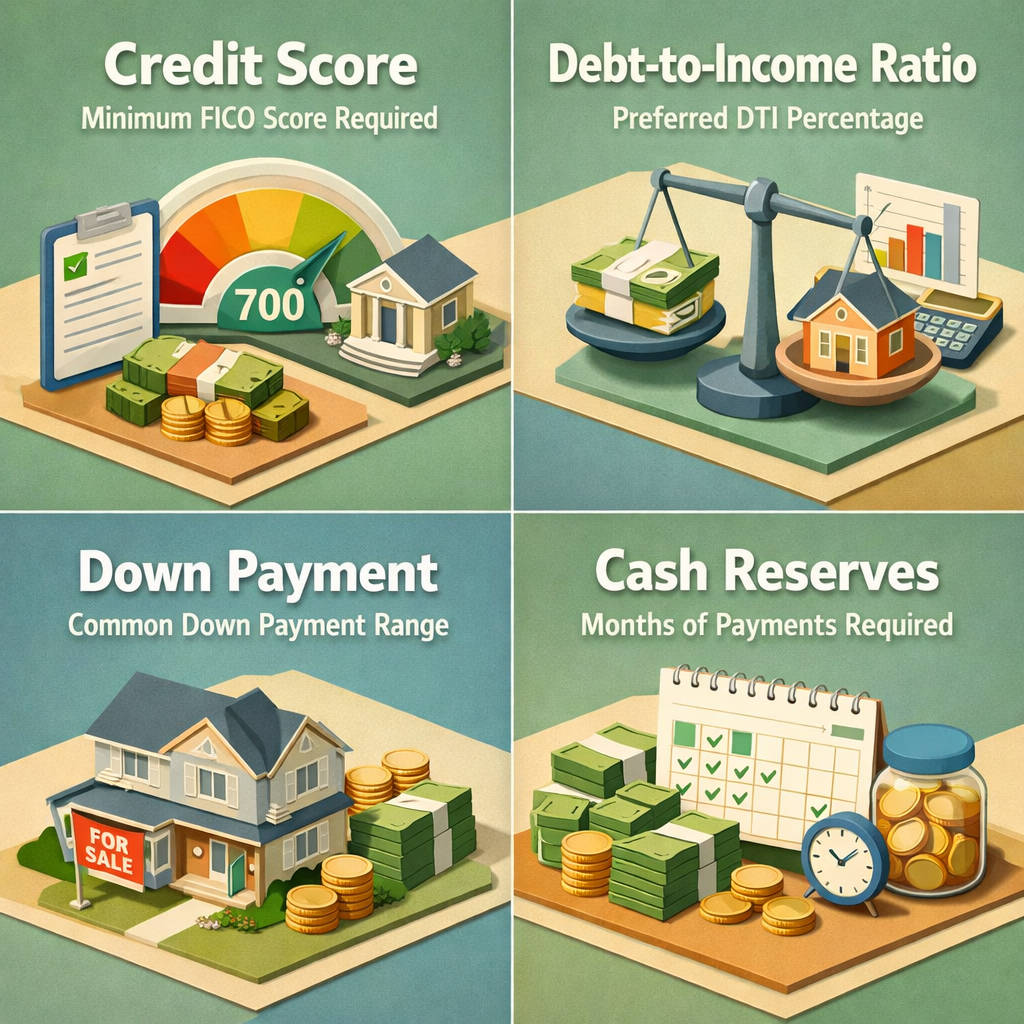
While individual lender requirements vary, there are several common benchmarks that most jumbo lenders apply to self-employed applicants. Understanding these thresholds helps you prepare a stronger application and set realistic expectations before you start shopping for a home.
Credit Score
Jumbo loans typically require higher credit scores than conventional conforming mortgages. Most lenders look for a minimum FICO score of 700, though many prefer scores of 720 or higher. The stronger your credit profile, the more negotiating power you may have on interest rates and loan terms. If your score needs improvement, addressing outstanding debts and reducing credit card utilization before applying could make a meaningful difference.
Debt-to-Income Ratio
Your debt-to-income (DTI) ratio — the percentage of your gross monthly income that goes toward debt payments — is one of the most important factors in any mortgage application. For jumbo loans, lenders commonly prefer a DTI at or below 43%, though some may allow up to 45% or even 50% with compensating factors like significant reserves or a large down payment. Because your income is calculated using net earnings from your tax returns, freelancers with high deductions may appear to have a higher DTI than their actual cash flow suggests. This is one reason why working with a lender who specializes in self-employed borrowers can be especially beneficial.
Down Payment
Jumbo loans typically require larger down payments than conforming mortgages. A down payment of at least 10% to 20% is common, and some lenders may require 25% or more depending on the loan size and your overall financial profile. A larger down payment not only reduces the lender's risk but can also help offset any concerns about income documentation complexity.
Cash Reserves
Because of the higher loan amounts involved, jumbo lenders often require borrowers to demonstrate substantial liquid reserves after closing. This may range from six to twelve months of mortgage payments held in verifiable accounts. For 1099 earners with variable income, strong reserves serve as an important safety net that reassures lenders about your ability to cover payments during slower earning periods.
Organizing Your Documentation as a Dual-Source Freelancer
Documentation is the foundation of a successful freelance income jumbo mortgage application. When your income comes from two 1099 sources, the paper trail needs to be clear, consistent, and comprehensive. Disorganized or incomplete records are one of the most common reasons self-employed borrowers experience delays or denials.
Here's what you'll likely need to gather before applying:
- Two years of personal federal tax returns (including all schedules, particularly Schedule C if you operate as a sole proprietor)
- Two years of 1099 forms from each client or platform that paid you
- Year-to-date profit-and-loss statement from a licensed CPA or accountant
- Two to three months of personal bank statements showing income deposits and cash reserves
- Business bank statements if you operate under a business entity
- CPA letter or verification of self-employment confirming your business is active and ongoing
- Signed IRS Form 4506-C authorizing the lender to request your tax transcripts directly from the IRS
If you've recently shifted from one type of freelance work to another, be prepared to explain that transition clearly. Lenders want to see that your income sources are related to a consistent field of expertise, which reinforces the likelihood that your earnings will continue at a similar level going forward.
Strategies to Strengthen Your Jumbo Loan Application
Beyond meeting the baseline requirements, there are several proactive strategies that may improve your approval odds and help you secure better loan terms as a self-employed borrower.
Work With a Lender Experienced in Self-Employed Borrowers
Not all lenders have the same appetite for 1099 income complexity. Mortgage brokers and lenders who specialize in jumbo or non-QM products are often more familiar with the nuances of freelance income and may have access to loan programs that traditional banks don't offer. Seeking out a lender with a proven track record of working with self-employed clients could save you significant time and frustration.
Reduce Your Taxable Deductions Strategically
This is a delicate balance. While maximizing deductions reduces your tax burden, it also reduces your documented income — which directly affects how much you can borrow. Some borrowers work with their accountants to strategically minimize deductions in the one to two years leading up to a major home purchase so their net income is higher on paper. This may not be right for everyone, but it's worth a conversation with your tax professional.
Build a Larger Cash Reserve
If your income documentation is complex, a larger reserve account can serve as a compensating factor that reassures lenders. Holding twelve or more months of mortgage payments in liquid savings demonstrates financial resilience and may allow a lender to overlook minor gaps in documentation or income fluctuations.
Consider a Co-Borrower
If you have a spouse or partner with W-2 income, adding them as a co-borrower can simplify the qualification process. Their traditional employment income is straightforward to verify and may help balance any DTI concerns arising from your 1099 earnings. Combined qualifying income could also open the door to a larger loan amount.
Common Pitfalls Freelancers Should Avoid When Applying
Even well-prepared borrowers can run into trouble if they're not aware of common missteps. Here are some situations to avoid as you navigate the jumbo loan process with dual 1099 income:
- Applying too soon after going freelance: If you recently transitioned to full-time freelancing, you may not yet have the two-year income history most lenders require. Waiting until you have a complete two-year record could significantly improve your approval chances.
- Making large deposits without documentation: Unexplained large deposits in your bank statements can raise red flags during underwriting. Be prepared to source any significant deposits with paper trails such as invoices or contracts.
- Taking on new debt before closing: Opening new credit accounts or taking on additional debt between application and closing can alter your DTI and jeopardize your approval.
- Underestimating the impact of write-offs: Aggressive business deductions may minimize your tax bill, but they reduce the income lenders will count. Be realistic about how your net income compares to your gross earnings before setting your home purchase budget.
- Skipping pre-approval: In the jumbo loan market, sellers take pre-approval very seriously. Obtaining a formal pre-approval letter — not just a pre-qualification — before making offers shows you're a serious and financially prepared buyer. To better understand what you may qualify for a jumbo loan, consider using an affordability tool before you begin the process.
●Conclusion
Understanding how to qualify for a jumbo loan with 1099 income from two freelance jobs starts with knowing what lenders are really evaluating: the stability, continuity, and documentation of your earnings. Freelancers with diverse income streams are increasingly common, and the mortgage industry has developed tools and programs to serve this growing group of borrowers. By organizing your financial records carefully, maintaining strong credit, building solid reserves, and working with the right lending professionals, your path to a high-value home purchase is very much within reach. If you're ready to take the next step, connecting with a mortgage specialist who understands the unique needs of self-employed borrowers is one of the smartest moves you can make.