
Filing for Chapter 13 bankruptcy is one of the most difficult financial decisions a person can make. But it's also a structured step toward getting your finances back on track. Once you've completed the process, you may be wondering whether homeownership is still within reach. The good news is that it could be — even with a lower credit score. Understanding how to qualify for a conventional loan with low credit score after Chapter 13 bankruptcy takes patience, planning, and a clear picture of what lenders expect. This guide walks you through everything you need to know, from waiting periods and credit benchmarks to the strategies that may help you get approved.
What Chapter 13 Bankruptcy Means for Your Mortgage Eligibility
Chapter 13 bankruptcy — sometimes called a "wage earner's plan" — allows individuals with a regular income to develop a repayment plan to pay back all or part of their debts over three to five years. Unlike Chapter 7, which involves liquidating assets, Chapter 13 lets you keep your property while catching up on missed payments. That distinction matters a great deal when it comes to mortgage lending.
Lenders view Chapter 13 more favorably than Chapter 7 in many cases because it demonstrates a willingness to repay debts rather than discharge them entirely. That said, it still leaves a significant mark on your credit report — typically remaining visible for up to seven years from the filing date. During that time, mortgage lenders will scrutinize your financial history carefully.
When evaluating conventional mortgage requirements after bankruptcy discharge, lenders generally look at two key phases: the period while you're still in an active repayment plan, and the period after your discharge. Each phase carries different eligibility rules, and knowing where you stand in that timeline is your first step.
Mandatory Waiting Periods Before Applying for a Conventional Mortgage
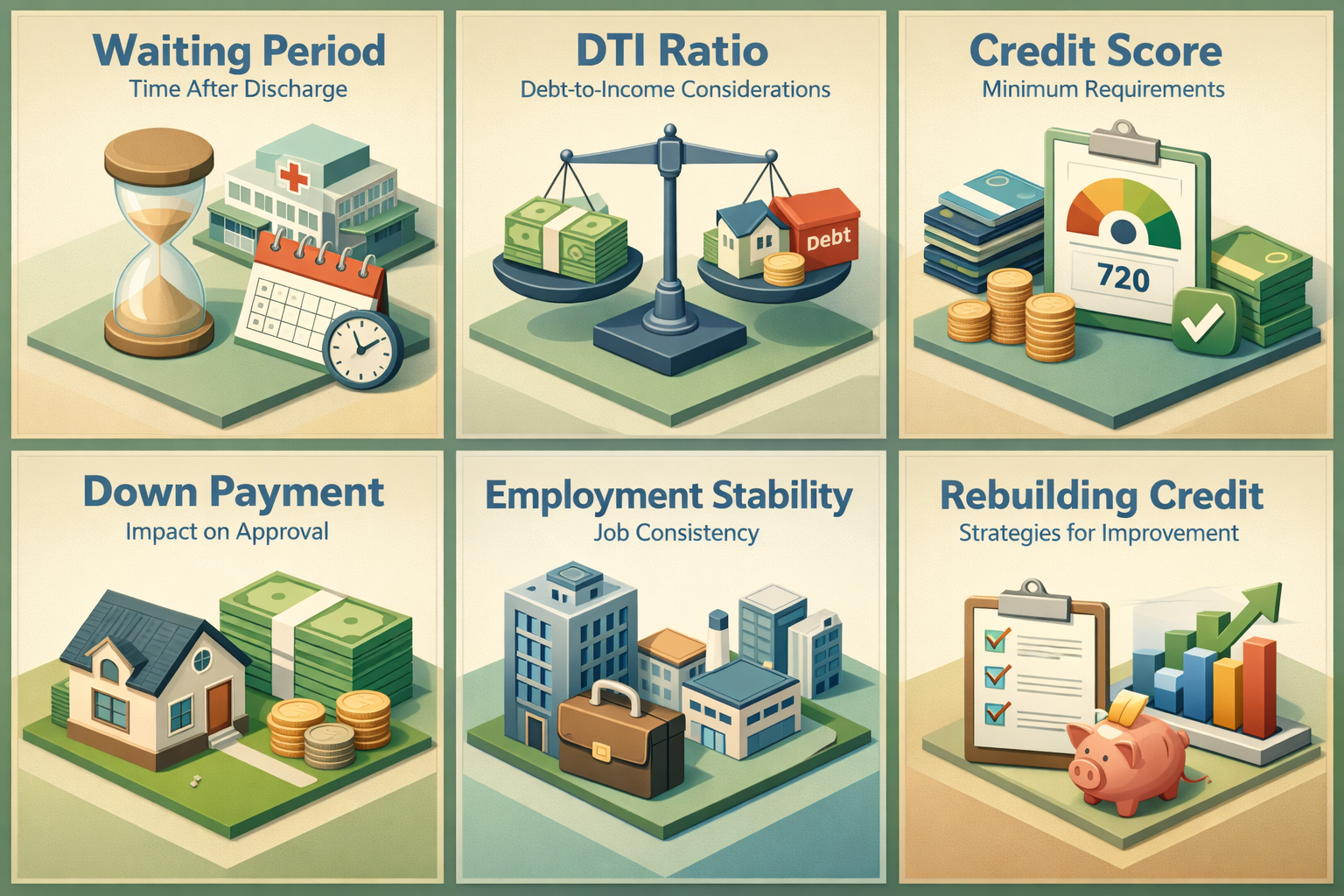
One of the most important factors in understanding how to qualify for a conventional loan with low credit score after Chapter 13 bankruptcy is knowing how long you typically need to wait before applying. Conventional loans backed by Fannie Mae and Freddie Mac have established guidelines around bankruptcy waiting periods, though lenders may impose additional "overlays" — meaning stricter internal requirements on top of the baseline rules.
For Chapter 13 specifically, the conventional loan waiting period guidelines generally work as follows:
- From the discharge date: A waiting period of approximately two years is typically required after a Chapter 13 discharge before you can apply for a conventional loan.
- From the dismissal date: If your Chapter 13 was dismissed rather than discharged, the waiting period may extend to four years.
- During an active repayment plan: Some loan programs may allow applications during the repayment phase, but conventional loans typically require court approval and a demonstrated on-time payment history of at least 12 months.
It's worth noting that these timelines may vary depending on the lender and the specific circumstances of your bankruptcy. If there were extenuating circumstances — such as a serious illness, job loss, or the death of a contributing household member — some lenders might be willing to reduce the waiting period, though this is subject to documented proof and additional underwriting review.
Credit Score Benchmarks and What Low Really Means to Lenders
Conventional loans are not government-backed, which means lenders take on more risk when issuing them. As a result, credit score requirements tend to be stricter compared to FHA or VA loan programs. Most conventional mortgage requirements include a minimum credit score in the range of 620 to 640, though some may require higher scores depending on other risk factors in your file.
After Chapter 13 bankruptcy, many borrowers find their scores fall below these thresholds — at least initially. However, credit scores can recover over time with disciplined financial behavior. Here's what lenders are generally looking for when reviewing your credit profile post-bankruptcy:
- No new derogatory marks: Late payments, collections, or new negative accounts after your bankruptcy can seriously hurt your chances of approval.
- Positive payment history: Demonstrating consistent, on-time payments on any remaining or new accounts signals financial responsibility.
- Credit utilization: Keeping balances low relative to your available credit limit may help improve your score more quickly.
- Mix of credit types: Having a combination of installment loans and revolving credit accounts could reflect well on your overall credit profile.
Even if your score is on the lower end of the conventional loan threshold, other compensating factors — such as a larger down payment, stable employment history, or low debt-to-income ratio — may help offset the credit risk in a lender's eyes. It's rarely just one number that determines your fate.
Debt-to-Income Ratio and Employment Stability After Bankruptcy
Your credit score is only one piece of the puzzle. Lenders also pay close attention to your debt-to-income (DTI) ratio — that is, how much of your gross monthly income goes toward paying debts. For conventional loans, lenders typically prefer a DTI ratio of 43% or lower, though some may allow slightly higher ratios with strong compensating factors.
After going through Chapter 13, your debt load may have been restructured significantly, which could actually work in your favor. If your monthly obligations are now more manageable, your DTI ratio might be in a stronger position than it was before you filed. This is one reason why some borrowers find that post-bankruptcy finances, while still challenging, are more stable than the period leading up to filing.
Employment stability is another major consideration. Lenders want to see that you have a reliable, verifiable income source. Generally, two years of consistent employment in the same field is considered favorable. If you've changed jobs during or after your bankruptcy, lenders will look at whether the move was lateral or upward, and whether the income remains steady. Self-employment after bankruptcy introduces additional complexity, as lenders may require at least two years of tax returns to verify income consistency.
What Lenders Consider "Stable Income"
- W-2 employment with consistent hours and pay
- Salaried positions with a track record of at least two years
- Self-employment income verified through two years of tax returns
- Part-time income that has been consistent for at least two years
Rebuilding Your Credit Profile to Strengthen Your Loan Application
Waiting out the mandatory period isn't enough on its own — how you use that time matters enormously. Rebuilding credit after Chapter 13 bankruptcy is a deliberate process, and the steps you take during the waiting period can significantly influence whether you qualify for a conventional mortgage and what rate you might receive.
Here are some practical strategies that may help accelerate credit recovery:
- Secured credit cards: These require a cash deposit as collateral and are often easier to obtain post-bankruptcy. Using them responsibly and paying them off monthly can help build a positive payment history.
- Credit-builder loans: Offered by some credit unions and community banks, these small installment loans are specifically designed to help people establish or rebuild credit.
- Authorized user status: If a trusted family member or friend adds you as an authorized user on their credit card account, their positive history could benefit your credit profile.
- Monitor your credit reports: Errors on your credit report can drag down your score unfairly. Reviewing your reports from all three major bureaus and disputing inaccuracies may help protect your score.
- Avoid new negative marks: Even one missed payment post-bankruptcy could signal to lenders that old habits haven't changed. Consistent, on-time payments are essential.
The road back to strong credit takes time, but it's absolutely achievable. Many borrowers see meaningful score improvements within 12 to 24 months of focused credit management after their bankruptcy discharge.
Down Payment Requirements and How They Affect Approval Odds
For conventional loans, the standard minimum down payment is typically 3% for first-time homebuyers or 5% for repeat buyers — though these figures can vary by lender and loan program. However, if your credit score is on the lower end after Chapter 13 bankruptcy, putting more money down could meaningfully strengthen your application.
A larger down payment reduces the lender's exposure to risk. For example, a 10% or 20% down payment signals financial commitment and leaves more equity in the property from day one. It also means you may be able to avoid private mortgage insurance (PMI), which is typically required when the down payment is less than 20% on a conventional loan. Avoiding PMI lowers your monthly payment and can make the loan more affordable over time.
During the waiting period after bankruptcy, many borrowers focus on saving aggressively for a down payment. This dual approach — rebuilding credit while building savings — can put you in a much stronger position when you're finally ready to apply. Even if your credit score isn't at its peak, a sizable down payment might help tip the scales in your favor during underwriting.
Down Payment Assistance Programs Worth Exploring
Some state and local programs offer down payment assistance to eligible borrowers, including those with past credit challenges. While not all of these programs are compatible with post-bankruptcy applicants, it's worth researching what's available in your area. A HUD-approved housing counselor can help you identify programs you may qualify for and guide you through the application process.
Working With the Right Lender After Chapter 13 Bankruptcy
Not all lenders approach post-bankruptcy applications the same way. Some lenders specialize in working with borrowers who have complex credit histories, while others may decline applications that fall outside a very narrow comfort zone. Finding the right fit can make a significant difference in your outcome.
Here's what to keep in mind when shopping for a lender after Chapter 13:
- Look for lenders with flexible overlays: Some lenders apply stricter guidelines on top of Fannie Mae and Freddie Mac minimums. Others stick closer to the baseline, which may give you more flexibility.
- Ask about manual underwriting: When a file doesn't fit neatly into automated underwriting criteria, some lenders will consider manual underwriting — a more individualized review of your full financial picture.
- Compare multiple offers: Shopping around and comparing loan estimates from several lenders is always a smart move, but especially so when you have a complex financial history.
- Work with a mortgage broker: A broker has access to multiple lenders and may be able to identify options that match your specific post-bankruptcy profile.
- Be transparent: Provide full documentation of your bankruptcy, discharge papers, and any court approvals. Trying to conceal information can result in application denial or legal consequences.
Understanding how to qualify for a conventional loan with low credit score after Chapter 13 bankruptcy is ultimately about preparation and persistence. Lenders want to see that the chapter you closed on financial hardship is truly behind you — and that the chapter ahead is built on a stronger foundation.
●Conclusion
Qualifying for a conventional mortgage after Chapter 13 bankruptcy isn't a quick process, but it's far from impossible. By understanding the waiting periods, meeting conventional mortgage requirements after bankruptcy discharge, rebuilding your credit deliberately, and presenting a strong overall financial profile, you may be in a much better position than you think. The key is to use the waiting period wisely — save, rebuild, and research your options. When you're ready to take the next step, consider speaking with a licensed mortgage professional at LoanWise who can help you evaluate your current eligibility and map out a realistic path to homeownership.