
Inheriting vacant land might feel like a financial windfall — but when you're trying to use it as part of a home purchase or refinance, things can get complicated quickly. Lenders view raw or undeveloped land very differently than a finished home, and conventional loan guidelines are particularly specific about what qualifies as acceptable collateral. If you're wondering how to qualify for a conventional loan with inherited vacant land, you're not alone. Many homebuyers and homeowners face this exact challenge, and the good news is that with the right preparation, it's often possible to navigate successfully. This article breaks down what lenders typically look for, how inherited land affects the process, and practical steps you can take to strengthen your application.
Why Inherited Vacant Land Complicates Conventional Financing
Conventional loans — those backed by Fannie Mae or Freddie Mac — are designed primarily for properties that are move-in ready or at least structurally sound. Vacant land, by its nature, doesn't fit neatly into that framework. When land is inherited, additional layers of complexity emerge, including title clarity, estate documentation, and how the property's value is assessed.
Lenders offering conventional mortgage financing are cautious about land for several reasons. Raw land doesn't generate rental income, it may lack utilities or road access, and its value can be harder to appraise consistently. Because there's no structure to secure the loan against, the risk profile is higher from the lender's perspective. That said, inherited land isn't automatically a dealbreaker — it depends heavily on how you intend to use it and whether it meets specific property eligibility standards.
It's also worth noting that if the vacant land is separate from the property you're financing, it may simply be treated as an asset rather than collateral. In that case, the challenges shift from property eligibility to documentation and valuation.
Understanding Conventional Loan Requirements for Inherited Land
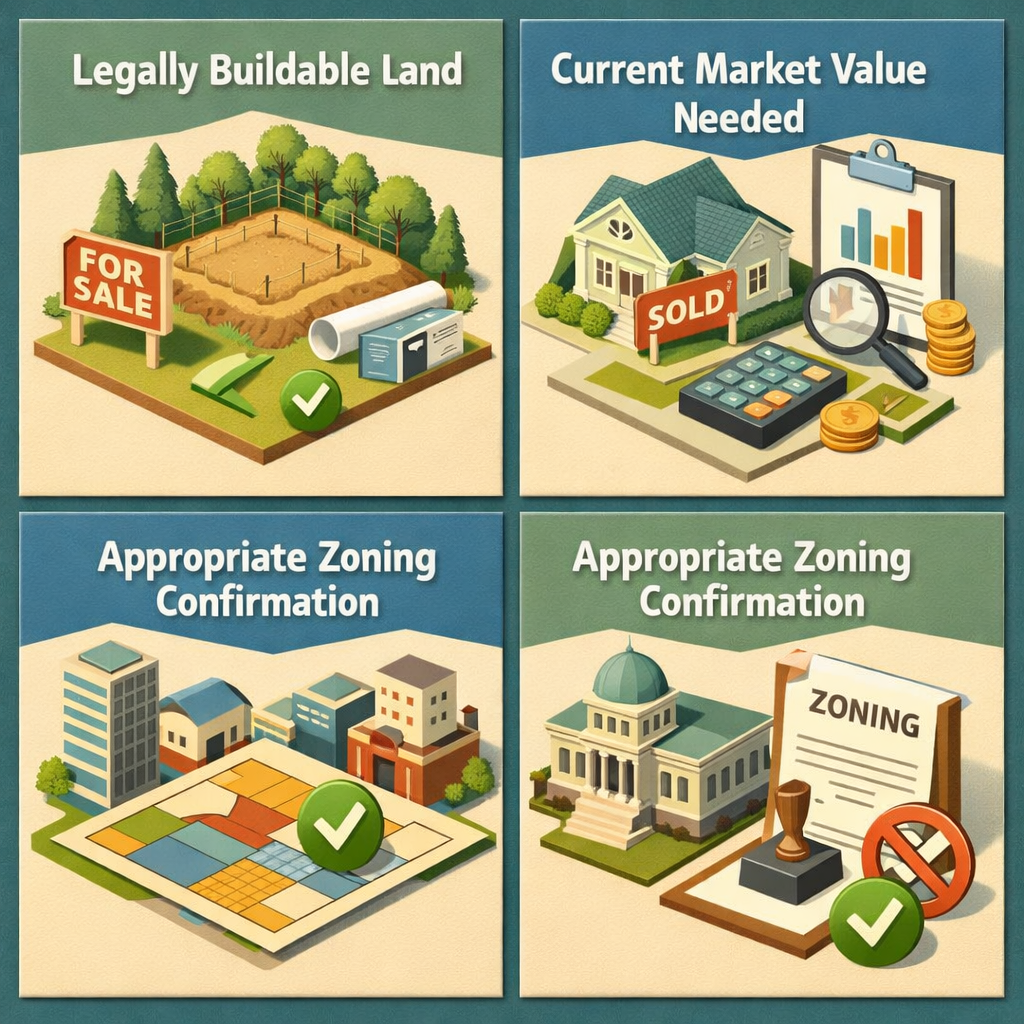
Meeting the conventional loan requirements for inherited land starts with understanding what Fannie Mae and Freddie Mac guidelines actually allow. Here's what lenders typically evaluate:
- Clear Title: The property must have a clean, marketable title in your name. Inherited land often comes with probate complications, co-heirs, or outstanding liens that must be resolved before a lender will consider it.
- Property Eligibility: If you're financing a home on the inherited land (a construction-to-permanent loan, for example), the land itself may be used as an equity contribution. However, lenders will require the land to be legally buildable, properly zoned, and accessible by road.
- Appraisal Standards: An independent licensed appraiser must determine the land's current market value. Unlike homes, land appraisals rely heavily on comparable sales of similar parcels, which can be harder to find in rural or undeveloped areas.
- Zoning and Use: Lenders want confirmation that the land is zoned appropriately for its intended use. Agricultural-zoned land used for residential purposes, for instance, may raise red flags for underwriters.
- No Income Generation Required: Vacant land doesn't need to produce income to qualify you — but your personal income and creditworthiness still must meet standard conventional loan requirements.
If the inherited land is being used as a down payment substitute or equity in a construction loan, the lender will typically require documentation showing how long you've owned it and what it's currently worth. Lenders may apply specific loan-to-value limits in these scenarios, so it's wise to ask your loan officer upfront about their internal guidelines.
Clearing the Title After Inheritance: A Critical First Step
One of the most common obstacles when trying to qualify for a conventional loan with inherited vacant land is title-related. When land passes through an estate, the transfer of ownership isn't always straightforward — especially if probate was involved, if multiple heirs share ownership, or if the deceased had unpaid debts secured by the property.
Here's what you may need to address before approaching a lender:
- Probate Completion: If the estate hasn't been formally settled, the land may not legally be in your name yet. Most lenders won't accept collateral or assets tied to an unsettled estate.
- Deed Transfer: Make sure a new deed has been recorded in your name at the county recorder's office. A title search will confirm whether this has been done correctly.
- Lien Resolution: Outstanding property taxes, mechanic's liens, or judgment liens must typically be paid or negotiated before closing.
- Co-Heir Agreements: If you inherited the land jointly with siblings or other relatives, you'll need all parties to agree on any transaction involving the property. A quitclaim deed may be needed to consolidate ownership.
Working with a real estate attorney experienced in estate law can save you significant time and frustration here. Title companies can also conduct a thorough title search and issue title insurance, which many lenders will require before approving a loan where inherited land is involved.
Using Inherited Land Equity in a Construction or Purchase Loan
One of the most practical ways to leverage inherited vacant land is as an equity contribution toward a construction-to-permanent conventional loan. In this scenario, you're essentially using the land's appraised value in place of — or in addition to — a traditional cash down payment. This approach can be especially helpful for buyers who have land but limited liquid savings.
Here's how this typically works:
- You own the land outright (free and clear, with a clean title).
- A licensed appraiser determines the land's current market value.
- The lender applies that value as equity, reducing the amount you need to borrow for construction.
- The combined loan-to-value (LTV) — based on the finished home's projected appraised value — must fall within conventional guidelines, which often require an LTV of 97% or lower depending on the program.
It's important to understand that not all lenders offer construction-to-permanent products, and those that do may have stricter overlays on top of Fannie Mae or Freddie Mac guidelines. You might need to shop around to find a lender comfortable with inherited land as an equity source.
Additionally, lenders may require a builder approval process, a detailed construction timeline, and inspections at various stages of building. These requirements protect both you and the lender, but they do add steps to the process.
Credit, Income, and Financial Qualifications That Still Apply
Even if your inherited land situation is fully resolved, you still need to meet the standard borrower qualifications for a conventional loan. These don't change just because your down payment or equity source is non-traditional. Here's what lenders will typically evaluate:
- Credit Score: Most conventional loans require a minimum credit score of 620, though scores of 740 or higher tend to unlock the best rates and terms. If your score is below this threshold, it may be worth taking time to improve it before applying.
- Debt-to-Income Ratio (DTI): Conventional guidelines generally prefer a back-end DTI of 45% or lower, though some automated underwriting approvals may allow higher ratios with compensating factors. Your total monthly debt payments — including the proposed mortgage — are measured against your gross monthly income.
- Stable Income: Lenders want to see at least two years of consistent employment or self-employment income, supported by W-2s, tax returns, or 1099s. Gaps in employment or declining income can raise concerns.
- Reserves: Some lenders may require two to six months of mortgage payments in liquid savings, especially when the transaction involves non-standard collateral like inherited land.
If your financial profile is strong across these categories, it can offset some of the complexity that inherited land introduces. A well-prepared loan package — including a clear letter of explanation for the inherited land — can go a long way toward reassuring an underwriter and improving your approval odds.
Working With the Right Lender and Loan Officer
Not every lender is equally comfortable with unconventional property scenarios. When inherited vacant land is involved, the experience and flexibility of your loan officer can make a real difference. Here are some tips for finding the right fit:
- Look for Lenders With Land Experience: Some community banks, credit unions, and portfolio lenders have more flexibility when it comes to land-related transactions. They may hold loans in-house rather than selling them to the secondary market, which allows for more nuanced underwriting decisions.
- Ask About Overlays: Even lenders who follow Fannie Mae or Freddie Mac guidelines may have internal overlays — additional requirements on top of the standard rules. Ask specifically whether they've handled inherited land scenarios before.
- Get a Pre-Qualification First: Before ordering appraisals or spending money on title work, get a preliminary assessment from a loan officer. They can help you understand whether your scenario is likely to be approved and what documentation you'll need.
- Consider a Mortgage Broker: A broker has access to multiple lenders and can shop your scenario to find one best suited for inherited land financing. This can save time compared to approaching lenders individually.
Being upfront about your inherited land situation from the very first conversation is essential. Surprises late in the loan process can cause delays or even denials, so full transparency helps everyone involved.
●Conclusion
Learning how to qualify for a conventional loan with inherited vacant land takes patience, preparation, and the right professional guidance. The process involves more moving parts than a standard home purchase — from clearing the title and getting a land appraisal to meeting borrower income and credit requirements. But it's a path that many homebuyers and homeowners have successfully navigated.
The key is to start early, work with experienced professionals, and be thorough in your documentation. If the inherited land is a meaningful asset, it could actually work in your favor by reducing the amount you need to borrow or serve as equity in a construction loan. With the right lender and a clear plan, what might seem like a complicated situation can become a smart financial opportunity. Reach out to a LoanWise mortgage specialist today to explore your options and get personalized guidance tailored to your unique situation.