
Going through a divorce is already one of life's most challenging transitions. Then comes the question of what happens next — including whether you can buy a home on your own. If you're wondering how to qualify for a conventional loan with a recent divorce decree and shared property, you're not alone. Many homebuyers and homeowners find themselves navigating this exact situation every year. The good news is that qualifying is absolutely possible. It does, however, require careful preparation, the right documentation, and a clear understanding of how lenders evaluate your financial picture after a major life change. This guide will walk you through everything you need to know.
What Lenders Look for After a Divorce
When you apply for a conventional loan following a divorce, lenders assess your application largely the same way they would for any borrower — but with additional scrutiny around your changed financial circumstances. Conventional loans are typically backed by Fannie Mae or Freddie Mac guidelines, and both agencies have specific rules about how divorce-related income, liabilities, and assets are treated during underwriting.
Lenders will generally want to see a finalized divorce decree. This document is critical because it outlines the legal division of assets and debts, clarifies any alimony or child support obligations, and confirms which party is responsible for shared property. Without a finalized decree, many lenders may be reluctant to proceed, since the financial picture remains legally unresolved.
Here's what underwriters typically review when a divorce is involved:
- Finalized divorce decree: Confirms the legal separation of finances and property.
- Property settlement agreement: Details who retains ownership of real estate and other assets.
- Marital settlement agreement (MSA): May outline spousal support, child support, and debt division.
- Court-ordered support documentation: Required if alimony or child support is being counted as qualifying income.
It's worth noting that lenders may also request a copy of the final judgment of dissolution or similar court documentation depending on the state. Having these papers organized and readily available can help speed up the approval process considerably.
How Shared Property Affects Your Conventional Loan Application
Shared property — meaning real estate that was jointly owned during the marriage — can be one of the more complex factors in a post-divorce mortgage application. Lenders need to understand exactly how ownership and debt responsibility have been resolved before they can accurately assess your debt-to-income (DTI) ratio and creditworthiness.
If you and your former spouse jointly owned a home and that mortgage is still in both names, that liability could still appear on your credit report and count against your DTI — even if the divorce decree awards the property to your ex. This is a critical point that many borrowers overlook. The mortgage lender who holds that loan is not legally bound by the terms of your divorce decree. Until the loan is refinanced or paid off, both parties typically remain liable.
Ways Shared Property Is Typically Resolved
There are a few common ways that shared real estate is addressed after a divorce, each with different implications for your new loan application:
- Refinancing the joint mortgage into one name: If your ex-spouse refinances the shared home into their name alone, the debt may be removed from your credit profile over time, which could help your DTI ratio.
- Sale of the shared property: If the property is sold and proceeds are divided, the mortgage is paid off entirely. This is often the cleanest resolution from a lending standpoint.
- Buyout: One spouse buys out the other's share, typically through a cash-out refinance. The departing spouse is removed from the title and mortgage.
- Divorce decree assignment: The decree assigns responsibility to one party, but lenders may still count the debt unless proof of 12 months of on-time payments by the other party is documented.
Fannie Mae guidelines, for example, may allow a lender to exclude a jointly held mortgage from your DTI calculation if you can show that your ex-spouse has been making the payments independently for a sufficient period — typically supported by bank statements or payment history. Always confirm current guidelines with your lender, as these rules can be updated.
Using Alimony and Child Support as Qualifying Income
One of the potential advantages for divorced borrowers is the ability to count court-ordered alimony or child support as qualifying income. This can meaningfully improve your debt-to-income ratio and help you reach the income threshold needed for approval. However, lenders have specific documentation requirements before this income can be counted.
Generally speaking, conventional loan guidelines may allow alimony or child support to be used as qualifying income if:
- The payments are documented in a finalized divorce decree or court order.
- The income has been received consistently for a minimum period — often six months to one year.
- The payments are expected to continue for at least three years from the date of the mortgage application.
You'll typically need to provide bank statements showing receipt of payments, as well as the legal documentation establishing the obligation. Lenders want to see a reliable, documented income stream — not just a verbal agreement or informal arrangement.
If you're the one paying alimony or child support, those obligations will generally be counted as a monthly debt obligation, which increases your DTI. This is an important consideration when calculating how much home you can afford on your own after a divorce.
Credit Score and Debt-to-Income Considerations After Divorce
Divorce can have a real impact on your credit profile, particularly if joint accounts were mismanaged during or after the separation. Before applying for a conventional loan, it's wise to review your credit report carefully and address any issues that may have surfaced during the transition.
Conventional loan requirements for credit scores typically vary by lender, but many require a minimum score in the range of 620 or higher for standard approval. Borrowers with higher scores generally access better interest rates and may face fewer underwriting conditions. If your credit took a hit during the divorce — whether from late payments, increased credit card balances, or joint accounts in dispute — you may want to spend some time rebuilding before applying.
Steps to Strengthen Your Credit Before Applying
- Pull all three credit reports and dispute any inaccuracies related to joint accounts.
- Close or remove yourself as an authorized user on accounts that no longer serve you.
- Pay down revolving debt to reduce your credit utilization ratio.
- Avoid opening new credit accounts in the months leading up to your application.
- Establish a consistent, on-time payment history on your own accounts.
Your DTI ratio is equally important. Most conventional lenders prefer a back-end DTI — which includes all monthly debt obligations — of 43% or lower, though some programs may allow up to 50% with compensating factors. If shared property debts are still appearing on your report, your DTI could be inflated. Working with a knowledgeable loan officer to model different scenarios can help you find the most favorable path forward.
How to Qualify for a Conventional Loan With a Recent Divorce Decree and Shared Property: Key Documentation
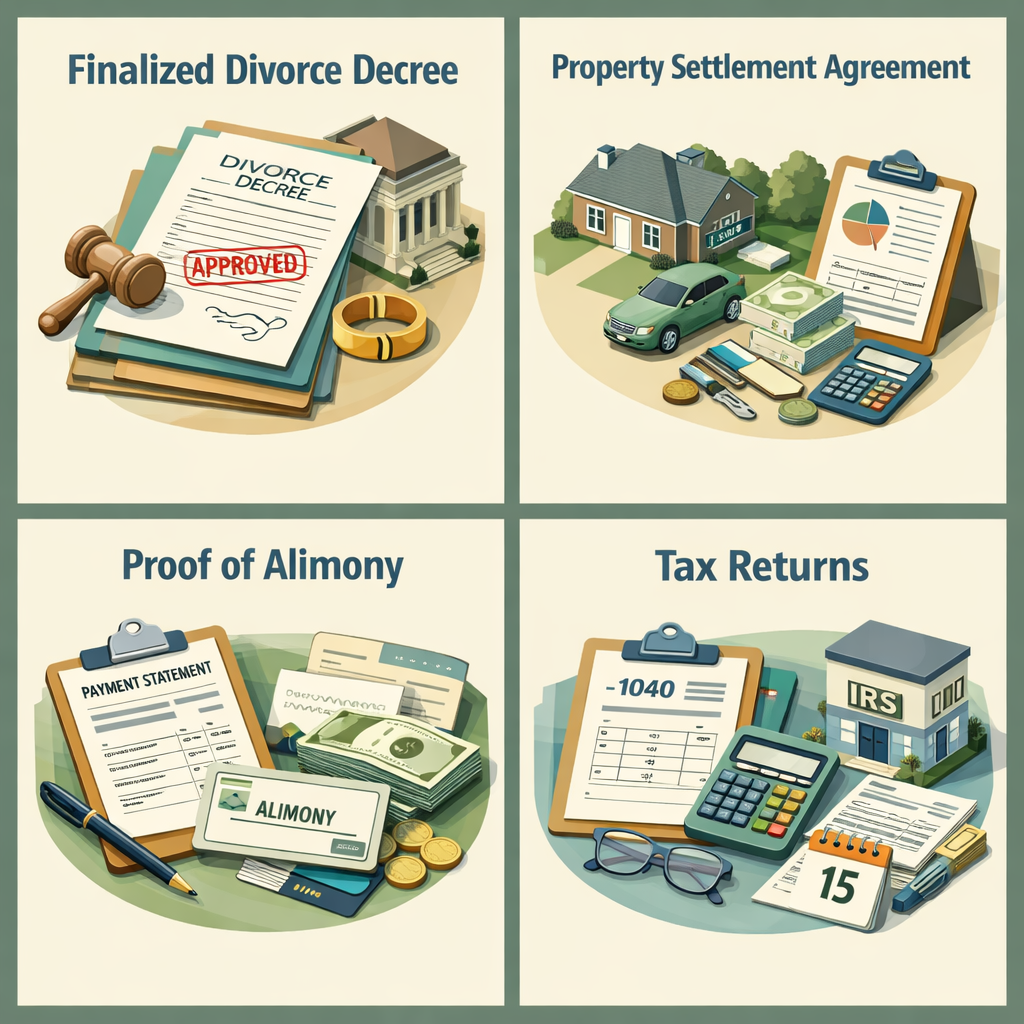
Documentation is everything in post-divorce mortgage lending. Lenders need a clear paper trail to understand your current financial situation and confirm that all shared obligations have been legally addressed. Being thorough and proactive with your paperwork can significantly reduce delays and back-and-forth with underwriting.
Here is a consolidated list of documents you may need to gather:
- Finalized divorce decree: The complete, court-stamped document — not a draft or summary.
- Property settlement agreement: Details of who owns what and who is responsible for which debts.
- Proof of alimony or child support payments: Bank statements showing consistent deposits over time.
- Proof that an ex-spouse is paying a joint mortgage: Typically 12 months of canceled checks or bank statements in the ex-spouse's name.
- Quitclaim deed or refinance documentation: If you've been removed from a shared property title or mortgage.
- Two years of tax returns and W-2s: Standard income documentation for conventional loans.
- Recent pay stubs: Confirming current employment and income levels.
- Bank statements: Showing assets available for down payment and closing costs.
The more organized and complete your documentation is from the start, the smoother the underwriting process tends to be. Consider working with a mortgage professional who has experience with post-divorce applications — they can help you anticipate lender questions before they arise.
Down Payment and Asset Considerations After Divorce
One challenge many newly single borrowers face is accumulating a sufficient down payment after dividing marital assets. Divorce settlements often involve splitting savings accounts, investment portfolios, and home equity — which can leave each party with less liquid capital than they had before.
For a conventional loan, the typical minimum down payment is 3% to 5% for primary residences, though putting down 20% or more allows you to avoid private mortgage insurance (PMI). If the divorce settlement awarded you proceeds from the sale of a shared home, lenders will want to see documentation showing where those funds originated — typically through the settlement agreement and closing disclosure from the property sale.
Gift funds from family members may also be used toward a down payment on a conventional loan, subject to Fannie Mae and Freddie Mac guidelines. If you plan to use gifted funds, lenders will require a gift letter confirming that the money is not a loan. This can be a helpful option if your liquid assets are limited following the divorce settlement.
Keep in mind that lenders will also verify that your assets are seasoned — meaning the funds have been in your account for a set period, typically 60 days. Sudden large deposits without a clear explanation can trigger additional underwriting scrutiny.
Working With a Lender Who Understands Post-Divorce Mortgage Needs
Not all lenders are equally experienced with the nuances of post-divorce lending. Choosing a mortgage professional who understands conventional loan requirements divorce shared assets situations can make a significant difference in both your approval odds and your overall experience.
A knowledgeable loan officer will help you understand how your specific divorce decree affects your application, which debts can potentially be excluded from your DTI, and how to best present your income — including any alimony or support payments. They'll also be familiar with Fannie Mae and Freddie Mac overlays that apply to your situation and can guide you toward loan programs that are best suited to your circumstances.
Here are a few questions worth asking a potential lender:
- Have you worked with borrowers who recently finalized a divorce decree?
- How do you handle shared property that's still in both names?
- Can you model different scenarios based on my current DTI and credit profile?
- What documentation will underwriting require specific to my divorce situation?
Shopping around and comparing lenders is always a smart move — not just for interest rates, but also for how well each lender understands your unique financial picture. The right lending partner can help turn a complex situation into a manageable and ultimately successful homebuying experience.
●Conclusion
Navigating how to qualify for a conventional loan with a recent divorce decree and shared property isn't always straightforward, but it's far from impossible. With the right documentation, a clear understanding of how shared debts and assets are treated by lenders, and a knowledgeable mortgage professional by your side, you can move forward confidently toward homeownership. Take the time to organize your paperwork, review your credit profile, and understand how your divorce settlement impacts your financial qualifications. Every situation is unique, so consider speaking with a licensed loan officer at LoanWise who can evaluate your specific circumstances and help you find the best path to approval.