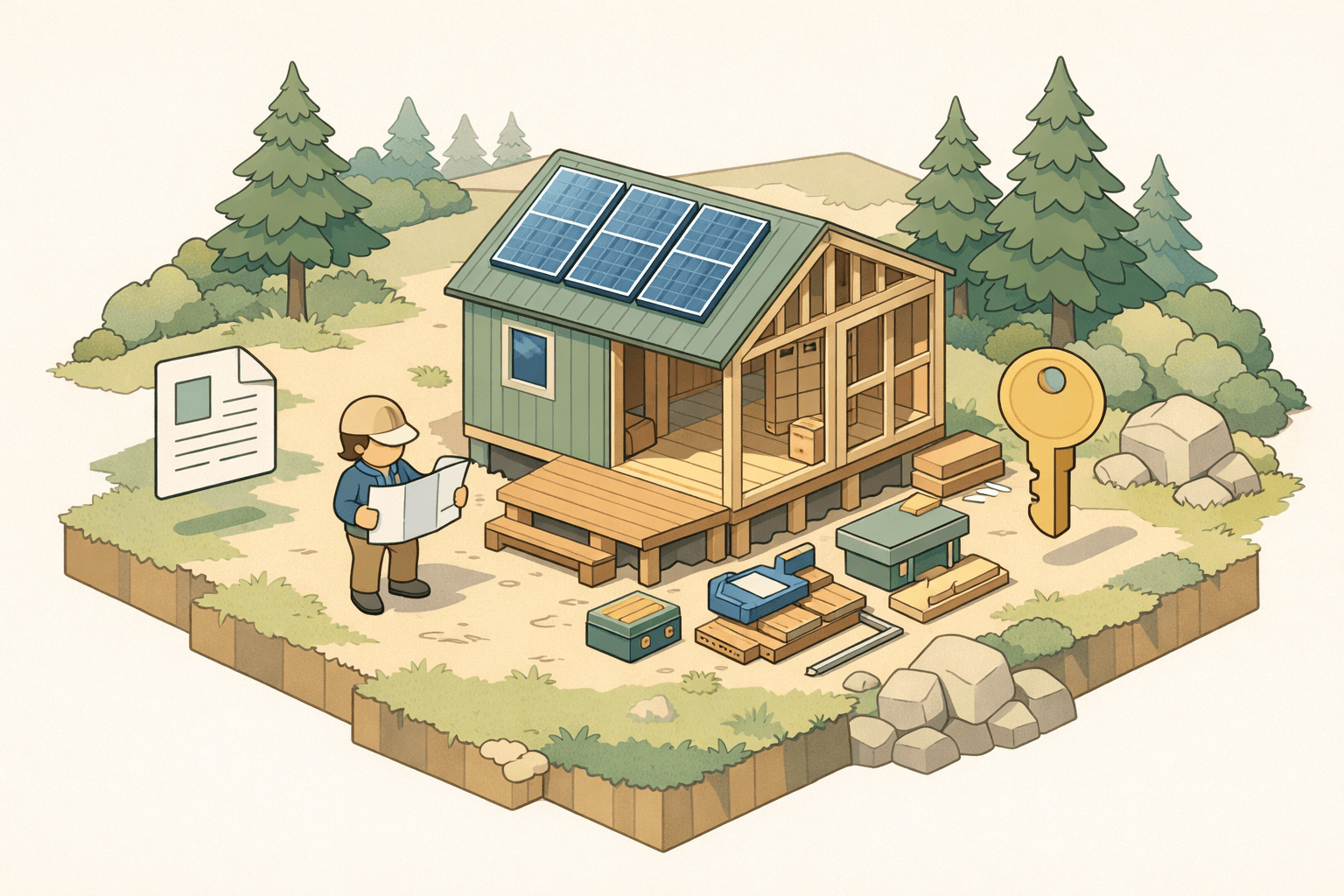
Building a home far from city infrastructure is an exciting vision for many Americans — a place of self-sufficiency, natural beauty, and independence. But when it comes to financing that dream, things can get complicated fast. If you're wondering how to qualify for a construction loan on a remote off-grid property, you're not alone. Traditional lenders often view these projects with extra caution, and the approval process tends to be more involved than a standard home construction loan. The good news is that with the right preparation, the right lender, and a solid understanding of what's required, securing financing for your off-grid build is achievable.
What Makes Off-Grid Construction Loans Different From Standard Loans
A conventional construction loan is already a more complex product than a typical purchase mortgage. Lenders are essentially financing a property that doesn't yet exist, which introduces a layer of risk that they must carefully manage. When you add the off-grid element — meaning the property relies on solar panels, well water, septic systems, rainwater collection, or other non-municipal utilities — the complexity increases significantly.
Most traditional lenders follow guidelines set by Fannie Mae, Freddie Mac, the FHA, or the VA. These agencies have specific standards about what types of properties are eligible for financing. A remote property that lacks grid-tied electricity, municipal water, or public road access may fall outside those guidelines entirely. This means lenders could struggle to resell the loan on the secondary market, which makes them hesitant to approve it in the first place.
Additionally, off-grid homes in remote locations can be harder to appraise accurately. Comparable sales — often called comps — may be scarce or nonexistent in rural and wilderness areas. Without reliable comps, lenders can't confidently assess the completed home's value, which creates another layer of uncertainty in the approval process.
Understanding Off-Grid Construction Loan Requirements Before You Apply
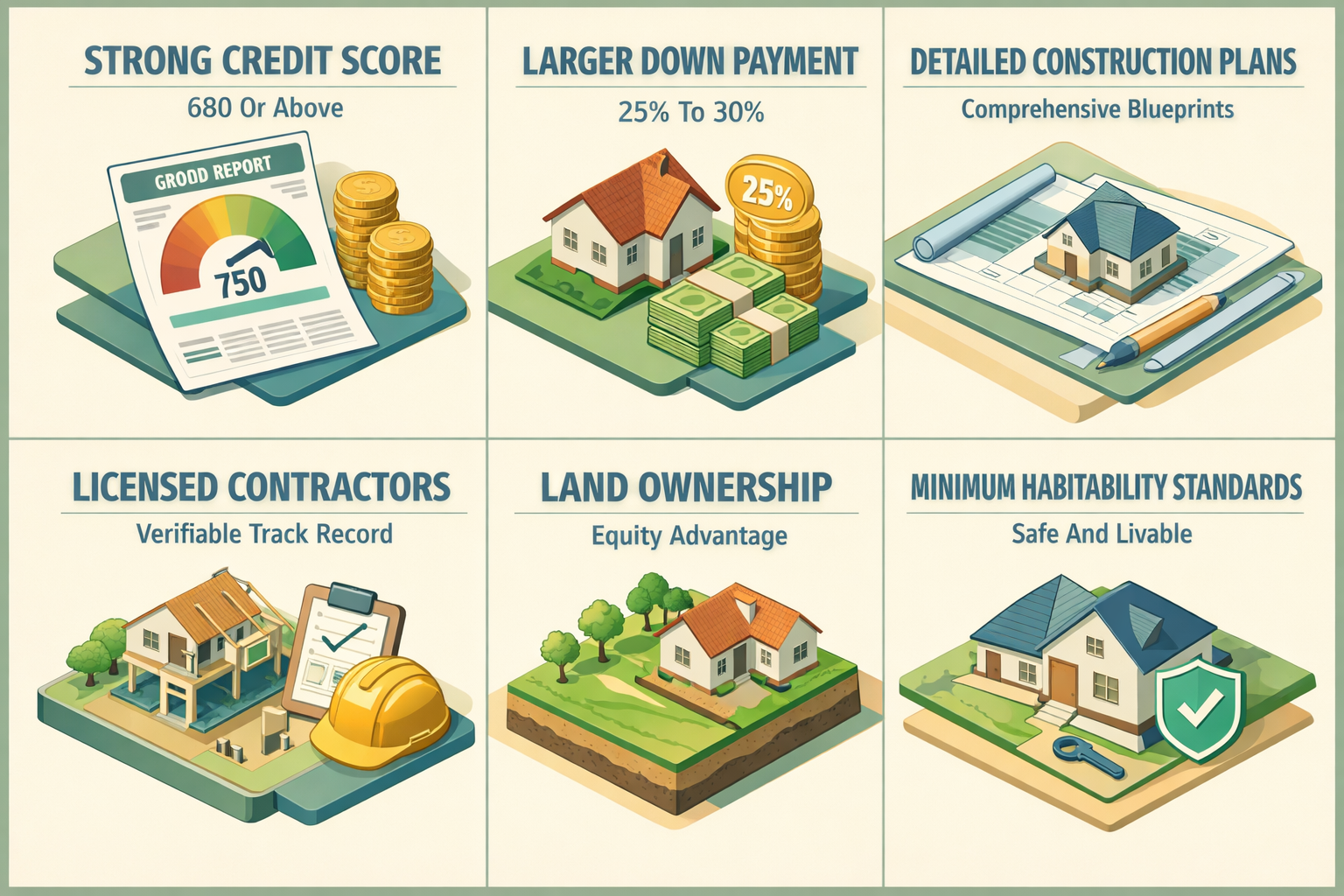
Before you approach a lender, it's important to understand the core off-grid construction loan requirements that most financing institutions will want to see. While these can vary by lender, several factors tend to come up consistently.
- Strong credit score: Because off-grid construction is considered higher risk, lenders typically require a higher credit score than they might for a conventional build. A score of 680 or above is often a starting point, though some portfolio lenders may have more flexibility.
- Larger down payment: Expect to put down more than the standard 20%. Many lenders financing remote or off-grid builds may require 25% to 30% or more, depending on the property's location and the perceived level of risk.
- Detailed construction plans: Lenders will almost always require comprehensive blueprints, contractor credentials, and a full construction budget before approving funds. The more detailed your plans, the more confidence a lender may have in your project.
- Licensed and insured contractors: Using an owner-builder approach — where you act as your own general contractor — may limit your lender options. Most lenders prefer or require a licensed general contractor with a verifiable track record.
- Land ownership or equity: If you already own the land, that equity may be counted toward your down payment, which can be a meaningful advantage when seeking financing.
It's also worth noting that the property must typically meet minimum habitability standards. Even for off-grid homes, lenders want assurance that the completed structure will be livable, safe, and capable of supporting basic functions like sanitation, shelter, and temperature regulation.
Remote Property Financing: Why Location Matters to Lenders
When it comes to remote property financing, geography plays a bigger role than many borrowers expect. A home located more than 30 to 50 miles from the nearest town, without year-round road access, or in a flood zone, wildfire hazard area, or other high-risk environment may face significant hurdles regardless of how strong the borrower's financial profile is.
Lenders care about location primarily because it affects two things: resale value and collateral risk. If a borrower defaults on the loan, the lender may need to sell the property to recover its investment. A highly remote or difficult-to-access property could take years to sell — or may attract only a very small pool of buyers — which increases the lender's exposure.
That said, location challenges don't automatically disqualify a project. Some lenders who specialize in rural and agricultural lending — including certain community banks, credit unions, and USDA-backed programs — may be more comfortable with remote property financing than large national banks. The USDA's Single Family Housing Guaranteed Loan Program, for example, is designed for rural areas and may be worth exploring, though it has its own eligibility criteria and property standards that off-grid homes may or may not meet.
It's always a smart move to research what loan programs are active in the specific county or state where your property is located, as regional lenders often have more nuanced knowledge of local land values and market conditions.
How to Qualify for a Construction Loan on a Remote Off-Grid Property Step by Step
Knowing how to qualify for a construction loan on a remote off-grid property is largely about preparation and finding the right lending partner. Here's a practical step-by-step approach to improve your chances of success.
Step 1: Build a Strong Financial Profile
Start by reviewing your credit report and addressing any outstanding issues. Pay down revolving debt, avoid opening new credit lines, and ensure your debt-to-income (DTI) ratio is well within acceptable limits — typically below 43%, though lower is better for a high-risk project like this.
Step 2: Secure Your Land First
Owning the land before you apply for a construction loan strengthens your application considerably. It demonstrates commitment, reduces the lender's overall exposure, and gives you equity to work with from day one.
Step 3: Develop a Comprehensive Build Plan
Work with an architect or experienced off-grid builder to produce detailed construction drawings, a materials list, a timeline, and a fully itemized budget. Lenders want to see that the project is well-planned and that cost overruns are being anticipated and accounted for.
Step 4: Choose the Right Lender
Don't limit yourself to national banks. Community banks, credit unions, and specialty lenders who offer portfolio loans — loans they keep on their own books rather than selling to the secondary market — may have more flexibility on property type and location. A mortgage broker with experience in rural or non-traditional construction lending can be an invaluable resource here.
Step 5: Prepare for the Appraisal
Work with your lender and appraiser early. Provide as much data as possible about nearby comparable properties, even if they're not perfect matches. The more context you can provide, the more accurate and favorable the appraisal may be.
Exploring Alternative Building Loan Options for Non-Traditional Projects
If conventional construction financing isn't available for your project, there are several alternative building loan paths worth considering. These options may come with different terms, higher rates, or additional requirements, but they can open doors that standard lenders won't.
- Portfolio loans: Offered by smaller banks and credit unions that hold loans in-house, these products aren't bound by secondary market guidelines. Lenders can set their own criteria, which often means more flexibility for unique properties.
- Hard money loans: These are short-term, asset-based loans typically offered by private investors or lending companies. They're usually faster to obtain but carry higher interest rates and shorter repayment windows. They might be suitable as a bridge solution while you work toward longer-term permanent financing.
- Construction-to-permanent loans: Some lenders offer a single loan that covers both the construction phase and converts to a standard mortgage upon completion. This can reduce the number of closings and associated fees, though qualifying may still require meeting the lender's property standards.
- Owner-builder loans: If you plan to serve as your own contractor, you may need to find a lender specifically willing to work with owner-builders. These programs exist but are less common, and they typically require you to demonstrate significant construction experience.
- Personal loans or home equity financing: For smaller off-grid projects, or to supplement a primary loan, personal loans or a home equity line of credit (HELOC) on another property could provide additional funds. These are generally not ideal as a primary financing strategy due to higher rates and lower limits, but they may serve a supporting role.
Key Documentation and Eligibility Factors Lenders Will Review
When applying for any construction financing — especially for a remote or off-grid project — being thoroughly prepared with documentation can make a significant difference. Here's what lenders are likely to request and evaluate.
Income Verification
Expect to provide recent tax returns (typically two years), pay stubs or profit and loss statements if self-employed, and bank statements. Lenders want to confirm that you have a stable income stream capable of supporting loan payments throughout the build phase and beyond.
Property Information
Be ready to share the legal description of the land, a current survey, any existing title reports, and documentation of road access. If the land is accessed via an easement, you'll likely need to provide the easement agreement as well.
Utility and Systems Plans
For off-grid builds, lenders may want to review how the property will generate power, manage water, and handle waste. Providing detailed plans for your solar array, well, septic system, or other alternative utilities may help the lender feel more confident about the property's long-term habitability and value.
Builder Documentation
Your general contractor's license, insurance certificates, references, and a signed construction contract will typically be required. In some cases, lenders may want to review the contractor's financial statements as well, particularly for larger or more complex projects.
Contingency Reserves
Many lenders require borrowers to demonstrate cash reserves beyond the construction budget — often enough to cover several months of payments or a percentage of the total project cost. This protects both you and the lender in the event of unexpected delays or cost increases, which are especially common in remote locations.
●Conclusion
Financing an off-grid build in a remote location is genuinely more challenging than a standard construction project, but it's far from impossible. The key is understanding what lenders need, preparing your documentation thoroughly, and being strategic about which lenders you approach. Community banks, credit unions, and specialty portfolio lenders tend to be your best allies in this process. By strengthening your financial profile, securing your land in advance, and working with experienced professionals — from builders to mortgage brokers — you give yourself the best possible chance of turning your off-grid dream into a funded reality. If you're ready to explore your financing options, LoanWise can help connect you with lenders who understand the unique nature of remote property construction.