
As a freelance professional, you know the frustration of completing great work and then waiting 30, 60, or even 90 days for a client to send payment. That gap between delivering your services and receiving your money can create real financial stress — making it hard to cover everyday expenses, invest in your business, or take on new projects with confidence. Fortunately, there's a practical solution that many independent contractors and self-employed individuals are beginning to discover: invoice financing. Understanding how to get invoice financing for freelance professionals could be the key to smoothing out your cash flow and building a more stable financial foundation.
What Invoice Financing Actually Means for Freelancers
Invoice financing is a form of short-term borrowing that allows you to access cash tied up in unpaid client invoices. Rather than waiting for a client to pay on their schedule, you work with a lender or factoring company that advances you a portion of the invoice's value — often somewhere between 70% and 90% — right away. Once your client pays the invoice in full, you receive the remaining balance minus the lender's fees.
For freelancers and independent contractors, this type of financing is particularly appealing because it doesn't rely heavily on your personal credit score or years of business history. Instead, approval is largely based on the creditworthiness of your clients and the legitimacy of your outstanding invoices. That makes it a more accessible option compared to traditional small business loans, which often require extensive documentation and strong personal financials.
There are two main structures you might encounter: invoice factoring and invoice discounting. With factoring, the financing company takes over the collection process and contacts your clients directly. With discounting, you retain control of collections and the arrangement stays more private. Each has its own advantages depending on your client relationships and business preferences.
Why Independent Contractors Struggle With Cash Flow
Cash flow challenges are one of the most common pain points for self-employed professionals. Unlike salaried employees who receive a predictable paycheck, freelancers often deal with irregular income, late-paying clients, and project-based earnings that can fluctuate significantly from month to month.
Consider a freelance graphic designer who completes a large branding project for a corporate client in January but doesn't receive payment until March due to the client's net-60 payment terms. During those two months, the designer still needs to pay for software subscriptions, marketing costs, and personal living expenses. Without a financial buffer, this situation can quickly become stressful — or even unsustainable.
This is precisely where accounts receivable financing for self-employed professionals comes in. Rather than taking on high-interest personal loans or maxing out credit cards to bridge the gap, freelancers can leverage the value already sitting in their invoices. It's a smarter, more strategic way to manage the natural ebbs and flows of self-employment income.
Other contributing factors to cash flow stress among independent contractors include project cancellations, scope creep without additional pay, and clients who delay payment without penalty. Having access to a reliable mechanism for getting cash from freelance invoices can provide meaningful peace of mind in all of these situations.
How to Get Invoice Financing for Freelance Professionals Step by Step
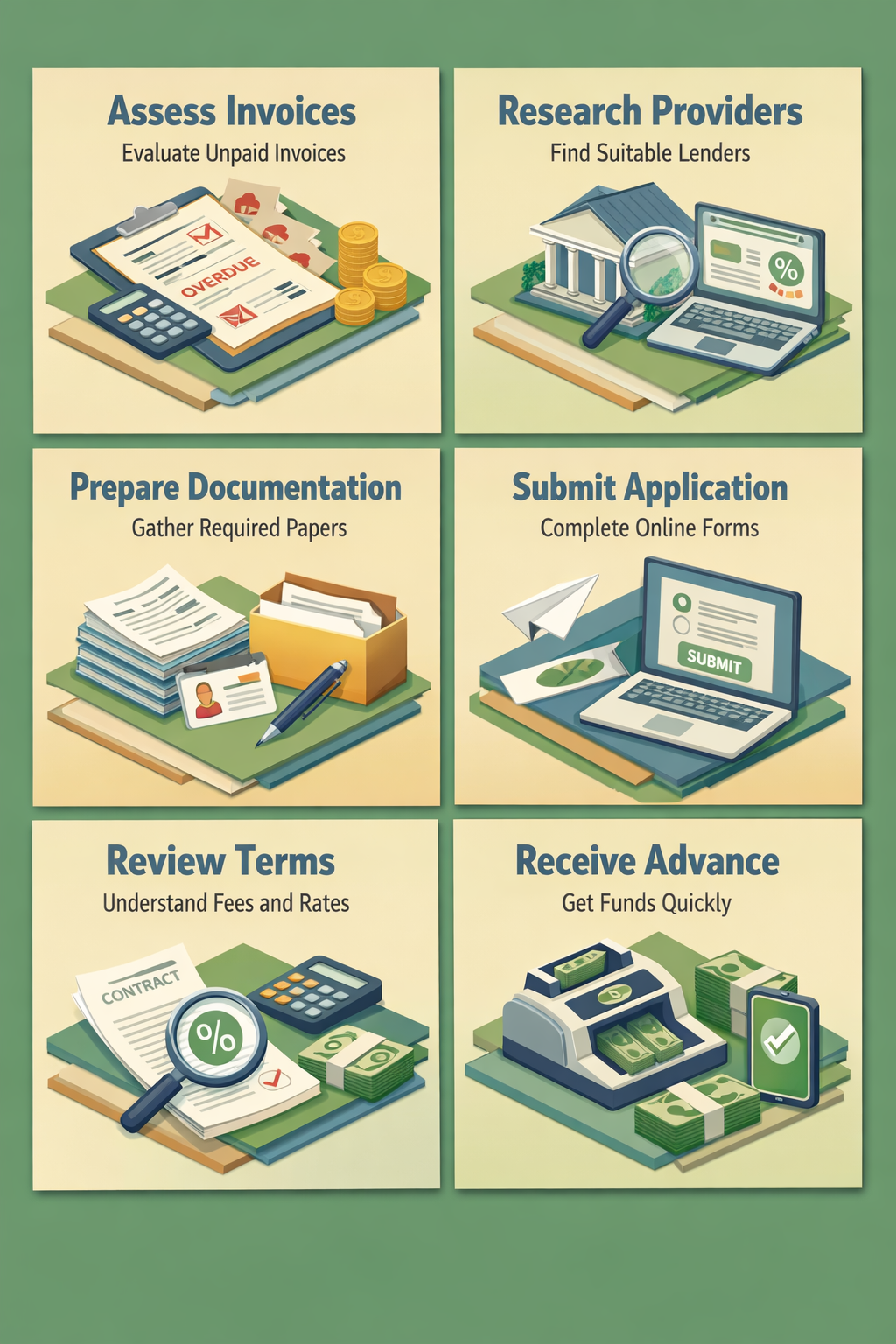
If you're ready to explore this option, the process is more straightforward than you might expect. Here's a general roadmap to help you get started:
- Assess your outstanding invoices: Before approaching any lender, take stock of which invoices are currently unpaid, how long they've been outstanding, and who the clients are. Lenders will want to evaluate the reliability of those clients as payers.
- Research financing providers: Not all invoice financing companies are the same. Some specialize in working with small businesses and freelancers, while others primarily serve larger corporations. Look for lenders that explicitly work with self-employed individuals or sole proprietors.
- Prepare your documentation: You'll typically need to provide copies of your invoices, basic business information, and potentially some client contact details. Some providers may also request bank statements or proof of the services rendered.
- Submit your application: Many online invoice financing platforms have streamlined digital applications. The approval process can sometimes be completed within 24 to 48 hours, which is much faster than traditional loan underwriting.
- Review the terms carefully: Pay close attention to the advance rate, fee structure, and any contractual obligations such as minimum monthly volumes or long-term commitments. Understanding the full cost of financing is essential before signing anything.
- Receive your advance: Once approved, the lender typically deposits the advanced funds directly into your business or personal bank account. You can then use that cash to cover expenses, invest in your work, or simply maintain stability.
It's worth noting that the specific requirements and timelines may vary depending on the lender and your individual circumstances. Always read the fine print and don't hesitate to ask questions before committing to any agreement.
Freelancer Invoice Factoring vs. Other Funding Options
When you're searching for ways to bridge a cash flow gap, you'll likely come across several financing options. It helps to understand how freelancer invoice factoring compares to the alternatives so you can make the most informed decision for your situation.
Personal loans are one option, but they typically require good personal credit and come with fixed repayment terms regardless of whether your income is consistent. For freelancers with variable earnings, a fixed monthly payment can create added pressure.
Business lines of credit offer flexibility, but most traditional lenders want to see at least one to two years of business history, steady revenue, and strong credit scores before extending this type of product. New or mid-stage freelancers may not yet meet those benchmarks.
Merchant cash advances are another alternative, especially for contractors who accept card payments. However, these products can carry high effective interest rates and should be approached with caution. They may be suitable for specific short-term needs but aren't generally recommended as a long-term cash flow strategy.
Invoice financing, by contrast, is directly tied to work you've already completed and money that's already owed to you. It's not creating new debt in the traditional sense — it's accelerating access to income you've legitimately earned. This distinction makes it a particularly compelling payment solution for independent contractors who want to maintain financial health without over-leveraging themselves.
What Lenders Look for When Evaluating Freelance Invoices
One of the most reassuring aspects of invoice financing for freelancers is that the evaluation criteria differ meaningfully from those of traditional lending. Here's what financing providers typically consider:
- Client creditworthiness: Lenders are often more interested in the financial reliability of your clients than in your own credit profile. If your clients are established businesses with a solid payment history, your invoices are likely to be viewed more favorably.
- Invoice legitimacy: You'll need to demonstrate that the invoice represents actual work completed and is not in dispute. Lenders may request signed contracts, project deliverables, or correspondence confirming that the client has accepted the work.
- Invoice age: Most providers prefer invoices that are relatively recent — typically less than 90 days old. Very aged invoices may be seen as higher risk since collection becomes more uncertain over time.
- Invoice amount: Some lenders have minimum invoice thresholds, which could be a consideration for freelancers who work on smaller projects. It's worth confirming these limits before applying.
- Industry type: Certain sectors may be viewed more favorably than others. Freelancers working with corporate clients in professional services, marketing, technology, or consulting may find more receptive financing partners than those in highly niche or informal markets.
Understanding what lenders prioritize can help you present your application in the strongest possible light and set realistic expectations about the financing you might qualify for.
Costs and Considerations Before You Commit
Like any financial product, invoice financing comes with costs that you should factor into your decision. While it can be a powerful tool for managing cash flow, it's important to go in with clear eyes about what you're paying for access to your own money early.
Fees in invoice financing are typically structured as a percentage of the invoice value, often referred to as a factor rate or discount rate. These fees may accrue weekly or monthly depending on how long it takes your client to pay. The longer the payment cycle, the more you may end up paying in fees — so it's worth considering which invoices are worth financing based on your client's typical payment behavior.
Some key questions to ask any provider include:
- What is the advance rate, and what percentage do I receive upfront?
- What fees apply, and how are they calculated?
- Is there a long-term contract or can I use the service on a per-invoice basis?
- Who handles collections — me or the financing company?
- Are there any penalties for early repayment or low invoice volumes?
Recourse versus non-recourse factoring is another important distinction. With recourse factoring, you're responsible for buying back the invoice if your client doesn't pay. With non-recourse factoring, the financing company absorbs that risk — but typically charges higher fees as a result. Each arrangement carries different implications for your financial exposure, so understanding this difference is essential.
●Conclusion
Knowing how to get invoice financing for freelance professionals is a genuinely valuable skill in today's independent workforce. The freedom of self-employment is exciting, but irregular cash flow doesn't have to be a constant source of anxiety. By leveraging the value of your outstanding invoices through accounts receivable financing, you can maintain momentum in your business, take on new opportunities, and build financial stability without waiting on slow-paying clients.
As you evaluate your options, take the time to compare multiple providers, read all terms carefully, and consider working with a financial advisor who understands the unique needs of self-employed professionals. At LoanWise, we're committed to helping entrepreneurs and independent contractors find smart, practical financing solutions that support their goals. If you're ready to explore your options, reach out to our team today — we're here to help you make confident, informed decisions about your financial future.