
Running a seasonal retail business can be incredibly rewarding, but it also comes with a very real challenge: cash flow doesn't always match up with your expenses. Whether you're gearing up for the holiday rush, a summer surge, or a back-to-school season, the costs of stocking inventory, hiring staff, and ramping up marketing often hit before the revenue does. That's why understanding how to get a working capital loan for seasonal retail is so valuable for small business owners and entrepreneurs navigating these predictable but demanding cycles. In this guide, we'll walk you through what seasonal business working capital means, what loan options exist, how lenders evaluate your application, and what steps you can take to improve your chances of approval.
What Is Seasonal Business Working Capital and Why Does It Matter
Working capital is the money your business uses to cover its day-to-day operating expenses. For most businesses, this includes payroll, rent, utilities, and inventory purchases. For seasonal retailers, however, working capital needs can spike dramatically during peak periods and shrink just as fast during slower months.
Seasonal business working capital refers specifically to the funds a business needs to bridge the gap between slow and busy seasons. Imagine a gift shop that earns the majority of its revenue between November and January. Come February, the sales slow down — but the rent, utilities, and loan repayments don't. Without a financial cushion or a reliable financing option, that gap can become a serious problem.
This is exactly why working capital financing is so relevant for seasonal retailers. It's not about growing your business in the traditional sense. It's about maintaining stability so you can keep the lights on, keep your staff employed, and be fully prepared when your busy season returns. Many entrepreneurs find that having access to seasonal financing makes the difference between thriving and barely surviving.
- Inventory purchasing: Buying stock months before peak season requires upfront capital.
- Staffing costs: Hiring and training seasonal employees adds to payroll expenses before revenue arrives.
- Marketing and promotions: Pre-season advertising campaigns need to be funded in advance.
- Lease and overhead commitments: Fixed costs don't pause during the off-season.
Types of Financing Options Available for Seasonal Retailers
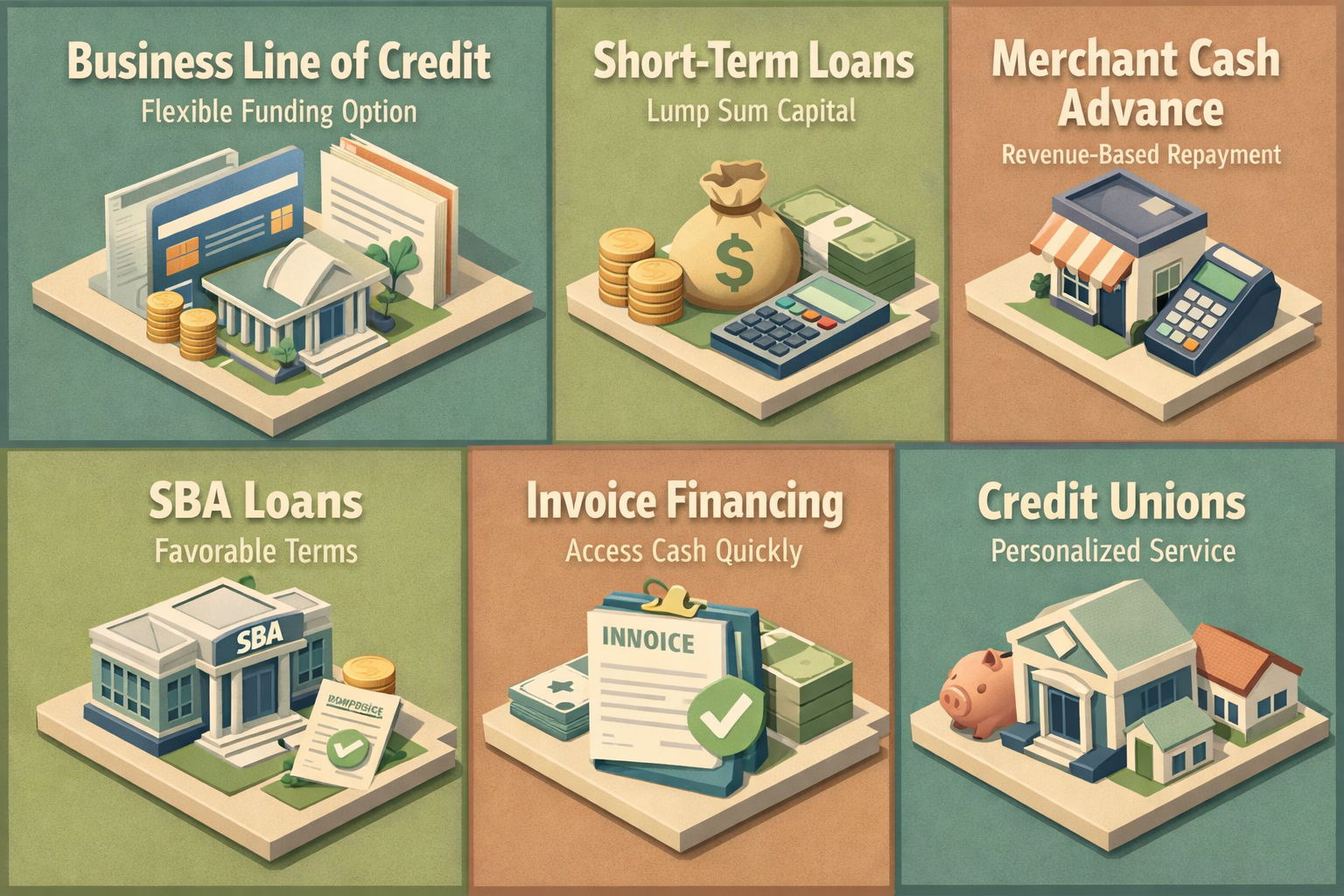
When you're exploring how to get a working capital loan for seasonal retail, you'll find that several types of financing products may be well-suited to your situation. Each one has its own structure, advantages, and trade-offs, so it's worth understanding what's available before you apply.
Business Line of Credit
A business line of credit is often considered one of the most flexible tools for seasonal retailers. It works similarly to a credit card — you're approved for a maximum credit limit, and you only draw funds when you need them. You pay interest only on what you borrow, and as you repay, that credit becomes available again. This revolving structure makes it ideal for managing unpredictable cash flow swings across different seasons.
Short-Term Business Loans
Short-term loans provide a lump sum of capital that's repaid over a set period — typically anywhere from a few months to about two years. These loans can be useful when you need a specific amount to purchase inventory or cover payroll ahead of your peak season. Repayment terms are usually fixed, so you'll know exactly what to expect each month.
Merchant Cash Advance
A merchant cash advance (MCA) provides upfront capital in exchange for a percentage of your future sales. Since repayment is tied to your revenue, it can be more manageable during slower months. However, MCAs often come with higher effective costs compared to traditional loans, so it's important to evaluate the full cost carefully before committing.
SBA Loans
Small Business Administration (SBA) loan programs, such as the SBA 7(a) loan, may offer more favorable terms for qualifying small business owners. These loans typically come with competitive interest rates and longer repayment terms, though the application process can take longer and may require more documentation than other options.
Invoice Financing
If your retail business sells to other businesses on credit terms, invoice financing could allow you to access cash tied up in unpaid invoices. A lender advances a portion of the invoice value upfront, and you repay it once your customer settles the invoice. This option is more common in B2B retail environments.
How Lenders Evaluate Seasonal Retail Loan Applications
Understanding what lenders look for can make a big difference in how you prepare your application. Most lenders — whether banks, credit unions, or online lenders — will evaluate several key factors when reviewing a seasonal retail business for working capital financing.
Business Revenue and Cash Flow History
Lenders typically want to see that your business generates consistent revenue over time, even if that revenue is seasonal by nature. Bank statements, profit and loss statements, and tax returns are common documents used to verify income. Demonstrating that your business reliably earns strong revenue during peak periods — and has a clear pattern of recovering from slow seasons — can work in your favor.
Time in Business
Many lenders prefer to work with businesses that have been operating for at least one to two years. This gives them enough historical data to assess how the business performs across multiple seasonal cycles. Newer businesses may face more limited options, though some online lenders and alternative financing providers may be more flexible.
Credit Profile
Both your personal credit score and your business credit score may be reviewed, depending on the lender and loan type. A stronger credit profile generally improves your chances of approval and may help you qualify for better terms. If your credit has some blemishes, it's worth reviewing your reports before applying and addressing any errors or outstanding issues.
Seasonal Revenue Documentation
Because your business is seasonal, lenders may want additional documentation showing your revenue patterns. Providing monthly breakdowns of sales data, not just annual totals, can help paint a clearer picture of your business cycle and demonstrate that your peak season earnings are sufficient to repay the loan.
Steps to Strengthen Your Loan Application Before Applying
Preparation is one of the most powerful tools you have when seeking financing. Taking the right steps before you apply could improve your odds of approval and potentially help you access better loan terms.
- Organize your financial documents: Gather at least two years of tax returns, recent bank statements, and a current profit and loss statement. Having these ready speeds up the process and signals to lenders that you're organized and serious.
- Review your credit reports: Check both your personal and business credit reports for errors. Disputing inaccuracies before applying can prevent unnecessary score damage during the review process.
- Calculate your actual funding need: Avoid borrowing more than you need. Calculate your expected expenses during the slow season and determine the specific amount that would bridge the gap without creating unnecessary debt.
- Build or maintain a business banking relationship: Having an established account with a bank or credit union may give you an advantage when applying for a loan through that institution.
- Prepare a brief business overview: Some lenders, especially for larger loan amounts, may want a summary of your business model, how you generate revenue, and how the loan funds will be used. A clear, concise explanation can reinforce your credibility.
- Time your application strategically: Applying for a working capital loan before your slow season hits — rather than during it — gives lenders a better view of your business performance and gives you more time to shop for the right product.
Comparing Lenders: Banks, Credit Unions, and Online Lenders
Not all lenders are created equal, and the right choice for your seasonal retail business will depend on your specific situation, timeline, and eligibility. Here's a general overview of the main lending channels to consider.
Traditional Banks
Traditional banks often offer the most competitive interest rates and loan terms, but they typically require stronger credit profiles, more documentation, and longer processing times. If you have an established relationship with your bank and a solid financial history, this could be a good starting point. However, if you need funds quickly before a peak season, the bank's timeline may not align with your needs.
Credit Unions
Credit unions are member-owned financial institutions that may offer more personalized service and flexible terms compared to large banks. If you're already a member of a credit union, it's worth inquiring about their small business loan products. They may be more willing to consider the full picture of your business rather than relying solely on automated credit scoring.
Online and Alternative Lenders
Online lenders have expanded significantly in recent years and now offer a wide range of products tailored to small business owners. They often have faster approval times and more flexible eligibility requirements, making them a practical option for seasonal retailers who need capital quickly. The trade-off is that interest rates and fees can be higher than traditional sources, so it's important to compare the total cost of financing — not just the interest rate.
When evaluating any lender, consider factors such as the annual percentage rate (APR), repayment schedule, prepayment penalties, and whether the lender has experience working with seasonal businesses. Reading reviews and asking questions upfront can save you from unpleasant surprises down the road.
Managing Repayment During Off-Season Periods
One of the unique challenges of seasonal business working capital is that repayment often coincides with your slowest revenue months. Planning for this in advance can help you avoid payment stress and protect your credit profile.
When possible, look for loan products that offer flexible or seasonal repayment schedules. Some lenders — particularly those familiar with seasonal industries — may allow lower payments during slow months and higher payments during peak periods. This structure aligns repayment with your actual cash flow, which can make a meaningful difference in your day-to-day operations.
It's also wise to set aside a portion of peak-season revenue specifically for loan repayment. Treating this as a non-negotiable expense — similar to rent or payroll — can help ensure you're never caught off guard. Building a small cash reserve from profitable seasons gives your business a buffer that reduces the urgency of borrowing during the next slow period.
Finally, communicate proactively with your lender if you anticipate difficulty making a payment. Many lenders, especially smaller community banks and credit unions, may work with you to adjust terms temporarily rather than letting an account go delinquent. Silence is rarely the best strategy when cash flow gets tight.
●Conclusion
Understanding how to get a working capital loan for seasonal retail is a skill that can genuinely transform how you manage your business through predictable highs and lows. From business lines of credit and short-term loans to SBA programs and merchant cash advances, there are meaningful options available to small business owners who take the time to prepare and apply strategically. The key is to start early, know your numbers, and choose a financing product that aligns with your business's actual cash flow patterns. At LoanWise, we're here to help entrepreneurs like you explore the right financing solutions for every season. Connect with a lending specialist today and take the next step toward a more financially resilient retail business.