
Historic homes carry a unique charm that modern construction simply can't replicate. From hand-carved woodwork to century-old brick facades, these properties tell stories that deserve to be preserved. But financing a historic home — especially one in need of restoration — can feel overwhelming. That's where USDA loan programs may offer a compelling solution. If you're a homebuyer or homeowner in a qualifying rural area, understanding how to get a USDA loan for a historic property preservation project could open doors you didn't know existed. In this guide, we'll walk you through what USDA loans are, who qualifies, how they apply to historical homes, and what steps you'll likely need to take to get started.
What Is a USDA Loan and Why Does It Matter for Rural Historic Homes
The U.S. Department of Agriculture (USDA) offers mortgage loan programs specifically designed to support homeownership in rural and suburban communities. The most well-known of these is the USDA Single Family Housing Guaranteed Loan Program, which allows eligible borrowers to purchase or refinance homes with no down payment requirement. There's also the USDA Direct Loan program, aimed at low- to very-low-income borrowers who need more substantial assistance.
What makes USDA loans especially relevant for historic home buyers is their focus on rural communities — which is precisely where many of America's most architecturally significant older homes are located. Small towns, farming communities, and rural villages across the country are filled with properties that have historical value but may be overlooked by conventional lenders due to their age or condition.
USDA loans can potentially be used to purchase these properties, and in some cases, borrowers may also be able to roll in renovation or repair costs. This makes the program a potentially powerful tool for buyers who want to preserve rather than demolish or bypass these cultural landmarks.
USDA Loan for Historical Homes Eligibility: What You Need to Qualify
Before diving into the renovation planning process, it's important to understand the foundational eligibility requirements for USDA loans. Meeting these criteria is the first step toward securing financing for a historic home.
- Location Requirements: The property must be located in a USDA-designated rural area. The USDA provides an online eligibility map that borrowers can use to check whether a specific address qualifies. Many smaller towns with populations under 35,000 may qualify, though this can vary.
- Income Limits: USDA loans are intended for low- to moderate-income borrowers. Income limits are set based on the median income for the county where the property is located. Typically, your household income must be at or below 115% of the area median income (AMI) for the Guaranteed Loan program.
- Creditworthiness: While the USDA doesn't set a strict minimum credit score for its Guaranteed Loan program, most participating lenders look for a credit score of at least 640. Borrowers with lower scores may still be considered, but they may face more scrutiny during underwriting.
- Primary Residence Requirement: USDA loans are designed for owner-occupied primary residences. Investors looking to purchase historic properties purely for rental income would not qualify under this program.
- Debt-to-Income Ratio: Lenders will evaluate your debt-to-income (DTI) ratio. A DTI of 41% or lower is typically preferred, though some flexibility may exist for well-qualified borrowers.
For USDA loan for historical homes eligibility, the property itself must also meet USDA's minimum property standards. This is where things get more nuanced for historic homes, as older structures may require repairs or updates to meet safety and structural requirements before a loan can be approved.
Property Condition Standards: Where Historic Preservation Meets Lending Rules
One of the most common challenges for buyers financing a historic home through any government-backed program is the property condition requirement. USDA loans are no exception. The property must meet the agency's minimum standards for safety, sanitation, and structural integrity before it can be approved as collateral for the loan.
For older homes, this might mean addressing issues such as:
- Outdated electrical wiring or plumbing systems
- Roof deterioration or structural damage
- Lead paint hazards (common in pre-1978 homes)
- Foundation concerns or significant moisture issues
The good news is that the USDA's Section 504 Home Repair program and certain loan products allow for repair costs to be incorporated into the financing, which could help buyers address these concerns before or shortly after purchase. However, it's worth noting that the extent to which repair costs can be rolled into a USDA Guaranteed Loan may be limited, and options can vary by lender and specific program.
If a historic property has been listed on the National Register of Historic Places or falls within a designated historic district, there may be additional preservation standards that apply to any renovation work. These standards — often guided by the Secretary of the Interior's Standards for Rehabilitation — aim to ensure that the property's historic character is maintained during any repair or improvement work. Buyers should be aware of these guidelines before committing to a renovation plan, as they may influence which changes are permissible.
Renovating Historic Property With a USDA Loan: What's Typically Covered
Understanding what renovation costs a USDA loan may help cover is essential for homebuyers and homeowners planning a historic preservation project. While the USDA Guaranteed Loan is primarily a purchase and renovation vehicle, certain repair and improvement costs may be eligible for financing depending on the specific program used.
When renovating historic property with a USDA loan, eligible improvements often include:
- Structural repairs necessary to bring the home up to USDA's livability standards
- Roof replacement or major repairs
- Heating, cooling, plumbing, or electrical system upgrades
- Accessibility improvements for persons with disabilities
- Energy efficiency upgrades such as insulation or window replacements
More extensive cosmetic or discretionary renovations — such as decorative restoration of historic architectural features — may not be covered under standard USDA loan programs. However, the USDA Section 504 Home Repair Loan and Grant program specifically targets very-low-income homeowners and may provide loans of up to $40,000 (or grants of up to $10,000 for those 62 and older) to address essential repairs and safety hazards. These amounts and limits are subject to change, so it's always advisable to verify current figures directly with the USDA or an approved lender.
Buyers with more extensive renovation needs might also consider pairing a USDA loan with other financing tools, such as state historic preservation tax credits, federal Historic Tax Credits (HTCs), or grants from local preservation nonprofits. Combining these resources can significantly broaden what's financially feasible for a major historic restoration project.
Step-by-Step Guide on How to Get a USDA Loan for a Historic Property Preservation
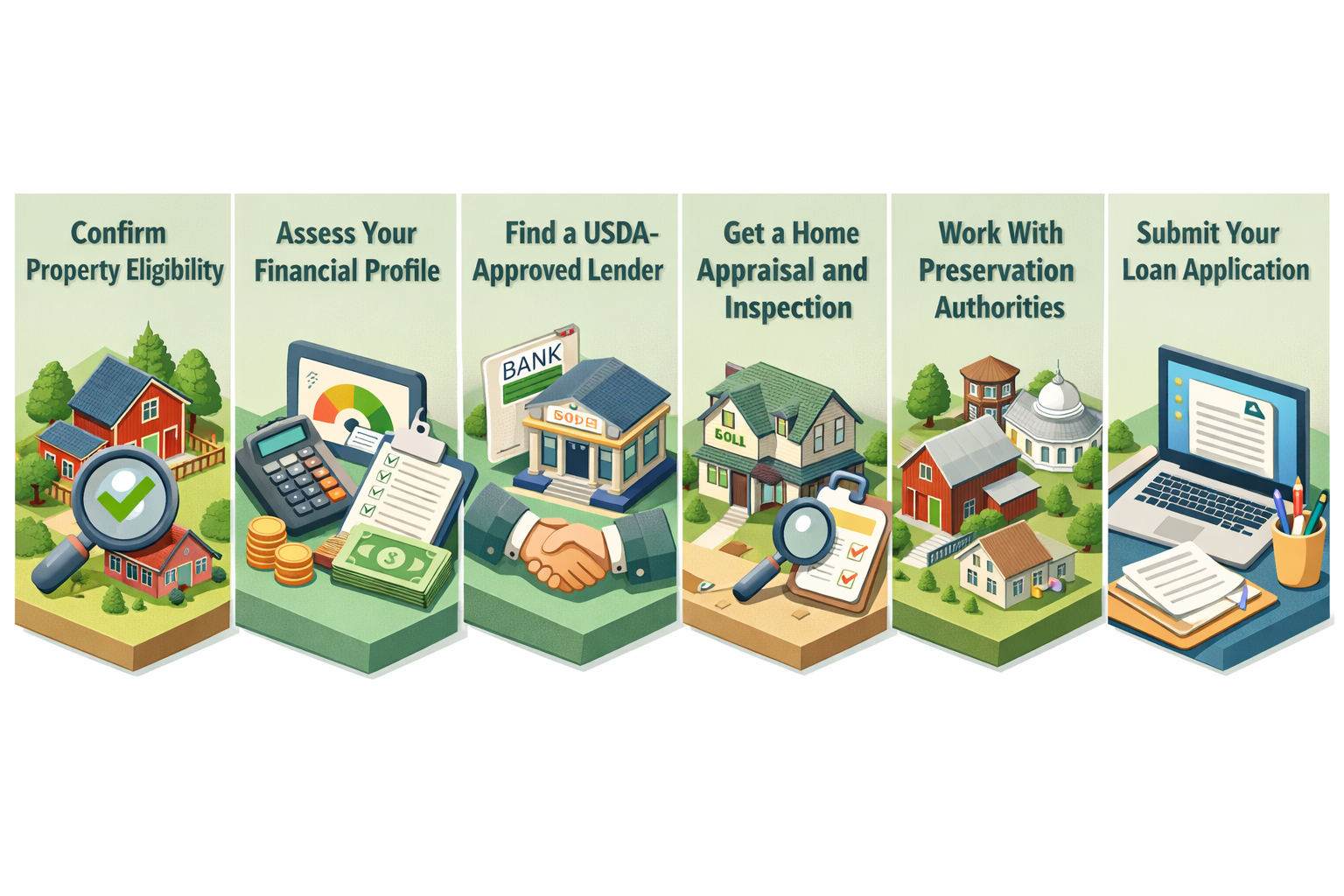
If you're ready to move forward, here's a practical overview of the steps typically involved in securing USDA financing for a historic home:
- Step 1 — Confirm Property Eligibility: Use the USDA's official eligibility map to verify that the property you're considering is located in a qualifying rural or suburban area. Also research whether the home is on any historic registry, as this may affect renovation requirements.
- Step 2 — Assess Your Financial Profile: Review your credit score, income, and existing debts. If your credit score is below 640, consider taking a few months to improve it before applying. Getting pre-qualified with a USDA-approved lender early in the process can give you a clearer picture of your borrowing capacity.
- Step 3 — Find a USDA-Approved Lender: Not all lenders offer USDA loan products. Search for lenders approved by the USDA to participate in the Guaranteed Loan program. Working with a lender experienced in both USDA financing and historic properties can be a significant advantage.
- Step 4 — Get a Home Appraisal and Inspection: A USDA-approved appraiser will assess the property's value and condition. For historic homes, it's also wise to hire a licensed home inspector who has experience evaluating older structures. Any required repairs may need to be completed before loan closing, or a repair escrow arrangement may need to be negotiated.
- Step 5 — Work With Preservation Authorities (If Applicable): If the property is listed on the National Register or sits in a historic district, contact your State Historic Preservation Office (SHPO) early. They can provide guidance on what renovation work is permissible and whether any tax incentives or grants are available to you.
- Step 6 — Submit Your Loan Application: Provide all required documentation — including income verification, tax returns, bank statements, and property details — to your lender. The lender will then submit the loan for USDA approval through the Guaranteed Underwriting System (GUS).
- Step 7 — Close on the Loan and Begin Preservation Work: Once approved, you'll close on the loan and take ownership of the property. From there, you can begin any planned renovation or preservation work, keeping in mind any applicable historic preservation standards.
Combining USDA Financing With Historic Tax Credits and Grants
One of the smartest strategies for buyers pursuing historic property preservation is layering multiple funding sources. USDA loans alone may not cover the full scope of a restoration project, particularly for homes with significant structural needs or those requiring historically sensitive renovations.
Here are some complementary funding options worth exploring:
- Federal Historic Tax Credit (HTC): This federal program offers a 20% tax credit for the certified rehabilitation of income-producing historic structures. While this may apply more directly to investor-owned or commercial historic properties, it's worth understanding how it might interact with your broader financial plan.
- State Historic Tax Credits: Many states offer their own historic tax credit programs that can complement the federal HTC. These programs vary significantly by state, so it's advisable to check with your State Historic Preservation Office for details.
- Community Development Block Grants (CDBG): Local governments and nonprofits sometimes administer CDBG funds that can be used for home repairs and historic preservation in qualifying areas — which often overlap with USDA rural eligibility zones.
- National Trust for Historic Preservation Grants: The National Trust offers several grant programs that may be available to homeowners preserving historically significant properties.
Combining these programs with a USDA loan could make an otherwise cost-prohibitive historic preservation project financially achievable. It's advisable to consult with a financial advisor or housing counselor who has experience in both rural lending and historic preservation funding.
Common Pitfalls to Avoid When Financing a Historic Rural Property
Navigating USDA loan requirements alongside historic preservation standards can be complex. Being aware of common mistakes may save you significant time, money, and frustration:
- Skipping the eligibility check: Don't assume a property qualifies just because it's in a rural-feeling area. Always verify using the USDA's official tools before investing significant time or money in the purchase process.
- Underestimating renovation costs: Historic homes can come with hidden issues that aren't immediately visible during a casual walkthrough. Budget conservatively and build in a contingency fund for unexpected repairs.
- Ignoring preservation standards: If a property is on a historic registry, making unauthorized alterations could jeopardize your eligibility for tax credits and may even create legal complications. Always consult with your SHPO before beginning renovation work.
- Choosing the wrong lender: Not all lenders are familiar with the nuances of both USDA loan programs and historic property financing. Selecting a lender with experience in both areas can make the process considerably smoother.
- Overlooking additional funding sources: Relying solely on your USDA loan to cover all costs may leave you short. Research grants, tax credits, and local preservation assistance programs early in the process.
Taking a proactive, well-informed approach to each of these areas can significantly improve your chances of successfully financing and preserving a historic home through USDA loan programs.
●Conclusion
Preserving a piece of history is one of the most rewarding things a homeowner can do — and it doesn't have to be financially out of reach. Understanding how to get a USDA loan for a historic property preservation project is a meaningful first step toward making that vision a reality. From confirming rural eligibility and meeting credit standards to working with preservation authorities and layering in tax credits or grants, there are multiple paths available to motivated buyers. The process may require patience and careful planning, but the opportunity to own and restore a piece of American history — with the help of accessible government-backed financing — is well worth the effort. Ready to explore your options? Connect with a USDA-approved lender today to take the first step toward your historic home journey.