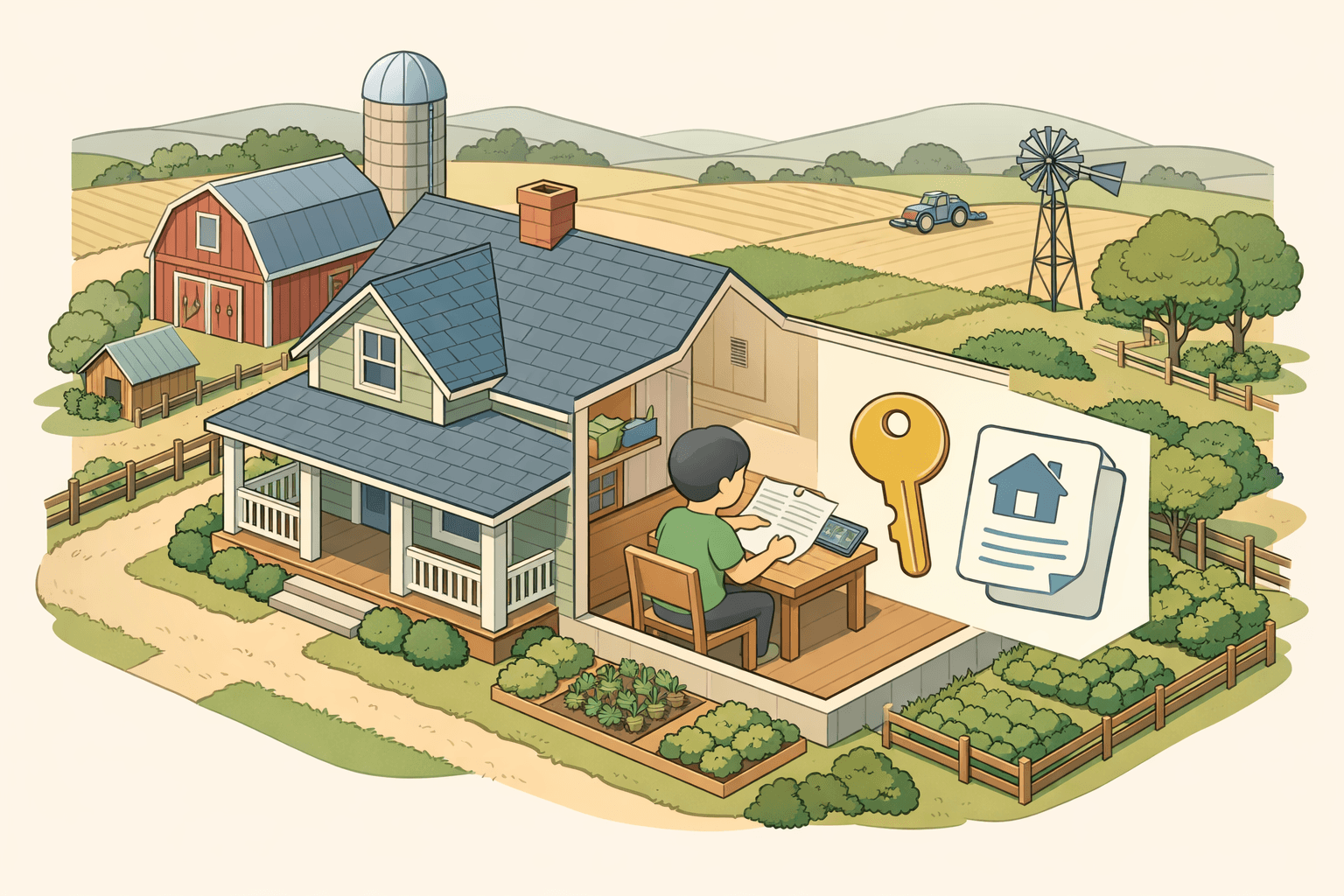
Inheriting farm land can feel like a tremendous gift — and it often is. But when you want to use that inherited property as the basis for a home purchase or refinance, the path forward may not be as straightforward as you'd expect. Many homebuyers and homeowners are surprised to discover that lenders treat agricultural and rural parcels differently than standard residential properties. If you're wondering how to get a conventional loan with inherited farm land, you're not alone. This guide walks you through the key steps, lender expectations, and practical strategies to help you move forward with confidence.
What Makes Inherited Farm Land Different From Other Properties
Conventional loans — those backed by Fannie Mae or Freddie Mac — are designed primarily for residential properties. When a property includes significant agricultural acreage, lenders must evaluate whether the home itself is the primary use of the land, or whether the farming operation takes center stage. This distinction matters a great deal during the underwriting process.
Inherited farm land often comes with unique characteristics that can complicate a conventional loan application. These may include:
- Large acreage: Conventional lenders typically prefer properties where the residential use is the dominant feature. Excessive acreage devoted to crop production or livestock may raise flags.
- Agricultural income on the title: If the farm generates income, lenders may classify it as a commercial or agricultural property rather than a residential one.
- Zoning and land classification: Farm land is often zoned agricultural, which may not meet conventional loan property eligibility standards without a careful review.
- Multiple parcels: Inherited estates sometimes include multiple legal parcels, which lenders may require to be consolidated before approving financing.
Understanding these nuances upfront can save you significant time and help you prepare a stronger loan application from the start.
Conventional Loan Requirements for Inherited Property
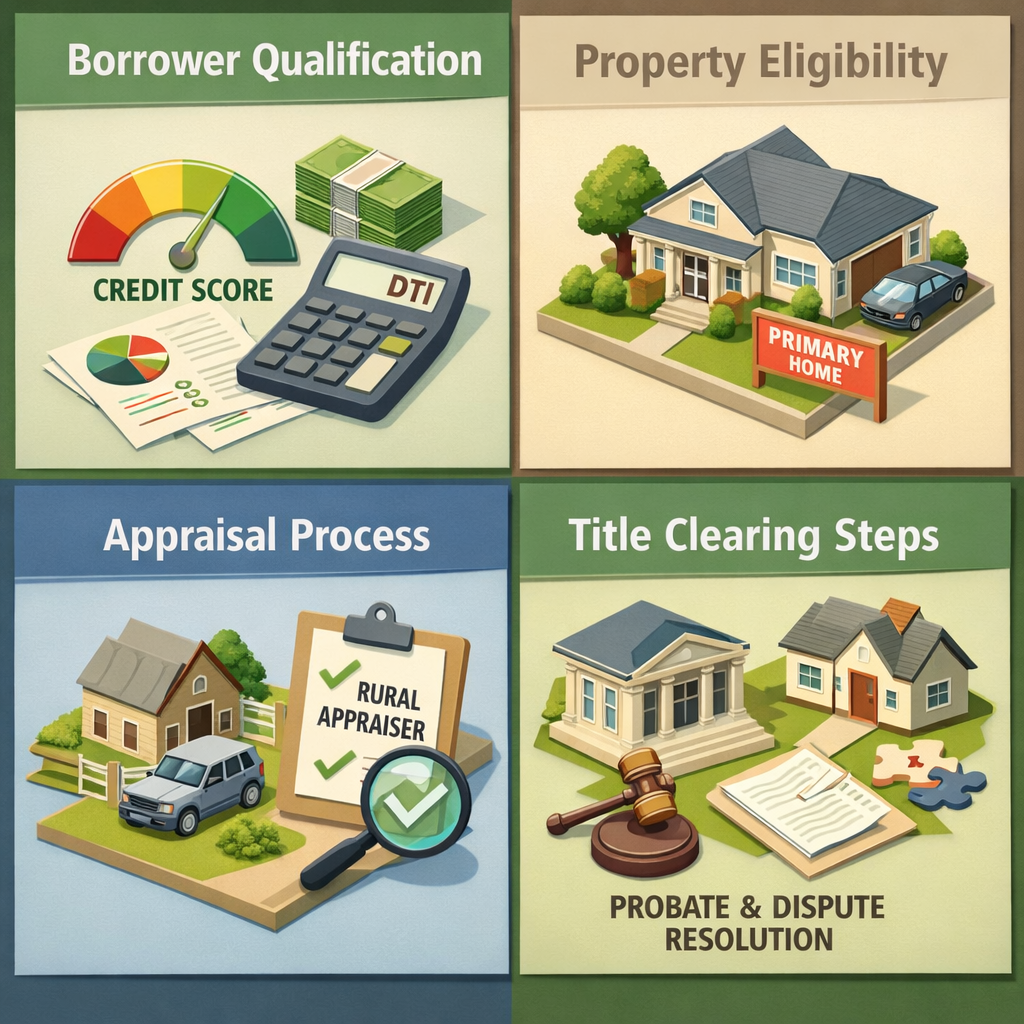
Meeting conventional loan requirements for inherited property involves satisfying both borrower qualifications and property eligibility standards. Let's break down what lenders typically look for on both fronts.
Borrower Qualification Standards
Your personal financial profile must meet conventional lending benchmarks regardless of what type of property you're financing. Lenders will generally evaluate:
- Credit score: Most conventional loan programs require a minimum credit score, often around 620, though a higher score may improve your rate and terms.
- Debt-to-income ratio (DTI): Lenders typically look for a DTI at or below 45%, though this can vary depending on compensating factors.
- Down payment: Conventional loans may allow as little as 3% to 5% down for primary residences, though properties with agricultural characteristics may require a higher down payment.
- Income documentation: Standard W-2 income, self-employment income, or even farm income may be considered, but it must be documented consistently.
Property Eligibility Considerations
Fannie Mae and Freddie Mac guidelines allow financing for rural properties, including those with some agricultural land, but the home must be the primary and highest-value feature of the property. Lenders will order an appraisal to confirm that the dwelling — not the farmland — drives the majority of the property's value. If the appraisal suggests otherwise, you may need to explore alternative loan products.
How to Clear the Title After Inheriting Farm Land
One of the most common obstacles when learning how to get a conventional loan with inherited farm land is establishing a clean, lendable title. Inherited property doesn't always transfer with a straightforward deed, especially when multiple heirs are involved or the estate was never formally probated.
Here are steps that can help you prepare the title for conventional financing:
- Probate the estate: If the land passed without going through probate, a lender may not recognize your ownership interest. Work with a real estate attorney to ensure the estate is properly settled.
- Resolve heir disputes: Co-heirs who haven't formally conveyed their interest to you may create a cloud on the title. A quitclaim deed from other heirs, or a buyout, is typically required.
- Address tax liens: Inherited farms may carry unpaid property taxes or estate tax obligations. These must generally be resolved before closing.
- Order a title search: A professional title search will uncover easements, encumbrances, or liens that could affect lender approval.
Taking the time to clean up the title is not optional — lenders will require title insurance, and most title companies won't issue a policy if significant clouds exist on the title.
Working With an Appraiser on Rural and Agricultural Properties
The appraisal process for farm land can be more involved than a standard residential appraisal. Conventional lenders require an appraisal that conforms to Fannie Mae or Freddie Mac guidelines, which means the appraiser must use comparable sales of similar rural or mixed-use properties.
Here's what to keep in mind when navigating the appraisal:
- Use a qualified rural appraiser: Not all residential appraisers are experienced with agricultural properties. Ask your lender to assign — or approve — an appraiser who has demonstrable experience with rural parcels.
- Understand the appraisal approach: For farm properties, appraisers may use a combination of the sales comparison approach and the income approach. If farm income significantly influences value, the lender may have concerns about residential eligibility.
- Acreage limits: While conventional guidelines don't always specify a hard acreage cap, some lenders apply internal overlays that limit how many acres can be included. Ask your lender about their specific property guidelines early in the process.
- Comparable sales availability: Rural markets often have fewer recent sales, which can make it harder for appraisers to find strong comps. This may affect the appraised value and your loan-to-value ratio.
A well-prepared appraisal that clearly establishes the residential nature of the property is often the linchpin of a successful conventional loan approval for inherited farm land.
Strategies to Strengthen Your Loan Application
Getting a conventional loan approved on inherited farm land may require a bit more preparation than a typical home purchase. The good news is that there are concrete steps you can take to improve your chances.
Separate the Residential Parcel
If the inherited estate consists of multiple legal parcels, consider working with a land surveyor and local planning office to separate the residential parcel from the agricultural acreage. Lenders are often more comfortable financing a clearly defined residential lot with an adjacent farm parcel held separately.
Reduce the Farm's Role in the Property Value
If farming operations currently dominate the property's income and value profile, scaling back or pausing active agricultural use before applying for a conventional loan may help the property qualify under residential guidelines.
Build a Strong Financial Profile
Since farm properties carry additional underwriting scrutiny, having a high credit score, low DTI, and solid reserves can help offset property-related concerns. Lenders may be more willing to work through property complexities when the borrower's financial standing is strong.
Shop Multiple Lenders
Not all lenders have the same internal overlays for rural or agricultural properties. Some mortgage companies and community banks may have more flexibility in their rural lending policies. Comparing loan offers from multiple lenders — including those who specialize in rural and agricultural financing — could open doors that a single lender may close.
When a Conventional Loan May Not Be the Right Fit
Even with the best preparation, some inherited farm properties may not qualify for conventional financing. In those cases, it's worth knowing about alternative loan options that might serve your needs.
- USDA Rural Development Loans: The USDA offers loan programs specifically designed for rural properties. If the farm is in an eligible rural area and you meet income requirements, a USDA loan could be an excellent alternative.
- Farm Service Agency (FSA) Loans: The USDA's Farm Service Agency offers loans targeted specifically at farmers and rural landowners. These programs may accommodate working farms more readily than conventional products.
- Portfolio Loans: Some local and community banks offer portfolio loans — loans they keep on their own books rather than selling to the secondary market. These lenders may have more flexibility with agricultural properties.
- Land Loans: If your primary goal is to hold and develop the land rather than finance a home on it, a land loan or agricultural mortgage may be more appropriate than a conventional residential loan.
Exploring these alternatives with a knowledgeable mortgage advisor can help you find the right product for your specific situation, especially when conventional guidelines create barriers.
●Conclusion
Navigating how to get a conventional loan with inherited farm land takes patience, preparation, and the right team of professionals in your corner. From clearing the title to working through the appraisal process, each step matters. The conventional loan requirements for inherited property may feel complex at first, but understanding what lenders look for — and taking proactive steps to meet those standards — puts you in a much stronger position. Whether you're planning to live on the property, rent it out, or preserve it as a family legacy, the right financing solution is out there. Speak with a knowledgeable mortgage advisor at LoanWise to explore your options and get personalized guidance tailored to your unique situation.