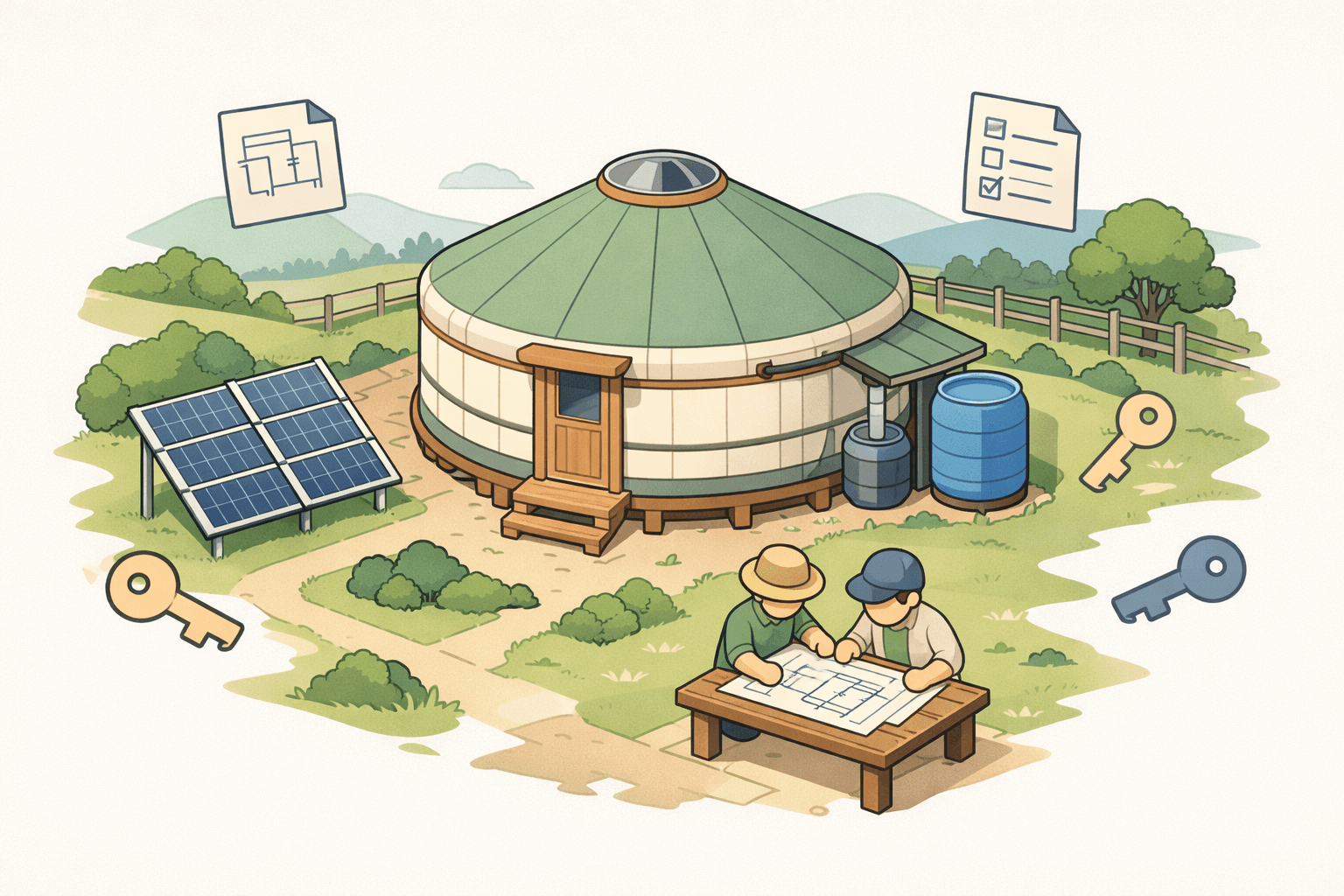
Yurts have come a long way from their nomadic roots. Today, they're being built as permanent, year-round residences on rural land — complete with solar power, rainwater collection systems, and composting waste solutions. It's an exciting lifestyle choice, but it raises a very practical question: how to get a construction loan for a yurt with off-grid utilities? The honest answer is that it's more complex than financing a traditional stick-built home, but it's far from impossible. With the right preparation, the right lender, and a clear understanding of what lenders are actually evaluating, many borrowers successfully secure financing for their off-grid yurt dreams. This guide walks you through exactly what you need to know.
Why Yurts Are Considered Non-Traditional Collateral
Before diving into the financing process, it helps to understand why lenders treat yurts differently from conventional homes. Most mortgage and construction loan products were designed with standard residential structures in mind — wood-frame or masonry homes connected to public utilities, built on permanent foundations, and appraised using comparable sales data from similar properties nearby.
Yurts don't always fit neatly into that framework. Depending on how they're built and permitted, a yurt may be classified as an accessory dwelling unit, a recreational structure, or even a temporary shelter by local zoning authorities. This classification directly affects whether a lender will treat it as real property — which is typically required to secure a traditional mortgage or construction loan.
Off-grid utilities add another layer of complexity. Lenders want assurance that the property has reliable access to water, power, and waste disposal. When those systems rely on solar panels, well water, or composting toilets rather than municipal connections, some lenders may view the property as higher risk or harder to resell in the event of a default. That said, the growing interest in sustainable living has pushed more specialty lenders to develop products for exactly these situations.
Understanding Construction Loan Basics Before You Apply
A construction loan is a short-term financing product that covers the cost of building a structure before permanent financing is put in place. Unlike a traditional mortgage, construction loans are typically disbursed in stages — often called "draws" — as work is completed and inspected. Interest is usually charged only on the amount drawn, not the full loan balance, which can help manage costs during the build.
There are two common structures you might encounter:
- Construction-to-permanent loans: These combine the construction phase and the long-term mortgage into a single product. Once the build is complete and the structure passes inspection, the loan converts to a permanent mortgage. This can simplify the process and reduce closing costs.
- Stand-alone construction loans: These cover only the build phase. Once construction is finished, you'd need to apply for a separate mortgage to pay off the construction loan. This involves two sets of closing costs but may offer more flexibility in choosing your permanent lender.
For yurt construction with off-grid utilities, a stand-alone construction loan followed by a portfolio mortgage may be a more realistic path, since many conventional lenders won't convert a construction loan into a permanent product for non-standard structures. It's worth speaking with multiple lenders early to understand which structure they offer and what restrictions apply.
How to Get a Construction Loan for a Yurt With Off-Grid Utilities: Key Lender Requirements
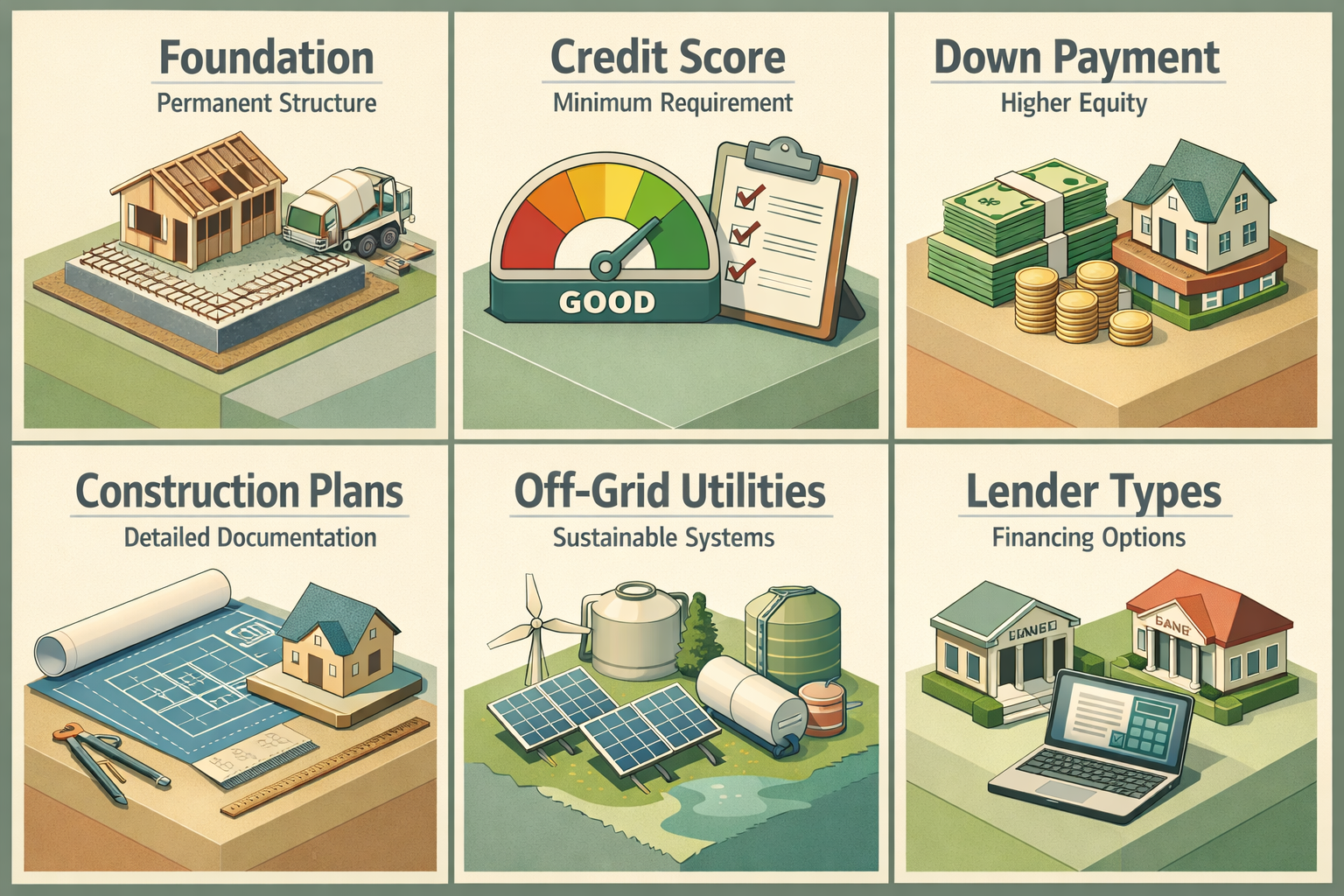
If you're researching how to get a construction loan for a yurt with off-grid utilities, one of the first things to understand is what lenders will typically want to see. While requirements vary by lender and loan type, most will look at several core factors.
Permanent Foundation and Local Permitting
One of the most important steps you can take is ensuring your yurt is built on a permanent foundation and permitted as a residential dwelling by your local jurisdiction. Many lenders — and appraisers — require this before they'll treat the structure as real property. A yurt on a concrete or pier-and-beam foundation with a certificate of occupancy is significantly easier to finance than one placed directly on the ground without permits.
Creditworthiness and Financial Strength
Lenders evaluating non-standard construction projects often apply stricter credit and financial requirements. You may need a credit score of at least 680 to 700, though some portfolio lenders may work with lower scores. A strong debt-to-income ratio — typically below 43% — and documented income history will also strengthen your application. If you're self-employed, expect to provide additional documentation such as two years of tax returns and profit-and-loss statements.
Larger Down Payment
Because off-grid yurts present more appraisal and resale uncertainty, lenders may require a larger down payment than they would for a conventional build — potentially 20% to 30% or more. A larger equity stake reduces the lender's risk and signals your commitment to the project.
Detailed Construction Plans and Budget
You'll likely need to submit a comprehensive construction plan, including architectural drawings, a materials list, and a line-item budget. For off-grid utilities, document your plans for power generation (such as solar), water sourcing (such as a permitted well), and waste disposal (such as a septic system or approved composting solution). Lenders want to see that your off-grid systems meet local health and safety codes.
Where to Find Lenders Willing to Finance Off-Grid Yurt Construction
Conventional banks and credit unions that follow standard Fannie Mae or Freddie Mac guidelines often can't finance yurt construction because these structures don't meet conventional appraisal standards. However, that doesn't mean financing is out of reach. Here are the most promising avenues to explore:
- Portfolio lenders: These are banks, credit unions, or private lenders that keep loans on their own books rather than selling them to the secondary market. Because they aren't bound by Fannie Mae or Freddie Mac guidelines, they have more flexibility to approve non-standard structures. Local community banks and credit unions in rural areas may be especially open to yurt and alternative dwelling financing.
- USDA Construction Loans: If your land is in a qualifying rural area, the USDA Single Family Housing Guaranteed Loan Program could be worth exploring. USDA loans have specific property eligibility requirements, but some rural alternative dwellings may qualify if they meet habitability standards. Off-grid utilities may be acceptable if they meet local codes.
- Private and hard money lenders: For borrowers who can't qualify through traditional channels, private lenders may offer construction financing with less stringent property requirements. These loans typically carry higher interest rates and shorter terms, so they're often best used as a bridge to longer-term financing once the build is complete and the property can be appraised.
- Land equity as leverage: If you already own the land where the yurt will be built, that equity may help you secure a construction loan or a home equity line of credit (HELOC) tied to the land. Some lenders will use the land as collateral to fund construction costs.
The Role of Appraisals in Off-Grid Yurt Financing
Appraisals are one of the biggest hurdles in off-grid yurt construction loan financing. Because yurts are uncommon, appraisers may struggle to find comparable sales — known as "comps" — in your area. Without strong comps, it's difficult to assign a market value to the completed property, which directly affects how much a lender will be willing to loan.
Here are a few strategies that may help:
- Work with an experienced appraiser: Seek out appraisers who have experience with alternative or rural dwellings. Your lender may need to go outside their standard appraiser panel to find someone qualified to evaluate a yurt.
- Provide supporting documentation: Sales records of comparable alternative dwellings, tiny homes, or rural recreational properties in your region can help an appraiser build a case for value. The more data you provide, the better positioned the appraiser is to establish a credible valuation.
- Prioritize quality construction: Higher-quality materials, professional installation of off-grid systems, and strong building permits all contribute to a more defensible appraisal. An appraiser is more likely to assign strong value to a well-built, code-compliant yurt than a minimally constructed one.
It's worth noting that appraisal outcomes can vary significantly depending on your location. In areas where alternative housing is more common — such as parts of the Pacific Northwest, Colorado, or New England — comps may be easier to find than in regions where yurt ownership is rare.
Practical Steps to Strengthen Your Loan Application
Getting approved for a non-traditional construction loan often comes down to how well-prepared your application is. Here are actionable steps that could improve your odds:
- Consult your local zoning office early: Before approaching lenders, confirm that your land is zoned for residential use and that a yurt can be permitted as a permanent dwelling. Get any approvals in writing.
- Hire a licensed contractor: Many lenders require that construction be performed by a licensed general contractor rather than an owner-builder. Even if owner-builder loans are available in your state, a licensed contractor gives lenders greater confidence in the project's completion.
- Prepare a thorough project package: Assemble your construction plans, permits, contractor bids, off-grid system specifications, and land ownership documents into a single, organized package. A complete, professional application signals to lenders that you're a serious and capable borrower.
- Build your financial profile: Pay down existing debts, check your credit report for errors, and avoid opening new credit accounts in the months before applying. A cleaner financial picture could make a meaningful difference with skeptical underwriters.
- Be transparent about the off-grid systems: Don't downplay or omit the off-grid nature of your utilities. Present them as a feature — backed by engineering specs, local permits, and maintenance plans — rather than a risk factor.
●Conclusion
Financing a yurt with off-grid utilities is genuinely one of the more complex challenges in the alternative housing space. Traditional lenders may hesitate, appraisers may struggle to find comps, and zoning rules can create unexpected roadblocks. But the path forward does exist — and it starts with education, preparation, and finding the right lending partner.
Understanding how to get a construction loan for a yurt with off-grid utilities means recognizing that this is a niche financing situation that rewards borrowers who do their homework. By securing proper permits, working with portfolio or specialty lenders, presenting a detailed construction plan, and building a strong financial profile, you put yourself in the best possible position to turn your off-grid vision into a financed reality.
If you're ready to explore your options, speaking with a knowledgeable loan advisor who has experience with alternative and rural property financing could be your most valuable first step. At LoanWise, we're here to help you find the financing path that fits your unique goals — no matter how unconventional the build.