
Running a small business often means walking a financial tightrope — especially when it comes to keeping shelves stocked and orders fulfilled. Whether you're a retailer preparing for a seasonal rush, a wholesaler scaling up supply, or an e-commerce entrepreneur managing rapid growth, having enough inventory on hand can make or break your revenue. But purchasing stock in bulk requires capital that many businesses simply don't have sitting idle. That's where inventory financing comes in. Understanding how to get a business loan for inventory purchase could be one of the most important steps you take toward stabilizing cash flow and growing your operation sustainably.
Why Inventory Financing Matters for Small Business Owners
Inventory is often a business's largest asset — and its biggest ongoing expense. For many small business owners and entrepreneurs, the gap between paying suppliers and collecting revenue from customers can stretch weeks or even months. Without sufficient working capital for inventory purchase, businesses risk stockouts, missed sales opportunities, and strained supplier relationships.
Inventory financing helps bridge that gap. Rather than depleting cash reserves or turning down large purchase orders, business owners can use a dedicated loan or credit facility to buy the stock they need now and repay it as products sell. This approach may help businesses maintain momentum without sacrificing liquidity.
Beyond day-to-day operations, inventory financing can support strategic growth. For example, if a supplier offers a significant bulk discount, having access to business loans for stock allows you to capitalize on that deal without draining your operating funds. It's not just about surviving the lean months — it's about positioning your business to grow confidently.
Common Types of Inventory Financing Options for Small Business
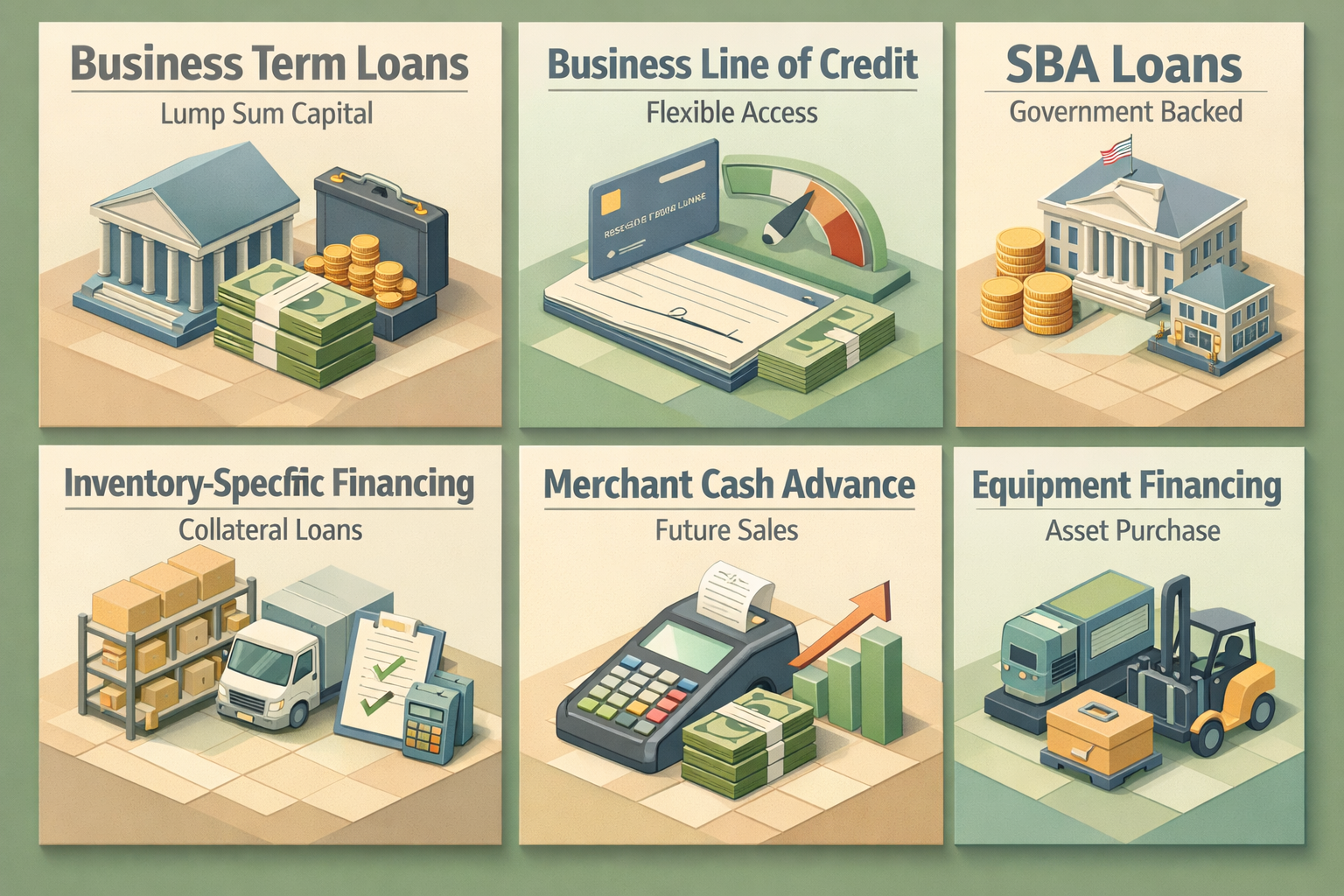
Before diving into the application process, it helps to understand the landscape of inventory financing options for small business. Not every loan product is the same, and choosing the right one depends on your business model, cash flow cycles, and credit profile.
Business Term Loans
A traditional term loan provides a lump sum of capital that you repay in fixed installments over a set period. This option may work well for businesses that need to make a one-time, large inventory purchase — such as stocking up before a holiday season or fulfilling a major wholesale contract. Repayment terms and interest rates will vary by lender, business financials, and creditworthiness.
Business Line of Credit
A revolving line of credit is often considered one of the most flexible inventory financing tools. You draw funds as needed, repay what you use, and borrow again — much like a credit card but typically with higher limits and lower rates. This could be an excellent choice for businesses with fluctuating inventory needs, as it offers ongoing access to working capital for inventory purchase without requiring a new loan application each time.
SBA Loans
The U.S. Small Business Administration offers several loan programs that may be used for inventory purposes. SBA 7(a) loans, in particular, are commonly used for working capital and general business expenses, including stock purchases. These loans often feature competitive rates and longer repayment terms, though the application process can be more rigorous and time-consuming than other options.
Inventory-Specific Financing
Some lenders offer loans specifically structured around inventory as collateral. In these arrangements, the inventory itself secures the loan, which may make it easier to qualify even if your business has limited credit history. However, lenders will typically require detailed inventory records and may advance only a percentage of the inventory's appraised value.
Merchant Cash Advance
A merchant cash advance (MCA) provides upfront capital in exchange for a percentage of future sales. While this option may offer fast access to funds, it can carry higher effective costs compared to traditional loans. Business owners should carefully review terms before proceeding with an MCA for inventory purchases.
How to Get a Business Loan for Inventory Purchase: A Step-by-Step Approach
Knowing how to get a business loan for inventory purchase requires more than simply filling out an application. Lenders evaluate several factors when deciding whether to approve your request and at what terms. Here's a practical walkthrough to help you prepare.
Step 1: Determine How Much You Actually Need
Start by calculating your inventory funding needs precisely. Review your sales history, upcoming demand projections, and current stock levels. Borrowing too little may leave gaps, while borrowing more than necessary increases your debt burden. A clear inventory plan will also strengthen your loan application by demonstrating that you've done your homework.
Step 2: Assess Your Business Credit Profile
Lenders will review both your personal and business credit scores. A stronger credit profile typically unlocks better rates and terms. If your business is relatively new or your credit score needs improvement, consider taking steps to build business credit before applying — such as opening a dedicated business bank account, paying vendor invoices on time, and establishing trade credit with suppliers.
Step 3: Organize Your Financial Documents
Most lenders will request a range of financial documents, which may include:
- Business bank statements (typically 3–12 months)
- Profit and loss statements
- Balance sheets
- Tax returns (business and personal)
- Accounts receivable and payable records
- An inventory valuation or purchase order details
Having these ready before you apply can speed up the underwriting process and signal to lenders that your business is well-managed.
Step 4: Choose the Right Lender
Different lenders serve different business profiles. Traditional banks and credit unions may offer the most competitive rates, but often have stricter requirements. Online lenders and alternative financing companies may be more flexible but could charge higher fees. SBA-approved lenders are a strong option if you qualify and can afford a longer approval timeline. Compare multiple offers before committing.
Step 5: Submit Your Application and Negotiate Terms
Once you've selected a lender, submit your completed application along with supporting documents. Be transparent about how funds will be used — lenders generally respond well to specific, well-reasoned use cases. If approved, don't hesitate to negotiate on interest rates, repayment schedules, or prepayment penalties. Even small improvements in terms can add up to meaningful savings over the life of the loan.
Key Qualification Factors Lenders Typically Review
Understanding what lenders look for can help you position your application for success. While criteria vary by lender and loan type, most commercial borrowers will encounter some version of the following evaluation factors.
Time in Business
Many lenders prefer businesses that have been operating for at least one to two years. Startups may face more limited options, though certain SBA microloan programs and alternative lenders may be more accommodating to newer businesses.
Annual Revenue
Lenders want to see that your business generates enough revenue to comfortably service the debt. Minimum revenue thresholds vary widely, so it's worth checking each lender's specific requirements before spending time on an application.
Debt Service Coverage Ratio
This ratio measures your business's ability to cover loan payments from its operating income. A ratio above 1.25 is often considered healthy by many traditional lenders, though some may accept lower figures depending on other strengths in your application.
Collateral
For inventory-backed loans, the inventory itself may serve as collateral. For other loan types, lenders might require business assets, equipment, or even a personal guarantee from the business owner. Understanding collateral requirements upfront helps you plan accordingly.
Industry Type
Some lenders specialize in particular industries or avoid others they consider higher risk. Retail, food service, and seasonal businesses may face additional scrutiny due to the variable nature of their inventory turnover. Being able to demonstrate consistent sales patterns can help offset concerns.
Smart Strategies to Improve Your Approval Chances When Applying for How to Get a Loan for Retail Inventory
Learning how to get a loan for retail inventory isn't just about meeting minimum requirements — it's about presenting your business in the strongest possible light. Here are several practical strategies that may help improve your odds of approval and secure more favorable terms.
Strengthen Your Business Plan
A well-documented business plan that outlines your inventory strategy, target market, sales projections, and repayment plan can go a long way with lenders — especially if your credit history is limited. It demonstrates that you've thought critically about how the loan will generate returns.
Build and Monitor Business Credit
Your business credit score is separate from your personal score and can be built over time through consistent financial behavior. Registering with business credit bureaus, paying bills on time, and keeping credit utilization low are all steps that may gradually improve your profile.
Consider a Co-Signer or Partner Guarantee
If your credit or financials aren't quite strong enough on their own, some lenders may accept a co-signer or a personal guarantee from a business partner with stronger financials. This reduces the lender's risk and could improve your chances of approval.
Start with Smaller Loan Amounts
If you're new to business borrowing, starting with a smaller loan amount that you can comfortably repay may help you build a track record with lenders. Over time, a history of on-time repayments can open doors to larger facilities with better terms.
Shop Around and Compare Offers
Don't accept the first offer you receive. Different lenders may assess your application differently, and the variation in rates, fees, and terms can be significant. Using a lending marketplace or working with a broker who understands small business financing may help you identify options you might not find on your own.
Understanding the True Cost of Business Loans for Stock Purchases
When evaluating business loans for stock, it's essential to look beyond the headline interest rate. The true cost of borrowing includes several components that can significantly affect how much you end up paying.
Annual Percentage Rate (APR) vs. Factor Rate
Traditional loans are typically quoted with an APR, which reflects the annualized cost of borrowing including fees. However, some alternative lending products — such as merchant cash advances — use a factor rate instead, which can make it harder to compare costs directly. When in doubt, ask the lender to express the total repayment amount in dollar terms so you can make an informed comparison.
Origination Fees and Closing Costs
Many lenders charge origination fees ranging from a small percentage of the loan amount to a flat fee. Some may also charge processing, underwriting, or documentation fees. Always ask for a full fee disclosure before signing any agreement.
Prepayment Penalties
Some loan products penalize borrowers for paying off the balance early. If you anticipate the ability to repay quickly — for example, after a strong sales season — look for loans that allow early repayment without penalty.
Repayment Structure and Cash Flow Impact
Daily or weekly repayment schedules, common with some alternative lenders, can put significant strain on cash flow even if the total cost seems manageable. Monthly repayment structures may be easier to plan around, particularly for businesses with monthly billing cycles or seasonal revenue patterns.
●Conclusion
Securing the right financing to keep your shelves stocked and your business moving forward is well within reach — but it does require preparation, research, and a clear understanding of your options. Whether you choose a term loan, a line of credit, an SBA program, or inventory-specific financing, the key is matching the product to your business's actual needs and repayment capacity. By taking the time to strengthen your credit profile, organize your financials, and compare lenders carefully, you'll be in a much stronger position to secure favorable terms. If you're ready to explore your inventory financing options, LoanWise is here to help you connect with the right lending solutions for your small business goals.