
Navigating the mortgage process after a job change or layoff can feel overwhelming, especially when your income looks different on paper than it did before. If you've recently received a severance package or taken a 401k withdrawal, you might be wondering how those funds affect your ability to qualify for a home loan. The good news is that understanding how to calculate DTI with severance package and 401k withdrawal income can give you a real advantage when approaching lenders. In this guide, we'll break down exactly what debt-to-income ratio means, how these non-traditional income sources are treated, and what steps you can take to put your best foot forward during the mortgage approval process.
What Is Debt-to-Income Ratio and Why It Matters for Homebuyers
Your debt-to-income ratio, commonly known as DTI, is one of the most important numbers a mortgage lender will look at when evaluating your loan application. It's a simple calculation that compares your total monthly debt obligations to your gross monthly income. The lower your DTI, the more financially flexible you appear to a lender — and the more likely you are to receive a favorable loan decision.
To calculate your DTI, divide your total monthly debt payments by your gross monthly income and multiply by 100 to get a percentage. For example, if your monthly debts total $2,000 and your gross monthly income is $6,000, your DTI would be approximately 33%. Most conventional lenders prefer a debt-to-income ratio at or below 43%, though some loan programs may allow higher ratios with compensating factors.
There are two types of DTI that lenders typically evaluate:
- Front-end DTI: This covers only your housing-related expenses, including your projected mortgage payment, property taxes, homeowner's insurance, and any HOA fees.
- Back-end DTI: This includes all monthly debt obligations — housing costs plus car loans, student loans, credit card minimum payments, and any other recurring debts.
When your income comes from non-traditional sources like a severance package or a 401k withdrawal, lenders must determine whether those funds qualify as countable income for DTI purposes. This is where many borrowers run into confusion, and it's well worth understanding the nuances before you apply.
How Lenders Treat Severance Pay When Calculating Your DTI
Severance pay is a lump-sum or structured payment made by an employer when an employee is laid off or separated from their position. While receiving severance may provide short-term financial relief, lenders typically view it with caution when it comes to qualifying income for a mortgage. The core issue is continuity — mortgage lenders generally want to see income that is stable, recurring, and likely to continue for at least the next three years.
Because severance is usually a one-time payment rather than an ongoing income stream, most lenders will not count it as qualifying income for DTI calculations under conventional guidelines. However, there are some important exceptions and strategies worth knowing:
- Documented continuation: If your severance is being paid out in regular installments over an extended period — similar to a salary continuation agreement — some lenders may treat it more like recurring income, provided the payments are documented and expected to continue.
- Asset depletion method: Some lenders, particularly those offering non-QM or portfolio loan products, may allow borrowers to convert documented liquid assets, including severance funds deposited into a bank account, into a monthly income figure using an asset depletion calculation.
- Reserves consideration: Even when severance doesn't count as qualifying income, having those funds in a verified bank account may strengthen your application by demonstrating strong financial reserves.
It's worth speaking directly with a loan officer about how your specific severance arrangement is structured, since lender interpretations may vary. A salary continuation agreement, for instance, may carry more weight than a single lump-sum deposit.
Understanding How 401k Withdrawals Factor Into Debt-to-Income Calculations
A 401k withdrawal introduces its own set of complexities when you're trying to qualify for a mortgage. Whether you've taken an early withdrawal, a hardship distribution, or are receiving regular distributions as part of retirement income, each scenario is treated differently by lenders — and they all affect your debt to income ratio severance 401k picture in different ways.
Regular Retirement Distributions
If you're at or near retirement age and taking regular, scheduled distributions from your 401k, lenders are generally more willing to count this as qualifying income. To use this income, you'll typically need to show documentation such as award letters or recent distribution statements, and lenders may want to see evidence that the distributions are expected to continue for at least three years. The income used for DTI is usually the gross amount before taxes are deducted.
Early Withdrawals and One-Time Distributions
Early 401k withdrawals — generally those taken before age 59½ — are treated much like severance payments. Since they're typically one-time events rather than recurring income, most conventional lenders will not count them as qualifying income for DTI purposes. Additionally, early withdrawals are often subject to a 10% penalty plus income taxes, which reduces the net value of those funds considerably.
Using 401k Assets Through Asset Depletion
One approach that may help borrowers with substantial 401k balances is asset depletion, also called asset dissipation. Under this method, a lender takes a percentage of your eligible retirement account balance and divides it by the loan term in months to arrive at a monthly income figure. For example, if you have $360,000 in a 401k and the lender uses 70% of that balance (to account for potential taxes and penalties) over a 360-month loan term, that could generate an imputed monthly income of $700. Guidelines vary significantly between lenders and loan programs, so it's important to ask about this option specifically.
Step-by-Step Guide: How to Calculate DTI With Severance Package and 401k Withdrawal
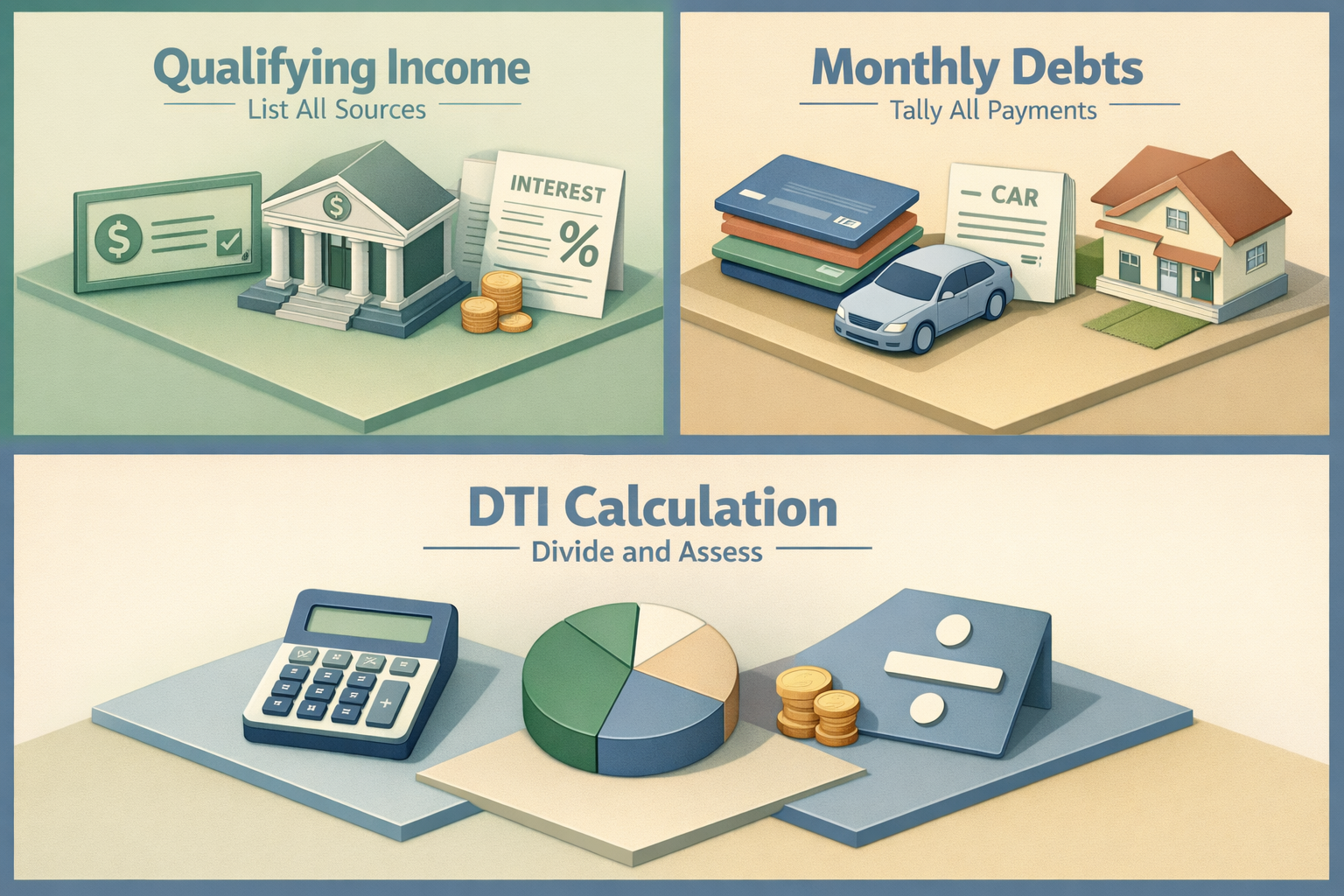
Now that you understand how lenders view these income types, let's walk through how to calculate DTI with severance package and 401k withdrawal income in a practical, step-by-step way. Keep in mind that actual lender guidelines may differ, so this is a general framework to help you prepare.
Step 1: Identify Your Qualifying Monthly Income
Start by listing all income sources that a lender is likely to count. This may include:
- New employment income, if you've started a new job after your separation
- Regular 401k or retirement distributions, if applicable
- Social Security or pension income
- Rental income from investment properties
- Severance continuation payments, if structured as a salary replacement
Do not include one-time lump sums, early 401k withdrawals, or other non-recurring amounts unless your lender specifically allows asset depletion calculations for those funds.
Step 2: Add Up Your Monthly Debt Obligations
Next, tally all monthly debt payments that will appear on your credit report or be counted by the lender. This typically includes:
- Minimum credit card payments
- Auto loan payments
- Student loan payments
- Personal loan installments
- Child support or alimony obligations
- Your proposed new mortgage payment (principal, interest, taxes, insurance, and HOA)
Step 3: Divide and Assess
Divide your total monthly debts by your total qualifying monthly income. Multiply by 100 to express it as a percentage. Compare that figure to your target loan program's DTI limits. If your DTI is higher than desired, consider paying down existing debts, exploring asset depletion income, or waiting until new employment income is documented before applying for a mortgage.
Common Mistakes Borrowers Make With Non-Traditional Income Sources
When your income picture is more complex, there are a few common pitfalls that can trip up even financially prepared borrowers. Being aware of these mistakes ahead of time can save you considerable stress during the underwriting process.
- Assuming all income counts: Not every dollar that flows into your bank account qualifies as income for mortgage purposes. Lenders follow specific guidelines — often tied to Fannie Mae, Freddie Mac, FHA, or VA standards — that define what counts. A deposit from a severance check or 401k withdrawal will likely be scrutinized closely.
- Failing to document the source of funds: Large deposits in your bank account will raise questions during underwriting. Be prepared to provide a paper trail showing the origin of any severance funds, 401k withdrawals, or other non-payroll deposits. Missing documentation can delay or derail your loan approval.
- Not accounting for taxes and penalties: An early 401k withdrawal may look substantial on paper, but after the 10% early withdrawal penalty and applicable income taxes, the actual net amount could be significantly lower. Make sure your financial planning accounts for these reductions.
- Applying too soon after a layoff: Some lenders may want to see a gap between employment separation and a new income source being fully established before they count it. Timing your application strategically can make a meaningful difference.
- Overlooking non-QM lending options: If traditional lenders won't work with your income situation, non-QM lenders and portfolio lenders may offer more flexible underwriting guidelines. These products are often designed for borrowers with non-traditional income profiles.
Tips to Improve Your Mortgage Approval Odds After a Job Transition
If you're in the middle of a career transition and still hoping to buy or refinance a home, there are several practical steps you can take to strengthen your position with lenders.
Start a New Job Before Applying
If you've already secured new employment, lenders will likely be able to use your new salary as qualifying income once you can document it — typically with offer letters and, in some cases, one or two pay stubs. The sooner you can show stable, recurring employment income, the stronger your DTI will look.
Reduce Existing Debts
Using a portion of your severance funds to pay down credit card balances or eliminate small loans could lower your monthly debt obligations significantly, helping to bring your DTI into a more favorable range without changing your income at all.
Build Your Reserves
Even when lenders won't count severance or 401k funds as qualifying income, having verified reserves — money in the bank beyond your down payment and closing costs — can act as a compensating factor that makes underwriters more comfortable with your application.
Work With an Experienced Loan Officer
Not all lenders will handle your situation the same way. Working with a loan officer who has experience with non-traditional income scenarios can help you identify the right loan program, present your finances in the most favorable light, and avoid unnecessary roadblocks during underwriting.
●Conclusion
Understanding how to calculate DTI with severance package and 401k withdrawal income isn't always straightforward, but it's absolutely manageable with the right knowledge and preparation. The key takeaway is that lenders prioritize stable, recurring income — so one-time lump sums typically won't boost your qualifying income on their own. However, strategies like asset depletion, debt reduction, and documenting salary continuation agreements may open more doors than you'd expect. If you're navigating a job transition and still have homeownership goals in sight, consider speaking with a knowledgeable lending professional who can help you map out a clear path forward based on your specific financial picture. Your situation may be more workable than you think.