
If you've recently received a severance package or you're currently in a student loan deferment period, you might be wondering how these financial situations affect your ability to qualify for a mortgage. You're not alone. Many homebuyers and refinancers find themselves in exactly this position — and it's a genuinely complex one. Understanding how to calculate DTI with recent severance package and student loan deferment could be the difference between a loan approval and an unexpected denial. In this guide, we'll walk you through the fundamentals of debt-to-income ratio calculations, explain how lenders typically treat severance income and deferred student loans, and share strategies to help you put your best financial foot forward.
What Is DTI and Why Does It Matter for Mortgage Approval
Your debt-to-income ratio, commonly referred to as DTI, is one of the most important numbers a mortgage lender will look at when evaluating your loan application. In simple terms, DTI measures how much of your gross monthly income goes toward paying debts each month. Lenders use it to assess whether you can comfortably take on a new mortgage payment without being financially overextended.
DTI is typically expressed as a percentage and calculated using this straightforward formula:
- Front-end DTI: Monthly housing expenses (principal, interest, taxes, insurance) divided by gross monthly income
- Back-end DTI: All monthly debt obligations (housing + credit cards + car loans + student loans + other debts) divided by gross monthly income
Most conventional loan programs prefer a back-end DTI of 43% or lower, though some programs may allow higher ratios depending on compensating factors like strong credit or significant cash reserves. FHA loans may also permit higher DTI thresholds in certain circumstances. The lower your debt-to-income ratio, the stronger your loan application generally looks to an underwriter.
It's worth noting that both components of the formula — your income and your debts — must be verified with documentation. That's where things can get complicated when you have a recent severance package or deferred loans on your record.
How Lenders View Severance Pay as Income
Receiving a severance package after a layoff can feel like a financial lifeline, but it's important to understand how mortgage lenders typically treat it — because it may not count the way you'd expect. Most lenders view severance pay with caution, primarily because it represents a one-time, non-recurring payment rather than stable, ongoing employment income.
In most cases, lenders will not count severance pay as qualifying income for DTI purposes. Their concern is straightforward: once the severance runs out, what income will support the mortgage payment? For this reason, underwriters generally want to see evidence of a new job or a reliable income stream before approving a loan. However, there are a few nuances worth knowing:
- If you've already started a new job: Lenders will typically use your new employment income to qualify you. Some may require at least one pay stub, while others might want a 30-day history.
- If you're still between jobs: Qualifying for a mortgage becomes significantly harder. Some lenders may consider the severance as a compensating factor — showing you have reserves — but it's unlikely to be counted as qualifying income on its own.
- Self-employed or contract transitions: If the severance bridges a transition to self-employment, lenders often require a two-year self-employment history before that income can be used for qualification.
The bottom line is that severance pay might help demonstrate that you have cash reserves, which can strengthen your application, but it generally won't directly lower your DTI by boosting your qualifying income. Speaking with a mortgage professional early in your job transition can help you understand the timing of your application.
Understanding Student Loan Deferment in the DTI Equation
Student loan deferment means you're temporarily not required to make payments on your loans — typically because you're in school, facing financial hardship, or in a grace period after graduation. While this might seem like it would help your DTI by removing a monthly obligation, the reality is more nuanced when it comes to mortgage qualification.
Different loan programs handle deferred student loans differently, and this is a critical detail to understand as part of the debt-to-income ratio calculation for severance pay and student loans.
Conventional Loan Guidelines
For conventional loans backed by Fannie Mae or Freddie Mac, lenders are generally required to include a payment amount for deferred student loans in your DTI calculation — even if you're currently making no payments. If the actual future payment is known, lenders may use that figure. If not, they may calculate a hypothetical payment based on a percentage of the outstanding loan balance.
FHA Loan Guidelines
FHA guidelines have historically required lenders to include a payment equal to a percentage of the outstanding student loan balance in the DTI calculation when no payment is currently due. The specific percentage used may vary based on current FHA policy updates, so it's wise to confirm the current rule with your lender.
VA and USDA Loan Guidelines
VA loan guidelines may allow lenders to exclude deferred student loan payments from DTI if the deferment extends a certain number of months beyond closing — though policies can evolve. USDA loans also have their own specific treatment of deferred debt. Each program has its own ruleset, so consulting directly with a loan officer familiar with your target program is strongly recommended.
The key takeaway is this: just because you're not paying doesn't mean the lender ignores it. Your deferred student loans could still be factored into your back-end DTI in a meaningful way.
How to Calculate DTI With Recent Severance Package and Student Loan Deferment Step by Step
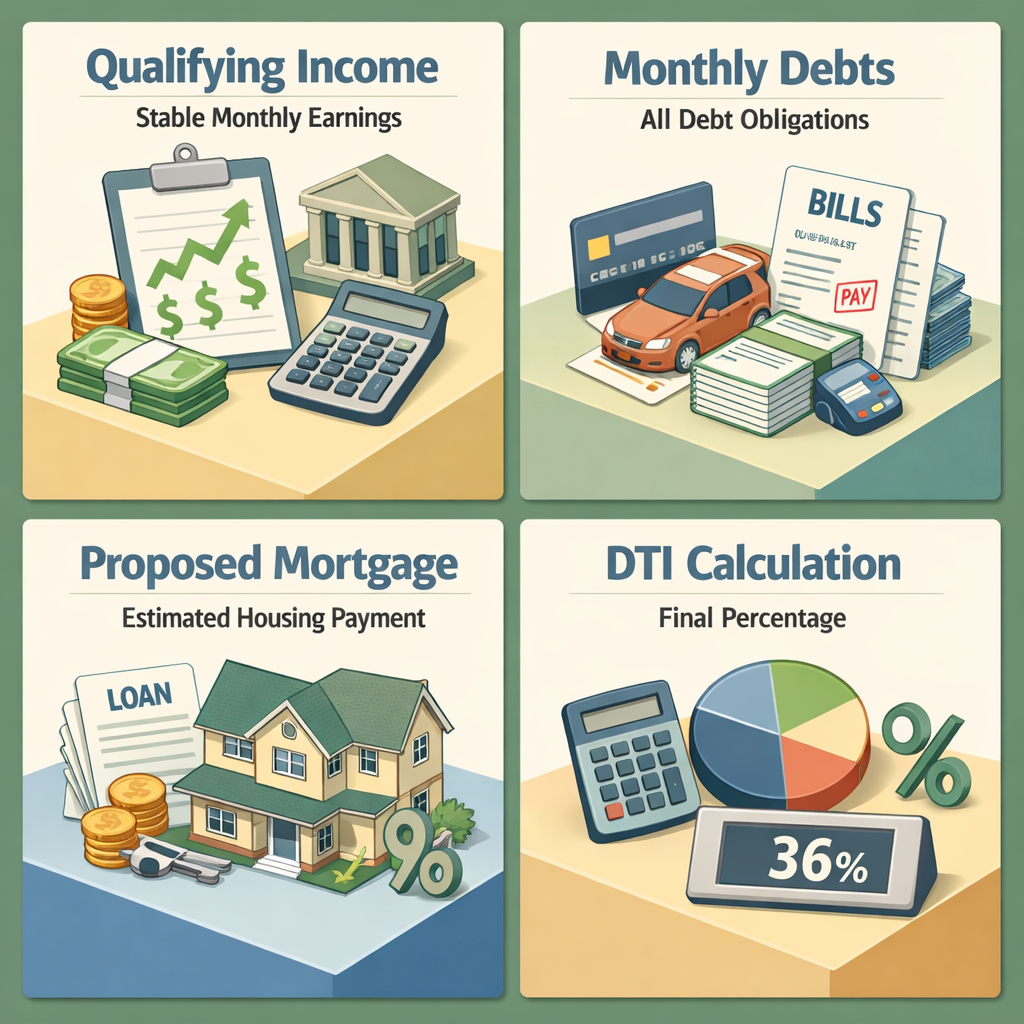
Now that we've covered how lenders view each piece separately, let's look at how to calculate DTI with recent severance package and student loan deferment in a practical, step-by-step way. This will help you estimate where you stand before you even speak with a lender.
Step 1: Determine Your Qualifying Monthly Income
Start with your verifiable, stable gross monthly income. If you've started a new job, use your new salary. Do not include your severance payment as income unless a lender specifically tells you they will consider it — and even then, verify this in writing. If you're still between jobs, your qualifying you for a mortgage income may be limited or unavailable for a standard mortgage application.
Step 2: List All Monthly Debt Obligations
Gather your monthly minimum payments for all debts, including:
- Credit card minimum payments
- Auto loan payments
- Personal loan payments
- Any other installment debts
For student loans in deferment, contact your loan servicer to find out what your actual future payment will be. If it's not yet determined, your lender may use a calculated estimate based on your outstanding balance.
Step 3: Add the Proposed Mortgage Payment
Include your estimated monthly housing payment — principal, interest, property taxes, homeowners insurance, and any HOA fees or mortgage insurance premiums. Your lender or loan officer can help you estimate this based on the home price and loan program you're targeting.
Step 4: Do the Math
Divide your total monthly debts (including the proposed mortgage) by your gross monthly qualifying income, then multiply by 100 to get your back-end DTI percentage. For example:
- Qualifying income: $5,000/month
- Total monthly debts including mortgage: $2,000/month
- Back-end DTI: $2,000 ÷ $5,000 = 0.40 or 40%
This example would likely fall within conventional program guidelines, though each lender and loan type has its own thresholds. If your calculated DTI feels high, read on — there are strategies to improve it.
Strategies to Improve Your DTI Before Applying for a Mortgage
Whether your DTI is borderline or clearly too high, there are several practical steps you can take to strengthen your position. These approaches are especially relevant for borrowers navigating the complexities of recent severance and deferred student debt.
- Secure new employment before applying: Even a short history at a new job can dramatically improve your qualifying income. Most lenders want to see a current offer letter, employment verification, or pay stub at minimum.
- Pay down existing debts: Reducing or eliminating high-balance credit cards or smaller installment loans can meaningfully lower your monthly debt obligations and improve your DTI.
- Explore income-driven repayment plans: If your student loans are in deferment due to financial hardship, some lenders may accept a low income-driven repayment (IDR) plan payment as your qualifying student loan payment — even if it's very small. This could be more favorable than a hypothetical percentage of your balance.
- Consider a co-borrower: Adding a creditworthy co-borrower with stable income can boost your qualifying income and potentially lower your combined DTI.
- Choose the right loan program: Some loan programs have more flexible DTI thresholds than others. Working with a knowledgeable mortgage advisor can help you identify which program aligns best with your current financial profile.
- Build cash reserves: While reserves don't directly lower your DTI, they can serve as a compensating factor that gives lenders confidence in your ability to handle mortgage payments through income disruptions.
Timing matters, too. If you're still in the early weeks after a layoff, it may be worth waiting until you've secured new employment before submitting a mortgage application. A brief delay now could result in a much stronger approval later.
Documentation You'll Need to Support Your Mortgage Application
Being prepared with the right paperwork can streamline your mortgage application process, especially when your financial situation involves severance pay and student loan deferment. Lenders will typically request a range of documents to verify both your income history and your current debt obligations. Here's what you'll likely need to gather:
- Severance documentation: Your severance agreement letter showing the amount and duration of payments, along with bank statements confirming deposits
- New employment verification: An offer letter, employment contract, or recent pay stubs from your new employer
- Prior employment history: W-2 forms and tax returns from the past two years to establish income history
- Student loan statements: Current statements showing your outstanding balance, deferment status, and projected future payment amount
- Credit report authorization: Lenders will pull your credit, but reviewing your own report beforehand helps you identify and address any errors
- Bank and asset statements: Showing your cash reserves and liquid assets, which may serve as compensating factors
Proactively organizing these documents — and being transparent with your lender about your situation — can help avoid surprises during underwriting. Lenders generally appreciate borrowers who come prepared and communicate openly about transitions in their financial lives.
Working With a Mortgage Professional During Financial Transitions
Navigating a mortgage application after a layoff or while managing deferred student debt is a situation where professional guidance can make a real difference. A knowledgeable loan officer doesn't just fill out paperwork — they help you understand how your unique financial circumstances are likely to be viewed by underwriters and which loan programs may be the best fit for your situation.
Here are a few reasons why working with an experienced mortgage professional is especially valuable during financial transitions:
- Program expertise: Different loan programs treat severance income and student loan deferment very differently. A good loan officer knows the nuances across conventional, FHA, VA, and USDA guidelines.
- Timing strategy: They can help you determine the optimal time to apply based on your employment transition and income stability.
- Pre-qualification analysis: Running preliminary numbers before a formal application helps you understand your likely DTI and identify any issues early.
- Lender relationships: Some mortgage brokers work with a range of lenders, which may give you access to more flexible underwriting guidelines or niche products suited to non-traditional income situations.
At LoanWise, we understand that life doesn't always follow a straight financial path. Whether you're a first-time homebuyer starting a new chapter after a job change or a homeowner looking to refinance while managing student debt, our team is here to help you navigate your options with clarity and confidence.
●Conclusion
Understanding how to calculate DTI with recent severance package and student loan deferment is genuinely important for anyone pursuing a mortgage during a period of financial transition. While these situations do add complexity to the qualification process, they don't necessarily close the door on homeownership or refinancing. The key is knowing how lenders interpret your income and debts, gathering the right documentation, and timing your application strategically. If you're unsure where you stand, a candid conversation with a mortgage professional is an excellent first step. The more informed you are going in, the better positioned you'll be to secure the financing that fits your goals.