
If you're a tech professional, corporate executive, or high-earning employee whose compensation includes stock options, qualifying for a jumbo loan can feel more complicated than it should. Lenders treat stock-based income differently from a standard salary, and that difference can significantly affect how much home you're approved to buy. Understanding how to calculate affordability for a jumbo loan with stock options income is the first step toward navigating this process with confidence. This guide breaks down what lenders look for, how your variable compensation is evaluated, and what you can do to strengthen your application.
What Makes Jumbo Loans Different from Conventional Financing
A jumbo loan is a mortgage that exceeds the conforming loan limits set by the Federal Housing Finance Agency (FHFA). In most parts of the United States, any loan amount above $766,550 as of 2024 is considered jumbo, though higher-cost areas may have elevated thresholds. Because these loans can't be purchased by Fannie Mae or Freddie Mac, lenders take on more risk — and that means they apply stricter underwriting standards.
For borrowers with straightforward W-2 income and a predictable salary, the qualification process is relatively straightforward. But for those whose earnings include stock options, restricted stock units (RSUs), bonuses, or other variable compensation, the path to approval involves additional documentation and a more nuanced income analysis. Lenders want to ensure that your income is stable, continuing, and sufficient to support a large mortgage payment over the long term.
Jumbo loan qualification with stock options requires demonstrating both the history of that income and the likelihood it will continue. Most lenders will want to see at least a two-year track record of receiving stock-based compensation before they count it toward your qualifying income.
How Lenders Define and Verify Stock Options Income
Stock options income can take several forms, and each is treated somewhat differently during the underwriting process. The most common types include:
- Incentive Stock Options (ISOs): Typically offered by employers and taxed differently than ordinary income.
- Non-Qualified Stock Options (NSOs): Taxed as ordinary income when exercised, which makes them easier for lenders to document.
- Restricted Stock Units (RSUs): Shares granted on a vesting schedule; once vested, they're treated as ordinary income on your tax return.
- Employee Stock Purchase Plan (ESPP) proceeds: Sometimes considered, though less commonly counted toward qualifying income.
Income verification for variable compensation like stock options typically involves reviewing your last two years of federal tax returns, your W-2 forms, and recent pay stubs. If your options were exercised, lenders look at the proceeds reported on your tax documents. They'll then calculate a monthly average based on the two-year history to determine how much of that income can be used for qualification purposes.
It's important to note that unrealized stock options — options that have been granted but not yet exercised — are generally not counted as qualifying income. Lenders can only use income you've actually received and reported. This distinction is critical when you're trying to understand how to calculate affordability for a jumbo loan with stock options income, because your paper wealth may look very different from your documentable earnings.
Calculating Your Qualifying Income the Way Lenders Do
The core of affordability calculation lies in how lenders average your income. For borrowers with variable compensation, underwriters typically use a straightforward method: add up all documented stock option income from the past 24 months, then divide by 24 to arrive at a monthly qualifying figure. If your stock income has been declining year over year, lenders may only use the lower year's figure — or they may decline to count it at all.
Here's a simplified example to illustrate the process:
- Year 1 stock option income (from tax return): $120,000
- Year 2 stock option income (from tax return): $96,000
- Two-year total: $216,000
- Monthly qualifying income from stock options: $9,000
If you also earn a base salary of $150,000 per year, your monthly base income would be approximately $12,500. Combined with the $9,000 from stock options, your total monthly qualifying income could be around $21,500 — subject to lender guidelines and documentation requirements.
From there, lenders apply your debt-to-income (DTI) ratio to determine how large a mortgage payment you can support. Jumbo lenders often prefer a DTI of 43% or lower, though some portfolio lenders may be more flexible depending on your overall financial profile. With a total monthly income of $21,500 and a 43% DTI cap, your maximum monthly debt obligations — including the proposed mortgage payment — would be around $9,245.
Keep in mind that your property taxes, homeowners insurance, and any HOA fees will be factored into that monthly payment figure, reducing the principal and interest amount you can qualify for.
Documentation You'll Need to Support Your Application
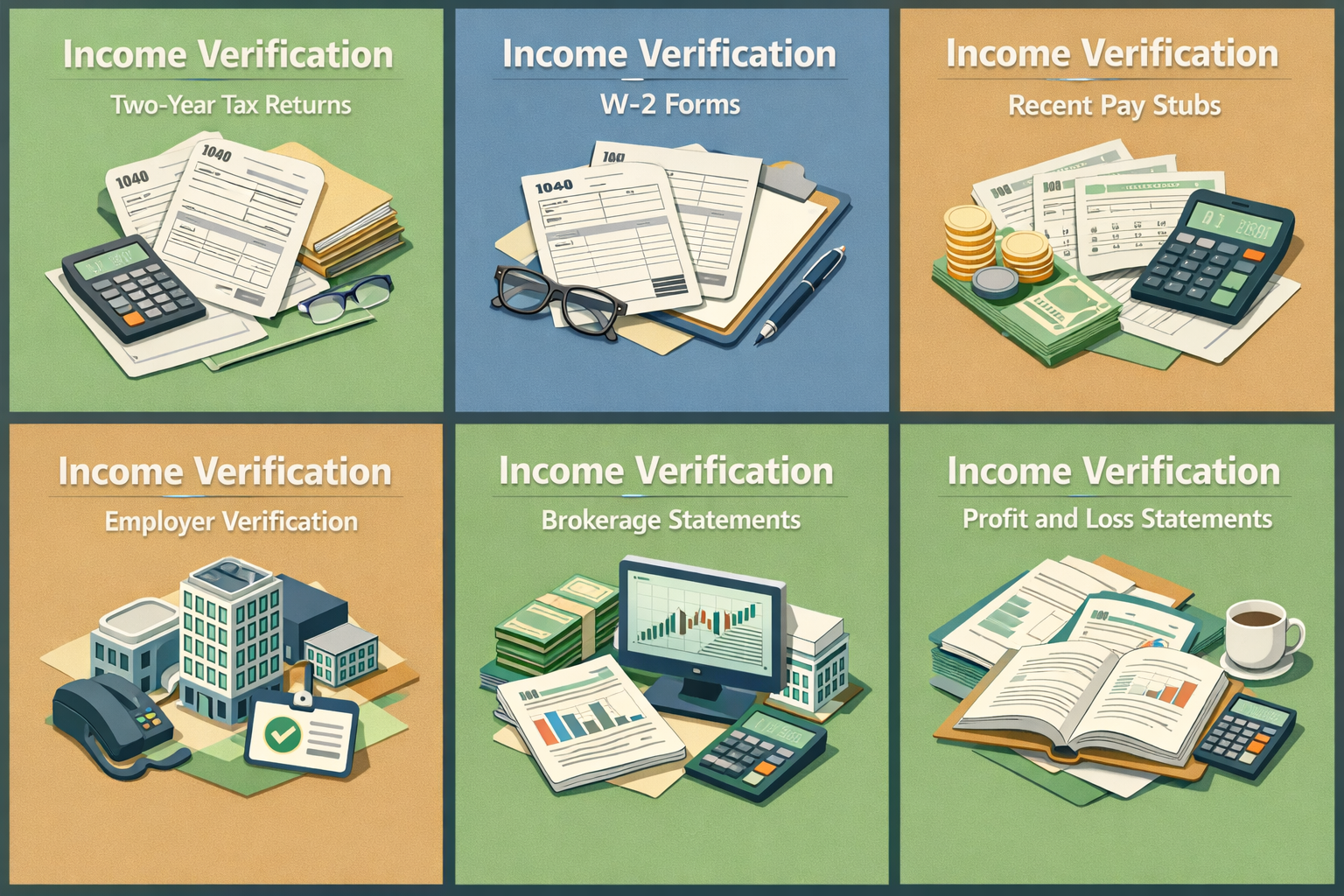
Preparing a thorough documentation package upfront can significantly smooth the jumbo loan process when your income includes stock options. Lenders conducting income verification for variable compensation will typically request:
- Federal tax returns (1040s): Two years, signed and complete, including all schedules.
- W-2 forms: Two years from all employers, showing wages and any stock compensation reported.
- Recent pay stubs: Covering at least 30 days, ideally showing year-to-date earnings including any RSU vesting or option exercise proceeds.
- Employer verification or offer letter: Some lenders may request written confirmation that your stock compensation plan is ongoing.
- Brokerage statements: To document the current value and vesting schedule of any future RSUs or options, even if these aren't used directly for income qualification.
- Profit and loss from stock transactions: A schedule D from your tax return may be reviewed if options were exercised and reported as capital gains.
The more organized and complete your documentation, the fewer delays you're likely to experience during underwriting. Working with a mortgage professional who has experience with jumbo loan qualification with stock options can help you anticipate exactly what each lender in your scenario will require.
Key Factors That Influence How Much Home You Can Afford
Beyond income, several other financial factors shape your jumbo loan affordability. Lenders scrutinize each of these carefully when the loan amount is well into the seven-figure range.
Credit Score Requirements
Jumbo lenders typically require a minimum credit score of 700 or higher, with many preferring scores of 720 to 740 or above. A stronger credit score may also help you secure a more competitive interest rate, which can meaningfully reduce your monthly payment and expand your buying power.
Down Payment Expectations
Most jumbo loans require a down payment of at least 10% to 20%, and some lenders may require more for higher loan amounts or borrowers with complex income profiles. A larger down payment reduces the loan-to-value (LTV) ratio, which lowers lender risk and may improve your rate.
Cash Reserves
Jumbo lenders commonly require significant post-closing reserves — often 12 months or more of mortgage payments held in liquid or semi-liquid assets. Your brokerage account, including vested RSUs or stocks, may count toward this requirement, which is one area where your equity compensation can work in your favor.
Consistency of Variable Income
If your stock option income has been relatively stable or growing over the two-year look-back period, lenders will likely view it more favorably. A sharp decline or inconsistency could raise questions and may result in only a portion of that income being used — or none at all.
Tips to Strengthen Your Jumbo Loan Application
Knowing how to calculate affordability for a jumbo loan with stock options income is one thing — but positioning yourself as a strong borrower takes strategic preparation. Here are practical steps that may improve your chances of approval:
- Exercise options before applying: If you have options that can be exercised, doing so at least a year before applying can create a stronger, documented income history.
- Reduce existing debt: Paying down credit cards, auto loans, or student debt lowers your DTI ratio and increases the mortgage payment you can qualify for.
- Keep your tax returns clean: Large deductions that reduce your reported taxable income can inadvertently hurt your qualifying income. Speak with both a tax advisor and a mortgage professional before filing.
- Work with a lender who specializes in jumbo or non-QM products: Portfolio lenders and private banks may have more flexible guidelines for high-earning borrowers with variable compensation.
- Build up reserves: Accumulating 12 to 24 months of liquid reserves strengthens your application considerably, especially when income is variable.
- Get pre-approved early: A thorough pre-approval, rather than just a pre-qualification, gives you a realistic picture of your purchasing power and helps you move quickly in competitive markets.
●Conclusion
Navigating jumbo loan qualification with stock options income is genuinely more complex than qualifying with a straightforward salary — but it's far from impossible. Lenders want to see that your income is real, documented, and likely to continue. By understanding how your variable compensation is evaluated, preparing thorough documentation, and working with a lender experienced in high-balance financing, you can approach the homebuying process with clarity and confidence.
If you're ready to explore your options, speaking with a knowledgeable mortgage professional is one of the best first steps you can take. At LoanWise, we work with borrowers across a range of income profiles and can help you understand exactly where you stand before you make an offer on your next property. Reach out today to start building your jumbo loan strategy.