One of the first questions most homebuyers ask when starting their mortgage journey is a simple one: how much do I actually need to put down? It's a fair question, and the answer isn't always as straightforward as people expect. For conventional mortgage loans — the most common type of home financing in the U.S. — your down payment can range quite a bit depending on your financial profile, the lender's requirements, and the type of property you're purchasing. Understanding how much down payment for conventional mortgage loans require can help you plan smarter, avoid surprises, and potentially save thousands of dollars over the life of your loan. Let's break it all down.
What Is a Conventional Mortgage and Why Does It Matter?
A conventional mortgage is a home loan that isn't backed by a government agency like the FHA, VA, or USDA. Instead, these loans are typically sold to or guaranteed by Fannie Mae or Freddie Mac, the two government-sponsored enterprises that set the underwriting guidelines most lenders follow. Because they don't carry a government guarantee, conventional loans generally come with stricter qualification standards — but they also offer more flexibility in terms of loan amounts, property types, and structure.
Conventional loans are often the preferred choice for borrowers with solid credit histories, stable income, and some savings set aside for a down payment. They can be used to purchase a primary residence, a second home, or an investment property — making them a versatile tool for a wide range of homebuyers and real estate investors. Understanding how these loans work is the foundation for figuring out your down payment strategy.
Conventional Mortgage Down Payment Requirements Explained
When it comes to conventional mortgage down payment requirements, the minimum is generally 3% of the home's purchase price for eligible borrowers. This option is typically available through specific programs like Fannie Mae's HomeReady or Freddie Mac's Home Possible, which are designed to support lower-to-moderate income buyers who meet certain criteria.
However, that 3% minimum isn't available to everyone. Most conventional loan guidelines require at least 5% down for standard purchases, and that number can increase depending on factors like your credit score, debt-to-income ratio, and whether you're buying a multi-unit property or a second home. For investment properties, lenders often require a significantly higher down payment — commonly 15% to 25% — because these properties carry greater risk from the lender's perspective.
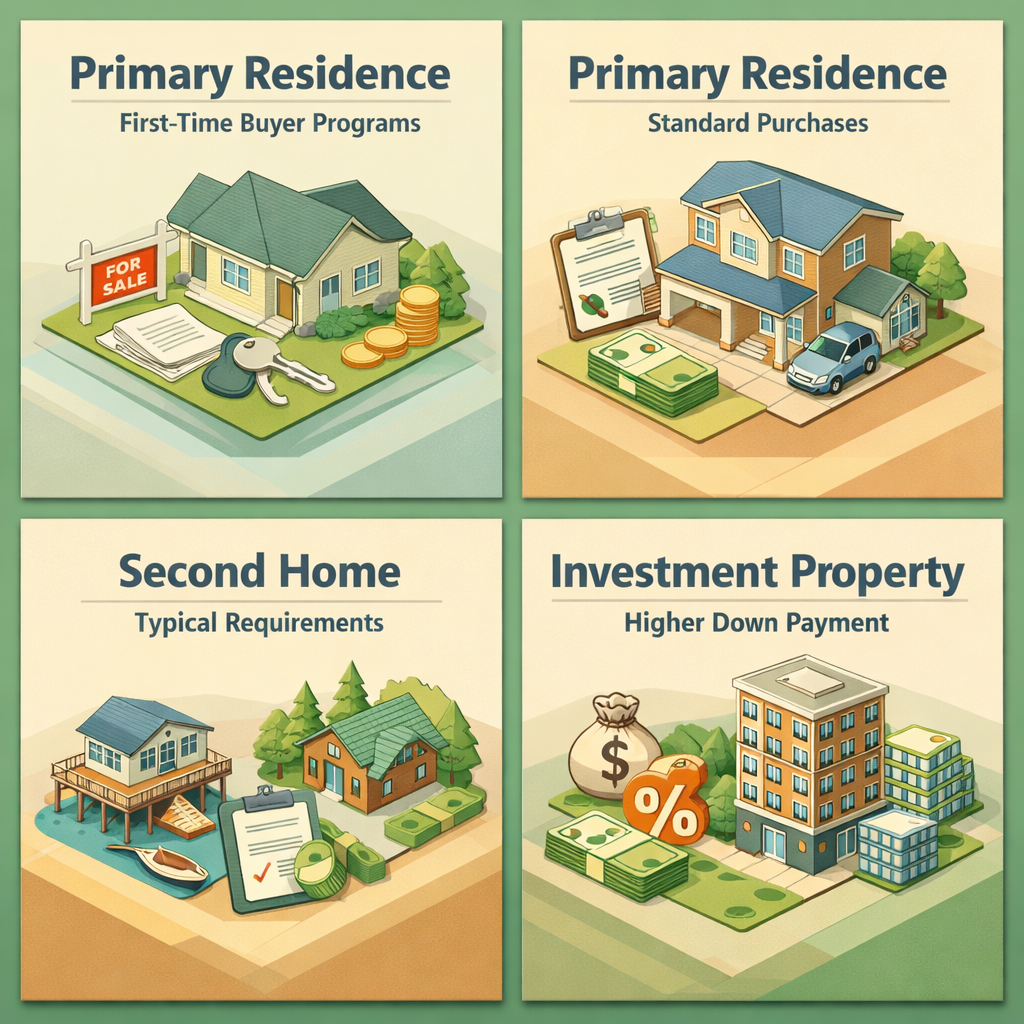
Here's a general overview of how conventional mortgage down payment requirements may vary by scenario:
- Primary residence (first-time buyer programs): As low as 3%
- Primary residence (standard): Typically 5% or more
- Second home: Often 10% or more
- Investment property: Commonly 15% to 25%
- Jumbo loans: May require 10% to 20% or higher
These figures can vary by lender, so it's always a good idea to shop around and compare your options before committing to any single financing path.
The 20% Down Payment Myth — and What It Actually Gets You
Many people believe you need to put down 20% to buy a home with a conventional loan. That's not accurate — but putting down 20% does come with meaningful advantages that are worth understanding. The most notable benefit is avoiding private mortgage insurance (PMI). When your down payment is less than 20%, lenders typically require PMI, which protects the lender — not you — in case you default on the loan.
PMI can add anywhere from a modest to a noticeable amount to your monthly payment, depending on your loan size and credit profile. It's not permanent, though. Once your equity in the home reaches 20%, you may be able to request its removal — either automatically when your loan-to-value ratio hits 78% based on your original purchase price, or sooner if you request a review and your home has appreciated.
Beyond eliminating PMI, a larger down payment may also help you:
- Qualify for a lower interest rate
- Reduce your monthly mortgage payment
- Strengthen your offer in a competitive real estate market
- Lower your overall loan balance and long-term interest costs
That said, tying up a large chunk of cash in a down payment isn't always the right move for every buyer. It's worth weighing the trade-offs carefully with a trusted mortgage advisor.
Average Down Payment for First Time Buyers: What the Numbers Show
The average down payment for first time buyer purchases tends to be lower than what repeat buyers put down — and that makes sense. First-time buyers are often working with less accumulated savings, and they may still be paying off student loans or other debts. Industry data has suggested that first-time buyers frequently put down somewhere in the range of 6% to 8%, though this can vary widely based on location, income, and available assistance programs.
Repeat buyers, by contrast, often benefit from the equity they've built in a previous home, which they can roll into a larger down payment on their next purchase. This gives them more flexibility and often better loan terms right out of the gate.
It's also worth noting that the median home price matters a great deal. A 5% down payment on a $300,000 home is $15,000 — a manageable savings goal for many buyers. But in high-cost markets where median prices can exceed $600,000 or more, even a 5% down payment becomes a significantly higher bar to clear. This is one reason why location plays such a big role in homebuyer financial planning.
How Your Credit Score Influences Your Minimum Down Payment for a Home Loan
Your credit score is one of the most important factors lenders consider when determining your minimum down payment for home loan eligibility. For conventional loans, Fannie Mae and Freddie Mac guidelines generally require a minimum credit score of 620 to qualify. However, borrowers with scores at the lower end of that range may face additional requirements — including a higher minimum down payment.
Borrowers with stronger credit profiles — typically 740 and above — often enjoy the most favorable terms, including access to the lowest available interest rates and potentially more flexibility around down payment size. If your credit score needs some work, it may make sense to spend a few months improving it before applying for a mortgage. Even a modest improvement in your score could meaningfully affect your loan terms.
Here are a few steps that may help improve your credit before applying:
- Pay down existing credit card balances to lower your utilization ratio
- Make all payments on time — payment history is heavily weighted
- Avoid opening new credit accounts in the months before applying
- Review your credit report for errors and dispute any inaccuracies
Your lender can also provide a credit review and help you understand where you stand before formally applying.
Down Payment Assistance Programs and Other Resources Worth Exploring
If saving for a down payment feels like a long road, you may not have to walk it alone. A wide range of down payment assistance (DPA) programs exist at the federal, state, and local levels — and many of them are specifically designed to help first-time buyers and moderate-income households bridge the gap between their savings and what they need to close on a home.
These programs can take several forms, including:
- Grants: Money that doesn't need to be repaid, often funded by state housing finance agencies
- Forgivable loans: Second mortgages that are forgiven after a set number of years if you remain in the home
- Deferred payment loans: Loans where repayment is delayed until you sell, refinance, or pay off the first mortgage
- Matched savings programs: Some nonprofits and government programs match your savings contributions up to a certain amount
Eligibility requirements vary by program and location, and some are paired specifically with conventional loan products. It's worth asking your mortgage lender or housing counselor which programs you might qualify for — many buyers are surprised to discover assistance they didn't know was available.
Additionally, gift funds from family members are often permitted for conventional loan down payments, provided they're properly documented. Your lender can walk you through the gift letter requirements and any restrictions that apply.
●Conclusion
Understanding how much down payment for conventional mortgage loans require is a critical step in your homebuying journey — and the good news is that you likely have more options than you think. Whether you're putting down 3%, working toward 20%, or somewhere in between, what matters most is finding a strategy that aligns with your financial situation, your timeline, and your long-term goals. The right down payment isn't necessarily the largest one — it's the one that sets you up for sustainable homeownership without stretching your finances too thin. At LoanWise, we're here to help you explore your options, understand your numbers, and move forward with confidence. Reach out to one of our mortgage specialists today to get started on your path to homeownership.