
A home equity line of credit (HELOC) can provide flexible access to your home's equity for major expenses like renovations, education costs, or debt consolidation. However, qualifying for a HELOC involves meeting specific financial and property requirements that lenders use to assess your creditworthiness and ability to repay. Understanding these home equity line of credit requirements before you apply can help streamline the process and improve your chances of approval at favorable terms.
Credit Score Standards for HELOC Approval
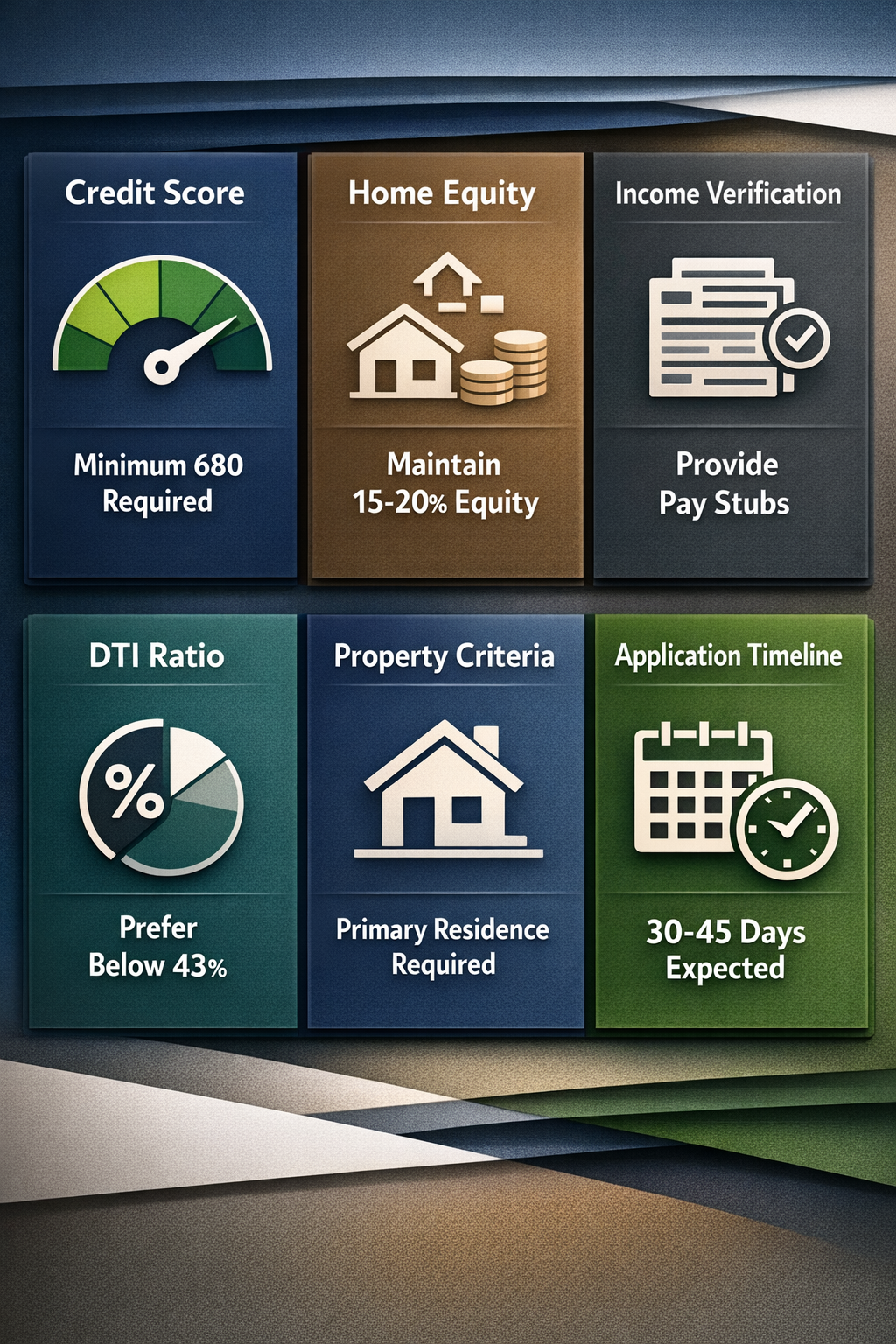
Most lenders typically require a minimum credit score of 680 for HELOC approval, though some may accept scores as low as 620. Your credit score significantly impacts both your eligibility and the interest rate you'll receive. Borrowers with credit scores above 740 often qualify for the most competitive rates and terms.
Lenders review your entire credit history, not just your score. They'll examine your payment history, credit utilization, length of credit history, and recent credit inquiries. Late payments, collections, or bankruptcies within the past few years could affect your approval chances, even with an acceptable credit score.
If your credit score falls below lender requirements, consider paying down existing debt, correcting any credit report errors, and avoiding new credit applications before applying for a HELOC. These steps might help improve your score and qualification prospects.
Home Equity and Loan-to-Value Requirements
Lenders typically require you to maintain at least 15-20% equity in your home after establishing a HELOC. This means your combined loan-to-value (CLTV) ratio, including your first mortgage and the HELOC credit line, should not exceed 80-85% of your home's current market value.
For example, if your home is worth $400,000, lenders might allow a maximum CLTV of 80%, or $320,000. If you owe $250,000 on your first mortgage, you could potentially qualify for a HELOC of up to $70,000. The exact percentage varies by lender and your overall financial profile.
A professional appraisal is usually required to determine your home's current value. Recent home improvements or favorable market conditions might increase your available equity, while declining property values could limit your borrowing capacity.
Income Verification and Employment History
Lenders need to verify your ability to make monthly payments on the HELOC. You'll typically need to provide recent pay stubs, tax returns from the past two years, and employment verification. Self-employed borrowers may need additional documentation, such as profit and loss statements or bank statements.
Stable employment history strengthens your application. Lenders prefer to see consistent employment for at least two years, though recent job changes within the same field might not disqualify you. If you're self-employed, demonstrating steady income over several years becomes even more important.
Some lenders may accept income from sources like rental properties, retirement accounts, or investment dividends. However, they'll typically require documentation to verify these income streams and may apply different qualification standards.
Debt-to-Income Ratio Considerations
Your debt-to-income (DTI) ratio is a crucial factor in HELOC approval. Most lenders prefer a DTI below 43%, though some may accept higher ratios for well-qualified borrowers. This ratio includes all monthly debt payments, including your mortgage, the potential HELOC payment, credit cards, auto loans, and other obligations.
Lenders calculate DTI using the maximum potential payment on the HELOC, not just the interest-only payments that might be available initially. This conservative approach ensures you can handle payments even if rates rise or when principal payments begin.
To improve your DTI ratio, consider paying down existing debts before applying or increasing your income through additional work or investment returns. A lower DTI ratio not only improves approval chances but may also help you qualify for better terms.
Property and Documentation Requirements
Your property must meet specific criteria for HELOC eligibility. The home should be your primary residence, though some lenders offer HELOCs on second homes or investment properties with stricter requirements. The property type matters too – single-family homes typically qualify more easily than condos or manufactured homes.
You'll need to provide extensive documentation during the application process. This typically includes property tax statements, homeowners insurance information, mortgage statements, and the professional appraisal. Some lenders might also require a title search or survey.
The property's condition and location can affect approval. Homes in declining neighborhoods or those with significant maintenance issues might face additional scrutiny. Lenders want to ensure the property maintains adequate value to secure the loan throughout the HELOC term.
Application Process and Timeline Expectations
The HELOC application process typically takes 30-45 days from application to closing, though complex situations might extend this timeline. After submitting your application and documentation, the lender will order an appraisal and begin underwriting your loan.
During underwriting, lenders may request additional documentation or clarification on certain aspects of your financial situation. Responding quickly to these requests can help prevent delays. Some lenders now offer streamlined online applications and digital document submission to expedite the process.
Once approved, you'll receive a credit line that you can access as needed during the draw period, which typically lasts 10 years. Understanding the terms, including how payments are calculated and when the repayment period begins, is essential before signing your HELOC agreement.
Tips for Improving Your HELOC Qualification
Several strategies can strengthen your home equity line of credit requirements profile before applying. Start by checking your credit report for errors and disputing any inaccuracies you find. Paying down existing debts can improve both your credit score and debt-to-income ratio simultaneously.
Consider timing your application strategically. If you're planning home improvements that could increase your property value, completing them before the appraisal might help you qualify for a larger credit line. However, ensure you have other financing in place for these improvements.
Shop around with multiple lenders, as requirements and terms can vary significantly. Credit unions, community banks, and online lenders might offer different qualification standards than larger national banks. Some lenders specialize in working with borrowers who have unique situations, such as self-employment or recent credit challenges.
●Conclusion
Meeting home equity line of credit requirements involves demonstrating strong creditworthiness, sufficient home equity, and stable income to support the additional debt. While standards vary among lenders, focusing on improving your credit score, maintaining low debt levels, and building substantial equity in your home will position you for successful HELOC qualification. Taking time to understand these requirements and prepare your financial profile before applying can help you secure the best possible terms for accessing your home's equity.