
Understanding Mortgage Closing Costs for Real Estate Investors
When acquiring rental properties or securing DSCR loans, mortgage closing costs can significantly impact your investment returns. These expenses, which typically range from 2% to 5% of the loan amount, often catch investors off guard and can derail otherwise profitable deals. Understanding what closing costs entail and how to manage them effectively is crucial for maintaining healthy profit margins in your real estate portfolio.
For investors focused on DSCR loans and rental property financing, closing costs present unique challenges compared to traditional homebuyer mortgages. The complexity increases when dealing with investment properties, as lenders may require additional documentation, inspections, and fees specific to rental income verification and property cash flow analysis.
Essential Components of Mortgage Closing Costs
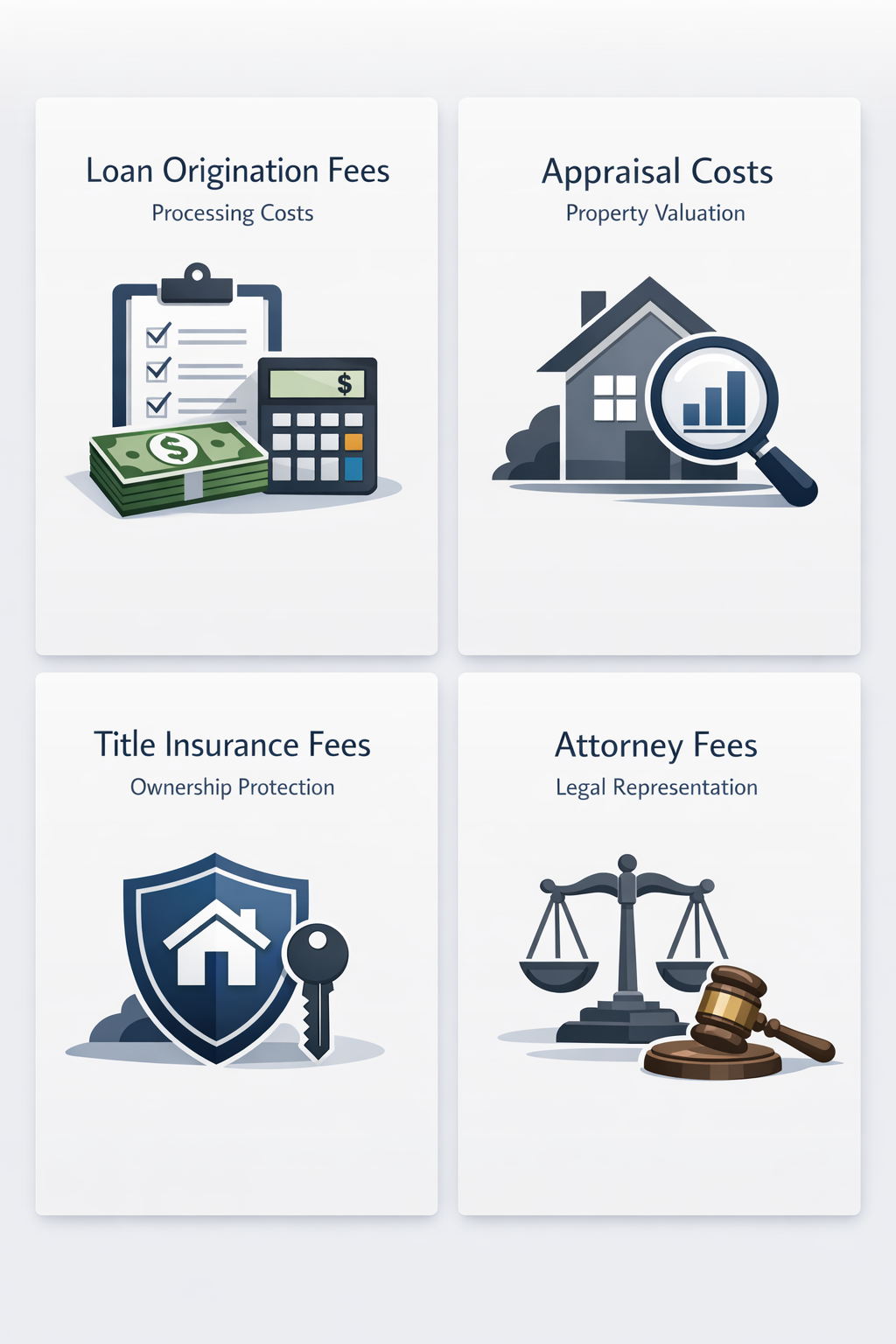
Essential components of mortgage closing costs include several key categories that investors must budget for when securing financing. These expenses can vary significantly depending on your loan type, property location, and lender requirements.
- Loan origination fees: Typically 0.5% to 1% of the loan amount, these fees compensate lenders for processing your DSCR loan application and may be higher for investment properties
- Appraisal and inspection costs: Property valuations for rental properties often require additional analysis of rental income potential, costing $400 to $800 depending on property complexity
- Title insurance and escrow fees: These protect your ownership rights and facilitate the transaction, usually ranging from $500 to $2,000 based on property value
- Attorney and legal fees: Many states require legal representation during real estate transactions, with costs typically ranging from $500 to $1,500 for investment property deals
Average Closing Costs for Investment Properties
Average closing costs for investment properties tend to be higher than primary residence purchases due to additional risk assessment requirements and specialized loan products like DSCR financing.
- DSCR loan closing costs: Investment property loans typically carry closing costs ranging from 2.5% to 4% of the loan amount, higher than conventional mortgages due to additional underwriting requirements
- Geographic variations: Urban markets may see closing costs 20% to 30% higher than rural areas due to increased property values and local fee structures
- Loan amount impact: Larger loan amounts don't necessarily mean proportionally higher fees, as many costs remain fixed regardless of property price
- Property type considerations: Multi-unit properties often incur additional inspection and appraisal fees compared to single-family rentals
Hidden Fees That Impact Investment Returns
Hidden fees that impact investment returns often surprise even experienced real estate investment investors, as these costs may not appear in initial loan estimates but become apparent during the closing process.
- Rental income verification fees: DSCR lenders may charge additional fees for analyzing lease agreements and verifying rental income potential, typically $200 to $500 per property
- Property management company verification: If you use professional property management, lenders might require verification of management agreements and fee structures
- Environmental assessments: Commercial or multi-unit properties may require environmental studies, adding $500 to $2,000 to your closing costs
- HOA document review: Properties in homeowner associations often require additional document review fees that can range from $100 to $400
DSCR Loan Specific Closing Considerations
DSCR loans specific closing considerations require investors to understand unique requirements that differ from conventional mortgage products, particularly regarding income verification and property analysis.
- Cash flow analysis fees: Lenders may charge for detailed analysis of property cash flow projections and rental market comparisons, typically $300 to $600
- DSCR calculation verification: Some lenders require third-party verification of debt service coverage ratios, which can add $200 to $400 to closing costs
- Market rent analysis: Independent rental market analysis may be required to verify projected rental income, costing $250 to $500 depending on market complexity
- Property condition assessments: Investment properties often require more detailed condition reports than owner-occupied homes, potentially adding $400 to $800 to closing expenses
Strategies to Reduce Mortgage Closing Costs
Implementing strategies to reduce mortgage closing costs can significantly improve your investment property returns and help preserve capital for future acquisitions or property improvements.
- Negotiate with multiple lenders: Compare closing cost estimates from at least three different lenders specializing in investment property financing, as fees can vary substantially between institutions
- Request lender credits: Some lenders may offer closing cost credits in exchange for slightly higher interest rates, which can be beneficial if you plan to refinance within a few years
- Bundle services when possible: Working with lenders who offer in-house appraisal and title services may reduce overall costs compared to using separate third-party providers
- Time your closing strategically: Closing at the end of the month can reduce prepaid interest costs, while avoiding peak seasons may provide more negotiating leverage with service providers
- Review all fees carefully: Challenge any fees that seem excessive or unclear, as some charges may be negotiable or unnecessary for your specific transaction type
Negotiating Closing Costs with Lenders
Negotiating closing costs with lenders requires preparation and understanding of which fees may be flexible versus those that are typically fixed by regulation or third-party requirements.
- Focus on lender-controlled fees first: Origination fees, processing charges, and administrative costs are often more negotiable than third-party fees like appraisals or government recording charges
- Leverage your borrowing relationship: If you're planning multiple property acquisitions or have existing accounts with the lender, use this relationship as leverage for fee reductions
- Compare loan estimate details: Use competing offers to negotiate better terms, but ensure you're comparing similar loan products and not sacrificing important features for lower closing costs
- Consider no-closing-cost options: Some lenders offer loans with no upfront closing costs in exchange for higher interest rates, which might make sense for short-term investment strategies
- Request itemized explanations: Ask lenders to justify any fees that seem excessive, as this transparency often leads to voluntary reductions or elimination of unnecessary charges
Planning Your Investment Budget Around Closing Costs
Planning your investment budget around closing costs ensures you maintain adequate cash reserves while maximizing your property acquisition potential and avoiding financial strain during the purchase process.
Smart investors typically budget 3% to 4% of the purchase price for closing costs when acquiring rental properties with DSCR loans. This conservative approach helps account for unexpected fees and ensures you have sufficient capital remaining for immediate property improvements or maintenance reserves.
Consider establishing separate closing cost reserves for each potential property acquisition, as this prevents you from depleting funds needed for down payments or emergency repairs. Many successful investors maintain a dedicated closing cost fund that covers multiple transactions, allowing for more flexible deal evaluation and faster closing timelines.
Remember that closing costs are often tax-deductible as business expenses for investment properties, which can help offset the immediate cash outflow. Consult with your tax advisor to understand how these expenses can be properly categorized and claimed to optimize your overall investment returns.
●Conclusion
Understanding and managing mortgage closing costs is essential for real estate investment success. These expenses, while significant, shouldn't prevent you from pursuing profitable rental property acquisitions when properly budgeted and negotiated.
By focusing on the strategies outlined above and maintaining detailed awareness of both obvious and hidden fees, you can minimize closing cost impact on your investment returns. Remember that every dollar saved on closing costs is a dollar that can be reinvested into property improvements or your next acquisition.
Take time to shop around with different lenders, negotiate where possible, and always request detailed explanations of any fees that seem excessive. With careful planning and negotiation, you can significantly reduce the financial impact of closing costs while building a profitable real estate portfolio.