Understanding FHA Loan vs. Conventional Loan for Investment Success
Real estate investors face critical financing decisions that can significantly impact their long-term profitability and portfolio growth. The choice between FHA loan vs. conventional loan options has become increasingly important as market conditions evolve in 2026. While many investors focus exclusively on DSCR loans and investment-specific products, understanding traditional financing options can provide strategic advantages in certain scenarios.
This comprehensive comparison examines how FHA and conventional loans might fit into your broader investment strategy, particularly when considering owner-occupied properties or transitional financing needs. Smart investors know that diversifying financing approaches often leads to better overall portfolio performance and increased leverage opportunities.
FHA Loan Advantages and Disadvantages for Investors
FHA loan advantages and disadvantages present unique considerations for real estate investors, particularly those exploring owner-occupied investment strategies or transitional housing approaches.
- Lower down payment requirements: FHA loans typically require as little as 3.5% down, which can preserve capital for additional investments or property improvements
- Flexible debt-to-income ratios: These loans may accommodate higher debt loads, beneficial for investors managing multiple properties or leveraged positions
- Accessible credit requirements: FHA programs often accept lower credit scores, potentially opening opportunities for investors with recent credit challenges
- Higher insurance costs: Mortgage insurance premiums can increase total carrying costs, impacting cash flow calculations for rental properties
- Property condition standards: FHA requirements for property conditions might limit opportunities in fixer-upper markets or distressed properties
Conventional Loan Advantages and Disadvantages Analysis
Conventional loan advantages and disadvantages often align more closely with experienced investor profiles, offering potentially better long-term financial outcomes for qualified borrowers.
- Competitive interest rates: Investors with strong credit profiles typically access lower rates compared to FHA vs conventional loans options, reducing long-term financing costs
- No mortgage insurance with 20% down: Eliminating insurance premiums can improve cash flow and overall investment returns
- Flexible property types: Conventional loans often accommodate various property conditions and investment strategies more readily
- Higher credit score requirements: Stricter qualification standards may exclude some investors from accessing these potentially favorable terms
- Larger down payment expectations: Standard 20% requirements can tie up more capital upfront, limiting immediate investment opportunities
Comparing Interest Rates and Fees Between Loan Types
Comparing interest rates and fees reveals significant differences that can impact investment profitability over time, with conventional loans often providing cost advantages for qualified investors.
- Base interest rate variations: Conventional loans may offer rates, requirements 0.25% to 0.75% lower than FHA options for borrowers with excellent credit
- Mortgage insurance cost differences: FHA insurance premiums typically range higher than conventional PMI, particularly over extended periods
- Closing cost considerations: FHA loans might include additional fees and requirements that can increase upfront investment costs
- Long-term payment impacts: Lower conventional rates can result in thousands of dollars in savings over typical investment holding periods
Market Positioning and Investment Strategy Alignment
Strategic comparison positioning in today's market requires understanding how traditional loan products complement specialized investment financing like DSCR loans and fix-and-flip programs.
- Owner-occupied investment opportunities: FHA loans can facilitate house-hacking strategies or primary residence purchases in high-growth markets
- Portfolio diversification benefits: Mixing traditional and investment-specific financing can optimize overall leverage and risk management
- Geographic market advantages: Certain markets, particularly in the Sunbelt region, may favor different loan types based on local conditions and rental demand
- Transition financing strategies: Traditional loans might serve as bridge solutions while preparing for more aggressive investment financing options
Choosing the Right Loan for Your Investment Goals
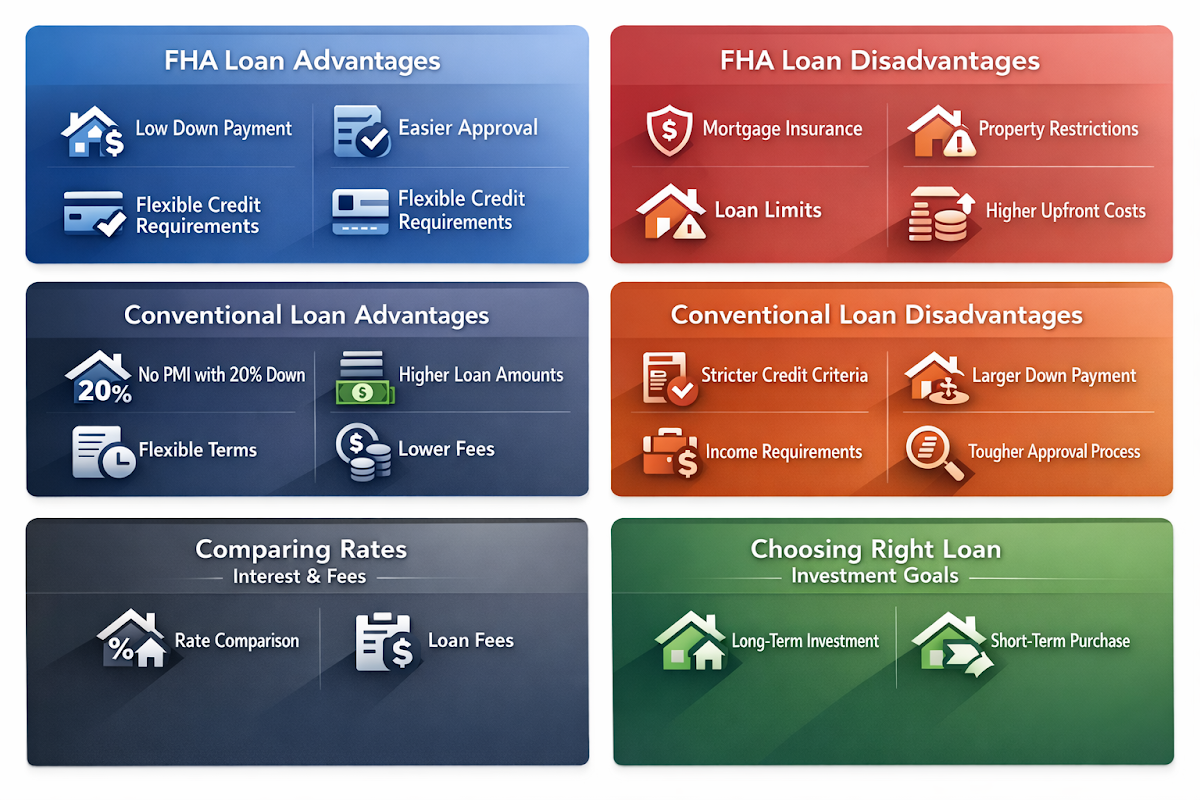
Choosing the right loan for you depends on careful evaluation of your current financial position, investment timeline, and broader portfolio objectives in the evolving 2026 market.
- Assess your credit profile and available capital: Strong credit and adequate reserves typically favor conventional loans, while FHA might suit investors with limited initial capital
- Calculate total cost of ownership: Compare interest rates, insurance costs, and fees over your expected holding period to determine true financial impact
- Evaluate property and market conditions: Consider whether your target properties and markets align with loan type requirements and restrictions
- Plan for portfolio growth: Choose financing that positions you for future investments, whether through capital preservation or improved cash flow
- Consider specialized investment products: Determine when DSCR loans or other investment-focused options might better serve your long-term strategy
●Conclusion
The FHA loan vs. conventional loan decision represents just one component of a comprehensive investment financing strategy. While conventional loans typically offer better long-term economics for qualified investors, FHA options might provide strategic advantages in specific scenarios or market conditions.
Successful real estate investors understand that no single financing approach fits every situation. The key lies in matching loan products to specific investment goals, property types, and market opportunities. As you evaluate these traditional options, consider how they might complement specialized investment products like DSCR loans for your rental properties or fix-and-flip financing for your renovation projects.
Remember that financing decisions should align with your broader investment strategy and risk tolerance. Whether you choose FHA or conventional financing, ensure the selected option supports your path toward building a profitable and sustainable real estate investment portfolio in 2026 and beyond.