
FHA Loan Credit Requirements: A Real Estate Investor's Perspective
While FHA loans are primarily designed for homebuyers, understanding FHA loan credit requirements can provide valuable insights for real estate investors who might consider owner-occupied strategies or need to understand the broader mortgage landscape. These government-backed loans typically offer more flexible credit standards than conventional financing, which could influence certain investment approaches.
For investors exploring various financing options, knowing how FHA credit requirements compare to investor-focused products like DSCR loans or fix and flip financing helps create a comprehensive understanding of the mortgage market. Let's examine what these requirements entail and how they might factor into your investment strategy.
Common Questions About FHA Credit Requirements
Many real estate investors have questions about FHA loan credit requirements, especially when comparing them to investor-focused financing options.
Q: Can I get an FHA loan with bad credit for investment properties?
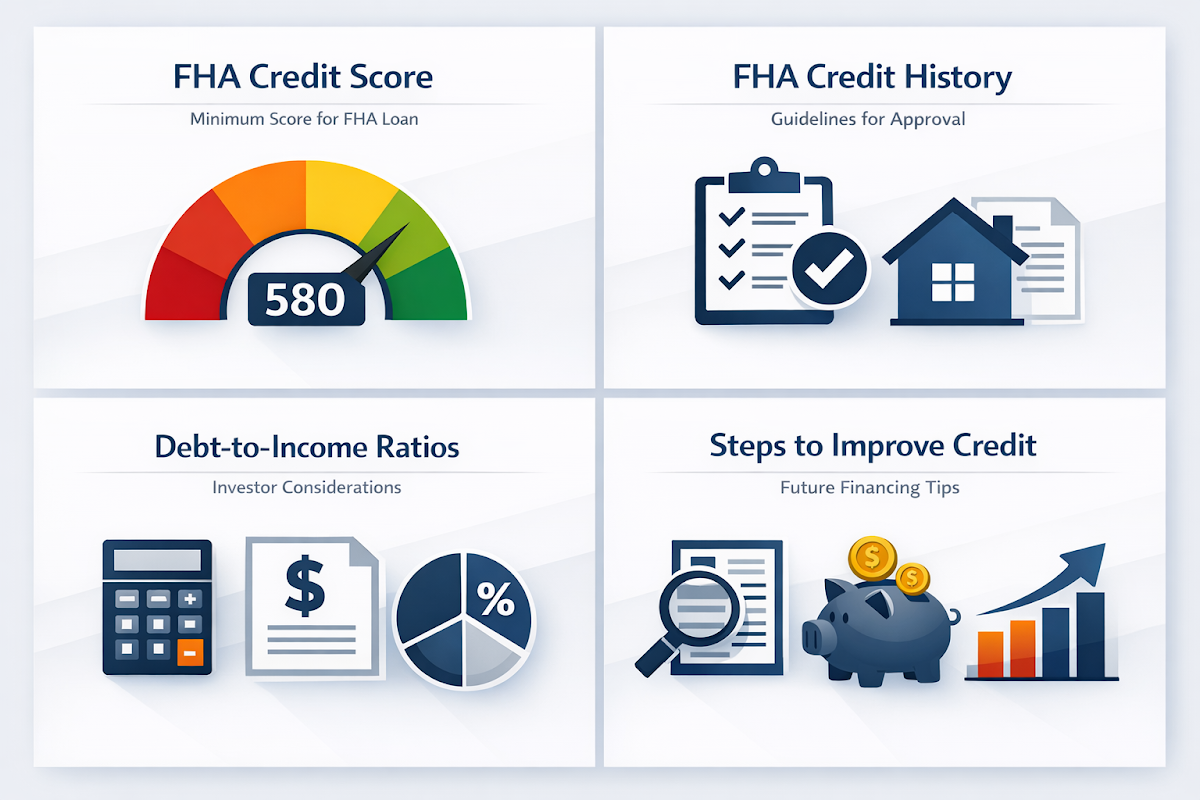
FHA loans are generally restricted to owner-occupied properties, so they're not typically available for traditional rental property investments. However, FHA loans may accept credit scores as low as 580 with a 10% down payment, or 500-579 with 35% down, making them accessible for house hacking strategies where you live in one unit of a multi-family property.
Key FHA Credit Score Requirements
Understanding the minimum credit score for FHA loans helps investors compare these requirements against other financing options available for real estate investments.
- Credit scores of 580 or higher typically qualify for 3.5% down payment programs
- Scores between 500-579 may be eligible but usually require 35% down payment
- Individual lenders might set higher minimum requirements than FHA guidelines
- Manual underwriting may be available for borderline credit situations
FHA Credit History Guidelines
FHA loan credit history guidelines tend to be more forgiving than conventional loans, which can be relevant when investors are building their credit profiles for future investment financing.
- Bankruptcy discharge must typically be at least 2 years old for Chapter 7
- Foreclosure seasoning requirements are generally 3 years from completion date
- Late payments in the past 12 months could impact approval chances
- Collections and charge-offs don't automatically disqualify borrowers
Debt-to-Income Considerations for Investors
FHA debt-to-income ratios differ significantly from investor loan products like DSCR financing, where property cash flow takes precedence over personal income.
- Front-end ratio typically shouldn't exceed 31% of gross monthly income
- Back-end ratio generally caps at 43% including all monthly debt obligations
- Compensating factors may allow higher ratios in some circumstances
- Rental income from investment properties may be counted with proper documentation
Steps to Improve Credit for Future Investment Financing
Learning how to improve credit for an FHA loan can also benefit investors preparing for future investment property financing through DSCR loans or bridge financing.
- Pay down existing credit card balances to reduce utilization ratios below 30%
- Avoid opening new credit accounts within 6 months of applying for financing
- Dispute any inaccurate items on credit reports through all three bureaus
- Consider becoming an authorized user on accounts with excellent payment history
- Maintain consistent payment patterns across all existing accounts
Alternative Financing Options for Real Estate Investors
While FHA loans have specific limitations for investors, understanding these requirements helps when evaluating more suitable investment financing products.
- DSCR loans focus on property cash flow rather than personal credit scores
- Fix and flip loans offer short-term financing for renovation projects
- Bridge loans provide quick closings for time-sensitive investment opportunities
- Portfolio lenders may offer more flexible credit requirements for experienced investors
- Hard money lenders prioritize property value and equity over credit scores
●Conclusion
While FHA loan credit requirements primarily serve homebuyers and house hackers, understanding these standards provides valuable context for real estate investors navigating the broader financing landscape. The more flexible credit requirements of FHA loans highlight the differences between owner-occupied and investment property financing.
For serious real estate investors, specialized products like DSCR loans, fix and flip financing, and bridge loans often provide more suitable terms and requirements than traditional residential mortgages. These investor-focused options typically emphasize property performance and investment strategy over personal credit profiles, making them better aligned with real estate investment goals.
As you build your investment portfolio, consider working with lenders who understand the unique needs of real estate investors and can offer financing solutions designed specifically for rental properties, fix and flip projects, and other investment strategies.