
The mortgage loan pre-approval process serves as the foundation for successful real estate investment acquisitions. Unlike traditional homebuyer financing, investor-focused mortgage products like DSCR loans require a different approach to pre-approval that emphasizes property performance over personal income documentation. Understanding these mortgage pre-approval steps can significantly streamline your investment timeline and strengthen your position when making offers on rental properties or fix and flip opportunities.
For real estate investors in 2026, the pre-approval landscape has evolved to accommodate various investment strategies, from single-family rental acquisitions to multi-property portfolio expansions. The benefits of mortgage pre-approval extend beyond knowing your borrowing capacity, they provide competitive advantages in fast-moving markets where cash-equivalent offers often win deals.
Credit Score and Financial Documentation Checklist
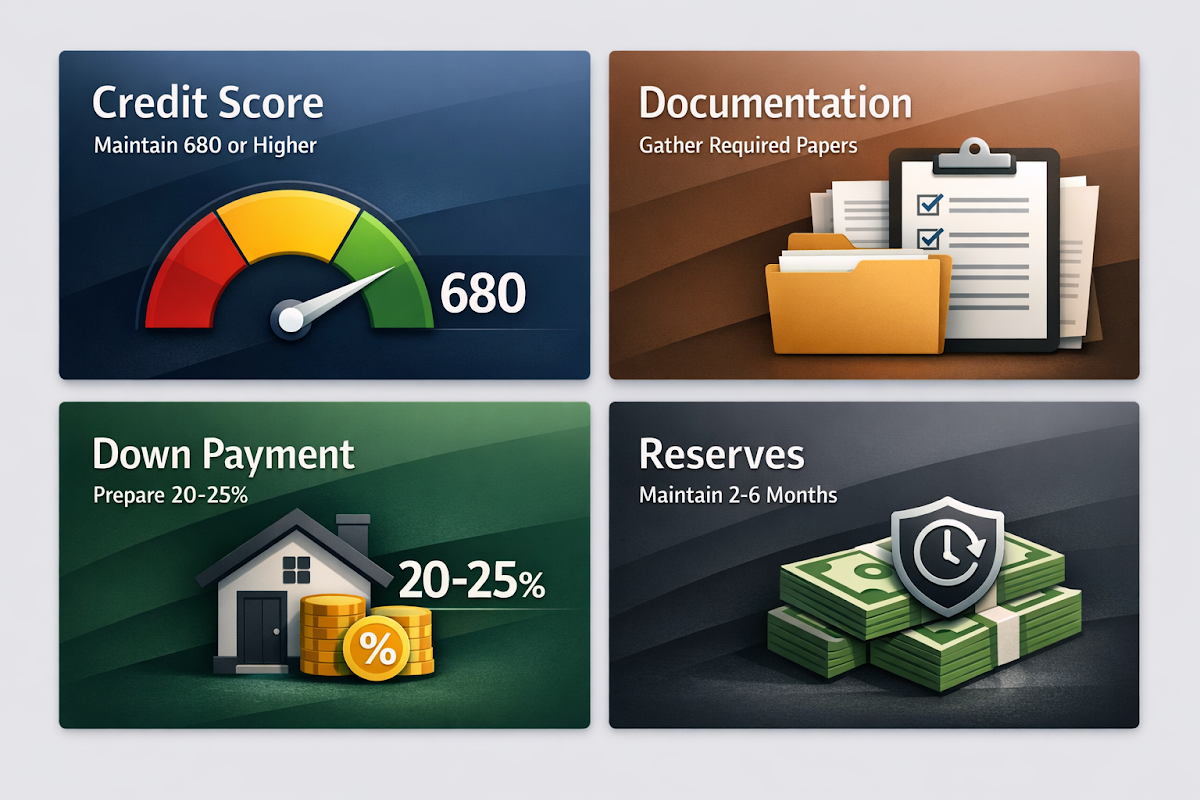
The credit score and financial documentation checklist forms the cornerstone of any successful mortgage loan pre-approval process for real estate investors. DSCR loans typically require a minimum credit score of 680, making this threshold essential for accessing investor-friendly financing options.
- Maintain a credit score of 680 or higher for DSCR loan eligibility
- Gather recent bank statements showing adequate reserves for down payment and closing costs
- Compile tax returns from the previous two years, even though DSCR loans may not require income verification
- Document existing real estate holdings and their current debt service obligations
Property Analysis Requirements for DSCR Loans
Property analysis requirements for DSCR loans focus on the investment property's ability to generate sufficient rental income to cover debt obligations. This approach differs significantly from traditional mortgage products that emphasize borrower income verification.
- Obtain professional appraisals that include rental income analysis and market comparisons
- Provide lease agreements or market rent studies demonstrating the property's income potential
- Calculate the debt service coverage ratio to ensure the property meets lender requirements
- Document property condition reports and any planned improvements that might affect rental income
Down Payment and Reserve Fund Preparation
Down payment and reserve fund preparation represents a critical component of the mortgage loan pre-approval process, particularly for investment properties where lenders typically require higher initial capital commitments.
- Prepare for down payment requirements ranging from 20% to 25% for most DSCR loan programs
- Maintain liquid reserves equivalent to 2-6 months of property expenses and debt service
- Document the source of funds to satisfy lender seasoning requirements
- Consider the impact of multiple property acquisitions on overall cash position and borrowing capacity
Timeline Expectations for Investment Property Pre-Approval
Understanding timeline expectations for investment property financing helps investors plan their acquisition strategies and manage deal flow effectively. The mortgage pre-approval steps for DSCR loans often move more quickly than traditional financing due to reduced income documentation requirements.
- Initial application and credit review typically takes 1-3 business days for preliminary approval
- Property appraisal and rent analysis may require 7-14 days depending on market conditions
- Final underwriting and approval documentation usually completes within 2-3 weeks total
- Rate locks and loan commitment letters can extend the pre-approval validity for 60-90 days
Interest Rate Considerations and Market Positioning
Interest rate considerations and market positioning directly impact the financial viability of investment property acquisitions and should factor prominently into pre-approval decisions.
- Current DSCR loan rates typically range from approximately 5.875% to 7.375% based on property type and borrower profile
- Compare rates across multiple lenders to optimize financing costs and improve cash flow projections
- Consider rate lock options during the pre-approval period to protect against market volatility
- Evaluate how interest rate changes might affect your debt service coverage ratio and overall deal profitability
Portfolio Growth Strategy Integration
Portfolio growth strategy integration ensures that your mortgage loan pre-approval process aligns with long-term investment objectives and maintains flexibility for future acquisitions.
- Structure pre-approvals to accommodate multiple property purchases without exhausting borrowing capacity
- Consider cross-collateralization options that might leverage existing properties for additional financing
- Plan for refinancing opportunities on existing holdings to free up capital for new acquisitions
- Maintain relationships with multiple lenders to diversify funding sources and optimize terms
Strategic Pre-Approval Benefits for Competitive Advantage
The strategic benefits of completing the mortgage loan pre-approval process extend far beyond simple qualification verification. Pre-approved investors gain significant advantages in competitive real estate markets where speed and certainty often determine successful acquisitions. DSCR loan pre-approval particularly strengthens an investor's position by demonstrating financial readiness without the complexity of income verification that might delay traditional financing. This preparation allows investors to act quickly on opportunities, negotiate from positions of strength, and focus their energy on property analysis rather than financing uncertainty.
●Conclusion
The mortgage loan pre-approval process for real estate investors requires strategic preparation that goes beyond traditional homebuyer financing. By understanding what's needed for mortgage pre-approval in the investment property space, including DSCR loan requirements and portfolio considerations, investors can position themselves for success in competitive markets.
The benefits of mortgage pre-approval compound significantly for active investors who understand how long the process takes and plan accordingly. With proper preparation covering credit requirements, property analysis, and financial documentation, the pre-approval process becomes a powerful tool for scaling investment operations and securing favorable financing terms that support long-term portfolio growth.