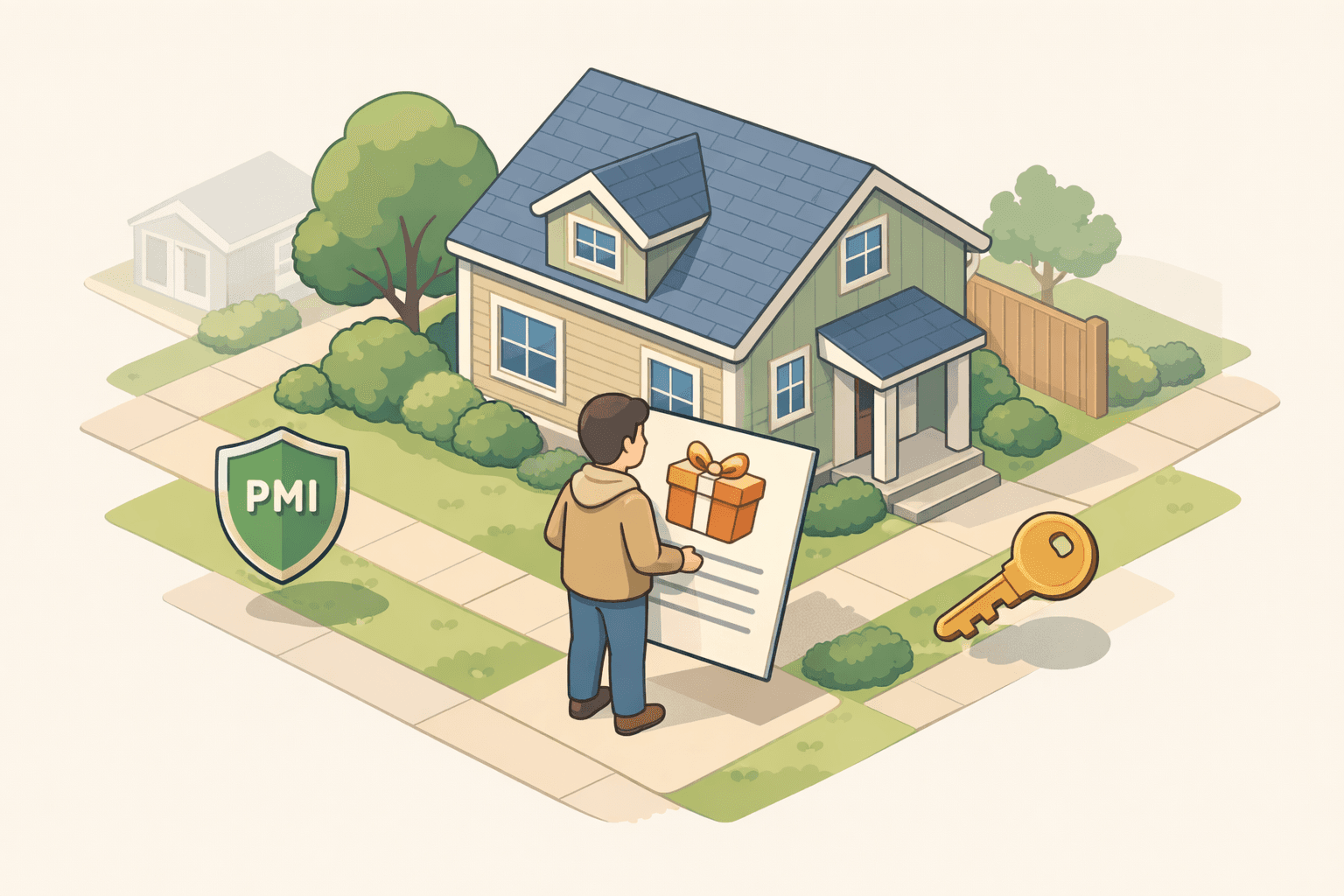
Buying a home is one of the biggest financial steps most people will ever take. For many homebuyers, pulling together a down payment is the hardest part of the process. Receiving financial help from a generous friend, employer, or another non-relative source can make homeownership feel much more reachable. But once you decide to use gifted funds for your down payment, new questions tend to follow — especially around private mortgage insurance, or PMI. Understanding the cost of PMI for a conventional loan with 15% down payment from a non-relative gift is essential before you close on a home. This article walks through how PMI is priced, how gifted down payments are treated by lenders, and what you can do to make the most of your situation.
What Private Mortgage Insurance Actually Covers
Private mortgage insurance is a policy that protects the lender — not the borrower — if the homebuyer defaults on the loan. It's typically required on conventional loans when the buyer puts down less than 20% of the home's purchase price. So if you're bringing 15% to the table, PMI will very likely be part of your monthly payment.
It's worth noting that PMI doesn't provide any direct benefit to the borrower. Instead, it reduces the lender's risk, which is why they require it when the loan-to-value (LTV) ratio is above 80%. With a 15% down payment, your LTV sits at 85%, which puts you in PMI territory for most conventional loan programs.
The good news is that 15% down is meaningfully better than the minimum 3% or 5% often used by first-time buyers. A higher down payment typically results in a lower PMI rate, which means your monthly insurance premium may be more manageable than you'd expect.
How PMI Rates Are Typically Calculated on Conventional Loans
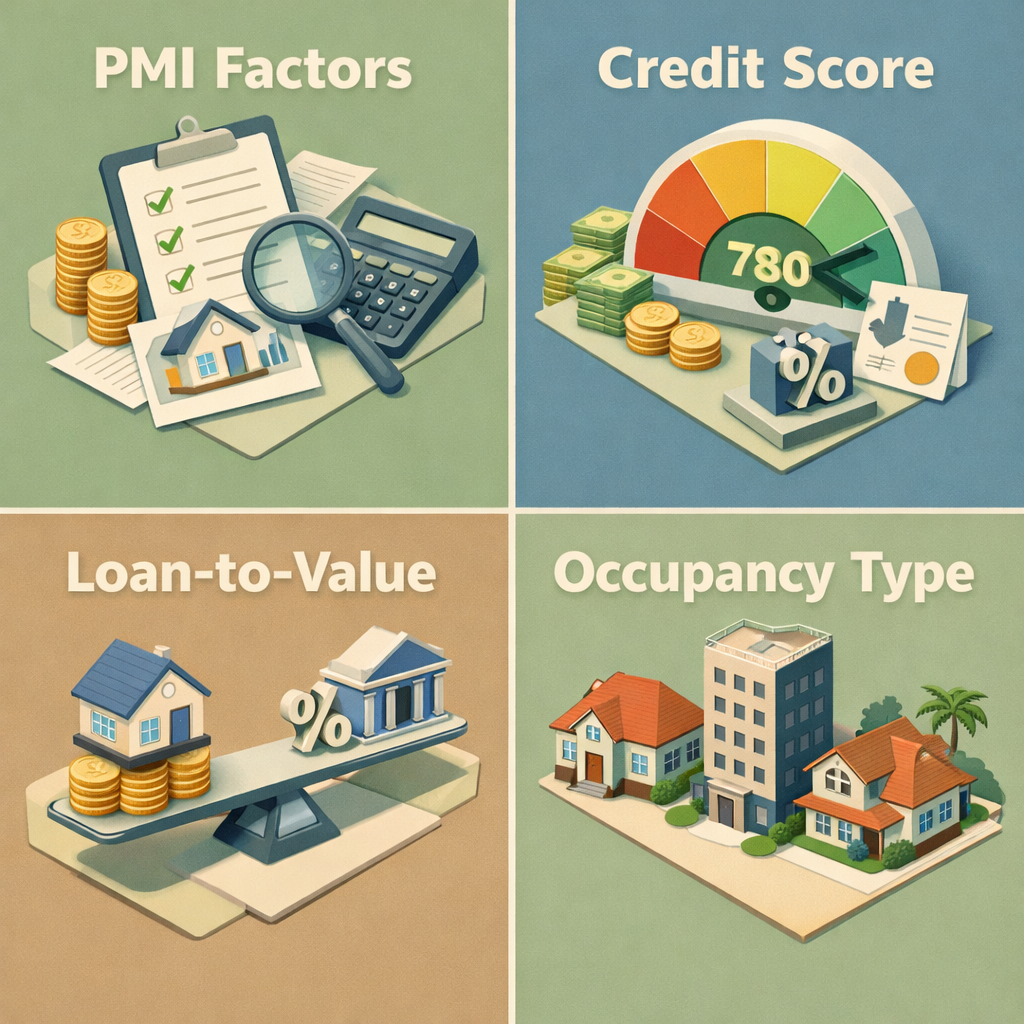
PMI rates on conventional loans are not one-size-fits-all. Insurers and lenders consider several factors when setting your premium. The most influential variables typically include:
- Loan-to-value ratio: The lower your LTV, the lower your PMI rate tends to be. At 85% LTV with a 15% down payment, you're closer to the 80% threshold, which generally results in more favorable PMI pricing.
- Credit score: Borrowers with higher credit scores often qualify for lower PMI rates. A score above 740 may result in noticeably lower premiums compared to scores in the 620–679 range.
- Loan term: A 30-year fixed loan typically carries a slightly higher PMI rate than a 15-year term due to the extended risk period for the insurer.
- Occupancy type: Primary residences often receive better PMI pricing than investment properties or second homes.
- Type of PMI: Borrowers may choose between borrower-paid PMI (monthly), lender-paid PMI (built into the interest rate), or a single upfront premium paid at closing.
For a borrower putting 15% down with a solid credit score, PMI rates might typically fall somewhere in a range that adds a modest amount to the monthly payment. While specific rates vary by insurer and market conditions, the combination of 85% LTV and strong credit can position a borrower fairly well compared to those putting down less.
Cost of PMI for Conventional Loan with 15% Down Payment from Non-Relative Gift
When someone other than a family member — such as a close friend, employer, or charitable organization — provides the down payment funds, this is referred to as a gift from a non-relative. Understanding the cost of PMI for a conventional loan with 15% down payment from a non-relative gift requires looking at two separate issues: how the gifted funds affect your loan eligibility and how PMI pricing responds to the source of those funds.
From a PMI pricing standpoint, the insurer is primarily focused on your LTV ratio, credit profile, and loan characteristics. The source of the down payment funds — whether from savings, a relative, or a non-relative — typically doesn't directly change your PMI rate. What matters more is that the funds are properly documented and that the lender can verify the money is a true gift with no repayment obligation.
However, conventional loan guidelines — particularly those backed by Fannie Mae and Freddie Mac — do have specific rules about gift funds. For a primary residence with a 15% down payment, gift funds from a non-relative may be acceptable under certain program guidelines, but lenders often apply additional scrutiny. Some lenders may require that a portion of the down payment come from the borrower's own funds, especially when the gift comes from a non-relative source.
If the lender approves the non-relative gift and structures the loan accordingly, the cost of PMI itself should reflect the standard pricing for your LTV and credit tier. The additional risk, in the lender's view, may be reflected more in the loan approval conditions than in the PMI rate directly.
Documentation Requirements When Using Gifted Funds from a Non-Relative
One area where non-relative gifts add complexity is documentation. Lenders and mortgage insurers need to confirm that the funds are legitimate, properly transferred, and not a disguised loan. Failing to document the gift correctly could delay your closing or even result in a denial.
Here's what lenders commonly require when a non-relative provides gift funds:
- A signed gift letter: This letter must confirm the amount of the gift, the relationship between the giver and the borrower, the property address, and a clear statement that no repayment is expected.
- Proof of the donor's ability to give: Lenders may request bank statements or other financial records from the gift donor to show the funds are legitimate.
- Evidence of transfer: Bank statements showing the funds moving from the donor's account to the borrower's account, along with deposit confirmation, are typically required.
- Source of funds verification: For non-relative gifts especially, underwriters may take a closer look to ensure the money isn't tied to any undisclosed loan agreement.
Getting these documents in order early in the process can help things move smoothly. Working with an experienced mortgage professional who understands how gift funds interact with conventional loan guidelines can make a real difference here.
How Your Credit Score Shapes the PMI Premium You Pay
Even with a 15% down payment and properly documented gift funds, your credit score remains one of the most powerful drivers of your PMI cost. Mortgage insurers use a risk-based pricing model, meaning borrowers perceived as higher risk pay higher premiums.
Borrowers with credit scores above 740 or 760 often qualify for the most favorable PMI pricing tiers. As credit scores drop below 700, premiums may increase meaningfully. If your score falls in the 620–679 range — which is still within conventional loan territory — your PMI costs could be noticeably higher than those of a borrower with stronger credit at the same LTV.
This is why it's often worth taking a few months to improve your credit before applying, if you're not in a rush. Paying down existing balances, correcting errors on your credit report, and avoiding new credit inquiries could help move your score higher — and potentially reduce your PMI expense over the life of the loan.
It's also worth understanding that PMI isn't permanent. On conventional loans, borrowers may request PMI cancellation once their loan balance reaches 80% of the home's original appraised value. By federal law under the Homeowners Protection Act, lenders must automatically cancel PMI when the loan balance drops to 78% of the original purchase price, assuming payments are current.
PMI Structures Worth Comparing Before You Commit
Not all PMI is structured the same way, and the type you choose can affect both your monthly payment and your total cost over time. Here are the most common options available on conventional loans:
- Monthly PMI (Borrower-Paid): This is the most common structure. The premium is added to your monthly mortgage payment and cancels once you reach the required equity threshold. It offers flexibility because you're not committed to paying it if home values rise quickly or you pay down your loan faster than expected.
- Single Premium PMI: You pay the entire PMI cost upfront at closing. This eliminates the monthly PMI payment but requires more cash at closing. It could make sense if you have extra funds available and plan to stay in the home long-term.
- Lender-Paid PMI (LPMI): The lender covers the PMI premium in exchange for a slightly higher interest rate. There's no separate monthly PMI line item, but you pay a higher rate for the life of the loan — even after you would have otherwise hit the cancellation threshold.
- Split Premium PMI: A hybrid approach where part of the premium is paid upfront at closing and the remainder is split into smaller monthly installments. This can help reduce the ongoing monthly cost without a large single upfront payment.
If you're using a non-relative gift for your 15% down payment, the single premium option may require careful planning since most or all of your down payment is coming from outside funds. Discussing these structures with your loan officer can help you identify which option aligns best with your financial situation.
Steps to Take Before Applying for a Conventional Loan with Gifted Funds
Preparation makes a meaningful difference when you're using a non-relative gift as part of your down payment strategy. Here are some practical steps to strengthen your position before you apply:
- Confirm the gift is permissible: Talk with your loan officer early to verify whether your lender and chosen loan program allow non-relative gifts for a 15% down payment scenario. Guidelines can vary between lenders and PMI companies.
- Prepare your gift documentation in advance: Don't wait until underwriting to gather the gift letter, donor bank statements, and transfer receipts. Having these ready from the start can prevent delays.
- Review your credit report: Check all three bureaus for errors or negative items. Addressing issues before applying may improve your score and reduce your PMI rate.
- Compare PMI quotes: Just like you'd shop for the best mortgage rate, it's worth asking about PMI rates from different insurers. Some lenders work with multiple PMI companies, and rates can vary.
- Calculate your break-even point: If you're weighing a larger down payment against using the gifted funds at 15%, run the numbers to see how long it would take for the PMI savings to offset any opportunity cost.
- Speak with a licensed mortgage professional: A knowledgeable loan officer can walk you through how your specific credit profile, loan amount, and gifted down payment will interact with PMI pricing under current guidelines.
●Conclusion
Using a non-relative gift to cover a 15% down payment on a conventional loan is a legitimate and increasingly common path to homeownership. The cost of PMI for a conventional loan with 15% down payment from a non-relative gift is shaped primarily by your LTV ratio, credit score, and the PMI structure you select — not necessarily by the source of the funds themselves. That said, proper documentation of the gift is critical, and some lenders may apply additional scrutiny to non-relative gifts compared to family contributions.
The key takeaway is that 15% down puts you in a relatively favorable PMI pricing position compared to buyers putting down less. With a strong credit score and well-documented gift funds, many homebuyers find that the monthly PMI cost is a manageable trade-off for getting into a home sooner. As your equity grows, PMI can be cancelled — making it a temporary cost rather than a permanent burden.
At LoanWise, we're here to help you navigate these decisions with clarity and confidence. Whether you're evaluating PMI options, working through gifted fund requirements, or simply trying to understand how conventional loan guidelines apply to your situation, our team is ready to guide you every step of the way.