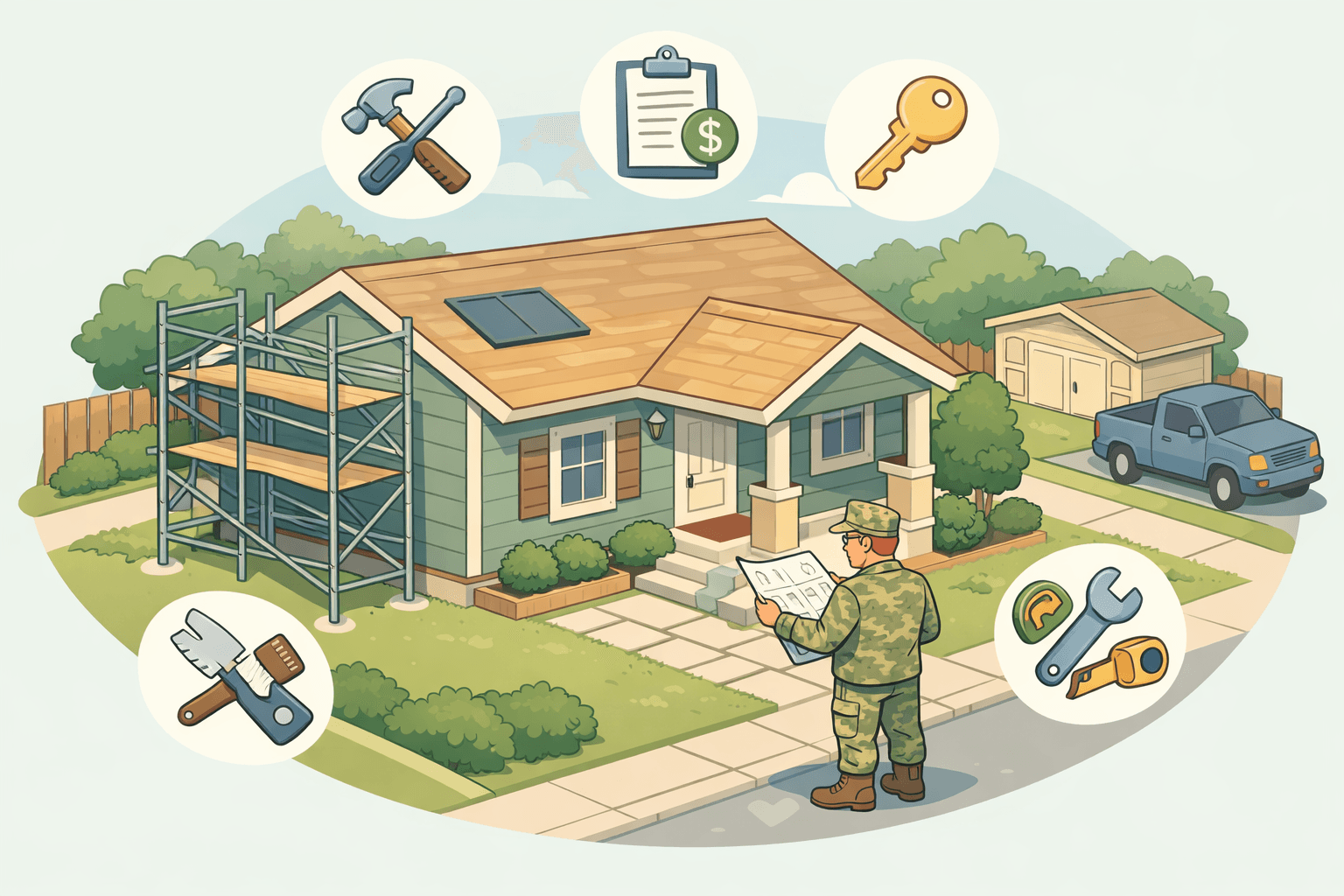
If you're a veteran or active-duty service member eyeing a home that needs some work, you might be wondering: can I use VA loan benefits for a fixer-upper home? The short answer is — it depends. The VA loan program is one of the most powerful home financing tools available to eligible borrowers, offering no down payment, competitive interest rates, and no private mortgage insurance. However, the program does come with property condition requirements that can make purchasing distressed or run-down homes a bit more complex. The good news is that there are pathways designed specifically to help veterans finance both the purchase and renovation of a property that needs repairs. This guide walks you through what you need to know before making an offer on that diamond-in-the-rough property.
Understanding VA Loan Minimum Property Standards
Before diving into renovation financing, it's important to understand why fixer-uppers can be tricky with a standard VA loan. The Department of Veterans Affairs requires that any home purchased with a VA loan meet what are called Minimum Property Requirements (MPRs). These standards are designed to protect the veteran borrower by ensuring the home is safe, structurally sound, and sanitary at the time of purchase.
A VA-approved appraiser will assess the property during the appraisal process and flag any issues that fail to meet these requirements. Common problems that may trigger MPR concerns include:
- Roof damage or significant leaks
- Exposed electrical wiring or outdated electrical systems
- Broken or missing windows and doors
- Evidence of foundation issues or structural damage
- Peeling lead-based paint in older homes
- Non-functioning heating or plumbing systems
- Pest or termite infestations
If a home has these types of deficiencies, a standard VA purchase loan typically cannot be used to close on the property until those issues are resolved. This is a key limitation that veterans need to plan for when shopping for homes that need renovation work. However, understanding these standards early in your home search can save you from costly surprises down the road.
Can I Use VA Loan Benefits for a Fixer-Upper Home With a Standard Purchase Loan?
Technically, can I use VA loan benefits for a fixer-upper home through a standard VA purchase loan? In limited cases, yes — but only if the repairs needed are relatively minor and the home still meets VA Minimum Property Standards at the time of appraisal. If a home needs cosmetic updates like new flooring, fresh paint, or updated landscaping, a standard VA loan could work just fine.
The challenge arises when the property has significant structural, safety, or habitability issues. In those situations, the VA appraiser may place conditions on the loan that require repairs to be completed before closing. This creates a dilemma: the seller may not want to make repairs, and the buyer typically can't fund major renovations out-of-pocket before owning the home.
Some veterans negotiate seller-paid repair credits or work with sellers willing to complete repairs prior to closing. While this can be a viable strategy for light renovation needs, it's often not practical for heavily distressed properties. That's where specialized VA rehab loan options come into play.
Exploring VA Rehab Loan Options: The VA Renovation Loan
For veterans looking to purchase and renovate a home simultaneously, the VA renovation loan — sometimes called the VA rehab loan — may be the right solution. This product combines the purchase price and the estimated cost of repairs into a single loan, allowing borrowers to finance the home and improvements together without needing a separate construction or personal loan.
Not all lenders offer VA renovation loans, as they require additional underwriting expertise and involve more complexity than a standard purchase loan. However, working with a lender experienced in VA renovation lending could open doors to properties that might otherwise be out of reach.
Key benefits of VA renovation loans may include:
- No down payment requirement for eligible veterans (subject to lender and VA guidelines)
- Financing for both purchase and renovation costs in one loan
- Potentially competitive interest rates compared to personal loans or credit cards used for home improvements
- Ability to buy a home below market value and build equity through renovations
It's worth noting that the scope of eligible renovations may vary depending on the lender's specific program guidelines. Some VA renovation products are designed for light-to-moderate repairs, while others may accommodate more substantial rehabilitation work. Always consult with a knowledgeable VA-approved lender to understand exactly what types of improvements are permitted under their specific program.
VA Renovation Loan Requirements You Should Know
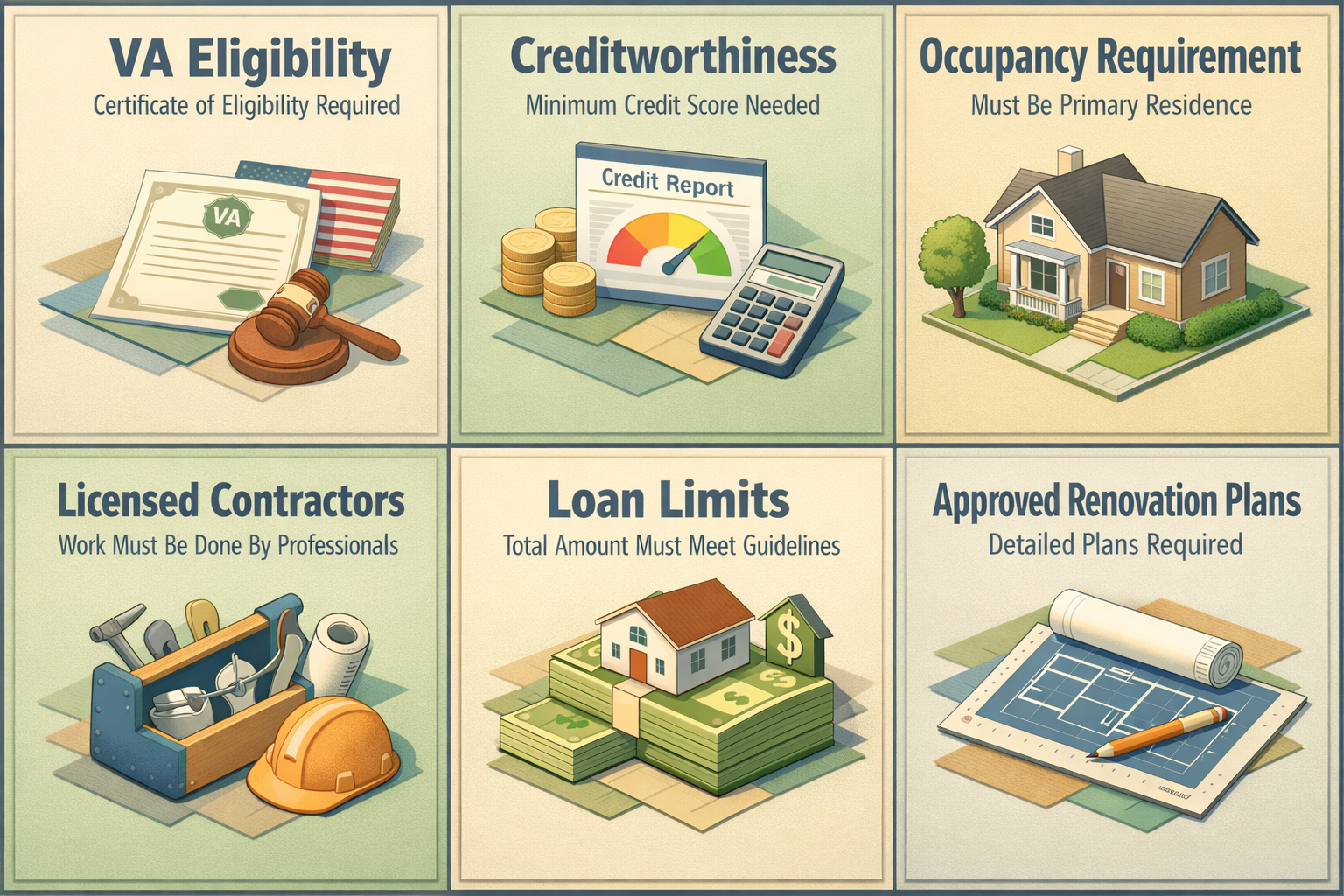
If you're considering a VA renovation loan, it helps to understand the general VA renovation loan requirements before you begin your home search. While specific guidelines can vary by lender, there are some common criteria that typically apply:
- VA Eligibility: You must have a valid Certificate of Eligibility (COE) confirming your VA loan entitlement based on your military service history.
- Creditworthiness: Most lenders look for a minimum credit score, which often ranges around 620 or higher, though some lenders may have more flexible standards depending on the borrower's overall financial profile.
- Occupancy Requirement: VA loans are designed for primary residences. You'll generally need to intend to live in the home once renovations are complete.
- Licensed Contractors: Renovation work typically must be completed by licensed, insured contractors. DIY work is generally not eligible under VA renovation programs.
- Loan Limits: The total loan amount — purchase price plus renovation costs — must fall within acceptable limits based on the area's conforming loan guidelines and the home's projected after-improved value.
- Approved Renovation Plans: Lenders may require detailed renovation plans and cost estimates from contractors before approving the loan.
Meeting these requirements could position you well to take advantage of this unique financing tool. Speaking with a VA-specialized loan officer early in the process can help you understand which requirements apply to your specific situation and how to best prepare your application.
Navigating VA Loans for Distressed Properties and Foreclosures
Veterans interested in VA loans for distressed properties — such as bank-owned foreclosures, short sales, or REO (real estate owned) listings — face a unique set of challenges. These homes are often sold "as-is," meaning the seller typically won't make repairs or provide credits. Because distressed properties may have deferred maintenance, vandalism damage, or missing appliances and fixtures, they frequently fail VA Minimum Property Standards.
That said, some distressed properties are in surprisingly good condition and may pass a VA appraisal without issue. The key is to conduct a thorough pre-offer walkthrough and, if possible, consult with a VA-experienced real estate agent who can help identify whether a distressed home is likely to meet MPR requirements.
When a distressed property doesn't meet VA standards as-is, veterans have a few potential paths forward:
- Use a VA renovation loan to purchase and repair simultaneously
- Explore an escrow holdback or repair escrow arrangement if permitted by the lender
- Consider whether the repairs needed are minor enough that the seller or their bank might agree to complete them
- Evaluate whether another loan product (like an FHA 203(k) or conventional renovation loan) might be a better fit for that specific property
It's also worth remembering that some VA-acquired properties — homes previously financed with VA loan benefits and repossessed — may be sold through the VA's own disposition process. These homes sometimes come with repair allowances or flexible terms, though availability varies and inventory changes frequently.
Comparing VA Renovation Financing to Other Rehab Loan Programs
Veterans aren't limited to VA-specific products when financing a fixer-upper. It's worth comparing VA rehab loan options to other renovation financing tools to determine the best fit for your goals and financial situation.
FHA 203(k) Loan: This government-backed renovation loan is available to non-veterans and veterans alike. It comes in two versions — the Standard 203(k) for major renovations and the Limited 203(k) for smaller repairs. The FHA 203(k) requires a minimum 3.5% down payment for borrowers with qualifying credit scores, which is a notable difference from VA's no-down-payment benefit.
Conventional Renovation Loans (Fannie Mae HomeStyle or Freddie Mac CHOICERenovation): These programs allow borrowers to finance renovations with a conventional loan. Down payment requirements typically start at 3% to 5%, and private mortgage insurance may apply depending on the loan-to-value ratio.
Personal Loans or Home Equity Products: Some veterans use personal loans or, if they already own a home, a home equity line of credit (HELOC) to fund renovations. These options can be flexible but may come with higher interest rates than mortgage-based renovation products.
For eligible veterans, the VA renovation loan often remains compelling because of the no-down-payment feature and the absence of mortgage insurance. However, if your primary residence is already covered and you're looking at an investment property or second home, note that VA loans are restricted to owner-occupied primary residences — a key distinction for real estate investors.
Tips for Veterans Ready to Buy a Fixer-Upper With VA Benefits
Successfully using your VA loan benefits to purchase and renovate a home takes some extra planning. Here are practical strategies to help make the process smoother:
- Work with a VA-experienced real estate agent: An agent familiar with VA transactions will know how to spot potential MPR issues early and negotiate accordingly.
- Get pre-approved before you shop: Knowing your borrowing capacity — including renovation funds — helps you make realistic offers and move quickly in competitive markets.
- Order a thorough home inspection: While a VA appraisal checks for MPR compliance, a separate home inspection provides a more detailed look at the property's condition. This helps you estimate renovation costs more accurately.
- Build a realistic renovation budget: Factor in a contingency of roughly 10% to 20% above your estimated repair costs, as renovation projects often encounter unexpected expenses.
- Vet your contractors carefully: VA renovation programs typically require licensed contractors. Gather multiple bids and verify credentials before committing.
- Understand the timeline: Renovation loans often take longer to close than standard purchase loans due to additional documentation, appraisal requirements, and contractor coordination. Plan accordingly.
- Consult a VA-approved lender early: Not every lender offers VA renovation products. Connecting with a knowledgeable VA lender at the start of your search can save you significant time and frustration.
With careful preparation and the right team of professionals, buying a fixer-upper with VA benefits can be a rewarding path to homeownership — and potentially a smart way to build equity from day one.
●Conclusion
So, can I use VA loan benefits for a fixer-upper home? The answer is a qualified yes — provided you understand the property standards involved and explore the right loan products for your situation. A standard VA purchase loan may work for homes needing only minor cosmetic updates, while the VA renovation loan opens the door to properties requiring more substantial repairs. Navigating the requirements takes some extra effort, but for eligible veterans, the benefits of VA financing — including no down payment and no private mortgage insurance — make it well worth exploring. Connect with a VA-approved lender at LoanWise today to find out which renovation financing option aligns best with your homeownership goals.