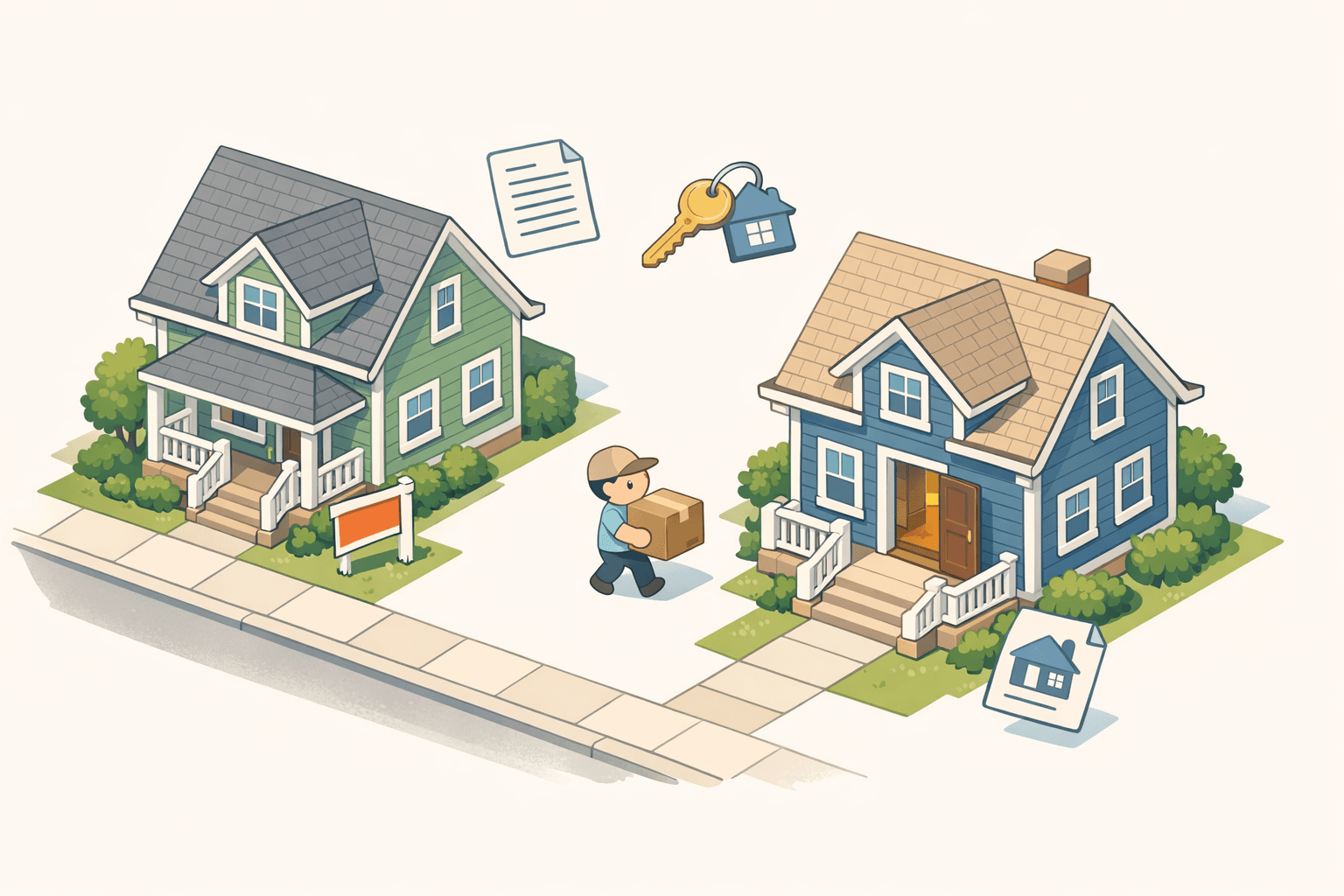
One of the most common challenges homeowners face is figuring out how to buy a new home while still owning their current one. The timing rarely lines up perfectly, and the financial pressure of managing two properties at once can feel overwhelming. But with the right strategy and financing tools, it's entirely possible to make a smooth transition. Whether you're upsizing, downsizing, or simply relocating, understanding your options is the first step toward a confident move. This guide walks you through the key approaches to buying a house while selling yours, so you can make informed decisions every step of the way.
Why Timing Is the Biggest Challenge
In an ideal world, your current home would sell the same day you close on your new one. In reality, that almost never happens. Real estate markets move at their own pace, and the gap between selling and buying can stretch from a few weeks to several months. This timing mismatch creates a genuine financial dilemma: do you sell first and risk having nowhere to live, or buy first and risk carrying two mortgages at once?
The answer depends largely on your financial position, the local market conditions, and your personal risk tolerance. In a competitive seller's market, homes may move quickly, which could give you more confidence buying before your current property sells. In a slower market, the opposite may be true. Either way, going in without a plan could expose you to unnecessary stress and cost.
Understanding the risks on both sides helps you make a more grounded decision. Selling first gives you a clear budget but leaves you potentially homeless between transactions. Buying a house first locks in your new home but may stretch your finances thin. Most homeowners find that a middle-ground strategy, supported by the right financing product, offers the most flexibility.
What Is a Bridge Loan and How Does It Work?
A bridge loan is a short-term financing solution designed specifically for homeowners who are buying a house while selling yours. It essentially bridges the gap between the purchase of your new home and the sale of your existing one. Lenders typically secure a bridge loan against your current home's equity, giving you access to funds you can use toward the down payment or closing costs on your next property.
Bridge loans are usually structured with terms ranging from six months to one year, though some lenders may offer slightly longer periods. Interest rates on bridge loans tend to be higher than standard mortgage rates, reflecting the short-term nature and added risk involved. Monthly payments may be interest-only during the loan term, with the principal repaid once your current home sells.
To qualify, lenders will typically look at your overall equity position, credit profile, and your ability to carry both loans simultaneously if needed. Not every lender offers bridge financing options, so it's worth shopping around or working with a mortgage broker who has access to a wider range of products. While bridge loans can be a powerful tool, they work best when you have a reasonable expectation that your current home will sell within the loan term.
Using a Home Equity Line of Credit as an Alternative
If a bridge loan feels like too much commitment, a Home Equity Line of Credit, commonly known as a HELOC, may offer a more flexible path. A HELOC allows you to borrow against the equity in your current home up to an approved limit, drawing funds as needed rather than receiving a lump sum upfront. This revolving credit structure can be particularly useful when you're still searching for your next home and aren't ready to commit to a fixed loan amount.
One important consideration is timing. Most lenders won't approve a HELOC once your home is listed for sale, so you'd need to secure the line of credit before putting your property on the market. That requires some advance planning, but it could give you a valuable financial cushion during the transition period.
HELOCs typically carry variable interest rates, which means your borrowing costs could fluctuate over time. However, during a short transition window, this may be an acceptable trade-off for the flexibility the product provides. As with any home equity product, your existing mortgage balance and the appraised value of your home will determine how much you can access.
Making a Contingent Offer on Your Next Home
Another common approach to buying a house while selling yours involves submitting a contingency offer. This type of offer includes a condition stating that your purchase is contingent on the successful sale of your current home. It's a straightforward way to protect yourself from carrying two mortgages indefinitely, and many sellers understand the position a buyer is in.
The challenge with contingent offers is that they can be less attractive to sellers, particularly in competitive markets where multiple offers are common. A seller who receives a clean, non-contingent offer alongside yours may simply choose the path of least resistance. That said, in slower markets or when a property has been sitting unsold for a while, sellers may be more open to negotiating on contingency terms.
Some buyers choose to strengthen a contingent offer by shortening the contingency period, offering a higher earnest money deposit, or demonstrating strong pre-approval documentation. These steps signal seriousness and may help offset the uncertainty a seller feels when accepting a conditional purchase agreement. Working with an experienced real estate agent can make a significant difference in how these negotiations unfold.
Qualifying for Two Mortgages at Once
In some situations, a homeowner may have the financial strength to carry both mortgages during the transition. This approach avoids the complexity of bridge financing or contingency clauses, but it does require solid income, manageable debt levels, and strong credit. Lenders will assess your debt-to-income ratio based on both mortgage obligations, so your numbers need to hold up under that combined pressure.
If you're considering this route, it helps to get pre-approved before listing your current home. A lender can run the numbers to show you exactly where you stand when both payments are factored in. This pre-approval also puts you in a strong position when making an offer on a new home, since sellers and their agents can see that your financing is already lined up.
It's worth noting that some loan programs have specific guidelines around counting rental income or expected proceeds from a pending home sale when calculating qualifying income. A knowledgeable loan officer can help you navigate these nuances and identify which program gives you the most flexibility in your specific situation.
Practical Tips for Managing Both Transactions
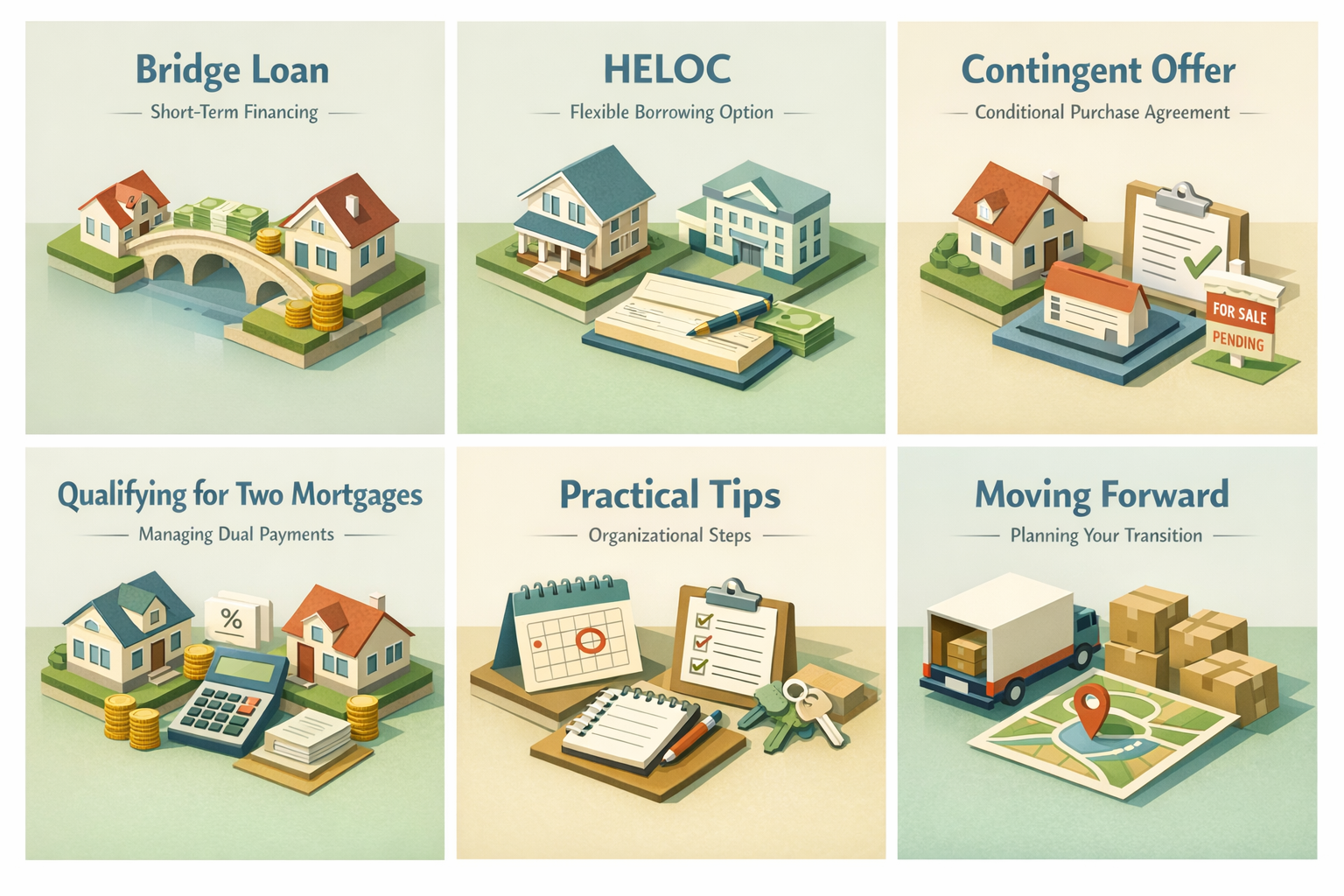
Even with the right financing in place, manage both transactions simultaneously calls for careful organization. Here are some practical steps that may help you stay on track:
- Get pre-approved early: Knowing your buying power before your current home sells gives you a clear picture of what you can afford and how much of a financing gap you may need to cover.
- Price your current home strategically: A realistic listing price increases the chance of a quicker sale, which reduces the overlap period and minimizes carrying costs.
- Negotiate flexible closing dates: Both as a buyer and a seller, requesting extended or staggered closing timelines can create breathing room between transactions.
- Build a cash reserve: Having liquid savings set aside to cover overlapping mortgage payments, moving costs, or unexpected repairs on either property can prevent financial stress during the transition.
- Work with experienced professionals: A real estate agent who handles simultaneous transactions regularly and a mortgage lender who understands bridge financing can make the whole process significantly smoother.
These steps won't eliminate every complication, but they can give you a meaningful advantage when the unexpected occurs. Real estate transactions rarely go exactly as planned, so flexibility and preparation are your best assets.
●Conclusion
Navigating the process of buying a house while selling yours doesn't have to be a source of panic. With options like bridge loans, HELOCs, contingency offers, and dual mortgage qualification, homeowners have more tools at their disposal than ever before. The key is to understand which approach aligns with your financial situation, your timeline, and your comfort level with risk. Taking the time to explore these options with a qualified mortgage professional could be the single most important step you take before making your next move. At LoanWise, we're here to help you find the financing path that fits your life — not the other way around.