
Essential Business Loan Underwriting Guide for Real Estate Investors
Business loan underwriting represents the critical evaluation process that determines whether your real estate investment financing gets approved or denied. For property investors seeking DSCR loans, fix and flip financing, or bridge loans, understanding this process can mean the difference between securing capital quickly and missing profitable opportunities.
The underwriting process involves comprehensive analysis of your financial profile, property details, and investment strategy. Unlike traditional home mortgages, investment property underwriting focuses heavily on cash flow potential and debt service coverage ratios rather than personal income alone.
This guide breaks down the essential elements of business loan underwriting that every real estate investor should understand before applying for investment property financing.
Common Questions About Business Loan Underwriting
Understanding business loan underwriting often starts with addressing the most frequently asked questions from real estate investors.
Q: What is business loan underwriting?
Business loan underwriting is the comprehensive evaluation process where lenders assess the risk of approving your loan application. For real estate investors, this typically involves analyzing your credit profile, cash flow projections, property values, and overall investment strategy to determine loan approval and terms.
Q: How does underwriting differ for investment properties versus personal mortgages?
Investment property underwriting places greater emphasis on the property's income-generating potential and debt service coverage ratios. Lenders may require higher down payments, maintain stricter credit requirements, and focus more on rental income projections than personal employment income.
Q: Can I speed up the underwriting process?
While you cannot control the lender's internal timeline, providing complete documentation upfront and responding quickly to underwriter requests can help avoid delays. Working with experienced investment property lenders who understand your financing needs may also streamline the underwriting process.
Key Documentation Requirements for Investment Underwriting
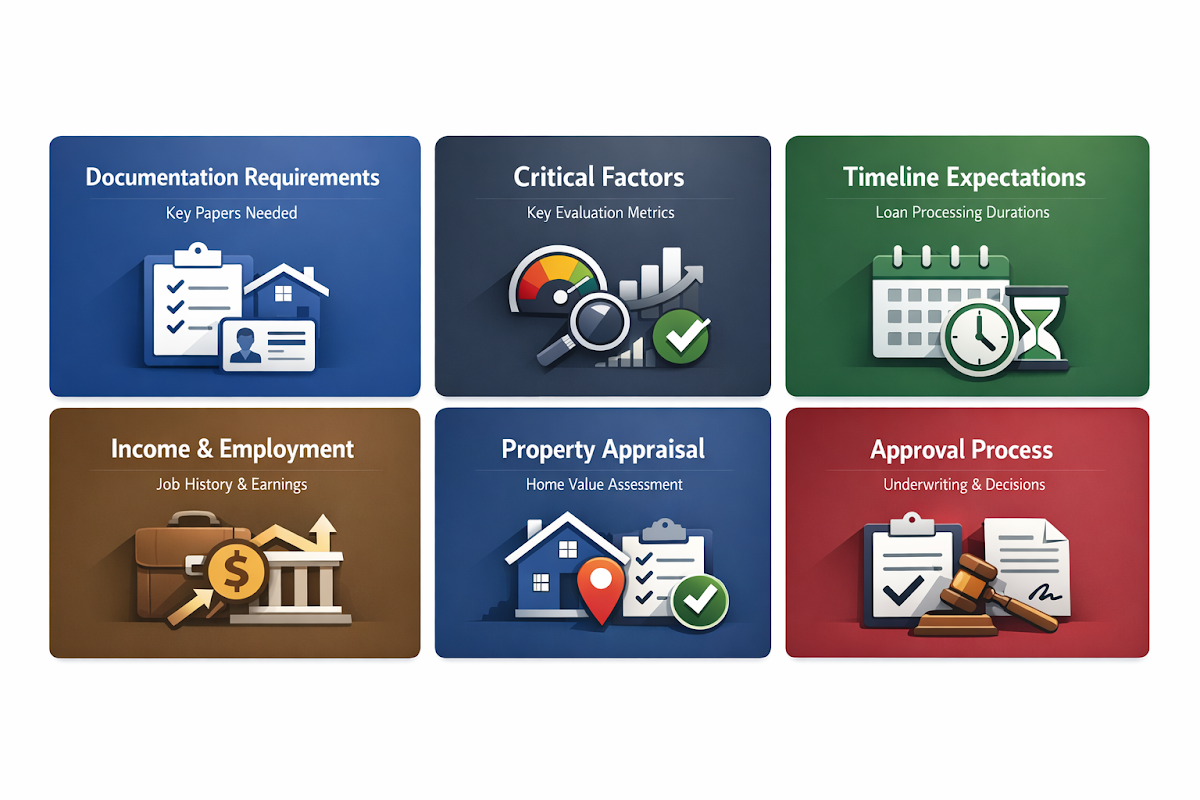
Proper documentation forms the foundation of successful business loan underwriting for real estate investments. Lenders require specific paperwork to evaluate your application thoroughly.
- Financial Statements: Recent tax returns, profit and loss statements, and bank statements demonstrating your financial stability and cash reserves for the investment
- Property Documentation: Purchase contracts, property appraisals, rent rolls for existing properties, and detailed renovation plans for fix and flip projects
- Credit and Identity Verification: Personal and business credit reports, driver's license, and Social Security card to verify your identity and creditworthiness
- Insurance and Legal Papers: Property insurance quotes, entity formation documents for LLCs or corporations, and any existing mortgage statements for current investment properties
Having these documents organized and readily available can significantly reduce the time spent in underwriting review.
Critical Factors Considered in Business Loan Underwriting
Understanding the factors considered in business loan underwriting helps investors prepare stronger applications and set realistic expectations for approval.
- Debt Service Coverage Ratio (DSCR): The property's projected rental income compared to the total debt payments, with most lenders requiring a minimum DSCR of 1.0 to 1.25 for approval
- Credit Score and History: Personal and business credit scores typically need to be above 620 for most investment property loans, with higher scores securing better terms and rates
- Cash Reserves and Down Payment: Adequate liquid assets to cover down payments (usually 20-25% minimum) plus additional reserves for unexpected expenses or vacancy periods
- Property Value and Condition: Professional appraisals and property inspections to confirm the investment's current value and identify any major repair needs that could affect profitability
Each factor carries different weight depending on the loan type and lender requirements, but all play important roles in the final underwriting decision.
Timeline Expectations for Different Loan Types
The question of how long does business loan underwriting take varies significantly based on loan complexity and lender efficiency, but certain patterns typically emerge for different investment financing products.
- DSCR Loans: Standard debt service coverage ratio loans often take 30-45 days from application to closing, as underwriters must verify rental income projections and analyze property cash flow potential
- Fix and Flip Bridge Loans: These short-term financing options may close in 15-21 days since they focus more on property value and exit strategy rather than extensive income verification
- Commercial Investment Loans: Larger commercial properties or portfolio loans can require 45-60 days due to more complex underwriting requirements, environmental assessments, and detailed financial analysis
Keep in mind that incomplete documentation, property complications, or credit issues can extend these timelines considerably. Working with specialized investment property lenders often results in faster processing than traditional banks.
Strategies to Improve Your Underwriting Approval Chances
Smart preparation can significantly improve your prospects during the business loan underwriting process and potentially secure better loan terms for your real estate investments.
- Strengthen Your Credit Profile: Pay down existing debt, resolve any credit report errors, and avoid new credit inquiries for several months before applying to maximize your credit score
- Build Substantial Cash Reserves: Maintain liquid assets beyond the minimum down payment requirement, demonstrating your ability to handle unexpected expenses or temporary vacancy periods
- Choose Properties Wisely: Select investment properties in strong rental markets with proven income potential, as underwriters favor properties with stable rental histories and positive cash flow projections
- Work with Experienced Professionals: Partner with real estate agents, appraisers, and contractors who understand investment properties and can provide accurate market data and renovation estimates
These proactive steps help present your application in the strongest possible light during underwriter review.
Common Underwriting Challenges and Solutions
Understanding potential obstacles in business loan underwriting allows investors to address issues proactively and avoid application delays or denials.
- Insufficient Cash Flow Documentation: Provide detailed rent rolls, lease agreements, and market analysis to demonstrate realistic income projections, especially for properties without established rental history
- Property Condition Concerns: Address major property issues before applying or provide detailed contractor estimates and renovation timelines to show how improvements will enhance property value
- Debt-to-Income Ratio Problems: Consider paying down existing debt, increasing down payment amounts, or focusing on higher-income-producing properties to improve your overall financial profile
Many underwriting challenges can be resolved with proper preparation and clear communication with your lender about your investment strategy and financial capabilities.
●Conclusion
Mastering the business loan underwriting process gives real estate investors a significant advantage in securing financing for profitable opportunities. By understanding evaluation criteria, preparing comprehensive documentation, and addressing potential challenges proactively, you can navigate underwriting more successfully.
Remember that each lender may have slightly different underwriting standards and timelines. Working with mortgage professionals who specialize in investment property financing can help you identify the best loan products for your specific situation and investment goals.
The key to underwriting success lies in thorough preparation, realistic expectations, and choosing the right financing partners for your real estate investment strategy.