
For small business owners and entrepreneurs, keeping shelves stocked and supply chains moving is critical to staying competitive. Whether you run a retail shop, an e-commerce store, or a product-based business, there are moments when you need more inventory than your current cash flow can support. That's where business financing comes in. Understanding the business loan requirements for inventory purchase can help you approach lenders with confidence and secure the working capital you need to grow. This guide walks you through what lenders typically look for, which loan products may fit your situation, and how to put your best foot forward when applying.
Why Inventory Financing Matters for Small Business Owners
Cash flow is one of the most common challenges facing small businesses. Seasonal demand spikes, supplier minimums, and bulk purchase discounts can all create a gap between what you have in the bank and what you need on your shelves. Inventory financing helps bridge that gap, allowing you to purchase stock now and repay the loan as sales come in.
For many business owners, waiting to accumulate enough cash to buy inventory could mean losing sales, missing out on supplier deals, or falling behind competitors. A well-structured business loan for stock can give your business the momentum it needs at exactly the right time.
The good news is that there are several inventory financing options designed specifically for product-based businesses. From traditional bank loans to revolving lines of credit, lenders have created tools that can align with the natural rhythm of your sales cycle. The key is knowing which option fits your needs and what lenders will require from you during the application process.
Common Lender Requirements When Applying for Inventory Loans
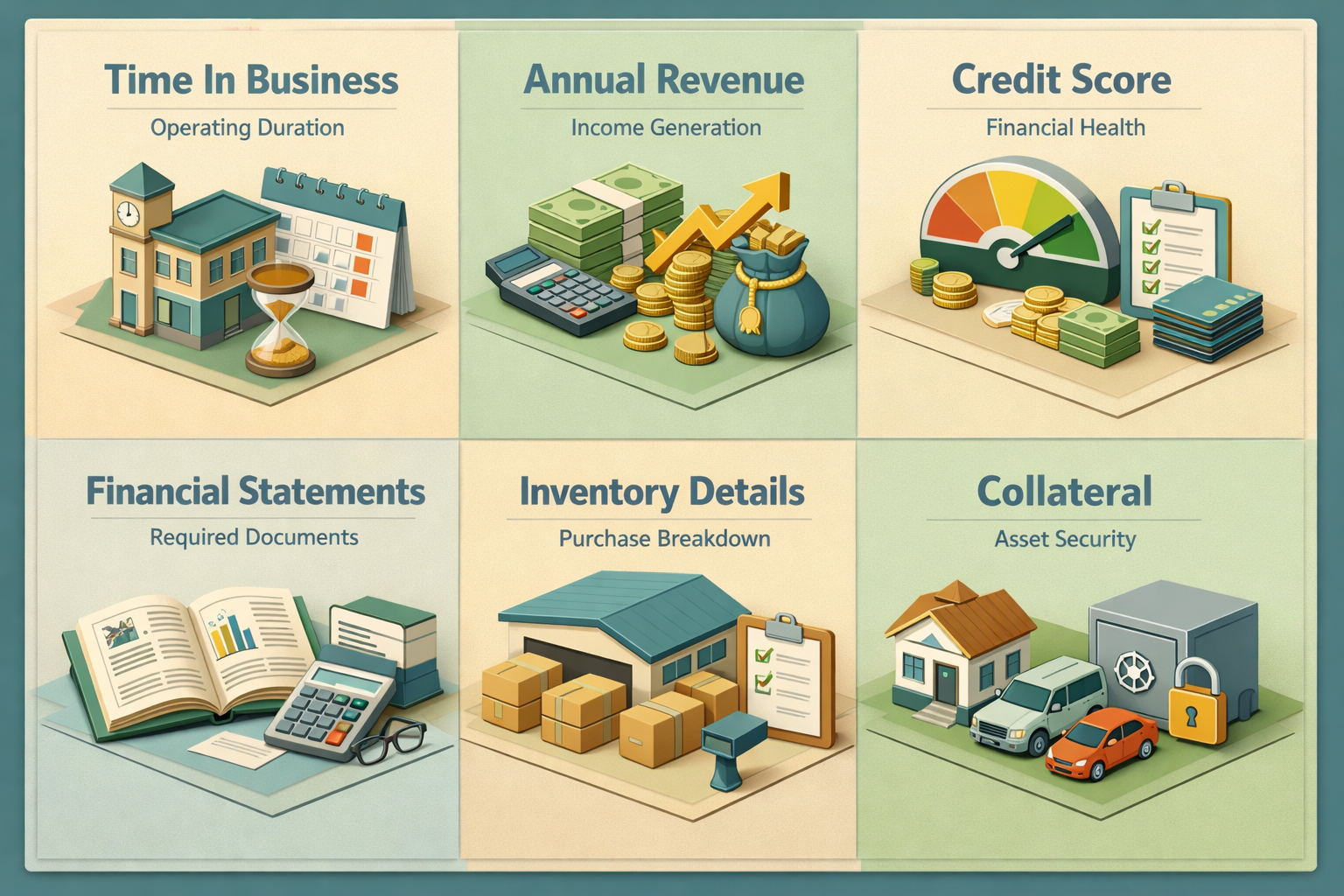
When evaluating business loan requirements for inventory purchase, lenders typically look at several core factors. While requirements can vary depending on the lender and loan type, most commercial borrowers can expect to provide the following:
- Time in business: Most traditional lenders prefer businesses that have been operating for at least one to two years. Startups may face stricter scrutiny or need to explore alternative lending channels.
- Annual revenue: Lenders want to see that your business generates enough income to service the debt. Revenue requirements vary by lender, but consistent and documented sales history strengthens your application.
- Credit score: Both your personal and business credit scores may be reviewed. A stronger credit profile typically results in better loan terms and lower interest rates.
- Financial statements: Expect to provide profit and loss statements, balance sheets, and possibly tax returns for the past two years. These documents help lenders assess your financial health.
- Inventory details: Since the loan is tied to a specific purpose, lenders may ask for supplier invoices, purchase orders, or a breakdown of what inventory you plan to buy and how quickly it's expected to sell.
- Collateral: In many cases, the inventory itself may serve as collateral. Some lenders may also require additional assets depending on the loan size.
Meeting these benchmarks doesn't guarantee approval, but they form the foundation of a strong application. The more organized and transparent your documentation, the smoother the process tends to be.
Exploring Your Inventory Financing Options
Not all business loans are created equal, and choosing the right product can make a meaningful difference in your repayment experience. Here's a look at some of the most common inventory financing options available to small business owners:
Business Lines of Credit
A revolving line of credit is one of the most flexible tools for managing inventory purchases. You draw funds as needed, repay what you've used, and borrow again. This structure works well for businesses with fluctuating inventory needs throughout the year. Interest is typically charged only on the amount drawn, which may help keep costs manageable.
Term Loans
A traditional term loan provides a lump sum that you repay over a fixed period with regular installments. This option may suit businesses that need to make a large, one-time inventory purchase — such as stocking up before a major holiday season. Term loans often come with predictable payment schedules, which can simplify budgeting.
SBA Loans
Small Business Administration loans, particularly the SBA 7(a) program, can be used for working capital purposes including inventory. These loans are partially guaranteed by the government, which may allow lenders to offer more favorable terms to qualifying borrowers. However, the application process can be more involved and may take longer than other loan types.
Inventory-Specific Financing
Some lenders offer financing products designed specifically around inventory as collateral. In this arrangement, the lender may advance a percentage of the inventory's appraised or purchase value. This type of asset-based lending can be a practical solution for businesses with substantial and fast-moving stock.
Merchant Cash Advances
While not a traditional loan, a merchant cash advance provides upfront capital in exchange for a portion of future sales. This option can work for businesses with strong card-based revenue, though the effective cost may be higher than other financing options. It's worth comparing carefully before committing.
Working Capital for Inventory: How Lenders Assess Your Ability to Repay
When you apply for working capital for inventory, lenders aren't just looking at what you want to buy — they're evaluating whether your business can comfortably repay what it borrows. This assessment typically centers on a few key metrics.
Debt service coverage ratio (DSCR) is one measurement lenders commonly use. It compares your net operating income to your total debt obligations. A ratio above 1.0 suggests your business generates enough income to cover its debts, which lenders generally view favorably. The higher the ratio, the stronger the position you're in.
Lenders may also evaluate your inventory turnover rate — how quickly your business sells and replenishes its stock. A high turnover rate signals healthy demand and suggests the loan is likely to be repaid as inventory converts to revenue. Slow-moving inventory, on the other hand, may raise concerns about repayment risk.
Additionally, lenders will often look at your current ratio, which measures your short-term assets against short-term liabilities. A strong current ratio indicates that your business has enough liquid resources to meet near-term obligations, even if sales temporarily slow.
Understanding these metrics ahead of time can help you prepare your financials and address any weak spots before you apply. If your numbers aren't quite where you'd like them to be, working with a financial advisor or accountant to strengthen them first may improve your chances of approval. For businesses seeking working capital for inventory, being well-prepared can make a significant difference.
How to Fund Retail Inventory: Practical Steps Before You Apply
Knowing how to fund retail inventory effectively starts well before you walk into a lender's office or complete an online application. A little preparation can go a long way toward securing the financing you need on terms that work for your business.
- Review your credit reports: Check both your personal and business credit reports for errors or outdated information. Disputing inaccuracies before applying could improve your score and strengthen your application.
- Organize your financial documents: Gather your most recent tax returns, bank statements, profit and loss statements, and any existing loan agreements. Having these ready speeds up the process and shows lenders you're serious and organized.
- Define your inventory need clearly: Be specific about what you're purchasing, why you need it, and how you expect it to generate revenue. A clear business case for the loan can increase lender confidence.
- Calculate how much you actually need: Avoid borrowing more than necessary. Over-borrowing increases your repayment burden without adding proportional value to your business.
- Compare multiple lenders: Interest rates, fees, repayment terms, and eligibility requirements can vary significantly between lenders. Shopping around — including banks, credit unions, and online lenders — may help you find a better fit.
- Consider your repayment timeline: Match your loan term to your expected inventory sales cycle. If you expect to sell through stock within 90 days, a short-term loan or line of credit may be more appropriate than a multi-year term loan. Learning how to fund retail inventory through the right channels can help you make a more informed decision.
Business Loans for Stock: Tips to Strengthen Your Application
Applying for business loans for stock can feel overwhelming, especially if it's your first time seeking commercial financing. But with the right approach, you can present a compelling case to lenders and improve your likelihood of approval.
Build a Strong Business Credit Profile
If you haven't already established a separate business credit profile, now is a good time to start. Opening a business bank account, obtaining a business credit card, and ensuring your vendors report payments to business credit bureaus can all contribute to a healthier business credit score over time.
Demonstrate Consistent Revenue
Lenders want to see stability. Even if your revenue fluctuates seasonally, showing a consistent upward trend or a reliable average can make a positive impression. If your business has experienced a temporary downturn, be prepared to explain it and demonstrate recovery.
Show a Clear Repayment Plan
Walk lenders through how you plan to use the funds and how quickly you expect the inventory to convert to revenue. A simple cash flow projection that ties loan repayment to anticipated sales can demonstrate financial literacy and planning.
Explore Lender-Specific Programs
Some lenders offer programs tailored to specific industries or business types. Retailers, wholesalers, and distributors may find specialized loan products that better suit their inventory cycles. It's worth asking lenders directly whether they have programs designed for product-based businesses.
●Conclusion
Securing financing for your inventory doesn't have to be a complicated process — but it does require preparation and an understanding of what lenders are looking for. The business loan requirements for inventory purchase generally center on your creditworthiness, financial history, and the viability of your inventory as a revenue-generating asset. By exploring your options, organizing your documents, and presenting a clear repayment plan, you can approach the process with confidence.
At LoanWise, we're here to help small business owners and entrepreneurs find the right financing solutions for their unique needs. Whether you're stocking up for a busy season, expanding your product line, or managing cash flow gaps, the right lending partner can make all the difference. Connect with a LoanWise lending specialist today to explore inventory financing options that could work for your business.