Running a used car dealership comes with a unique set of financial demands — and keeping your lot stocked with quality vehicles is one of the biggest. Whether you're launching a new operation or looking to scale an established business, having the right funding in place can make all the difference. Fortunately, there are several strong business loan options for acquiring a used car dealership inventory that entrepreneurs and small business owners can tap into. From SBA programs to asset-based lending, understanding your choices is the first step toward building a thriving dealership.
Why Inventory Financing Is Critical for Used Car Dealerships
Unlike many retail businesses, used car dealerships carry a significant portion of their capital tied up in physical stock. Every vehicle on the lot represents a substantial investment before a single sale is made. That's why used car dealership inventory financing isn't just a convenience — it's often a operational necessity.
Without adequate funding, a dealership may struggle to meet customer demand, miss out on bulk acquisition opportunities at auctions, or find itself unable to refresh aging inventory. In competitive markets, a well-stocked lot is often what separates thriving dealerships from those that stagnate.
Cash flow timing also plays a major role. Dealerships frequently need to purchase vehicles weeks or even months before those cars generate revenue. Financing bridges that gap, allowing business owners to maintain momentum without draining their working capital reserves.
- Auction purchases often require quick, upfront payments that most small dealerships can't cover with cash alone.
- Seasonal demand shifts may require rapid inventory adjustments that outpace available funds.
- Growth opportunities — like acquiring a competitor's stock — can appear unexpectedly and require fast financing decisions.
Floor Plan Financing: The Industry Standard for Vehicle Inventory
When it comes to business loan options for acquiring a used car dealership inventory, floor plan financing is widely considered the industry's go-to solution. This type of revolving credit line is specifically designed for dealerships and allows owners to borrow funds to purchase individual vehicles, then repay those funds as each car is sold.
Think of it as a rolling line of credit where the vehicles themselves serve as collateral. As cars sell, the corresponding loan balances are paid down, and new vehicles can be financed in their place. This structure aligns well with the natural rhythm of dealership operations.
How Floor Plan Financing Typically Works
Lenders offering floor plan credit lines may be traditional banks, credit unions, or specialized automotive finance companies. The amount a dealership can borrow is often tied to its sales volume, credit history, and the appraised value of the vehicles being financed. Interest is typically charged only on the outstanding balance — meaning the faster you sell, the less you pay in interest.
It's worth noting that lenders may conduct periodic audits of your lot to verify that the financed vehicles are still on-site. Keeping accurate records and maintaining compliance with these audit requirements is essential to preserving your credit line.
SBA Loan Programs That May Support Dealership Inventory Needs
Small Business Administration (SBA) loans are among the most well-known funding sources for entrepreneurs across industries, and used car dealership owners may find certain programs particularly useful. While SBA loans aren't exclusively designed for inventory purchases, they can often be structured to address a range of business needs — including vehicle stock acquisition.
SBA 7(a) Loans
The SBA 7(a) loan program is the agency's most versatile offering. Eligible small businesses could use these funds for working capital, equipment, real estate, and in some cases, inventory. For dealership owners who need a broader financing solution that covers multiple operational needs — including some portion of inventory — this program might be worth exploring.
SBA 7(a) loans are issued through approved lenders and backed partially by the federal government, which may allow borrowers to access better terms than they'd find through conventional lending alone. Loan amounts, repayment terms, and eligibility requirements can vary, so it's advisable to work directly with an SBA-approved lender to understand what's possible for your situation.
SBA 504 Loans
The SBA 504 program is generally better suited for fixed asset acquisition — such as real estate or major equipment — rather than rolling inventory. However, if your dealership plans include purchasing or improving a physical location alongside your inventory strategy, this program could complement your overall financing plan.
Term Loans and Lines of Credit for Used Car Inventory Purchases
Beyond specialized floor plan financing and SBA programs, traditional term loans and business lines of credit are also viable tools for dealership owners seeking flexible funding.
Business Term Loans
A standard business term loan provides a lump sum of capital that's repaid over a fixed period with regular installments. For dealership owners who want to make a large, one-time inventory acquisition — such as purchasing a batch of vehicles from a retiring dealer or at a liquidation auction — a term loan could offer predictable repayment terms and straightforward structure.
Lenders will typically evaluate your credit score, time in business, revenue history, and existing debt obligations when assessing your application. Stronger financial profiles generally unlock better interest rates and longer repayment windows.
Business Lines of Credit
A revolving line of credit gives dealership owners the flexibility to draw funds as needed, repay, and borrow again — similar in spirit to floor plan financing but typically not secured by the vehicles themselves. This flexibility can be valuable for covering operational gaps, topping up inventory between floor plan draws, or handling unexpected expenses.
Lines of credit may carry variable interest rates and could require periodic renewal, so it's important to understand the terms fully before committing. They often work best as a complementary tool alongside a primary inventory financing solution.
Asset-Based Lending: Using What You Own to Fund What You Need
Asset-based lending (ABL) is another financing avenue that some dealership owners explore, particularly those with existing assets they can leverage. In this model, the loan amount is tied to the value of collateral — which might include existing vehicle inventory, equipment, accounts receivable, or even real estate.
For used car dealers, this approach can be especially useful if the business has a track record of sales and an established inventory base. Lenders assess the liquidation value of your assets to determine how much they're willing to advance. Because the loan is secured by tangible assets, some lenders may offer more flexibility on credit requirements compared to unsecured options.
It's important to note that asset-based lending typically involves ongoing monitoring and reporting requirements. Lenders may want regular updates on asset values, and failing to maintain required collateral levels could trigger loan adjustments. Working with a lender experienced in automotive or dealership lending can make this process smoother.
What Lenders Look for When Evaluating Dealership Financing Applications
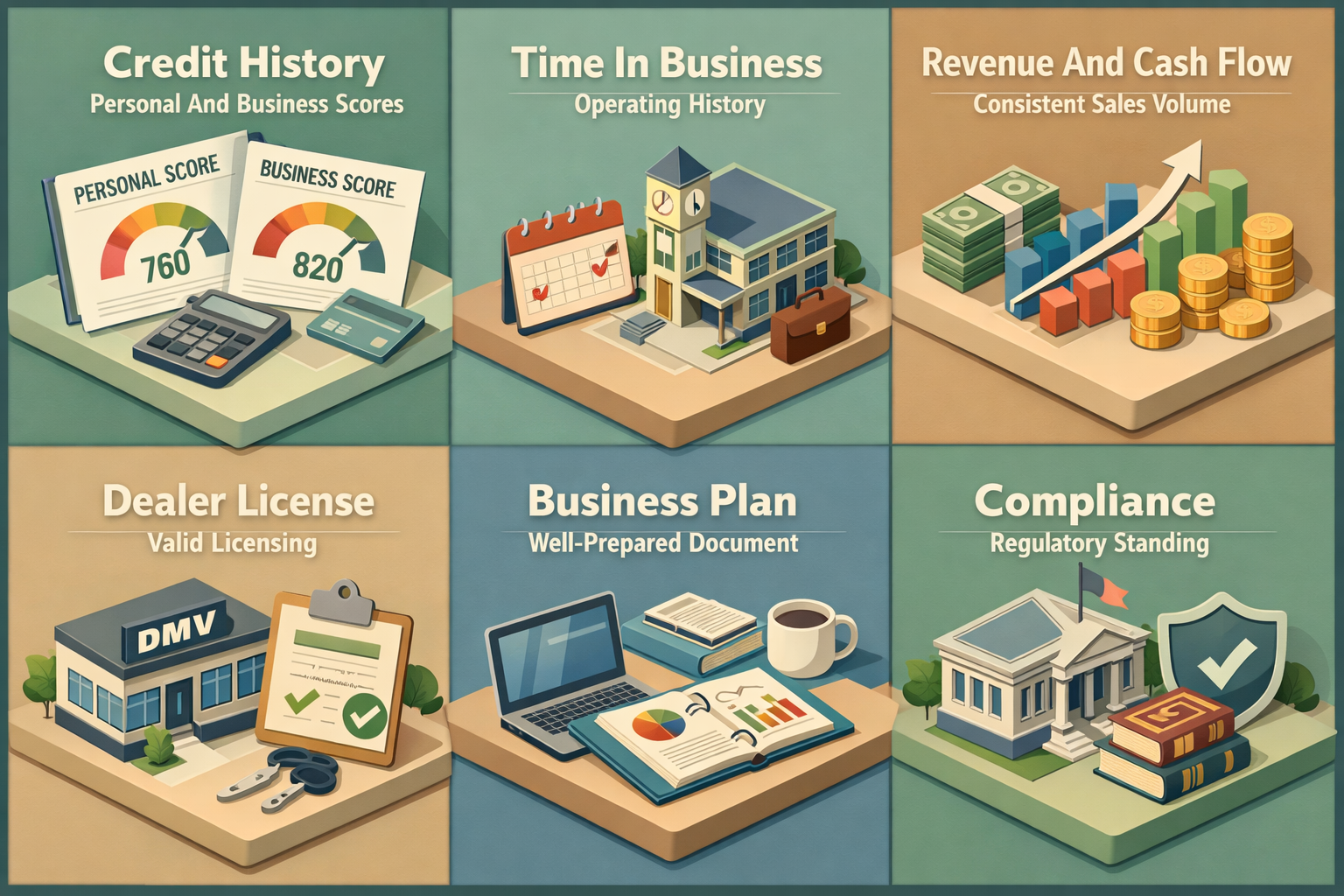
Whether you're applying for floor plan financing, a term loan, or an SBA program, lenders will evaluate several key factors before approving funding. Understanding what they're looking for can help you put your best foot forward.
- Credit history: Both personal and business credit scores often play a role, especially for newer dealerships without extensive financial track records.
- Time in business: Lenders typically prefer applicants with at least one to two years of operating history, though startup-focused programs may have different criteria.
- Revenue and cash flow: Demonstrating consistent sales volume and healthy cash flow signals that your dealership can service debt obligations reliably.
- Dealer license and compliance: Most lenders will verify that your dealership holds valid licensing and operates in good regulatory standing.
- Business plan: For newer operations or significant loan amounts, a well-prepared business plan can strengthen your application considerably.
Preparing your documentation in advance — including tax returns, bank statements, profit and loss statements, and your dealer license — can help speed up the approval process and reduce back-and-forth with lenders.
Choosing the Right Financing Partner for Your Dealership Goals
Not all lenders are equally equipped to serve the automotive dealership industry. When evaluating your business loan options for acquiring a used car dealership inventory, it's worth prioritizing lenders or brokers who have direct experience in dealership finance and understand the unique cash flow patterns of vehicle sales.
Specialized floor plan lenders often have dedicated dealership teams who can move quickly on approvals and understand the time-sensitive nature of auction purchases. Traditional banks may offer competitive rates but could move more slowly or apply less flexible underwriting criteria.
Questions to Ask Potential Lenders
- Do you have experience working with used car dealerships specifically?
- What are your audit and compliance requirements for floor plan lines?
- How quickly can funds be disbursed once approved?
- Are there prepayment penalties or early payoff restrictions?
- What happens to my credit line if a financed vehicle doesn't sell within a certain timeframe?
Taking the time to compare multiple lenders and ask targeted questions can help you find a financing partner that aligns with your dealership's size, growth stage, and operational style. A good lending relationship can be just as valuable as the capital itself.
●Conclusion
Stocking and sustaining a used car dealership requires more than just business savvy — it takes the right financial foundation. From floor plan credit lines to SBA loans and asset-based lending, there are multiple pathways available to help small business owners and entrepreneurs build a well-funded, competitive inventory. The key is understanding each option clearly, preparing your financials thoroughly, and partnering with a lender who understands the dealership world. If you're ready to explore used car dealership inventory financing solutions tailored to your business, LoanWise is here to help you navigate the process with confidence.