
Acquiring a small craft cider brewery is an exciting venture — but it's also a complex financial undertaking. Between the physical facility, specialized equipment, brand goodwill, and barrels of aging product, the purchase price can be substantial. That's why understanding your business loan options for acquiring a small craft cider brewery with aging inventory is so important before you sign anything. Whether you're an entrepreneur looking to enter the craft beverage industry or an experienced operator expanding your portfolio, the right financing strategy could make or break your acquisition. In this guide, we'll walk through the most relevant loan programs, lender considerations, and practical tips to help you secure funding with confidence.
Why Craft Cider Brewery Acquisitions Present Unique Financing Challenges
Buying a craft cider brewery isn't like purchasing a typical retail business. Lenders tend to scrutinize these deals more carefully because the asset mix is unconventional. You're often dealing with a combination of real estate or a lease, production equipment, branded intellectual property, taproom fixtures, and — perhaps most importantly — aging inventory that hasn't yet been sold.
That last piece is where things get tricky. Aging cider inventory represents real value, but it's illiquid. It can't be easily liquidated if the business struggles, and its worth depends heavily on production quality, market demand, and how long it still needs to age. Traditional lenders may discount or entirely exclude this inventory from their collateral assessment, which can create a gap between what you're paying and what the bank is willing to lend against.
Additionally, craft beverage businesses often operate on thin margins with seasonal revenue patterns. Lenders want to see consistent cash flow, and if the brewery you're acquiring has inconsistent sales history or relies heavily on a single distribution channel, that could raise red flags during underwriting. Being prepared to address these concerns upfront — with solid financial documentation and a clear business plan — is essential.
SBA Loans for Breweries: The Most Accessible Path for Most Buyers
For many small business owners pursuing a craft brewery acquisition, SBA loan for breweries programs — particularly the SBA 7(a) and SBA 504 — are the most viable starting point. These government-backed programs are designed specifically to support small business acquisitions and expansions where conventional financing might fall short.
SBA 7(a) Loans
The SBA 7(a) loan is the most flexible of the two. It can be used to finance business acquisitions, working capital, equipment purchases, and even some inventory costs. For a craft cider brewery purchase, this means a single 7(a) loan could potentially cover the business goodwill, equipment, and a portion of the inventory value — all in one package. Loan amounts may go up to $5 million, and repayment terms for business acquisitions typically extend up to 10 years, or up to 25 years if real estate is included.
One thing to keep in mind: the SBA requires borrowers to inject a meaningful equity contribution — often around 10% to 30% of the total project cost. The exact amount can vary based on the lender and the deal structure, so it's worth discussing this early in the process.
SBA 504 Loans
If the brewery owns its real estate or you're planning to purchase the building as part of the deal, the SBA 504 loan may be worth exploring. This program is structured around fixed assets like real property and major equipment. It's typically a two-part loan involving a bank and a Certified Development Company (CDC). The 504 may offer longer terms and fixed interest rates, which can be appealing for buyers looking for payment stability over time.
How Lenders Evaluate Aging Inventory in a Cider Business Financing Deal
One of the most nuanced aspects of cider business financing is how lenders treat aging inventory. Unlike finished goods sitting on a shelf, aging cider is a work-in-progress asset. Its value is tied to the production timeline, the quality of the cider-making process, and market conditions at the time of eventual sale.
Most conventional lenders will apply a significant discount — sometimes 50% or more — to the stated value of aging inventory when calculating collateral. Some may not count it at all. This doesn't mean you can't get a loan, but it does mean you'll likely need to make up that gap through other means, such as a larger down payment, additional collateral, or a seller financing arrangement.
Seller Financing as a Bridge
In many craft brewery acquisitions, the seller agrees to carry a portion of the purchase price as a note. This is particularly common when aging inventory is involved, since the seller has the most context about its actual value and is often willing to take on some of the risk in exchange for a higher total sale price. A seller-carry arrangement can reduce the amount you need from a bank and improve your overall debt-service coverage ratio — a metric lenders watch closely.
Asset-Based Lending Considerations
Some lenders specialize in asset-based lending and may be more comfortable valuing tangible assets like fermentation tanks, bottling lines, and cold storage equipment. If the brewery has significant physical assets, working with an asset-based lender as part of a blended financing structure could help you capture more of that value. Equipment and asset-based lending is worth exploring as a complementary layer to your primary acquisition loan.
Conventional Term Loans and Alternative Financing for Craft Brewery Acquisitions
Not every buyer will qualify for or want an SBA loan. Conventional term loans from community banks and credit unions can also be a strong option, especially if you have an existing banking relationship, strong credit, and a solid business history in the beverage or food industry.
Community lenders often have more flexibility in how they underwrite non-traditional businesses. A local bank that understands the craft beverage market in your region might be more willing to consider the full picture — including aging inventory, brand equity, and taproom revenue — than a large national institution working from a rigid scorecard.
Lines of Credit for Working Capital
Even after you've secured acquisition financing, a business line of credit can be a valuable tool. Craft cider production has inherent cash flow gaps — you spend money on apples, production labor, and aging time long before you see revenue from those batches. A revolving line of credit can help you manage these gaps without disrupting your operations or depleting your cash reserves.
Alternative and Online Lenders
Alternative lenders and online platforms may offer faster approvals and less stringent documentation requirements, but they typically come with higher interest rates and shorter repayment terms. These options might make sense for smaller financing strategies — such as covering a working capital shortfall during the transition period — but they're generally not well-suited for the full cost of a brewery acquisition.
Building a Loan Application That Lenders Will Take Seriously
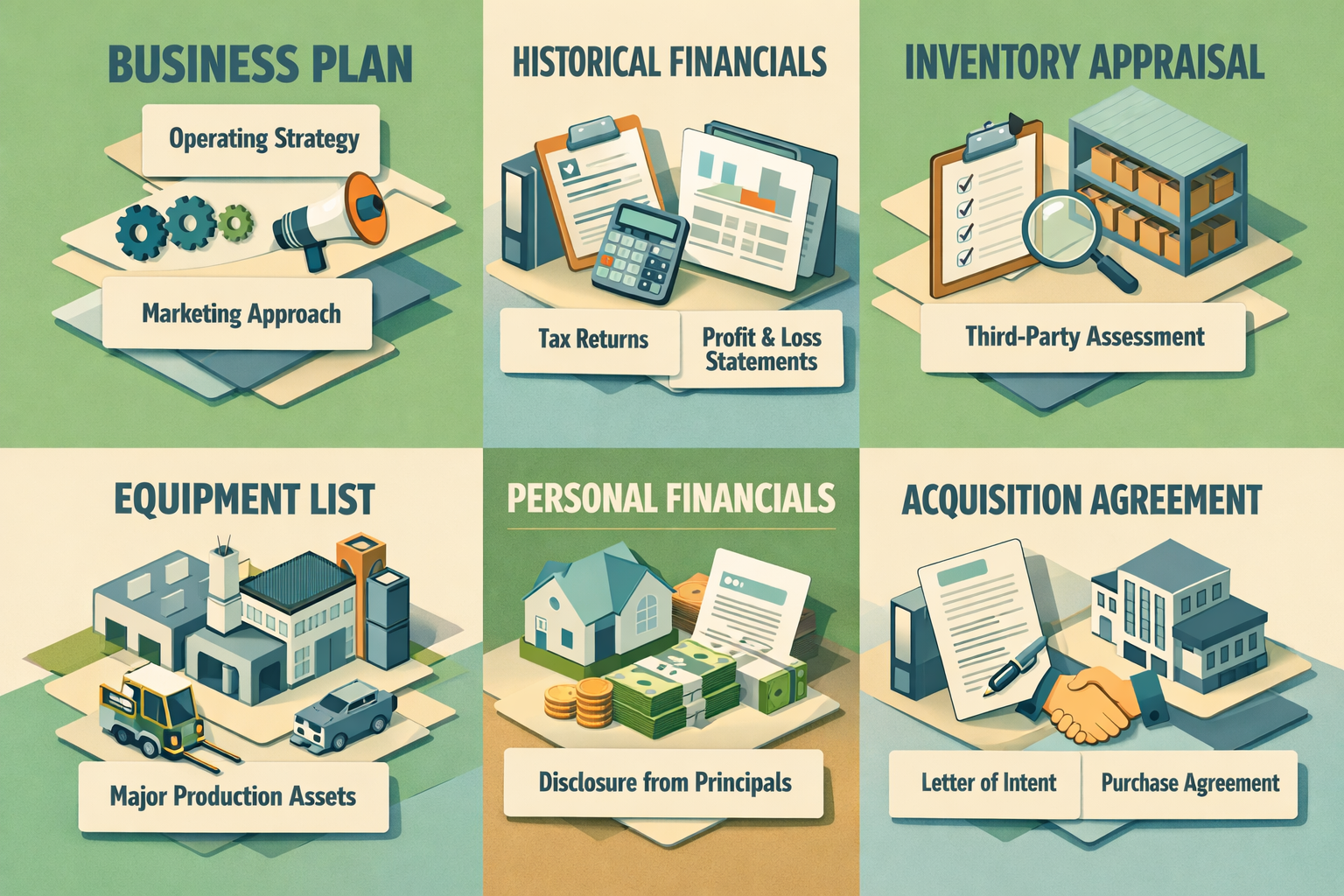
Regardless of which loan program you pursue, a well-prepared application can significantly improve your chances of approval and help you secure better terms. Here's what lenders typically want to see when evaluating a craft brewery acquisition:
- Business plan: A detailed plan covering your operating strategy, marketing approach, distribution channels, and financial projections for at least three years.
- Historical financials: At least two to three years of the brewery's tax returns, profit and loss statements, and balance sheets.
- Inventory appraisal: A third-party assessment of the aging inventory's value, ideally from someone with beverage industry expertise.
- Equipment list and appraisals: Documentation of all major production assets with current fair market values.
- Personal financial statements: Most lenders — especially for SBA loan programs — will require personal financial disclosure from all principals with significant ownership stakes.
- Acquisition agreement: A letter of intent or purchase agreement outlining the deal structure, including any seller financing terms.
It's also worth consulting with a commercial loan broker or SBA-approved lender early in the process. They can help you identify which program fits your deal best and flag any documentation gaps before you formally apply.
Credit and Approval Factors Specific to the Craft Beverage Industry
Your personal and business credit profile will play a central role in your ability to secure a craft brewery acquisition loan. Most SBA lenders look for a personal credit score of at least 650 to 680, though stronger scores will give you access to better rates and terms. If your credit needs work, addressing it before you begin the acquisition process could save you considerably in the long run.
Beyond credit scores, lenders evaluate your debt-service coverage ratio (DSCR) — essentially, whether the brewery's projected income can comfortably cover its loan payments. A DSCR of 1.25 or higher is typically preferred, meaning the business generates at least $1.25 in income for every $1 of debt obligation. If the brewery's historical revenue is borderline, you may need to demonstrate how your operational improvements or cost reductions will close that gap. Exploring business loan options tailored to your situation can help you find the right fit.
Industry experience also matters. Lenders are more likely to approve a buyer who has prior experience in food and beverage production, hospitality, or business operations than a complete newcomer. If you're new to the craft beverage space, partnering with or hiring someone who has relevant experience may strengthen your application.
●Conclusion
Navigating the business loan options for acquiring a small craft cider brewery with aging inventory requires a clear understanding of how lenders think, what assets they value, and which programs align with your specific deal structure. SBA 7(a) and 504 loans tend to be the most accessible routes for qualified buyers, while seller financing and asset-based lending can help fill valuation gaps created by aging inventory. The key is preparation — a strong business plan, thorough documentation, and a realistic assessment of the brewery's financials will position you as a credible borrower. At LoanWise, we're here to help small business owners and entrepreneurs find the right financing path. Reach out today to explore your options and take the next step toward owning your craft cider operation.