
The food truck industry has grown into a thriving segment of the small business economy, offering entrepreneurs a lower-cost entry point into food service compared to traditional brick-and-mortar restaurants. But even a mobile kitchen comes with real costs — from the truck itself to permits, equipment, and working capital. That's why understanding the business loan options for acquiring a food truck business is one of the most important steps any aspiring food vendor can take. Whether you're buying an existing operation or launching a new one from the ground up, the right financing strategy could make the difference between a dream deferred and a business rolling down the road.
Why Food Truck Financing Requires a Targeted Approach
Food trucks occupy a unique space in the lending world. They're considered both a business venture and a piece of equipment, which means lenders often evaluate them differently than they would a storefront or office-based company. Traditional banks may be cautious about extending credit to mobile businesses, especially startups with limited operating history.
That said, food truck financing has become more accessible as lenders recognize the resilience and profitability potential of mobile food businesses. Entrepreneurs today have access to several funding channels — and knowing which one fits your situation could save you both time and money. The key is matching the right loan product to the stage of your business and the specific assets you need to acquire.
It's also worth noting that lenders will typically want to see a solid business plan, projected revenue, your personal credit profile, and sometimes collateral. If you're acquiring an existing food truck business, having documented sales history from the previous owner may actually strengthen your application significantly.
SBA Loan Programs Built for Small Business Entrepreneurs
The U.S. Small Business Administration offers several loan programs that could be well-suited for food truck entrepreneurs. These government-backed SBA loans are designed to reduce lender risk, which often translates into more favorable terms for borrowers — including lower down payments and longer repayment periods.
SBA 7(a) Loans
The SBA 7(a) loan is one of the most versatile options available. It can be used for a wide range of business purposes, including purchasing an existing business, buying equipment, covering working capital, and even refinancing existing debt. For someone exploring business loan options for acquiring a food truck business, the 7(a) program may offer a practical path — particularly if the acquisition involves taking over an established operation with documented revenue.
Loan amounts under the 7(a) program can go up to $5 million, though most food truck acquisitions would likely require far less. Repayment terms may extend up to 10 years for working capital or equipment, and up to 25 years for real estate. Interest rates are typically tied to the prime rate plus a spread, making them competitive in many market environments.
SBA Microloans
For newer food vendors or those with more modest funding needs, the SBA Microloan program may be a strong fit. This program offers loans up to $50,000 through nonprofit intermediary lenders, and it's specifically designed to help startups and small businesses that might not qualify for conventional financing. The funds can be used for equipment, inventory, supplies, and working capital — all common needs when launching or acquiring a food truck.
Equipment Financing as a Direct Path to Owning Your Mobile Kitchen
One of the most straightforward forms of food truck financing is equipment financing, which is specifically structured around the purchase of physical assets. In this case, the food truck itself — along with the cooking equipment, refrigeration units, and other built-in systems — may serve as collateral for the loan.
Because the equipment secures the loan, lenders may be more willing to work with borrowers who have limited credit history or fewer assets. This structure can also mean faster approval timelines compared to some other loan types, which is helpful when you're moving quickly on an acquisition opportunity.
Equipment loans typically cover a percentage of the asset's value, and repayment terms are often aligned with the expected useful life of the equipment. For a food truck, this might range from three to seven years depending on the lender and the condition of the vehicle. Keep in mind that at the end of the loan term, you own the equipment outright — unlike equipment leasing, where you may need to return or refinance the asset.
When evaluating equipment financing for food trucks, it's worth shopping multiple lenders and comparing not just interest rates but also origination fees, prepayment penalties, and any balloon payment structures that could affect your long-term cash flow.
Startup Loans and Alternative Funding for New Food Vendors
If you're entering the food truck space without an established business history, startup loans for food vendors may require a bit more creativity in your approach. Traditional lenders often want to see at least one to two years of operating history, which can be a challenge for brand-new entrepreneurs.
Here are some funding avenues that may be worth exploring:
- Community Development Financial Institutions (CDFIs): These mission-driven lenders often serve underrepresented entrepreneurs and may have more flexible credit requirements than conventional banks.
- Online lenders and fintech platforms: Some alternative lenders specialize in small business funding and may offer faster decisions, though interest rates could be higher than traditional options.
- Business credit cards: For smaller purchases like initial supplies or permit fees, a business credit card with a 0% introductory period might offer short-term relief without immediate interest costs.
- Personal loans: While generally not ideal for business purposes, a personal loan could serve as bridge financing in early stages — though this approach carries personal financial risk.
- Friends and family funding: Some entrepreneurs supplement formal loans with informal investment from personal networks. If you go this route, it's wise to document the terms in writing to protect all parties involved.
It's also worth researching local and state-level small business grant programs, which sometimes target food entrepreneurs, women-owned businesses, or minority-owned enterprises. Grants don't require repayment, making them an attractive complement to loan financing.
How Lenders Evaluate Mobile Business Loan Applications
Understanding how lenders think about mobile business loans can help you prepare a stronger application and avoid common pitfalls. While every lender has its own criteria, most will assess several core factors when reviewing your request.
Credit Profile
Your personal credit score is often the first thing a lender checks, especially for small business loans where your personal finances are closely tied to the business. A stronger credit profile generally opens the door to better rates and higher loan amounts. If your credit needs work, taking a few months to pay down existing balances and dispute any errors on your report could meaningfully improve your options.
Business Plan and Revenue Projections
For an acquisition, you'll want to provide detailed information about the business you're buying — including its current revenue, customer base, location history, and reason for sale. Lenders want to see that the business has a realistic path to generating enough income to cover your loan payments comfortably.
Down Payment and Collateral
Many lenders will require a down payment, which can range from 10% to 30% of the total loan amount depending on the program and your creditworthiness. Having collateral — such as the truck itself or other business assets — may also improve your approval odds and loan terms.
Industry Experience
Lenders may give weight to your background in food service or business management. If you've worked in the restaurant or catering industry, highlighting that experience in your application could strengthen your case as a qualified borrower.
Comparing Loan Structures: What Works Best for Food Truck Acquisitions
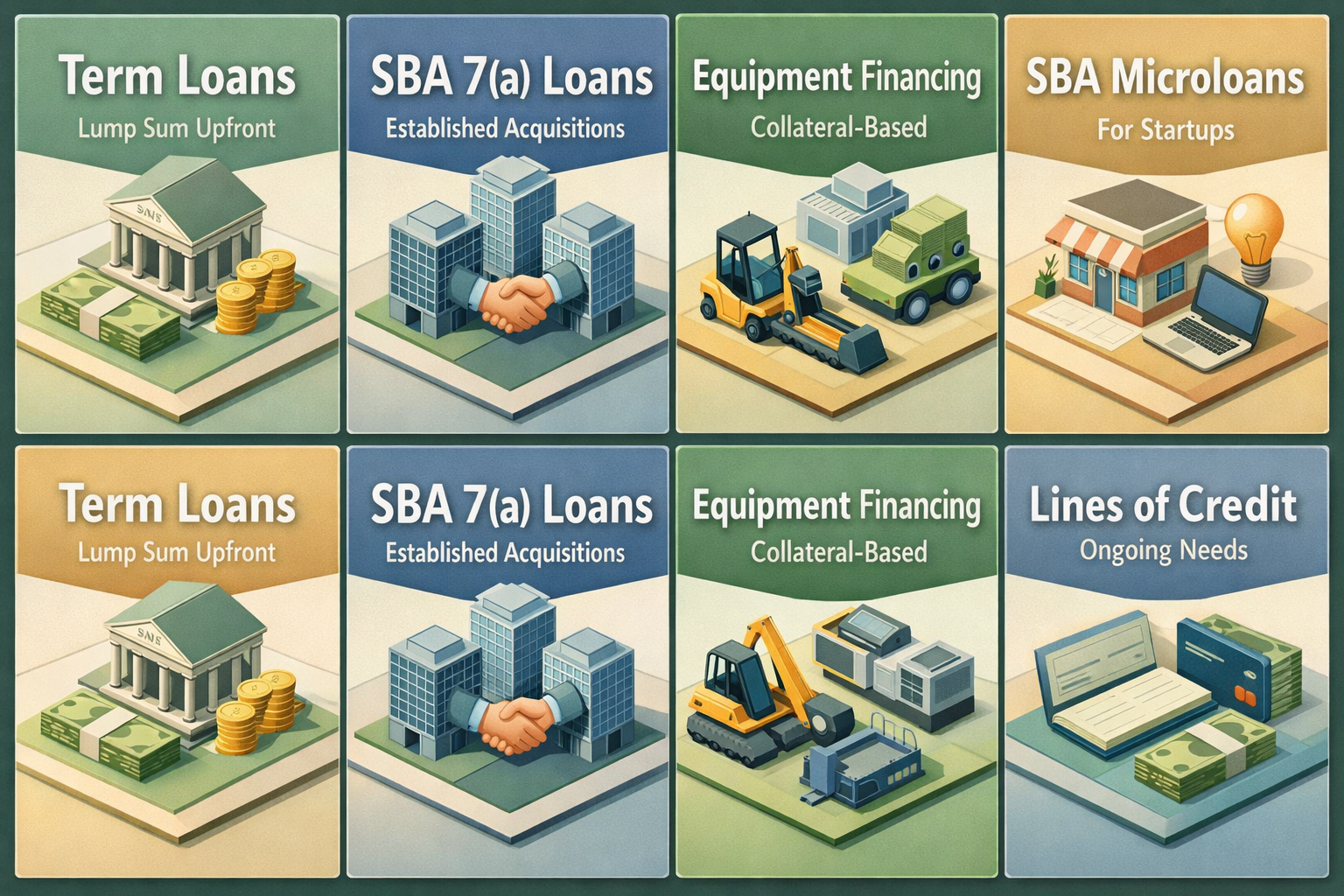
Not all loan products are created equal, and the right structure for your food truck acquisition will depend on what you're purchasing, how much you need, and how quickly you need the funds. Here's a brief comparison to help frame your decision-making:
- Term loans: These provide a lump sum upfront with fixed or variable repayment over a set period. They work well for full business acquisitions or larger purchases and offer predictable monthly payments.
- SBA 7(a) loans: Best for established acquisitions where full documentation is available. Offer competitive rates and longer terms but may take more time to process.
- Equipment financing: Ideal when the primary purchase is the truck and its built-in systems. Faster to obtain and collateral-based, reducing some underwriting burden.
- SBA Microloans: Well-suited for startups or smaller acquisitions under $50,000. Often paired with mentorship from the intermediary lender.
- Lines of credit: More appropriate for ongoing working capital needs after the acquisition rather than the purchase itself. Provides flexible access to funds as needed.
In many cases, entrepreneurs combine multiple financing sources — for example, using an equipment loan to purchase the truck and an SBA Microloan or line of credit to cover initial operating expenses. This layered approach can help manage cash flow during the critical early months of ownership.
Preparing Your Application to Maximize Approval Chances
Once you've identified the loan products that align with your goals, the next step is putting together a compelling application package. Being well-prepared not only speeds up the process but also demonstrates to lenders that you're a serious, organized borrower.
Consider gathering the following documents before you begin applying:
- Personal and business tax returns for the past two to three years (if applicable)
- A detailed business plan with financial projections for at least 12 to 24 months
- Profit and loss statements or revenue documentation from the existing food truck business
- A purchase agreement or letter of intent for the acquisition
- Information on permits, licenses, and any local health department certifications
- Documentation of your personal assets and liabilities
Working with a lender or financial advisor who has experience in small business loans — particularly in the food service or mobile business sector — can also help you navigate the process more efficiently. They may be able to identify programs you weren't aware of or guide you toward the application that best fits your profile.
Remember that the business loan options for acquiring a food truck business continue to evolve as new lenders enter the market and government programs expand. Staying informed and comparing multiple offers before committing is always a sound strategy.
●Conclusion
Acquiring a food truck business is an exciting entrepreneurial move, and the financing landscape offers more pathways than many first-time buyers expect. From SBA programs to equipment financing and startup-friendly alternatives, there are real options available for small business owners at every stage. The key is doing your homework, preparing a strong application, and working with lenders who understand the mobile food industry. At LoanWise, we're here to help you explore your options and connect with the right financing solutions for your business goals. Ready to take the next step? Reach out to a LoanWise advisor today and start building the financial foundation your food truck business deserves.