
Freelance consulting is one of the fastest-growing segments of the modern workforce. Whether you specialize in marketing strategy, IT implementation, HR advisory, or financial planning, managing multiple client engagements at the same time is a sign of success — but it can also create serious financial pressure. Invoices take weeks or months to clear, upfront expenses pile up, and your personal savings can only stretch so far. That's exactly why understanding the business loan options for a freelance consultant with multiple concurrent projects is so important. The right financing tool could be the difference between confidently scaling your practice and turning down profitable work because you simply can't cover the cost of delivery.
Why Freelance Consultants Face Unique Funding Challenges
Traditional lenders often design their products with brick-and-mortar businesses in mind — steady monthly revenue, physical inventory, long operating histories, and W-2 payroll records. Freelance consultants don't fit neatly into that model. Your income may fluctuate significantly from month to month, and you might invoice clients on net-30, net-60, or even net-90 terms while still needing to pay for software subscriptions, subcontractors, travel, and professional development well before those payments arrive.
When you're juggling multiple concurrent projects, these timing gaps multiply. You might be delivering work for three or four clients simultaneously, each at a different billing stage, which means your actual cash on hand rarely reflects your true earning potential. Lenders who don't understand this dynamic may view your financials as unstable — even when your consulting pipeline is robust and your client relationships are strong.
That said, the lending market has evolved. A growing number of lenders now offer products specifically suited to self-employed professionals and independent contractors. The key is knowing which loan types align with your business model, your cash flow patterns, and the specific demands of running a multi-project consulting practice.
Business Loan Options for a Freelance Consultant With Multiple Concurrent Projects
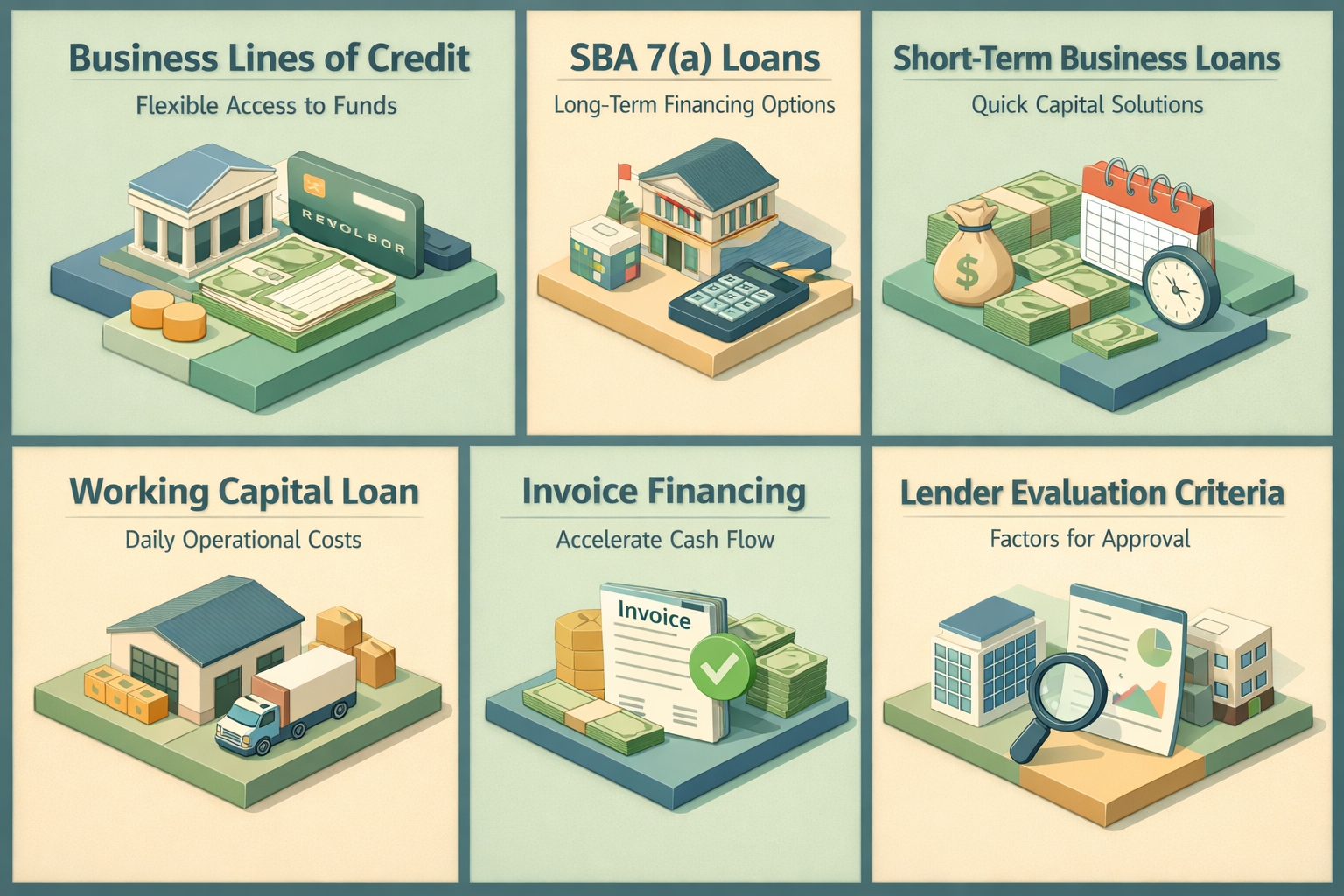
When evaluating the business loan options for a freelance consultant with multiple concurrent projects, it helps to think in terms of what you actually need the funds for. Are you bridging a cash flow gap between invoices? Hiring additional subcontractors to meet project demand? Investing in tools, software, or professional certifications? Each need may point toward a different financing solution.
Business Lines of Credit
A business line of credit is often one of the most practical tools for consultants managing overlapping engagements. Rather than borrowing a lump sum, you draw only what you need and repay it as client payments come in. This revolving structure means you're not paying interest on funds you haven't used, which can make it a cost-effective option for managing the unpredictable timing gaps that come with multi-project consulting work.
Qualifying for a business line of credit typically requires demonstrating consistent revenue and a reasonable credit profile. Some lenders may ask for bank statements covering six to twelve months, while others may want to see formal financial statements or tax returns. As a freelance consultant, your approval amount will likely be tied to your average monthly revenue rather than any physical assets you hold.
SBA 7(a) Loans
For consultants who need more substantial capital — perhaps to hire a small team, invest in proprietary methodology development, or expand into a new service vertical — an SBA 7(a) loan could be worth exploring. These government-backed loans are available through approved lenders and may offer competitive interest rates and longer repayment terms than conventional business loans. However, the application process tends to be more involved, and approval can take several weeks. If you have at least two years of self-employment history and solid tax returns, you may be a reasonable candidate.
Short-Term Business Loans
When you need capital quickly to bridge a specific gap — covering subcontractor costs for a new project before the retainer check clears, for example — a short-term business loan might provide the speed and simplicity you need. These loans are typically repaid within three to eighteen months and may be available from online lenders with faster approval timelines than traditional banks. Trade-offs can include higher interest rates and more frequent repayment schedules, so it's worth comparing total borrowing costs carefully.
Using a Working Capital Loan to Keep Multiple Projects Moving
A working capital loan for freelance consultant multi-project scenarios is specifically designed to cover the day-to-day operational costs of running your business — not long-term investments, but the ongoing expenses that keep your projects on track. Think payroll for a part-time virtual assistant, monthly software subscriptions, co-working space memberships, or the cost of subcontracting specialized work to a fellow consultant.
When you're managing several client engagements simultaneously, these costs tend to stack up quickly. A working capital loan for freelance consultant gives you a buffer so that a delayed payment from one client doesn't derail your ability to deliver on another project. This type of financing is generally short- to medium-term in nature and is often easier to qualify for than larger investment loans, since lenders are primarily evaluating your ability to repay from current revenue streams rather than projecting long-term growth.
Some lenders offering working capital products may focus heavily on your average monthly revenue and the consistency of your deposits, rather than requiring extensive collateral. This can be advantageous for consultants who may not own significant physical assets. However, it's important to borrow only what your cash flow can comfortably support — taking on debt that exceeds your near-term repayment capacity could create more pressure than it relieves.
Invoice Financing: Unlocking Cash Tied Up in Client Payments
Invoice financing — sometimes called accounts receivable financing or invoice factoring — is a particularly relevant option for freelance consultants who issue invoices with extended payment terms. Rather than waiting 30, 60, or 90 days for a client to pay, you sell or pledge those outstanding invoices to a lender in exchange for immediate cash, typically a percentage of the invoice value.
For a consultant juggling multiple concurrent projects, this approach can be a smart way to stabilize cash flow without taking on traditional debt. You're essentially accelerating revenue you've already earned. The lender collects the invoice payment directly from your client and remits the remaining balance to you, minus their fee.
It's worth noting that invoice financing products vary widely in cost and structure. Some lenders charge a flat fee per invoice, while others apply a weekly or monthly rate for as long as the invoice remains outstanding. If your clients tend to pay promptly, your financing costs may be relatively low. If payment timelines are longer, the fees can add up. Always review the full cost structure before committing to any invoice financing arrangement.
How Lenders Evaluate Self-Employed Borrowers and Independent Consultants
Understanding how lenders assess your application is a critical step in securing the right financing. For freelance consultants, the evaluation process may look somewhat different than it does for traditional business owners. Because you likely don't have payroll records or extensive physical assets, lenders will often focus on a combination of the following factors.
- Bank statements: Most lenders will want to see three to twelve months of business bank statements to assess your average monthly deposits, overall revenue consistency, and spending patterns.
- Tax returns: Two years of personal and business tax returns are commonly requested, especially for larger loan amounts. Lenders will often use your net profit figures — after deductions — which can sometimes be significantly lower than your gross consulting revenue.
- Credit score: Both personal and business credit scores may be reviewed. A stronger credit profile could help you access better terms and higher borrowing limits.
- Time in business: Many lenders require at least one to two years of self-employment history. Newer consultants may find their options more limited, though some alternative lenders and microloan programs serve earlier-stage businesses.
- Debt-to-income ratio: Lenders want to feel confident that your existing obligations won't make new loan repayments unmanageable. Keeping your overall debt load reasonable can strengthen your application.
Preparing documentation in advance and working with a lender who has experience serving self-employed borrowers can make the process considerably smoother.
Practical Tips for Strengthening Your Loan Application as a Consultant
Even if your income is variable, there are steps you can take to present your consulting business in the most favorable light to potential lenders. These strategies may improve your chances of approval and help you access more competitive terms.
- Separate your business and personal finances: Maintaining a dedicated business checking account and using it consistently for all consulting income and expenses makes your revenue picture much clearer to lenders. It also simplifies your bookkeeping and tax preparation.
- Build a business credit profile: If you haven't already, consider establishing a business entity — such as an LLC — and applying for a business credit card or small trade line to begin building a separate business credit history.
- Document your client contracts: Having signed agreements that demonstrate ongoing or recurring work can help lenders feel more confident in the stability of your income stream. Long-term retainer contracts are especially persuasive.
- Work with an accountant: A tax professional who understands self-employment income can help you structure your deductions in a way that doesn't unnecessarily reduce your reported net income — which is what most lenders use to assess your repayment capacity.
- Compare multiple lenders: Rates, terms, and qualification criteria vary significantly across banks, credit unions, online lenders, and SBA-approved institutions. Taking time to shop your options could save you meaningful money over the life of the loan.
Choosing the Right Financing Strategy for Your Consulting Practice
There's no single financing solution that works for every freelance consultant, and the right approach may actually involve combining more than one product. For example, you might use a business line of credit for ongoing working capital needs while leveraging invoice financing for larger, slower-paying client projects. Or you might pursue a short-term loan to cover a specific upfront investment and repay it over the following few months as project payments arrive.
The most important thing is to align your borrowing strategy with your actual cash flow cycle. Borrow for specific, identifiable needs rather than as a general financial cushion, and build repayment schedules around your realistic income projections — not your best-case scenario.
If you're newer to business borrowing, starting with a smaller loan or line of credit can help you build a track record with lenders, which may open doors to larger and more favorable financing in the future. Many consultants find that responsible use of a working capital product in year one makes it considerably easier to access growth capital in year two or three.
At LoanWise, we understand that freelance consulting is a legitimate and growing business model — and that the right funding strategy can help you take on more projects, deliver better results, and build a more resilient practice. Whether you're exploring a line of credit, an SBA loan, or invoice financing, our team is here to help you evaluate your options with clarity and confidence.
●Conclusion
Managing multiple concurrent client projects is an exciting sign of growth for any freelance consultant — but it also demands smart financial planning. Understanding the business loan options for a freelance consultant with multiple concurrent projects gives you the foundation to make informed borrowing decisions that support your work rather than complicate it. From flexible lines of credit and working capital loans to invoice financing and SBA-backed programs, today's lending landscape offers more options than ever for self-employed professionals. Take the time to assess your needs, prepare your documentation, and connect with a lender who understands your business model. The right financing could be the tool that helps you say yes to your next big opportunity.