
Essential Business Loan for Real Estate Success
Real estate investors face a rapidly evolving financing landscape in 2026, where securing the right business loan for real estate can determine portfolio success or failure. With lending standards easing and new opportunities emerging across commercial and residential investment sectors, understanding your financing options has never been more critical.
Today's savvy investors recognize that different property types and investment strategies require specialized financing approaches. From DSCR loans that focus on cash flow potential to fix and flip loans designed for rapid turnaround projects, the modern real estate financing ecosystem offers targeted solutions for every investment scenario.
This comprehensive guide examines the most effective business loan strategies for real estate investors, helping you navigate qualification requirements, market opportunities, and financing structures that align with your investment goals.
Smart Financing Strategies: What to Do
Smart financing strategies can make the difference between a profitable investment and a missed opportunity. These proven approaches help investors maximize their financing potential while minimizing unnecessary risks.
- Maintain a DSCR of 1.25 or higher: Lenders typically require a minimum debt service coverage ratio of 1.00, but investors who achieve 1.25 or higher unlock the best rates and highest leverage potential for their business loan for real estate projects.
- Target high-potential markets with strong fundamentals: Focus your investment efforts on markets showing consistent rent growth, favorable price-to-rent ratios, and solid cash flow potential to strengthen your loan applications.
- Leverage increased conforming loan limits: The new ceiling limit of $1,249,125 for one-unit properties in 2026 opens doors to higher-value investment properties and expanded portfolio opportunities.
- Build relationships with specialized lenders: Work with financial institutions that understand real estate investment loans and offer programs specifically designed for rental property loans and commercial real estate loans.
- Diversify your financing portfolio: Combine different loan products like DSCR loans for rental properties and fix and flip loans for renovation projects to maximize your investment capacity.
Common Financing Mistakes: What to Avoid
Avoiding common financing mistakes can save investors thousands of dollars and prevent deals from falling through. These pitfalls often catch even experienced investors off guard.
- Don't ignore debt service coverage requirements: Failing to meet minimum DSCR requirements can result in loan denial or significantly higher interest rates, making your business loan for real estate investment less profitable.
- Don't overlook market research and due diligence: Investing in markets without understanding local rent growth patterns, vacancy rates, and economic fundamentals can lead to cash flow problems and loan default risks.
- Don't rely solely on traditional banking relationships: Conventional lenders may not offer the specialized products needed for property development financing or fix and flip loans, limiting your investment opportunities.
- Don't underestimate renovation costs and timelines: Poor cost estimation on fix and flip projects can strain your financing capacity and impact future loan applications with specialized lenders.
- Don't neglect to maintain adequate cash reserves: Insufficient reserves can jeopardize loan approval and leave you vulnerable when unexpected expenses arise during property ownership or renovation phases.
Essential DSCR Loan Requirements and Qualifications
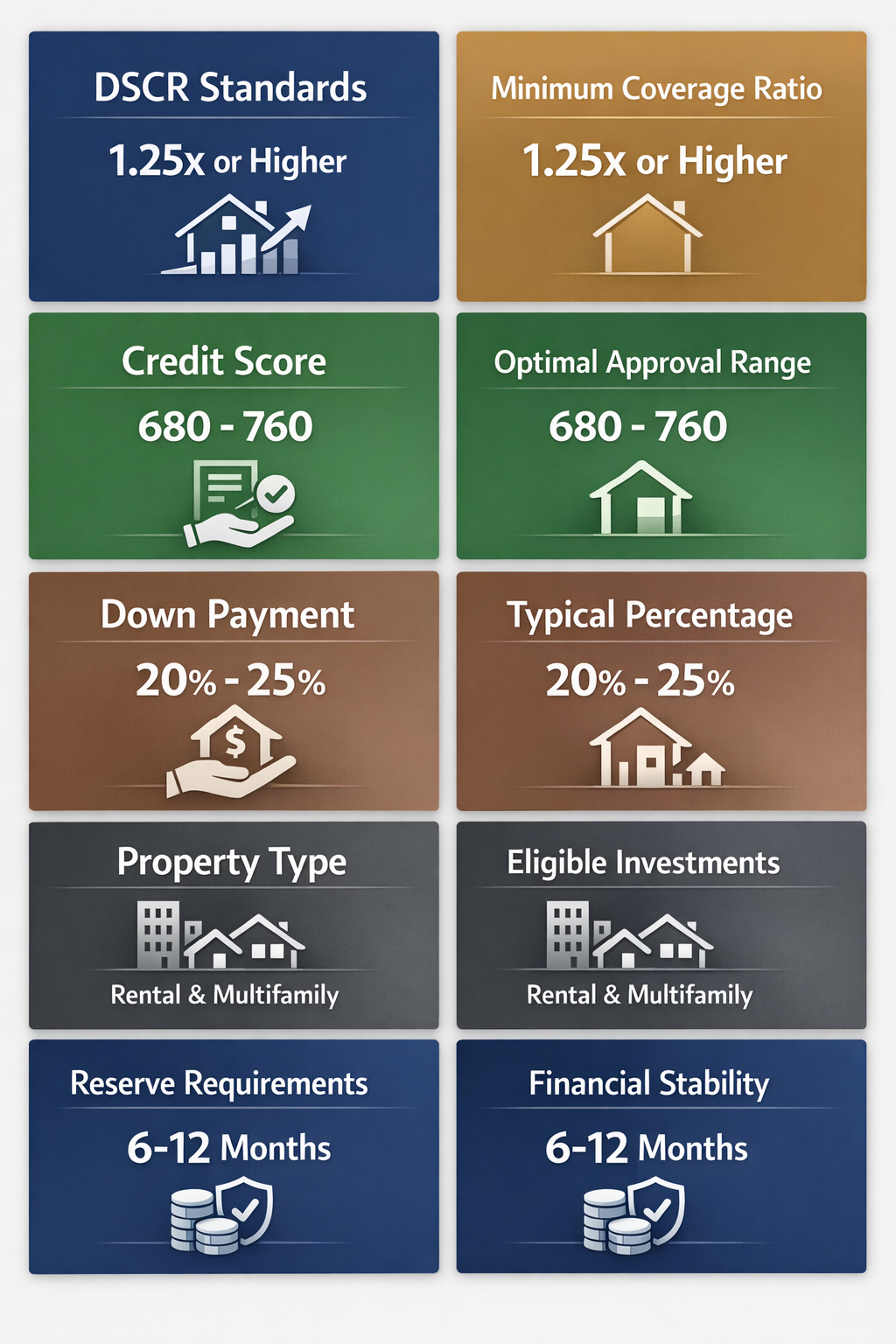
DSCR loan requirements have evolved significantly in 2026, offering investors more opportunities to secure favorable financing terms. Understanding these essential qualifications helps investors prepare stronger applications for their business loan for real estate ventures.
- Debt Service Coverage Ratio Standards: Most lenders require a minimum DSCR of 1.00, meaning the property's rental income covers the mortgage payment. However, achieving a DSCR of 1.25 or higher typically unlocks better interest rates and loan terms for rental property loans.
- Credit Score Considerations: While DSCR loans focus primarily on property cash flow rather than personal income, maintaining a solid credit profile still influences loan approval and pricing. Most lenders prefer credit scores above 640 for optimal terms.
- Down Payment Requirements: DSCR loans typically require down payments ranging from 20% to 25% of the property's purchase price. Investment properties with stronger cash flow potential may qualify for lower down payment options.
- Property Type Eligibility: These loans work well for single-family rentals, small multifamily properties, and certain commercial real estate investments where rental income can be accurately calculated and verified.
- Reserve Requirements: Lenders often require investors to maintain cash reserves equivalent to several months of mortgage payments, providing additional security for the loan and demonstrating financial stability.
Fix and Flip Financing: Speed and Flexibility
Fix and flip financing requires a different approach than traditional rental property loans, emphasizing speed and flexibility over long-term cash flow analysis. This specialized business loan for real estate serves investors who focus on property acquisition, renovation, and resale.
- Bridge Loan Advantages: Bridge loans provide short-term financing typically lasting 6 to 24 months, allowing investors to purchase and renovate properties quickly before permanent financing or sale. These loans often close in 2-3 weeks compared to 30-45 days for conventional loans.
- Interest-Only Payment Structures: Many fix and flip loans offer interest-only payments during the renovation period, preserving cash flow for construction costs and reducing monthly carrying expenses while the property undergoes improvements.
- After-Repair Value (ARV) Lending: Lenders may base loan amounts on the property's projected value after renovation rather than current condition, potentially providing higher leverage for experienced investors with proven track records.
- Construction Draw Processes: These loans often include construction draws that release funds as renovation milestones are completed, ensuring progress continues while protecting both lender and borrower interests throughout the project.
- Exit Strategy Requirements: Lenders typically require clear exit strategies, whether through sale or refinancing into long-term rental property financing, before approving fix and flip loans.
Commercial Real Estate Loan Opportunities
Commercial real estate loans present expanding opportunities in 2026 as lending standards continue to ease across the sector. This creates new possibilities for investors seeking to diversify beyond residential properties into commercial real estate investments.
- Property Development Financing Options: Development loans provide funding for ground-up construction projects, offering investors opportunities to create value through new commercial properties. These loans typically require detailed project plans, experienced development teams, and substantial equity contributions.
- Income-Producing Property Loans: Office buildings, retail centers, and industrial properties often qualify for favorable commercial real estate loans based on their rental income potential and lease structures. Long-term leases with creditworthy tenants strengthen loan applications.
- Mixed-Use Property Financing: Properties combining residential and commercial space may qualify for specialized loan programs that consider both rental income streams, providing investors with diversified cash flow opportunities.
- Portfolio Lending Solutions: Investors with multiple commercial properties might benefit from portfolio lending approaches that consider the overall performance of their real estate holdings rather than individual property metrics.
- Refinancing and Expansion Opportunities: Eased lending standards may allow investors to refinance existing commercial properties at better terms or access equity for additional investments, expanding their commercial real estate portfolios.
●Conclusion
The real estate investment landscape in 2026 offers unprecedented opportunities for investors who understand how to leverage the right business loan for real estate strategies. From DSCR loans that maximize rental property potential to fix and flip financing that enables rapid project turnaround, today's financing options provide targeted solutions for diverse investment approaches.
Success in this evolving market requires more than just access to capital. It demands a thorough understanding of loan requirements, market fundamentals, and the discipline to maintain strong financial metrics like debt service coverage ratios above 1.25. Investors who combine this knowledge with careful market selection and diversified financing strategies position themselves for sustained growth.
As lending standards continue to ease and conforming loan limits expand, the potential for portfolio growth has never been greater. Whether you're targeting your first rental property or expanding into commercial real estate development, the financing tools exist to support your investment goals. The key lies in matching the right loan product to your specific strategy while maintaining the financial discipline that lenders and markets reward.