
Essential Business Loan Eligibility for Startups
Real estate investors often transition into creating businesses that support their investment activities, from property management companies to construction firms. Understanding business loan eligibility for startups becomes crucial when expanding your real estate investment operations. Whether you're establishing a fix and flip business entity or launching a property management company, meeting lender requirements can determine your access to growth capital. The lending landscape for startup businesses typically involves stricter criteria than established companies, making preparation essential for success.
Common Questions About Startup Business Loans
Understanding startup business loans requirements often raises similar questions among real estate investors looking to formalize their operations.
Q: What credit score do I need for a startup business loan?
Most lenders require personal credit scores of 650 or higher for startup business loans, though some specialized lenders may consider scores as low as 550. Your personal credit history typically carries more weight than business credit when you're just starting out, since your company lacks an established credit profile.
Essential Documentation Requirements
Startup business loan requirements typically include comprehensive documentation that demonstrates your business viability and financial stability.
- Detailed business plan outlining your real estate investment strategy, target markets, and financial projections
- Personal financial statements showing assets, liabilities, and cash flow from existing investments
- Tax returns from the past two years, including Schedule E if you own rental properties
- Bank statements demonstrating consistent cash flow and adequate reserves
Credit Score Requirements and Alternatives
Credit score for startup loans varies significantly depending on the lender and loan type you pursue for your real estate business.
- Traditional banks typically require credit scores above 680 for favorable terms and rates
- SBA lenders may accept scores as low as 640, especially for real estate-related businesses
- Alternative lenders often consider scores between 550-650 but charge higher interest rates
- Asset-based lenders focus more on collateral value than credit scores for real estate investors
Collateral and Security Requirements
Collateral for startup business loans often becomes a critical factor when lenders evaluate your application, especially in real estate investment ventures.
- Real estate properties can serve as primary collateral, including investment properties and personal residences
- Business equipment, vehicles, or inventory may qualify as additional security
- Personal guarantees are typically required, putting your personal assets at risk
- Cash deposits or securities accounts can strengthen your collateral position
Steps to Strengthen Your Loan Application
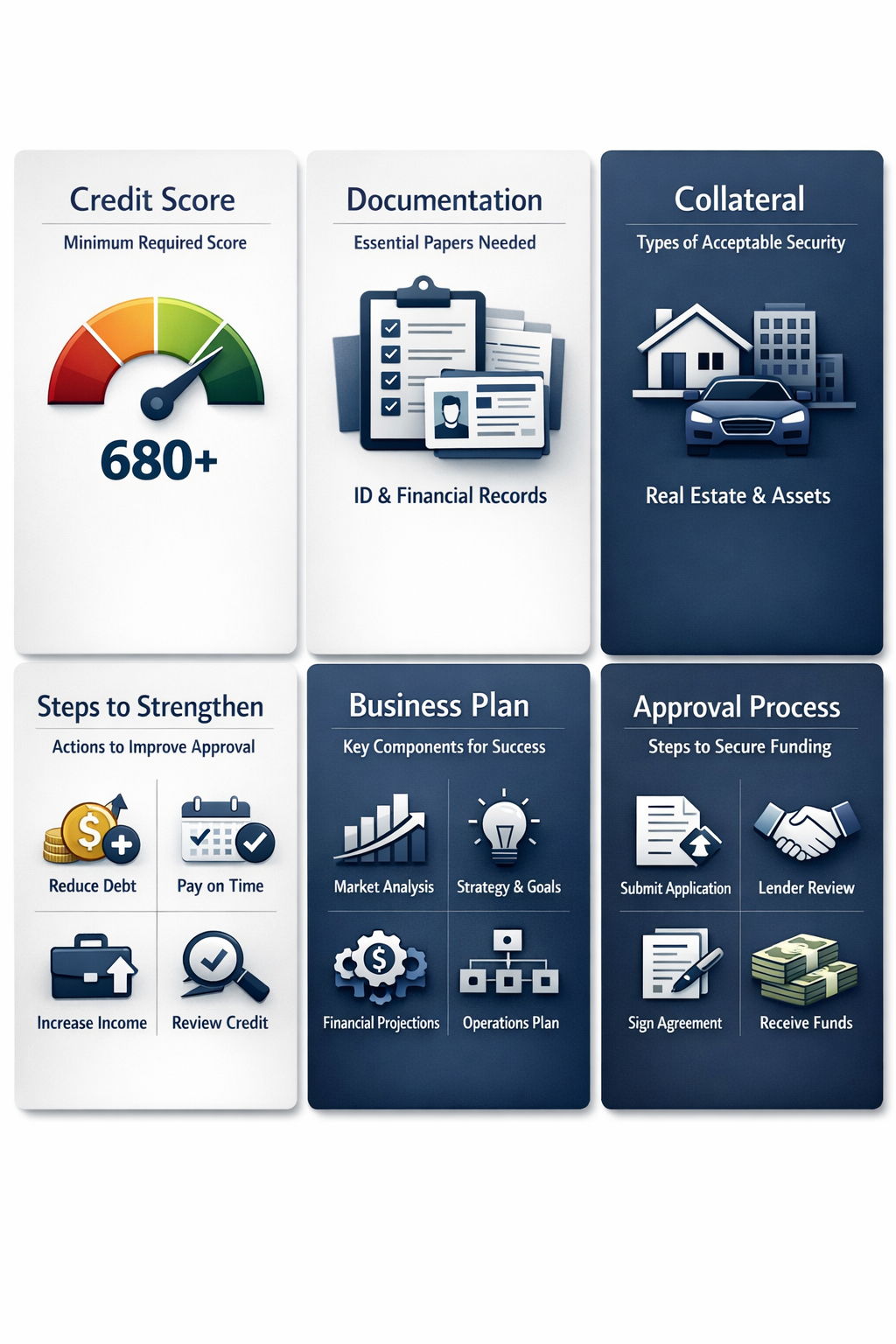
Improving your chances of approval requires strategic preparation and addressing potential weaknesses in your startup business loan requirements.
- Establish business credit by opening accounts with suppliers and paying bills on time to build your company's credit profile
- Maintain strong personal credit by paying all obligations promptly and keeping credit utilization below 30%
- Build cash reserves equivalent to 3-6 months of operating expenses to demonstrate financial stability
- Document your real estate investment experience and track record of successful projects
Business Plan Requirements for Loan Applications
A comprehensive business plan for loan applications serves as your primary tool for demonstrating viability to potential lenders.
- Executive summary highlighting your real estate investment background and business objectives
- Market analysis showing demand for your services in your target geographic areas
- Financial projections including revenue forecasts, expense budgets, and cash flow statements for 3-5 years
- Management team overview emphasizing relevant experience in real estate and business operations
- Risk assessment addressing potential challenges and your mitigation strategies
●Conclusion
Securing business loan eligibility for startups requires thorough preparation and understanding of lender expectations. Real estate investors transitioning into formal business operations must demonstrate creditworthiness, provide adequate collateral, and present compelling business plans. Success often depends on leveraging your existing real estate assets and investment experience to strengthen your application. While startup business loan requirements may seem challenging, proper preparation and documentation can significantly improve your chances of approval. Consider working with lenders who understand real estate investment businesses and can appreciate the unique aspects of your venture.