
Essential Business Loan Eligibility Requirements for Real Estate Investors
When you're ready to scale your real estate investment portfolio, understanding business loan eligibility criteria becomes crucial for securing the financing you need. Whether you're pursuing DSCR loans for rental properties or fix-and-flip financing for your next project, lenders evaluate specific requirements before approving your application. These criteria might vary between different loan programs, but knowing what lenders typically look for can help you prepare a stronger application and improve your chances of approval.
Core Financial Requirements Checklist
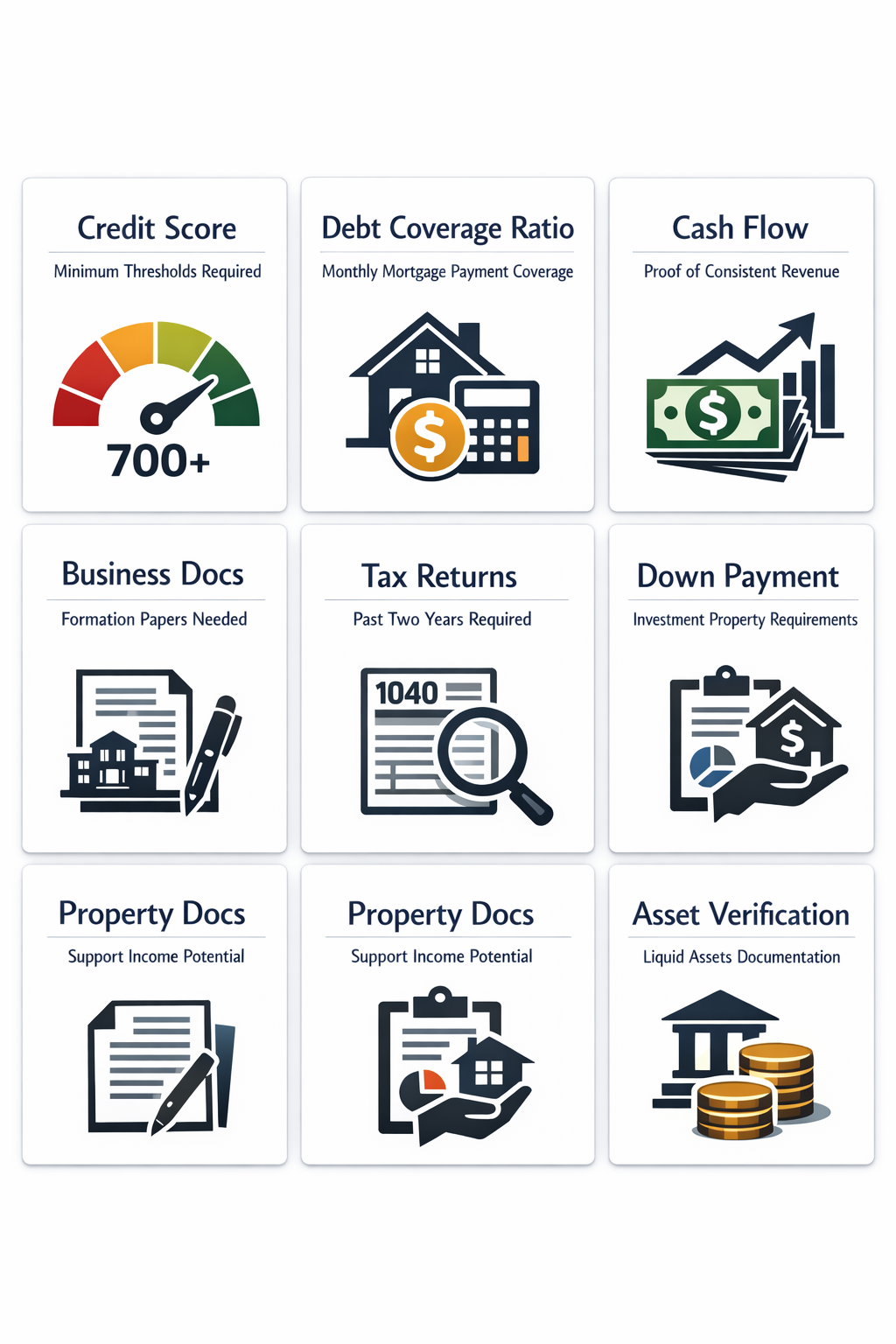
Core financial requirements form the foundation of business loan eligibility criteria that most lenders evaluate. These basic qualifications help determine whether you meet the minimum standards for loan consideration.
- Minimum credit score thresholds: Most business lenders typically require personal credit scores ranging from 600 to 680, depending on the loan type and risk profile
- Debt service coverage ratio: For DSCR loans, properties often need to generate rental income that covers at least 100% to 125% of the monthly mortgage payment
- Cash flow documentation: Lenders may require proof of consistent business revenue through bank statements, profit and loss statements, or rental income records
- Down payment capacity: Investment property loans typically require 20% to 25% down payment, with some programs accepting lower amounts for qualified borrowers
Documentation Essentials for Approval
Documentation essentials for approval represent critical business loan eligibility criteria that demonstrate your financial stability and repayment ability to potential lenders.
- Business formation documents: LLC operating agreements, partnership agreements, or corporate formation papers that establish your real estate investment entity
- Tax returns and financial statements: Personal and business tax returns for the past two years, along with current profit and loss statements
- Property documentation: Purchase agreements, appraisals, rent rolls, or lease agreements that support your investment property's income potential
- Asset verification: Bank statements, investment account summaries, and other liquid asset documentation to verify your financial reserves
Industry Experience and Track Record
Industry experience and track record often influence business loan eligibility criteria, as lenders prefer working with investors who have demonstrated success in real estate ventures.
- Previous investment property ownership: Experience managing rental properties or completing fix-and-flip projects can strengthen your application significantly
- Construction or renovation background: For fix-and-flip loans, contractors' licenses or documented renovation experience may improve your eligibility
- Property management capabilities: Evidence of successful tenant management, property maintenance, or working relationships with property management companies
- Market knowledge demonstration: Understanding of local real estate markets, property values, and rental demand in your target investment areas
Step-by-Step Credit Assessment Process
The step-by-step credit assessment process reveals how lenders evaluate business loan eligibility criteria related to your creditworthiness and financial responsibility.
- Personal credit score evaluation: Lenders typically pull personal credit reports to assess your payment history, credit utilization, and overall credit management skills
- Business credit review: If your investment business has established credit, lenders may examine business credit scores and payment patterns with suppliers or vendors
- Debt-to-income analysis: Calculation of your existing debt obligations relative to income from all sources, including employment and investment properties
- Credit history depth assessment: Review of credit account longevity, types of credit used, and recent credit inquiries to gauge financial stability
Revenue Verification Steps for Investors
Revenue verification steps for investors outline the specific business loan eligibility criteria that lenders use to confirm your income sources and financial capacity.
- Primary income documentation: W-2s, 1099s, or business income statements that show your main source of earnings and employment stability
- Investment property income analysis: Rent rolls, lease agreements, and property management statements that verify current rental income from existing properties
- Business revenue substantiation: For real estate businesses, documentation of property sales, management fees, or other business income through tax returns and bank deposits
- Asset-based income verification: Interest, dividends, or other investment income that contributes to your overall financial picture and repayment ability
Specialized Requirements by Loan Program
Specialized requirements by loan program highlight how business loan eligibility criteria may vary depending on the specific type of financing you're seeking for your real estate investments.
- DSCR loan specifications: Focus on property cash flow rather than personal income, with rental income typically needing to cover 100% to 125% of mortgage payments
- Fix-and-flip loan criteria: May require construction experience, detailed renovation budgets, and faster approval timelines due to shorter loan terms
- Bridge loan qualifications: Often emphasize exit strategy planning, property equity positions, and ability to secure permanent financing within the bridge period
- Commercial property requirements: Larger deals may need environmental assessments, market studies, and more extensive financial documentation than residential investments
Key Takeaway for Investment Success
Understanding business loan eligibility criteria gives you a significant advantage when pursuing real estate investment financing. While requirements might vary between lenders and loan programs, focusing on strong credit scores, documented income, adequate cash reserves, and relevant experience typically improves your approval odds. The key is preparing your financial documentation thoroughly and choosing loan products that align with your investment strategy and financial profile. Remember that meeting minimum requirements doesn't guarantee approval, but exceeding them often leads to better terms and smoother closing processes. Take time to strengthen any weak areas in your financial profile before applying, and consider working with lenders who specialize in investor financing to maximize your chances of success.
●Conclusion
Navigating business loan eligibility criteria successfully requires preparation, documentation, and understanding of what lenders value in real estate investors. By focusing on these key requirements and building a strong financial foundation, you'll be better positioned to secure the financing needed to grow your investment portfolio. Whether you're pursuing your first rental property or expanding into fix-and-flip projects, meeting these eligibility standards opens doors to the capital that can accelerate your real estate investment goals.