
Business Loan Eligibility Criteria for Real Estate Investors
Understanding business loan eligibility criteria is crucial for real estate investors seeking financing for rental properties, fix and flip projects, and portfolio expansion. Unlike traditional residential mortgages, investment property loans operate under different qualification standards that focus heavily on property performance and investor experience. Modern lending programs like DSCR loans have transformed how investors approach financing by emphasizing cash flow over personal income documentation. This shift creates new opportunities for investors who understand the specific requirements and can structure their applications accordingly.
Understanding DSCR Loan Qualification Requirements
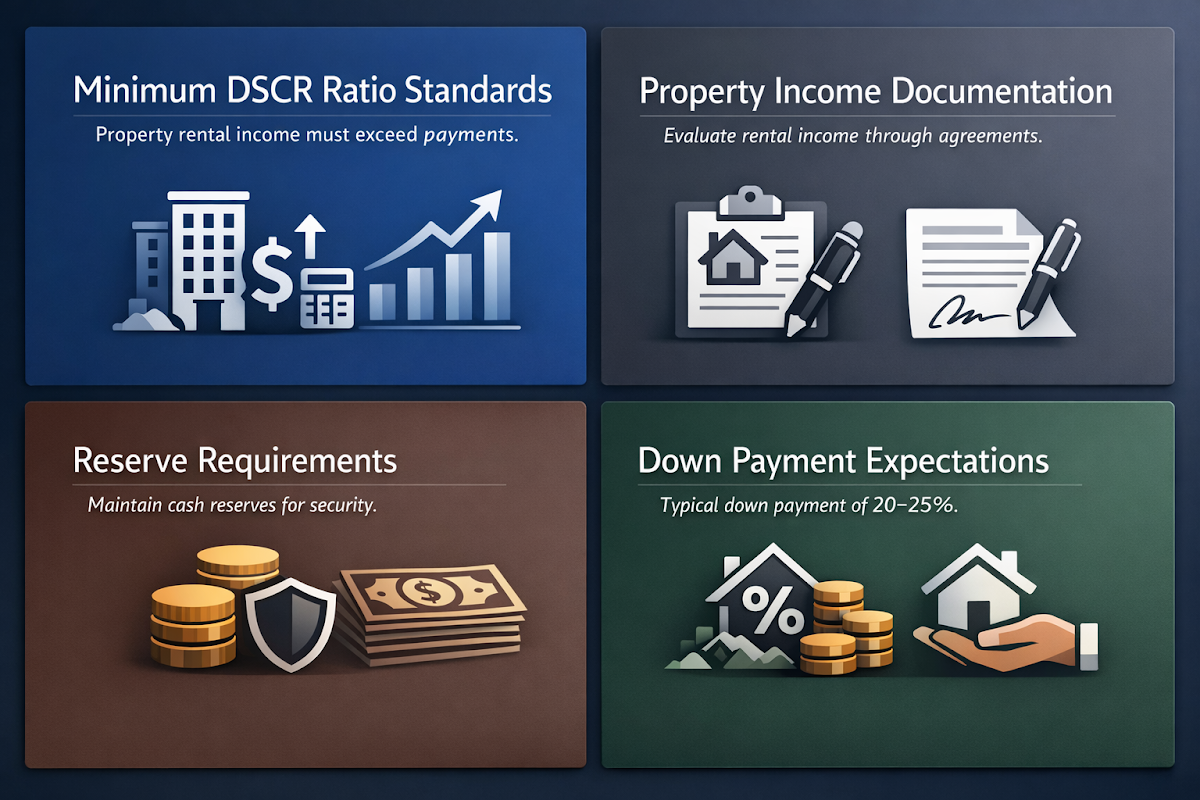
DSCR loan qualification requirements represent a fundamental shift in how lenders evaluate investment property financing. These programs focus on property cash flow rather than traditional personal income verification, making them particularly attractive for seasoned investors.
- Minimum DSCR Ratio Standards: Most lenders require a minimum DSCR ratio of 1.25, meaning the property's rental income must exceed monthly mortgage payments by 25%. Some specialized lenders may accept ratios as low as 1.0, though this typically comes with higher interest rates or additional requirements.
- Property Income Documentation: Lenders evaluate rental income through current lease agreements, market rent analyses, or appraisal rent schedules. This documentation must demonstrate the property's ability to generate sufficient cash flow to service the debt.
- Reserve Requirements: DSCR loans often require investors to maintain cash reserves equivalent to 2-6 months of mortgage payments. These reserves provide additional security for lenders and demonstrate the investor's financial stability.
- Down Payment Expectations: Investment property DSCR loans typically require 20-25% down payments, though some niche programs may offer lower down payment options for qualified investors with strong portfolios.
Credit Score Requirements for Investment Property Loans
Credit score requirements for investment property loans vary significantly based on the loan program and lender policies. Understanding these standards helps investors prepare their applications and identify suitable financing options.
- DSCR Loan Credit Standards: Most DSCR lenders require minimum credit scores between 620-680, with better rates and terms available for scores above 700. Some portfolio lenders may consider scores as low as 580 for experienced investors with substantial assets.
- Fix and Flip Financing Requirements: Bridge loans for fix and flip projects often have more flexible credit requirements, with some lenders accepting scores around 600-650. However, these loans typically require significant real estate experience and proven track records.
- Portfolio Lending Considerations: Established investors with multiple properties may find more flexible credit requirements through portfolio lenders who evaluate the entire investment portfolio rather than individual credit metrics.
- Credit History Factors: Lenders examine recent payment history, debt-to-income ratios, and any previous real estate investment experience. Recent bankruptcies or foreclosures typically require seasoning periods of 2-4 years before qualification.
Business Revenue Requirements and Documentation
Business revenue requirements for investment property loans depend on the specific loan program and investor structure. Many modern programs focus on property-level cash flow rather than personal or business income verification.
- No-Doc DSCR Programs: These loans evaluate property cash flow without requiring personal income documentation, making them ideal for self-employed investors or those with complex income structures. The property's rental income becomes the primary qualification metric.
- Asset-Based Lending Options: Some lenders offer qualification based on liquid assets rather than income streams. Investors with substantial cash reserves or investment portfolios may qualify even without traditional income documentation.
- Entity-Based Lending: Investors operating through LLCs or other business entities may need to provide business financial statements, though requirements vary significantly between lenders and loan programs.
- Bank Statement Programs: Alternative documentation loans may use 12-24 months of bank statements to verify cash flow and financial stability, providing flexibility for investors with irregular income patterns.
Industry-Specific Loan Eligibility Factors
Industry-specific loan eligibility factors can significantly impact approval odds for real estate investors, as lenders evaluate both the investor's background and property types when making lending decisions.
- Property Type Restrictions: Some lenders have preferences or restrictions regarding property types, with single-family rentals typically receiving the most favorable terms compared to multi-unit properties or commercial real estate.
- Geographic Lending Areas: Many lenders focus on specific markets or regions, which can affect availability and terms. Investors should identify lenders active in their target markets for optimal financing options.
- Experience Requirements: Fix and flip loans often require demonstrated experience in property renovation and resale, while rental property loans may favor investors with existing portfolios or property management experience.
- Loan Purpose Considerations: Purchase loans, refinances, and cash-out refinances may have different eligibility criteria, with cash-out refinances typically requiring higher credit scores and lower loan-to-value ratios.
Personal Guarantees and Investor Protection Strategies
Personal guarantees for business loans represent a critical consideration for real estate investors structuring their financing arrangements. Understanding when guarantees are required and how to minimize exposure helps protect personal assets while accessing necessary capital.
- Non-Recourse Loan Options: Some DSCR loans offer non-recourse features, limiting lender recourse to the specific property securing the loan rather than personal assets. These options typically require higher down payments and stronger credit profiles.
- Entity Structuring Benefits: Properly structured LLCs or other business entities can provide liability protection, though many lenders still require personal guarantees from entity owners, particularly for newer investors.
- Portfolio Cross-Collateralization: Some lenders may require cross-collateralization across multiple properties or personal guarantees securing the entire portfolio, which increases risk but may provide better rates or terms.
- Guarantee Release Provisions: Experienced investors may negotiate guarantee release provisions based on payment history, property performance, or portfolio growth, reducing long-term personal exposure.
●Conclusion
Navigating business loan eligibility criteria requires a comprehensive understanding of how modern lenders evaluate investment property financing. DSCR loans have revolutionized the landscape by focusing on property cash flow rather than personal income, creating opportunities for investors who may not qualify under traditional standards. Success depends on understanding minimum DSCR ratios, typically 1.25 or higher, along with credit requirements that generally range from 620-680 for most programs. Smart investors leverage these requirements by structuring their portfolios to maximize cash flow and maintaining the reserves lenders expect to see. The key lies in matching your investment strategy with the right loan programs while building relationships with lenders who understand real estate investment financing. As interest rates continue to fluctuate between 6.5% and 8.75% for DSCR loans, timing and preparation become crucial factors in securing optimal financing terms for your investment properties.