
Adjustable-rate mortgages, often called ARMs, can be a great tool when interest rates are low and predictable. But as rates shift and your financial situation evolves, that initial flexibility may start to feel like uncertainty. If you've built up significant home equity over the years, you're actually in a strong position to make a change. Exploring the best ways to refinance an ARM mortgage with significant home equity could help you lock in long-term stability, reduce monthly costs, and take full advantage of the value you've already built in your home. This guide walks you through the strategies, loan options, and key considerations to help you move forward with confidence.
Understanding Why ARM Refinancing Makes Sense When You Have High Equity
An adjustable-rate mortgage typically starts with a fixed introductory rate, then adjusts periodically based on a market index. While the initial rate is often lower than a fixed-rate loan, the uncertainty of future adjustments can create financial stress — especially for homeowners planning to stay in their homes long-term.
Here's where having significant home equity changes everything. Equity is the portion of your home's value that you truly own — the difference between what your home is worth and what you still owe. When that gap is large, lenders view you as a lower-risk borrower. That could mean access to better interest rates, more favorable loan terms, and a wider range of refinancing options.
Homeowners with high equity often qualify for conventional refinance products with reduced fees, and may even avoid private mortgage insurance (PMI) requirements that apply to borrowers with smaller down payments or less accumulated value. This combination — a motivated refinancer plus strong equity — creates real opportunity.
- Lower loan-to-value (LTV) ratio: High equity means a lower LTV, which typically leads to better rate offers from lenders.
- More product options: With strong equity, you may qualify for jumbo refinance loans, conventional products, or even cash-out refinancing.
- Reduced risk profile: Lenders are often more flexible with underwriting when equity is substantial.
Key Refinance Options Available to ARM Borrowers with Strong Home Equity
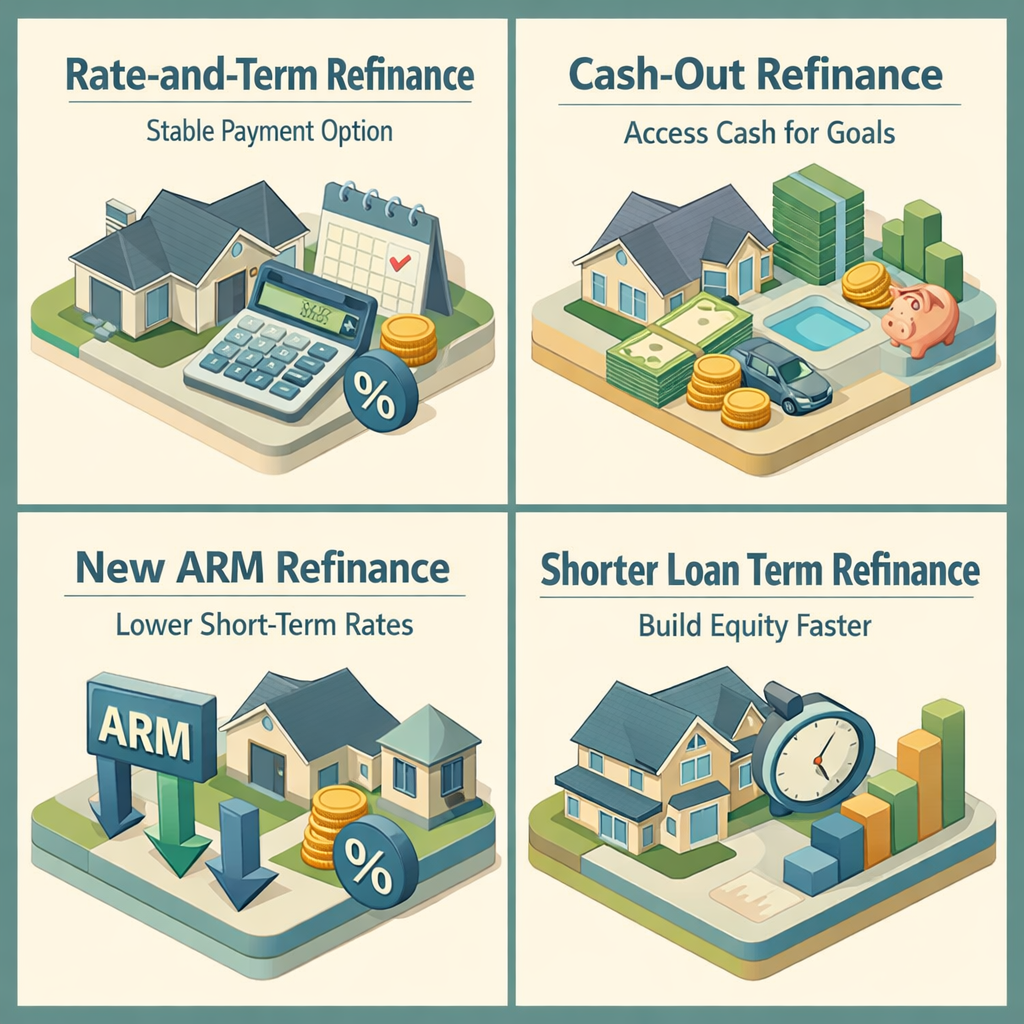
Not all refinance strategies are created equal. Depending on your goals — whether that's securing a predictable payment, accessing cash, or shortening your loan term — there are several paths worth considering.
Rate-and-Term Refinance into a Fixed-Rate Mortgage
The most straightforward move for many ARM borrowers is a rate-and-term refinance into a 15-year or 30-year fixed-rate mortgage. This replaces your adjustable loan with one that carries a consistent interest rate for the life of the loan. If market conditions are favorable and your credit profile is strong, this could result in a payment that's both stable and potentially competitive compared to your current ARM rate — especially if your ARM is approaching a reset period.
Cash-Out Refinance
If you've built significant equity, a cash-out refinance allows you to borrow more than you currently owe and receive the difference in cash. Homeowners often use these funds for home improvements, debt consolidation, or other large financial goals. Because your equity cushion is large, you may qualify for favorable terms while still maintaining a healthy LTV ratio after the cash-out.
Refinancing into a New ARM with Better Terms
In some cases, refinancing into a new ARM — particularly one with a longer fixed period, a lower margin, or more favorable caps — might make sense. This could be a good fit for investors or homeowners who don't plan to stay in the property long-term and want to take advantage of lower short-term rates without committing to a 30-year fixed.
Shorter Loan Term Refinance
With significant equity, you may qualify for a 15-year fixed loan at a lower interest rate than a 30-year product. While monthly payments could be higher, the total interest paid over the life of the loan is typically much lower — and you'd build full ownership faster.
Steps to Prepare Before You Refinance an ARM Mortgage with High Equity
Preparation is everything when it comes to a successful refinance an ARM mortgage. Even with strong equity on your side, taking the right steps beforehand can help you qualify for the best possible terms.
Check Your Credit Score and History
Your credit score plays a significant role in the interest rate you'll be offered. Lenders typically reserve the most competitive rates for borrowers with higher credit scores. Before applying, review your credit report for any errors, pay down revolving balances if possible, and avoid opening new credit accounts in the months leading up to your application.
Get a Current Home Appraisal Estimate
Your equity is only as valuable as your home's current market value supports. Home prices have shifted in many markets, so it's worth getting a general sense of what your property might appraise for before committing to a refinance. Many online tools can provide a rough estimate, but a formal appraisal ordered by your lender will be the official figure used in underwriting.
Gather Your Financial Documentation
Lenders will typically request recent pay stubs, W-2 forms, tax returns, bank statements, and details about your current mortgage. Having these ready in advance can speed up the process and reduce delays.
Calculate Your Break-Even Point
Refinancing comes with closing costs — often ranging from 2% to 5% of the loan amount, though this can vary. Calculating your break-even point (how long it takes for monthly savings to offset those upfront costs) is an important step in deciding whether refinancing makes financial sense for your timeline.
How Loan-to-Value Ratio Shapes Your Refinancing Power
Your loan-to-value (LTV) ratio is one of the most influential factors in any refinance transaction. It's calculated by dividing your remaining mortgage balance by your home's current appraised value. For example, if your home is worth $400,000 and you owe $200,000, your LTV is 50%.
A lower LTV — which results directly from having more equity — generally unlocks better refinancing outcomes. Here's how it tends to play out across common thresholds:
- LTV below 80%: You typically avoid private mortgage insurance on conventional loans, and you may access the most competitive rate tiers.
- LTV below 70%: At this level, some lenders may offer even more favorable pricing, and you're likely to have a broader selection of loan products available.
- LTV below 60%: This represents a very strong equity position and may open the door to portfolio lenders, jumbo refinance options, or premium rate pricing.
It's worth noting that lenders may have their own internal thresholds, and the specific rate improvements tied to each LTV band can vary by institution and market conditions. Always compare offers from multiple lenders to see how your equity position is being valued.
Timing Your ARM Refinance Strategically in a Changing Rate Environment
Timing is a factor that many homeowners underestimate. The right moment to refinance ARM mortgage with high equity depends on both your personal circumstances and the broader interest rate landscape.
If your ARM is approaching its first adjustment date, that's often a natural trigger to explore refinancing. Once an ARM begins adjusting, your payment could increase significantly — particularly in a rising rate environment. Locking in a fixed rate before that adjustment kicks in could save you from payment shock.
On the other hand, if rates are currently elevated compared to historical norms, it may be worth evaluating whether a short-term ARM with better caps could serve as a bridge while you wait for more favorable fixed-rate conditions. This approach carries its own risks, so it's worth speaking with a mortgage advisor who can help you model different scenarios.
Other timing considerations include:
- How long you plan to stay in the home: If you're staying long-term, locking into a fixed rate often makes more sense. If you plan to sell within a few years, a shorter ARM might be worth exploring.
- Your current ARM caps: Understanding how high your rate could go — and how quickly — gives you a clearer picture of the risk you're managing.
- Market trends: While predicting rates is never certain, following economic indicators and Federal Reserve commentary can help inform your timing.
Common Mistakes to Avoid When Refinancing an ARM with Substantial Equity
Even borrowers with excellent equity can encounter pitfalls during the refinancing process. Being aware of these common mistakes may help you avoid unnecessary costs and delays.
Focusing Only on the Interest Rate
It's easy to get fixated on the headline rate, but the annual percentage rate (APR) tells a fuller story. The APR includes lender fees, discount points, and other costs rolled into the effective rate. Always compare APRs alongside quoted rates to get an accurate picture of each loan offer.
Not Shopping Multiple Lenders
Getting quotes from at least three to five lenders is one of the most effective ways to ensure you're not leaving money on the table. Rates and fees can vary meaningfully from one institution to another, and your strong equity position gives you negotiating power worth using.
Extending Your Loan Term Without Considering Total Cost
If you're several years into your current ARM and you refinance into a new 30-year fixed loan, you're resetting your amortization clock. While monthly payments may drop, you could end up paying significantly more in total interest over the life of the new loan. Run the numbers carefully before committing.
Ignoring Prepayment Penalties
Some ARM products include prepayment penalties, especially in the early years of the loan. Review your current mortgage agreement before refinancing to understand whether any such fees apply. These costs could affect your break-even calculation and overall refinancing benefit.
●Conclusion
Refinancing an adjustable-rate mortgage when you've built up significant home equity is a powerful financial opportunity — and one that deserves careful thought and strategic planning. Whether your goal is rate stability, lower monthly payments, a shorter loan term, or accessing cash for other priorities, your equity position gives you a meaningful advantage in the lending marketplace.
The best ways to refinance an ARM mortgage with significant home equity all share a common thread: they start with understanding your goals, knowing your numbers, and working with knowledgeable lending professionals who can guide you through the options. Take the time to compare loan products, review your financial picture honestly, and calculate the true long-term cost of any refinance path you're considering.
At LoanWise, we're here to help homeowners like you navigate these decisions with clarity and confidence. Reach out today to explore your refinancing options and put your home equity to work in the smartest way possible.