
Relocating for a new job is exciting — but it can also bring financial complexity, especially if you already carry an adjustable-rate mortgage. When interest rates begin to shift, the variable payments tied to an ARM can create real uncertainty for homeowners who are also managing the costs of a move. The good news is that refinancing may offer a path to more stable, predictable monthly payments. Even better, if your employer has provided a relocation bonus or ongoing relocation benefits, that income could play a meaningful role in your qualification profile. Understanding the best options for refinancing ARM mortgage with relocation income can help you make a confident, well-informed financial decision during what is already a major life transition.
What Is an ARM and Why Refinancing May Make Sense After Relocation
An adjustable-rate mortgage, commonly called an ARM, starts with a fixed interest rate for a set introductory period — often five, seven, or ten years — and then adjusts periodically based on a benchmark index. This structure can be appealing when rates are low at origination, but it introduces risk once the fixed period ends and the rate begins to fluctuate.
For homeowners who relocate for work, refinancing ARM mortgage into a fixed-rate mortgage might be especially worth considering. When you move to a new city for a job, your financial circumstances often change significantly. You may be earning more, receiving relocation support from your employer, or transitioning into a more stable long-term career role. These changes could make you a stronger mortgage applicant than you were when you first took out your loan.
Refinancing could allow you to lock in a consistent rate, reduce the risk of future payment increases, and potentially lower your overall cost of borrowing depending on current market conditions. If you plan to stay in your new location for several years, converting an ARM to a fixed-rate loan through a refinance may offer meaningful financial peace of mind.
How Lenders View Relocation Income During the Mortgage Refinance Process
One of the most common questions relocating homeowners ask is whether their relocation bonus or employer-provided relocation allowance can be counted as income during the refinance qualification process. The answer is nuanced and depends on the type of relocation compensation you receive, how it's structured, and whether it can be documented clearly.
Lenders typically evaluate income based on its consistency and likelihood of continuation. A one-time ARM mortgage refinance relocation bonus — meaning a lump-sum payment made by your employer to cover moving costs — may not always be counted as qualifying income in the traditional sense. However, it can demonstrate financial strength and may be treated as reserves or assets, which can support your overall application.
On the other hand, if your employer offers a structured relocation allowance paid as regular supplements to your salary, or if your new employment package includes a permanent income increase tied to relocation, lenders may be more willing to consider that compensation as part of your qualifying income. The key factors typically include:
- Documentation: A written offer letter, employment contract, or employer verification letter that clearly outlines the relocation compensation and its terms.
- Continuity: Whether the income is ongoing or a one-time payment, as lenders generally prefer income that's expected to continue for at least two to three years.
- History: Some lenders may require a short employment history in the new role, though exceptions exist — particularly when an offer letter or contract provides strong evidence of income stability.
It's worth speaking directly with a mortgage professional to understand how your specific relocation package may be evaluated under current lending guidelines.
ARM Refinance Loan Options Worth Considering for Relocating Homeowners
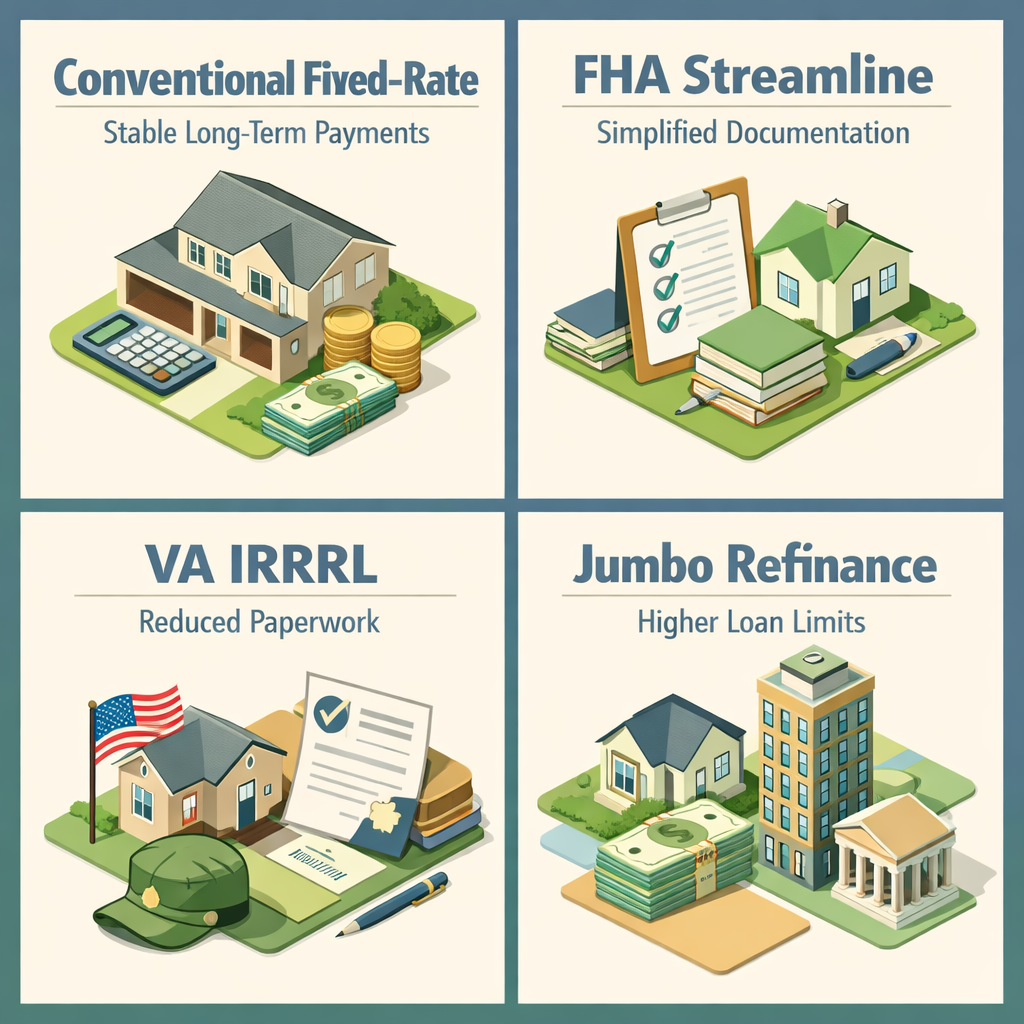
When exploring the best options for refinancing ARM mortgage with relocation income, it helps to understand the main refinance loan types available and which might align best with your situation.
Conventional Fixed-Rate Refinance
A conventional refinance into a 15-year or 30-year fixed-rate mortgage is one of the most straightforward paths for ARM borrowers. If your credit score is solid and your new income — including any relocation-related compensation — supports the debt-to-income requirements, a conventional refinance could offer competitive rates and long-term payment stability. This option is typically suited to borrowers with at least 20% equity in their home, though lower equity levels may still qualify with private mortgage insurance.
FHA Streamline or Standard FHA Refinance
If your original mortgage was an FHA-backed ARM, you might qualify for an FHA streamline refinance, which tends to have simplified documentation requirements. While income verification rules still apply, this path may be a bit more flexible for borrowers who are in a transitional employment period due to a job relocation.
VA Interest Rate Reduction Refinance Loan (IRRRL)
Eligible veterans and active-duty service members who originally financed with a VA loan may be able to use a VA IRRRL to refinance from an adjustable rate to a fixed rate. This program is known for its reduced paperwork and may be particularly accessible for military personnel who relocate frequently for service.
Jumbo Refinance Programs
For homeowners in higher-cost markets — which often correlates with relocation destinations in major metro areas — a jumbo refinance may be the appropriate product. These loans exceed conforming loan limits and may have slightly different income documentation standards. Relocation income documentation tends to carry more weight in jumbo underwriting when it's thorough and well-organized.
Using a Relocation Bonus Strategically to Strengthen Your Refinance Application
Even if your lender doesn't count a lump-sum ARM mortgage refinance relocation bonus directly as income, that doesn't mean it has no value in the application process. There are several ways to use this windfall strategically to improve your refinance profile.
Building Up Cash Reserves
Lenders often look at your post-closing reserves — meaning the amount of money you'll have left in savings after covering closing costs and down payment. A relocation bonus deposited into your bank account well in advance of applying could bolster your reserve position, which may make underwriters more comfortable with your application even if your employment is relatively new.
Paying Down Debt to Lower Your DTI Ratio
Your debt-to-income (DTI) ratio is one of the most important metrics in mortgage underwriting. If your relocation bonus gives you the ability to pay off a car loan, credit card balances, or other debts before applying for a refinance, your DTI could improve significantly. A lower DTI ratio may increase your loan options and could contribute to better rate pricing from lenders.
Covering Refinance Closing Costs
Refinancing is not free. Closing costs typically range from a few thousand dollars upward depending on the loan size and location. Using a relocation bonus to cover these out-of-pocket costs — rather than rolling them into the new loan — means you start with a lower loan balance and avoid paying interest on those fees over time.
Timing Your Refinance Around Your Relocation and Employment History
Timing can be just as important as the financial details when it comes to refinancing after a job-related move. Many lenders prefer to see at least 30 days of pay stubs from your new employer before approving a refinance. Some guidelines may even require a longer history at the new job, particularly for borrowers switching industries or moving from salaried to variable compensation structures.
That said, if you receive a strong, well-documented offer letter that confirms your salary and the permanence of your new position, some lenders may be willing to proceed before you've fully completed the standard waiting period. This is especially true for borrowers with strong credit profiles, substantial equity, and healthy reserves.
Here are a few timing considerations to keep in mind:
- Apply after you've received your first paycheck or two: Even a short pay history at a new employer can make underwriting smoother.
- Deposit your relocation bonus early: Large deposits made close to the application date may require additional documentation and explanation. Getting the funds settled in advance reduces underwriting friction.
- Monitor rate environments: If your ARM's fixed period is ending soon, waiting too long could expose you to rate adjustments while you're still building your employment history. Weighing that risk against qualification readiness is a conversation worth having with a lending professional.
- Maintain stable credit during the transition: Opening new credit accounts or taking on additional debt during a relocation can temporarily affect your credit score, so it may be wise to hold off on new credit until after your refinance closes.
Documents You May Need to Support a Refinance with Relocation Income
Preparation is key when refinancing with a non-traditional income component like relocation compensation. Having your paperwork organized in advance could significantly speed up the process and reduce back-and-forth with your lender. The documents you may need can include:
- New employer offer letter or employment contract confirming your position, start date, salary, and any relocation benefits
- Recent pay stubs from your new employer showing your base salary and any additional compensation
- Bank statements (typically two to three months) showing the deposit of your relocation bonus and current reserve levels
- Previous W-2s and tax returns to document prior income history
- Relocation benefit letter from your employer's HR department if the relocation package is part of a formal corporate program
- Documentation on the property being refinanced, including mortgage statements, homeowners insurance, and property tax records
Being organized and proactive with documentation can demonstrate to lenders that you're a responsible, well-prepared borrower — which can only help your application.
●Conclusion
Navigating a refinance while managing the demands of a job relocation might feel overwhelming, but with the right knowledge and preparation, it's entirely achievable. The best options for refinancing ARM mortgage with relocation income depend on your specific loan type, employment profile, and how your relocation compensation is structured. Whether you're converting a volatile adjustable rate into a stable fixed-rate loan, using your relocation bonus to strengthen your reserves, or timing your application strategically around your new employment start date, every thoughtful step you take brings you closer to financial security in your new home. Working with an experienced mortgage professional who understands how relocation income is evaluated can make a meaningful difference in your outcome. At LoanWise, we're here to help you explore your options and find a refinance path that works for your unique situation.