
Relocating for a new job is a major life change — and it often comes with a financial boost in the form of a relocation bonus. If you currently have an adjustable-rate mortgage, you may be wondering how to use that momentum to your advantage. Exploring the best options for refinancing ARM mortgage with recent relocation bonus income could help you lock in greater financial stability, lower your monthly payment, or reduce long-term interest costs. However, navigating how lenders treat bonus income — especially when it's new — requires some planning. This guide breaks down what you need to know so you can move forward with confidence.
Understanding Adjustable-Rate Mortgages and Why Refinancing Makes Sense
An adjustable-rate mortgage, commonly called an ARM, starts with a fixed interest rate for an initial period — often five, seven, or ten years — and then adjusts periodically based on a market index. While ARMs can offer attractive starting rates, the uncertainty of future rate changes may create financial stress, especially as adjustment periods approach.
For many homeowners, refinancing out of an ARM and into a fixed-rate mortgage provides long-term peace of mind. When you're also dealing with the transition of a recent relocation, having a predictable monthly payment becomes even more important. Refinancing at the right time could reduce your exposure to rising rates while allowing you to build equity more steadily.
That said, refinancing isn't free. Closing costs, appraisal fees, and other expenses can add up. Before moving forward, it's worth calculating your break-even point — the number of months it would take for your monthly savings to offset the cost of refinancing. Many financial professionals suggest this timeframe often falls somewhere between two and five years, though individual circumstances vary widely.
How Lenders View Relocation Bonus Income During the Approval Process
One of the most important factors when exploring ARM refinance relocation bonus scenarios is understanding how mortgage lenders evaluate this type of income. Most lenders want to see a consistent, two-year history of receiving bonus income before they'll count it toward your qualifying income. This is especially true for conventional loan underwriting guidelines set by Fannie Mae and Freddie Mac.
A relocation bonus is typically considered a one-time payment, which means lenders may treat it differently from recurring bonuses tied to job performance. Because it's not reliably repeated, many underwriters may not include it as part of your effective monthly income for qualification purposes. However, this doesn't mean the bonus is entirely useless in the process.
- Asset reserves: A relocation bonus deposited into your bank account may strengthen your reserve position, showing lenders you have funds to cover several months of mortgage payments.
- Down payment or payoff funds: If you're refinancing and have equity questions, using bonus funds to improve your loan-to-value ratio could positively influence your rate and approval odds.
- Debt reduction: Paying down high-interest debt with your bonus before applying may improve your debt-to-income ratio, which is a critical factor lenders evaluate.
It's always wise to speak with a knowledgeable loan officer who can review your specific situation. Lender overlays — additional requirements beyond standard guidelines — may differ from one institution to another, and some lenders may be more flexible than others when it comes to recently changed employment circumstances.
Loan Programs That May Work Well for Relocating Homeowners
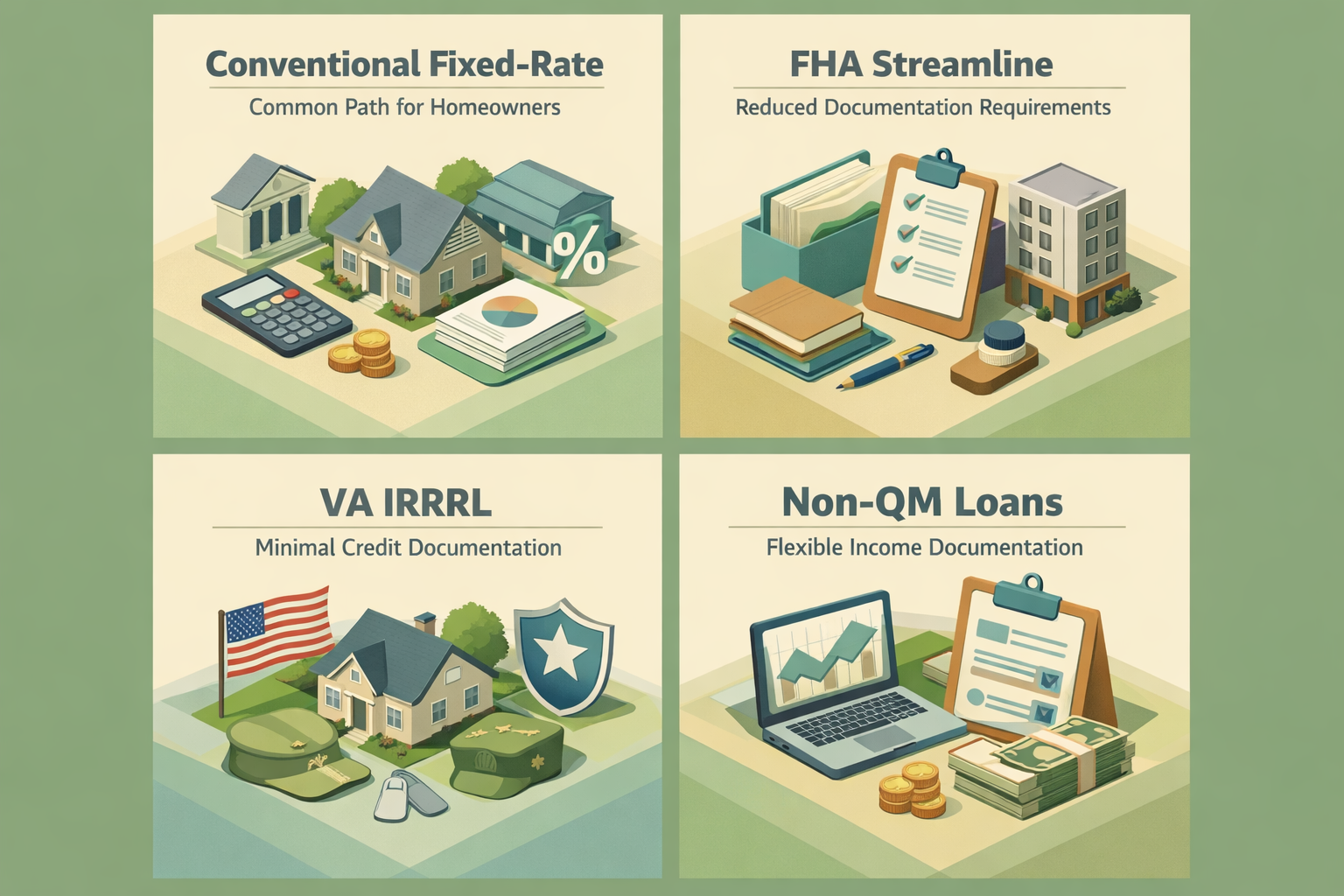
When evaluating the best options for refinancing ARM mortgage with recent relocation bonus income, it helps to understand the landscape of available loan programs. Each comes with its own set of qualification standards, and some may be better suited to your profile than others.
Conventional Fixed-Rate Refinance
A conventional loan backed by Fannie Mae or Freddie Mac is often the most common path for homeowners refinancing ARM mortgage out of an ARM. These loans typically require a credit score of at least 620, though higher scores generally lead to better rates. If your debt-to-income ratio is manageable and you have solid employment documentation from your new position, a conventional refinance may be a straightforward option.
FHA Streamline or Rate-and-Term Refinance
If your current mortgage is FHA-insured, an FHA streamline refinance may allow you to refinance with reduced documentation requirements. Income verification requirements can be less stringent for streamline programs, though you'd still need to demonstrate a clear benefit — typically a lower interest rate or reduced monthly payment. This might be worth exploring if your new income documentation is still limited.
VA Interest Rate Reduction Refinance Loan (IRRRL)
If you're a veteran or active-duty service member — which is quite common among those who relocate frequently — the VA IRRRL could be a powerful tool. This program typically requires minimal credit documentation and may not require income verification at all, making it potentially ideal for someone in the middle of a job transition.
Non-QM and Portfolio Loans
For borrowers whose financial profile doesn't fit neatly into conventional guidelines, non-qualified mortgage (non-QM) loans or portfolio products offered by individual lenders may provide more flexibility. These loan types often allow alternative income documentation methods, such as bank statements or asset depletion, and some may be more accommodating of recently changed employment situations. Keep in mind that non-QM loans often carry higher interest rates to offset the lender's additional risk.
Managing Your Debt-to-Income Ratio with New Employment Income
Your debt-to-income (DTI) ratio is one of the most influential numbers in the mortgage refinancing process. Lenders calculate it by dividing your total monthly debt obligations by your gross monthly income. Most conventional lenders prefer a DTI at or below 43 to 45 percent, though some programs may allow higher ratios with compensating factors.
When you've recently relocated for a new job, proving your income can be a bit more complex. You'll likely need to provide a signed offer letter or employment contract, recent pay stubs from your new employer, and possibly a verification of employment. If you've moved to a new role in the same field with equal or greater pay, lenders may be more comfortable approving the refinance even without a lengthy history at the new job.
Using your relocation bonus strategically here is key. For instance, if you can use a portion of those funds to pay off a car loan or reduce credit card balances, your monthly debt obligations decrease — and your DTI improves as a result. Even a modest improvement in your DTI ratio could make a meaningful difference in which loan products you qualify for and the rate you're offered.
Timing Your ARM Refinance for Maximum Financial Benefit
Timing plays a significant role in the success of any refinance. With a variable rate mortgage options bonus income scenario, there are several timing-related factors worth weighing carefully.
Where You Are in Your ARM Adjustment Period
If your ARM hasn't reached its first adjustment date yet, you may have more flexibility to choose your refinance window. However, if an adjustment is approaching, acting sooner rather than later could protect you from potential rate increases. It's worth reviewing your loan documents or speaking with your current servicer to understand exactly when your next adjustment is scheduled and what cap limits apply.
Current Market Rate Environment
Refinancing makes the most financial sense when the new fixed rate is meaningfully lower than what your ARM is likely to adjust to. Mortgage rates fluctuate based on broader economic conditions, Federal Reserve policy, and bond market movements. Monitoring rate trends — or working with a loan officer who does — can help you identify a favorable window to lock in your rate.
Your Employment Documentation Timeline
If you've recently started your new job, waiting a few months before applying could strengthen your application. Many lenders may feel more comfortable with at least 30 to 60 days of pay stubs from your new employer. If you're already several months into your new role, you're likely in a stronger position than you might think.
Documentation You'll Need to Refinance After a Job Relocation
Being organized and prepared with the right paperwork can speed up the refinancing your ARM mortgage process considerably. For homeowners who have recently relocated, lenders may request a somewhat expanded set of documents to confirm income stability. Here's what you'll typically want to have ready:
- Two years of federal tax returns showing your complete income history.
- Recent pay stubs from your current employer, ideally covering at least 30 days.
- Offer letter or employment contract from your new employer, especially if you've been in the role less than two years.
- Bank statements from the past two to three months, which may help document your relocation bonus as deposited funds.
- Explanation letter describing the nature of the relocation bonus if asked by the underwriter.
- Current mortgage statement and information about your existing ARM terms.
- Homeowners insurance declaration page and recent property tax information.
Transparency is your ally during underwriting. If your underwriter asks about large deposits — such as a relocation bonus — having a clear paper trail and a brief written explanation ready can prevent unnecessary delays.
●Conclusion
Refinancing an ARM mortgage after a job relocation is entirely achievable, and with the right preparation, it can be a genuinely smart financial move. The key is understanding how lenders interpret your new income, using your relocation bonus strategically to strengthen your application, and choosing the loan program that best fits your current situation. Whether you're drawn to a conventional fixed-rate product, an FHA option, a VA loan, or a more flexible non-QM solution, there's likely a path forward worth exploring. Connect with a trusted LoanWise mortgage professional who can review your complete financial picture and help you identify the best options for refinancing ARM mortgage with recent relocation bonus income — so you can move into your next chapter with greater confidence and financial clarity.