
Coming into an inheritance is a significant financial event — and if you're currently carrying an adjustable-rate mortgage (ARM), it may be exactly the opportunity you've been waiting for. Many homeowners feel uneasy about the unpredictability that comes with ARMs, especially in a shifting interest rate environment. When an inheritance arrives, it can provide the financial leverage needed to make a meaningful move toward stability. Understanding the best options for refinancing ARM mortgage with recent inheritance for down payment purposes could help you lock in a fixed rate, reduce your loan balance, and potentially lower your monthly obligations for years to come. This guide walks you through the key strategies, qualification steps, and important considerations so you can make an informed and confident decision.
Understanding How ARMs Work and Why Refinancing May Be the Right Move
An adjustable-rate mortgage starts with an initial fixed interest period — often three, five, seven, or ten years — after which the rate adjusts periodically based on a market index. While ARMs can offer lower introductory rates, they introduce a level of payment uncertainty that many homeowners find stressful over the long term.
Once that introductory period expires, your rate could rise significantly depending on market conditions. This kind of volatility can make budgeting difficult and may expose you to payment increases you weren't anticipating. For homeowners who plan to stay in their homes long-term, refinancing into a fixed-rate mortgage is often considered a more predictable and financially sound path.
Refinancing replaces your current loan with a new one — ideally with better terms. If you've recently received an inheritance, that lump sum can serve as additional equity or a paydown amount, which may help you qualify for better rates, eliminate private mortgage insurance (PMI), or reduce your overall loan-to-value ratio (LTV). Each of these outcomes could meaningfully improve your financial picture.
How an Inherited Lump Sum Can Strengthen Your Refinance Application
Lenders evaluate refinance applications based on several key factors: credit score, debt-to-income (DTI) ratio, home equity, and loan-to-value ratio. An inheritance can positively influence several of these metrics, making your application more competitive.
One of the most impactful uses of inherited funds in a refinance scenario is applying the money as a principal reduction. By paying down your existing mortgage balance before or during the refinance process, you increase your home equity and lower your LTV ratio. A lower LTV often translates to better interest rate offers from lenders and may eliminate the need for PMI if you drop below the 80% threshold.
Additionally, if you're refinancing into a new loan and applying inherited funds toward closing costs, you may be able to reduce the amount you need to finance — keeping your new loan balance lower from the start. Some homeowners also use inherited funds to pay off other debts, which can improve their DTI ratio and further strengthen their eligibility for favorable loan terms.
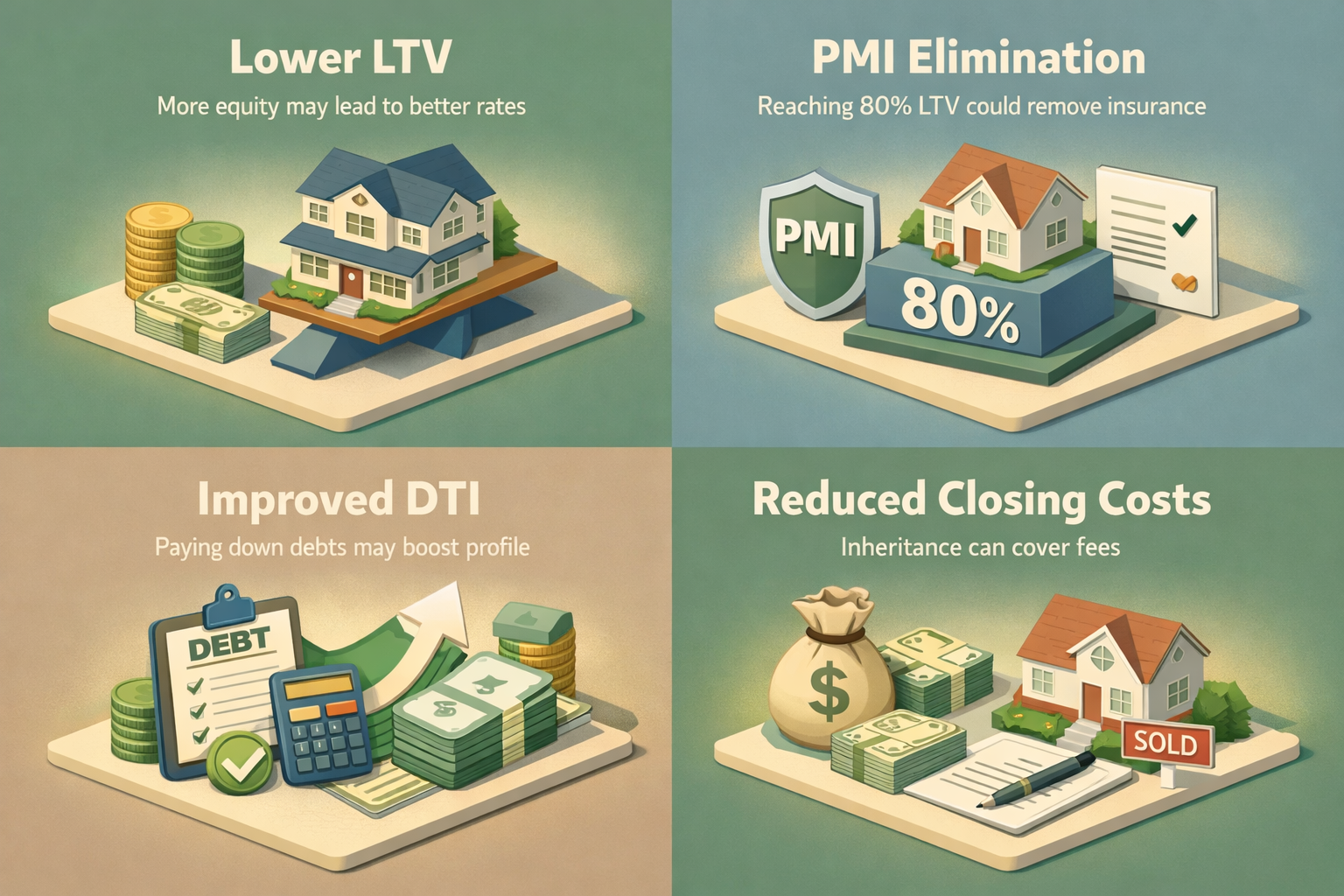
- Lower LTV: More equity may lead to better rates and fewer lender restrictions.
- PMI elimination: Reaching 80% LTV or below could remove costly monthly insurance premiums.
- Improved DTI: Using inherited funds to pay down debts may boost your qualification profile.
- Reduced closing costs out-of-pocket: Inheritance funds can cover fees, reducing financial strain at closing.
Documenting Your Inheritance: What Lenders Will Likely Require
Before a lender will count inherited funds as an eligible asset in your refinance transaction, they'll typically want documentation that proves the source and availability of those funds. This is a standard part of the mortgage underwriting process, and being prepared can help avoid delays.
Most lenders will ask for a copy of the estate settlement documents, probate records, or a letter from the estate attorney confirming the inheritance and the amount received. You'll also likely need to show bank statements reflecting the deposit of those funds. Lenders generally want to see that the funds have been in your account for at least 60 days — sometimes referred to as seasoning — before they're counted toward your refinance.
If the inheritance is very recent and hasn't been fully settled, it's worth speaking with a mortgage advisor early in the process. They can help you understand the timing requirements and what documentation will be needed based on your specific lender's guidelines. Being transparent with your lender about the source of funds is always the right approach, as undisclosed deposits can raise red flags during underwriting.
Best Options for Refinancing ARM Mortgage With Recent Inheritance for Down Payment Scenarios
Depending on your financial situation, there are several refinance loan types worth exploring when you have an inheritance available to support the transaction. Here's a closer look at some of the most common paths homeowners consider:
Conventional Fixed-Rate Refinance
For many homeowners, refinancing ARM mortgage into a conventional fixed-rate mortgage is the most straightforward option. If your credit score is solid and your LTV is at or below 80% — especially with the help of inherited funds — you may qualify for competitive rates without the need for mortgage insurance. Conventional loans are widely available and typically offer flexibility in terms of loan duration, including 15-year and 30-year options.
FHA Streamline or Rate-and-Term Refinance
If your current loan is FHA-insured, an FHA refinance might be a smooth transition. While FHA loans do require mortgage insurance regardless of LTV, they tend to have more flexible credit and income requirements. An inheritance could be used to cover upfront costs or reduce your balance before refinancing.
VA Interest Rate Reduction Refinance Loan (IRRRL)
Eligible veterans and active-duty service members with VA loans can use the VA IRRRL program to refinance into a lower rate with minimal documentation. If your ARM is a VA loan, this streamlined option may help you lock in a fixed rate efficiently. Inherited funds could assist with any associated fees.
Jumbo Refinance Loans
If your home value exceeds conventional loan limits, a jumbo refinance may be necessary. Lenders in this space often look for strong financial profiles, and an inheritance can help you demonstrate the reserves and equity that jumbo lenders typically require. These loans may carry slightly different qualification criteria, so working with an experienced mortgage advisor is especially valuable here.
Timing Your Refinance Around Rate Conditions and Inheritance Settlement
Timing matters considerably when it comes to refinancing. Two factors are especially relevant when inherited funds are involved: the current interest rate environment and the settlement timeline of the estate.
Interest rates fluctuate based on Federal Reserve policy, inflation data, and broader economic conditions. If rates are relatively favorable compared to what your ARM might adjust to, locking in sooner rather than later could work in your advantage. However, if your inheritance hasn't been fully distributed yet, you may need to wait until those funds are properly documented and seasoned before your refinance can close.
In some cases, it may be worth beginning the refinance application process even before the inheritance fully settles, so that you're ready to move quickly once the funds are available. A knowledgeable loan officer can help you strategize the optimal timing based on your estate's status and current market conditions. Rate lock periods typically range from 30 to 60 days, and some lenders offer extended lock options if you need more time.
Keep in mind that rushing through the process without proper documentation could create complications during underwriting. Taking a measured, well-prepared approach tends to lead to smoother closings and better outcomes overall.
Tax and Financial Planning Considerations When Using Inheritance Funds
Before directing all of your inherited funds toward a mortgage refinance, it may be worth consulting with a financial planner or tax advisor. Inheritances are handled differently depending on the type of asset received — cash, investment accounts, real estate, or retirement funds — and each can have different tax implications.
In many cases, inherited cash or bank account funds are not subject to federal income tax at the time of receipt, though estate taxes may apply depending on the size of the estate. However, inherited retirement accounts like traditional IRAs typically do require distributions to be taken within a specific window, and those distributions may be taxable as ordinary income.
Understanding how much of your inheritance is truly available — after any applicable taxes, legal fees, or estate expenses — is an important step before committing those funds to a refinance. Redirecting money toward your mortgage is a significant and relatively illiquid decision, so ensuring you maintain an adequate emergency fund and diversified financial cushion is equally important.
A thoughtful approach that balances debt reduction with overall financial health is likely to serve you better over the long run than simply applying every available dollar to your home loan.
Steps to Start the Refinance Process With Confidence
If you've decided that exploring the best options for refinancing ARM mortgage with recent inheritance for down payment strategies makes sense for your situation, here are practical steps to help you move forward:
- Review your current ARM terms: Understand when your rate is set to adjust, what index it's tied to, and what your current balance is.
- Check your credit profile: Pull your credit reports and address any discrepancies before applying. A stronger credit score typically means better rate offers.
- Calculate your current LTV: Get an estimate of your home's current market value and compare it to your loan balance. Determine how inherited funds might improve this ratio.
- Gather estate documentation: Collect settlement records, probate paperwork, and bank statements showing the receipt of inherited funds.
- Consult a mortgage advisor: Work with a licensed loan officer who can evaluate your complete financial picture and recommend the most suitable refinance product.
- Compare loan offers: Don't settle for the first quote you receive. Comparing rates, closing costs, and terms from multiple lenders can potentially save you thousands over the life of the loan.
- Lock your rate strategically: Once you've chosen a lender and loan program, lock your rate at a time that aligns with your estate settlement timeline.
Taking these steps in order can help you avoid common pitfalls and position yourself for a successful refinance outcome.
●Conclusion
Receiving an inheritance while carrying an adjustable-rate mortgage creates a rare window of financial opportunity. The best options for refinancing ARM mortgage with recent inheritance for down payment strategies depend on your unique circumstances — your credit standing, home equity, estate timeline, and long-term goals. Whether you're refinancing into a conventional fixed-rate loan, exploring government-backed programs, or evaluating jumbo refinance options, the key is to approach the process with solid preparation and expert guidance. At LoanWise, we're here to help homeowners like you navigate every stage of the refinancing journey. Reach out to one of our mortgage specialists today to explore what's possible with your inherited funds and start building a more stable financial future.