If you locked in a 30-year fixed mortgage when rates were higher, you might be wondering whether now is a good time to make a move. The good news is that homeowners don't have to wait until the end of their loan term to improve their financial situation. Exploring the best options for refinancing a 30-year fixed mortgage early for a lower rate could potentially save you thousands of dollars over the life of your loan. That said, refinancing isn't a one-size-fits-all decision. It requires careful planning, a solid understanding of your current loan terms, and a clear picture of where rates stand today. This guide walks you through what you need to know to make a confident, well-informed choice.
Why Homeowners Consider Refinancing a Fixed Mortgage Ahead of Schedule
A 30-year fixed mortgage offers stability and predictable monthly payments, which is why it's one of the most popular home loan products in the country. But life changes, and so does the lending market. Homeowners often explore early refinancing when interest rates drop significantly below what they're currently paying. Even a modest reduction in your rate could translate into meaningful monthly savings and a lower rate total interest cost over time.
There are several common motivations behind the decision to refinance early:
- Securing a lower interest rate to reduce monthly payments and overall loan costs
- Shortening the loan term by switching from a 30-year to a 15-year mortgage
- Tapping into home equity through a cash-out refinance for home improvements or debt consolidation
- Removing private mortgage insurance (PMI) once sufficient equity has been built
- Switching loan types, such as moving from an adjustable-rate mortgage to a fixed-rate product for added stability
Understanding your motivation is the first step. A rate-driven refinance has different considerations than an equity-driven one, so knowing your primary goal helps you compare loan products more effectively.
Evaluating the Break-Even Point Before You Refinance
One of the most important calculations any homeowner should run before refinancing is the break-even analysis. Refinancing isn't free — it typically comes with closing costs that may range from roughly 2% to 5% of the loan amount, depending on the lender, loan size, and location. These costs can include origination fees, appraisal fees, title insurance, and prepaid interest, among others.
The break-even point tells you how long it will take for your monthly savings to offset the upfront cost of refinancing. For example, if your closing costs total a certain amount and your new loan saves you a set amount each month, you'd divide the total cost by the monthly savings to find your break-even timeline. If you plan to stay in your home beyond that point, refinancing may make strong financial sense.
Here's what to consider when running your break-even calculation:
- Total estimated closing costs from your lender's loan estimate
- The difference between your current monthly payment and the projected new payment
- How long you realistically expect to remain in the home
- Whether you'll roll closing costs into the new loan, which affects your long-term savings
Homeowners who plan to sell within a few years may find that the upfront costs outweigh the savings — even if the new rate is noticeably lower. Timing matters just as much as the rate itself.
Top Refinancing Paths That Could Deliver a Lower Monthly Payment
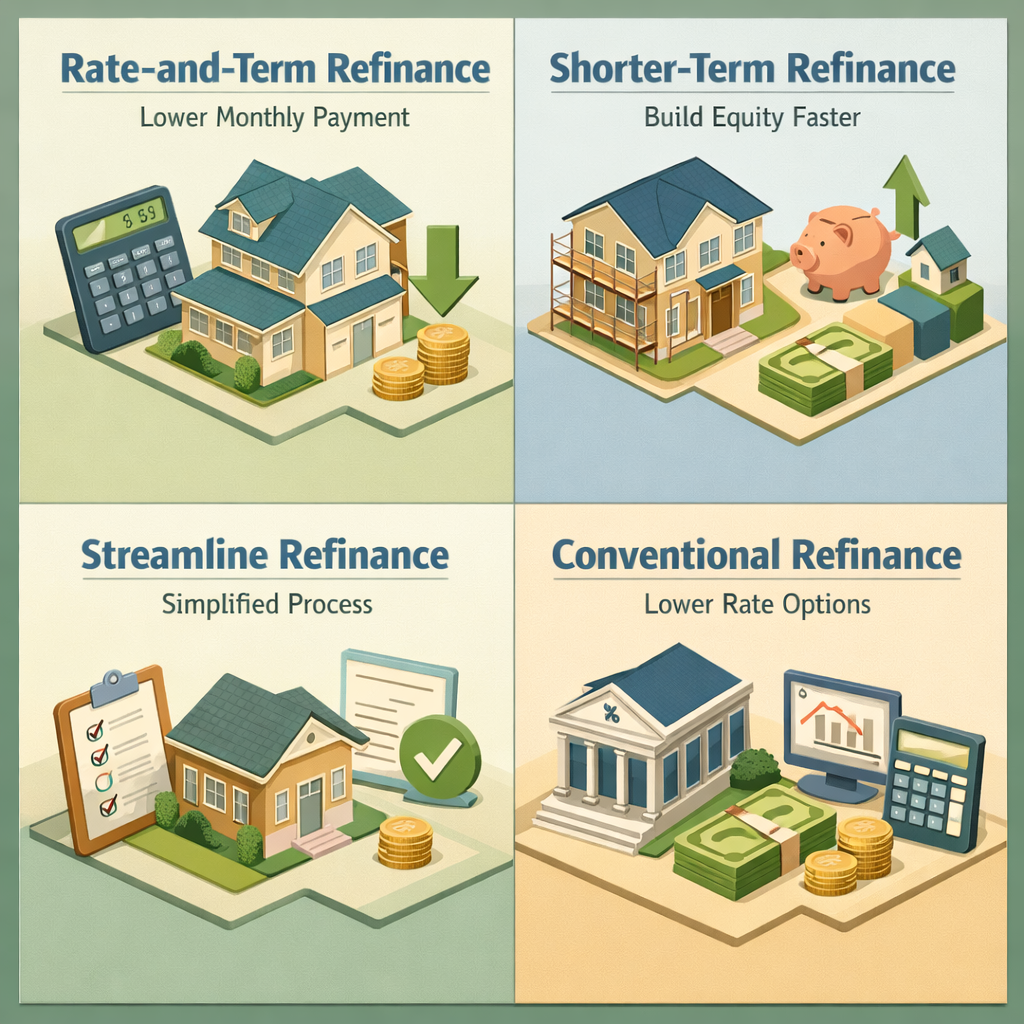
When it comes to the best options for refinancing a 30-year fixed mortgage early for a lower rate, borrowers generally have several loan product choices. Each path comes with its own trade-offs, and the right one depends on your financial goals, credit profile, and how much equity you've built.
Rate-and-Term Refinance
This is the most straightforward type of refinance. You replace your existing mortgage with a new one that has a different interest rate, a different term, or both — without changing the loan balance significantly. If rates have fallen since you first took out your mortgage, a rate-and-term refinance could lower your monthly payment and reduce the total interest you pay. Many lenders offer competitive pricing for borrowers with strong credit and solid equity.
Shorter-Term Refinance
Switching from a 30-year loan to a 15-year or 20-year mortgage typically comes with a lower rate, though your monthly payment may increase due to the accelerated payoff schedule. This option suits homeowners who have experienced income growth and want to build equity faster while paying less interest overall. It's a strong strategy for those who prioritize long-term savings over short-term cash flow flexibility.
Streamline Refinance Programs
If your original mortgage is backed by the FHA, VA, or USDA, you may be eligible for a streamline refinance. These programs are designed to simplify the process by reducing documentation requirements and, in many cases, skipping the full appraisal. The goal is to help borrowers move into a lower rate with fewer hurdles. VA borrowers may use the Interest Rate Reduction Refinance Loan (IRRRL), while FHA borrowers can explore the FHA Streamline program. Eligibility requirements apply, so it's worth speaking with your lender to confirm you qualify.
Conventional Refinance
For borrowers with a conventional loan, refinancing into another conventional product with a lower rate is a common and often straightforward option. Lenders typically look at your credit score, loan-to-value ratio, debt-to-income ratio, and income documentation. Borrowers with a credit score of 740 or higher and at least 20% equity tend to receive the most favorable rate offers.
How Your Credit Profile Shapes Your Early Refinance Rate Options
Your credit score plays a significant role in determining the interest rate a lender will offer when you refinance. Lenders use risk-based pricing, which means borrowers with stronger credit profiles are typically rewarded with lower rates. If your credit has improved since you first took out your mortgage, you may be in a better position to qualify for a more favorable rate today.
Here are some credit-related factors lenders commonly evaluate during a refinance application:
- Credit score: Higher scores generally unlock better rate tiers. Many lenders consider 620 the minimum for conventional refinances, while scores above 740 often qualify for the best available pricing.
- Payment history: Consistent on-time payments signal reliability to lenders and may strengthen your application.
- Debt-to-income (DTI) ratio: Lenders want to see that your total monthly debt obligations are manageable relative to your gross income. A lower DTI ratio typically supports a stronger application.
- Loan-to-value (LTV) ratio: The more equity you have in your home, the less risk the lender takes on. Borrowers with lower LTV ratios often qualify for better terms.
If your credit profile needs work, it may be worth spending a few months reducing balances, correcting any errors on your credit report, and avoiding new credit applications before submitting a refinance request. Even a modest improvement in your score could move you into a better rate bracket.
No-Closing-Cost Refinance: Flexibility With a Trade-Off
One refinancing approach that's grown in popularity is the no-closing-cost refinance. As the name suggests, the borrower doesn't pay closing costs out of pocket at the time of closing. Instead, those costs are either rolled into the new loan balance or offset by accepting a slightly higher interest rate — a method sometimes called a lender credit.
This option can be appealing for homeowners who don't have sufficient cash on hand to cover closing costs, or who plan to move or refinance again within a few years. Since the upfront financial barrier is removed, the break-even timeline essentially disappears in a traditional sense. However, it's important to recognize the trade-off involved.
- If costs are rolled into the loan balance, you'll pay interest on a slightly larger principal over time.
- If costs are offset by a lender credit, your new rate will be higher than the market's lowest available option.
- Over a long holding period, a no-closing-cost refinance may cost more in total interest than paying closing costs upfront and securing the lowest possible rate.
This option works best for borrowers with a shorter anticipated stay in the home or those who expect to refinance again when rates shift further. It's worth running the numbers both ways with your lender before deciding.
Market Timing and Rate Trends: What Early Refinancers Should Watch
Mortgage rates are influenced by a wide range of economic factors, including Federal Reserve policy decisions, inflation data, bond market movements, and broader economic conditions. Predicting exactly where rates will move is difficult even for experienced analysts, which is why most lending professionals suggest focusing on your personal financial situation rather than trying to time the market perfectly.
That said, staying informed about rate trends is a reasonable part of any early refinance strategy. Here are some general indicators homeowners may want to monitor:
- 10-year Treasury yield: Mortgage rates often move in a similar direction as the 10-year Treasury yield, so tracking this benchmark can offer a general sense of where rates may be heading.
- Inflation reports: When inflation rises, rates may follow. When inflation cools, lenders may begin to offer more competitive pricing.
- Federal Reserve meetings: While the Fed doesn't set mortgage rates directly, its policy stance and interest rate decisions influence lending markets and investor expectations.
Rather than waiting for the absolute lowest rate — which is nearly impossible to predict — many financial professionals suggest locking in a rate that meaningfully improves your current situation and makes sense given your break-even timeline. If rates fall further after you refinance, you may always have the option to refinance again, provided the costs justify the move at that time.
●Conclusion
The best options for refinancing a 30-year fixed mortgage early for a lower rate depend on your unique financial profile, your goals, and how long you plan to stay in your home. Whether you're drawn to a rate-and-term refinance, a streamline program, or a shorter loan term, the key is to run the numbers carefully and work with a trusted lending professional who can walk you through your options. An early mortgage refinance lower rate strategy isn't just about chasing lower numbers — it's about finding a loan structure that genuinely improves your financial position over time. At LoanWise, we're here to help you evaluate your choices with clarity and confidence. Reach out today to explore what refinancing could mean for your home and your future.