When you start exploring homeownership, the monthly mortgage payment can seem straightforward at first glance. But there's actually more to it than just paying back what you borrowed. Lenders and financial advisors often refer to a term called PITI in a mortgage — and understanding it could make a real difference in how you plan your budget and qualify for a home loan. In this guide, we'll break down each component of PITI, explain why lenders use it, and show you how it shapes your path to homeownership.
Breaking Down PITI: The Four Building Blocks of Your Mortgage Payment
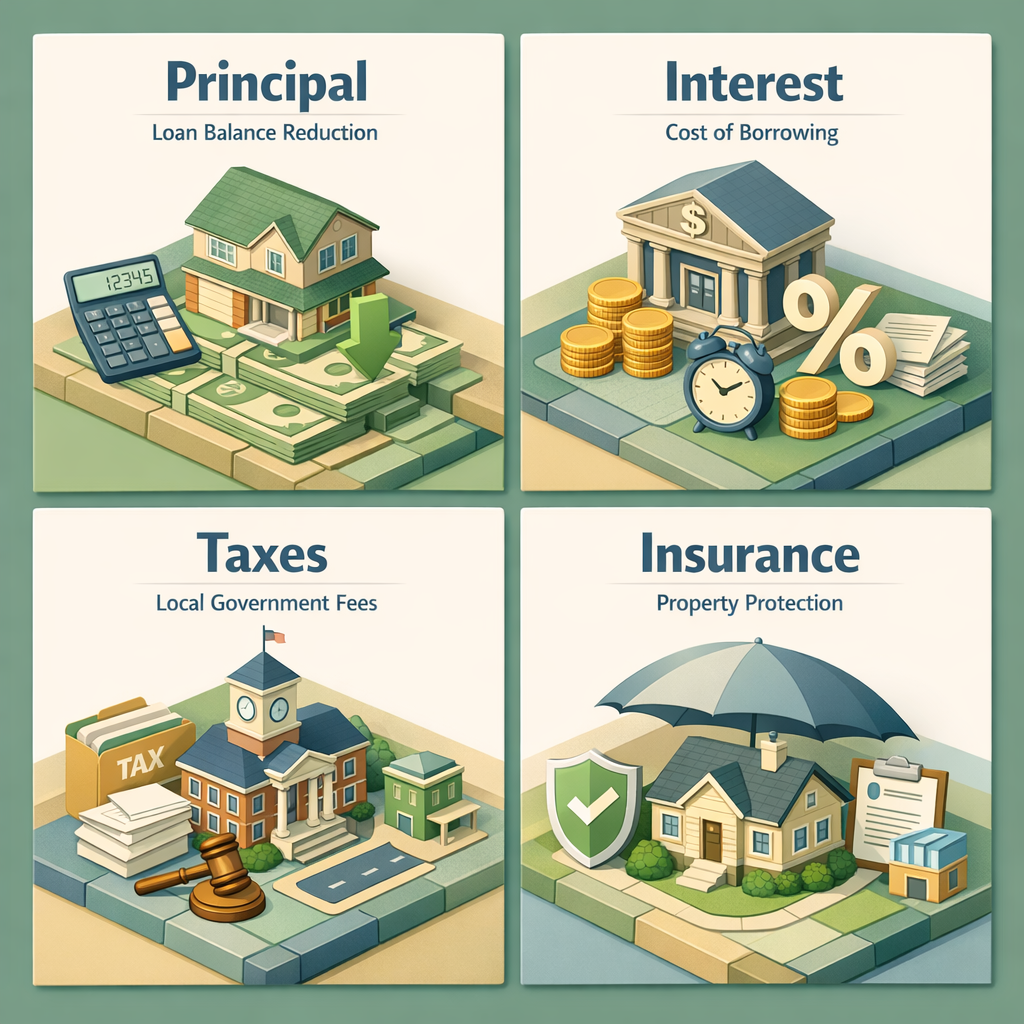
PITI is an acronym that stands for Principal, Interest, Taxes, and Insurance. These four elements combine to form the total monthly housing cost that most lenders evaluate when reviewing your mortgage application. Each piece plays a unique role, and together they give both you and your lender a complete picture of what homeownership truly costs each month.
- Principal: This is the portion of your payment that reduces your actual loan balance. Early in your mortgage, a smaller share goes toward principal, but that gradually increases over time.
- Interest: This is the cost you pay to borrow the money. Your interest rate — whether fixed or adjustable — determines how much of each payment goes to the lender as a fee for the loan.
- Taxes: Property taxes are assessed by your local government and are typically collected monthly through an escrow account managed by your lender or loan servicer.
- Insurance: This generally includes homeowners insurance, which protects your property against damage or loss. If your down payment is less than 20%, private mortgage insurance (PMI) may also be required and factored into this component.
It's worth noting that some lenders may also include homeowners association (HOA) fees or flood insurance in a broader version of this calculation, sometimes referred to as PITIA. However, the core four components — principal, interest, taxes, and insurance — are what most people mean when they say PITI.
How Principal and Interest Work Together Over the Life of Your Loan
The principal and interest portions of your payment are closely linked through a process called amortization. With a fixed-rate mortgage, your total monthly payment stays the same throughout the loan term, but the way that payment is divided between principal and interest shifts over time.
In the early years of a 30-year mortgage, for example, a much larger portion of your payment typically goes toward interest rather than reducing your loan balance. As time passes and your balance decreases, more of each payment chips away at the principal. This is why homeowners who've had their mortgage for many years tend to build equity more quickly than those who just started.
For homebuyers comparing loan options, understanding this split matters. A 15-year mortgage generally builds equity faster than a 30-year loan because the amortization schedule is compressed, meaning you pay down the principal more aggressively. However, the monthly payment on a shorter-term loan is also higher, so it's important to weigh affordability against long-term savings.
Adjustable-rate mortgages (ARMs) introduce a different layer of complexity. While initial rates may be lower, the interest portion of your payment could fluctuate after the fixed period ends, which in turn affects how much of your payment goes toward principal during those adjusted periods.
Property Taxes and Escrow: What Homeowners Need to Know
Property taxes are a significant and often underestimated part of homeownership costs. Rates vary widely depending on where you live — some counties and municipalities assess taxes at a much higher rate than others. When lenders calculate your PITI, they typically estimate your annual property tax bill and divide it by 12 to arrive at a monthly figure that gets added to your payment.
Most lenders require borrowers to use an escrow account to manage property taxes and insurance. Each month, a portion of your payment is deposited into this account, and when your tax or insurance bill comes due, your servicer pays it on your behalf. This arrangement helps ensure those obligations are met on time and protects the lender's interest in the property.
It's important for homebuyers to research property tax rates in their target area before committing to a purchase. A home that seems affordable based on its listing price might carry a substantial tax burden that pushes the overall PITI payment beyond what you'd comfortably planned for. Tools like county assessor websites or mortgage calculators that include tax estimates can help you get a clearer picture before you make an offer.
Also keep in mind that property tax assessments can change over time. Many municipalities reassess property values periodically, which could increase your tax bill — and therefore your monthly PITI — even if your interest rate stays the same.
Homeowners Insurance and PMI: Protecting Your Investment
The insurance component of PITI typically covers two distinct types of coverage, depending on your situation as a homebuyer.
Homeowners insurance is almost universally required by mortgage lenders. It protects the physical structure of your home and your personal belongings against risks like fire, theft, and certain natural disasters. Lenders require this because the home serves as collateral for the loan — if something happens to the property, they want to know it can be repaired or replaced.
The cost of homeowners insurance varies based on factors like the home's location, age, construction type, and your chosen coverage level. In areas prone to hurricanes, wildfires, or flooding, premiums may be considerably higher. If you're purchasing in a FEMA-designated flood zone, your lender may also require a separate flood insurance policy, which adds to your monthly housing costs.
Private mortgage insurance (PMI) is a different matter. This type of insurance is required by most conventional lenders when a borrower puts down less than 20% of the home's purchase price. PMI protects the lender — not the borrower — in case of default. It typically adds a monthly cost to your payment that can range depending on your loan size, credit profile, and down payment amount.
The good news for homeowners is that PMI doesn't last forever. Once you've built enough equity in your home — generally reaching 20% of the original value — you may be able to request its removal, which would lower your monthly PITI accordingly.
Why Lenders Use PITI to Evaluate Mortgage Qualification
Understanding PITI in a mortgage isn't just useful for budgeting — it's central to how lenders determine whether you qualify for a loan. One of the most important metrics lenders review is your debt-to-income ratio, or DTI. This ratio compares your monthly debt obligations to your gross monthly income.
Lenders typically look at two versions of your DTI:
- Front-end DTI (Housing Ratio): This measures your total PITI payment as a percentage of your gross monthly income. Many lenders prefer this ratio to stay below a certain threshold, though guidelines vary by loan type and lender.
- Back-end DTI (Total Debt Ratio): This includes your PITI plus all other monthly debt payments — such as car loans, student loans, and credit card minimums — divided by your gross income. Conventional loan guidelines and government-backed programs each have their own acceptable limits.
Because PITI encompasses all major housing costs, it gives lenders a more accurate view of your true monthly obligation than just looking at principal and interest alone. A lender who only considered P&I might approve a loan that becomes unaffordable once taxes, insurance, and PMI are added in. By using the full PITI figure, lenders help ensure that borrowers can realistically manage their payments over the long term.
For homebuyers, this means it's smart to calculate your estimated PITI before applying for a mortgage — not after. Knowing your likely total payment can help you shop within a realistic price range and avoid surprises during underwriting.
Practical Tips for Managing and Reducing Your PITI Payment
While some elements of PITI are fixed once your loan is in place, there are strategies homebuyers and homeowners can use to manage or potentially reduce their total monthly housing costs.
- Shop for homeowners insurance: Insurance premiums aren't set in stone. Comparing quotes from multiple providers could lead to meaningful savings, especially if you bundle home and auto coverage with the same insurer.
- Make a larger down payment: Putting down 20% or more eliminates the need for PMI, which can noticeably reduce your monthly payment. Even increasing your down payment from 5% to 10% may lower your PMI costs.
- Appeal your property tax assessment: If you believe your home has been overvalued by the local tax assessor, you may have the right to appeal. A successful appeal could lower your annual tax bill and reduce the tax portion of your PITI.
- Refinance strategically: Homeowners who refinance into a lower interest rate could reduce their principal and interest payment, which lowers the overall PITI. This can be especially impactful when rates have dropped significantly since your original loan was originated.
- Request PMI removal: Once you've reached 20% equity, contact your servicer to initiate the PMI cancellation process. Under the Homeowners Protection Act, lenders are generally required to automatically cancel PMI at 22% equity, but you may be able to request it earlier.
Each of these steps requires some upfront effort, but the potential monthly savings can be well worth it — especially over the course of a 15- or 30-year mortgage.
●Conclusion
Understanding PITI in a mortgage is one of the most practical steps any homebuyer or homeowner can take toward financial confidence. By knowing exactly what goes into your monthly payment — principal, interest, taxes, and insurance — you're better equipped to set a realistic budget, compare loan options, and meet lender qualification standards. Whether you're purchasing your first home, refinancing an existing mortgage, or simply trying to get a clearer handle on your housing costs, PITI gives you the full picture. At LoanWise, we're here to help you navigate every part of the home financing process with clarity and confidence. Reach out today to connect with a lending specialist who can walk you through your options.