
If you've ever worried about interest rates climbing while you're in the middle of buying a home, you're not alone. The mortgage process can take weeks or even months, and a lot can change in that time. That's where a mortgage rate lock comes in. It's one of the most practical tools available to homebuyers, and understanding how it works could save you a meaningful amount of money over the life of your loan. In this article, we'll walk through everything you need to know about mortgage rate locks — from what they are to when and how to use them wisely.
Understanding What a Mortgage Rate Lock Actually Is
A mortgage rate lock is an agreement between a borrower and a lender that guarantees a specific interest rate for a set period of time. Once you lock your rate, it won't change — even if market rates rise significantly before your loan closes. This protection gives homebuyers a level of certainty that's hard to put a price on, especially during periods of market volatility.
Rate locks are typically offered after you've submitted a mortgage application and a property has been identified. The lender will present you with a rate, and you can choose to lock it in for a defined window — commonly 30, 45, or 60 days, though longer periods may be available depending on the lender and loan type.
It's worth noting that a mortgage rate lock is not the same as loan approval. It simply means that the interest rate you've been quoted will be held for you while underwriting and processing continue. If your loan doesn't close within the lock period, you may need to extend the lock — which often comes with additional costs.
How the Rate Lock Process Works Step by Step
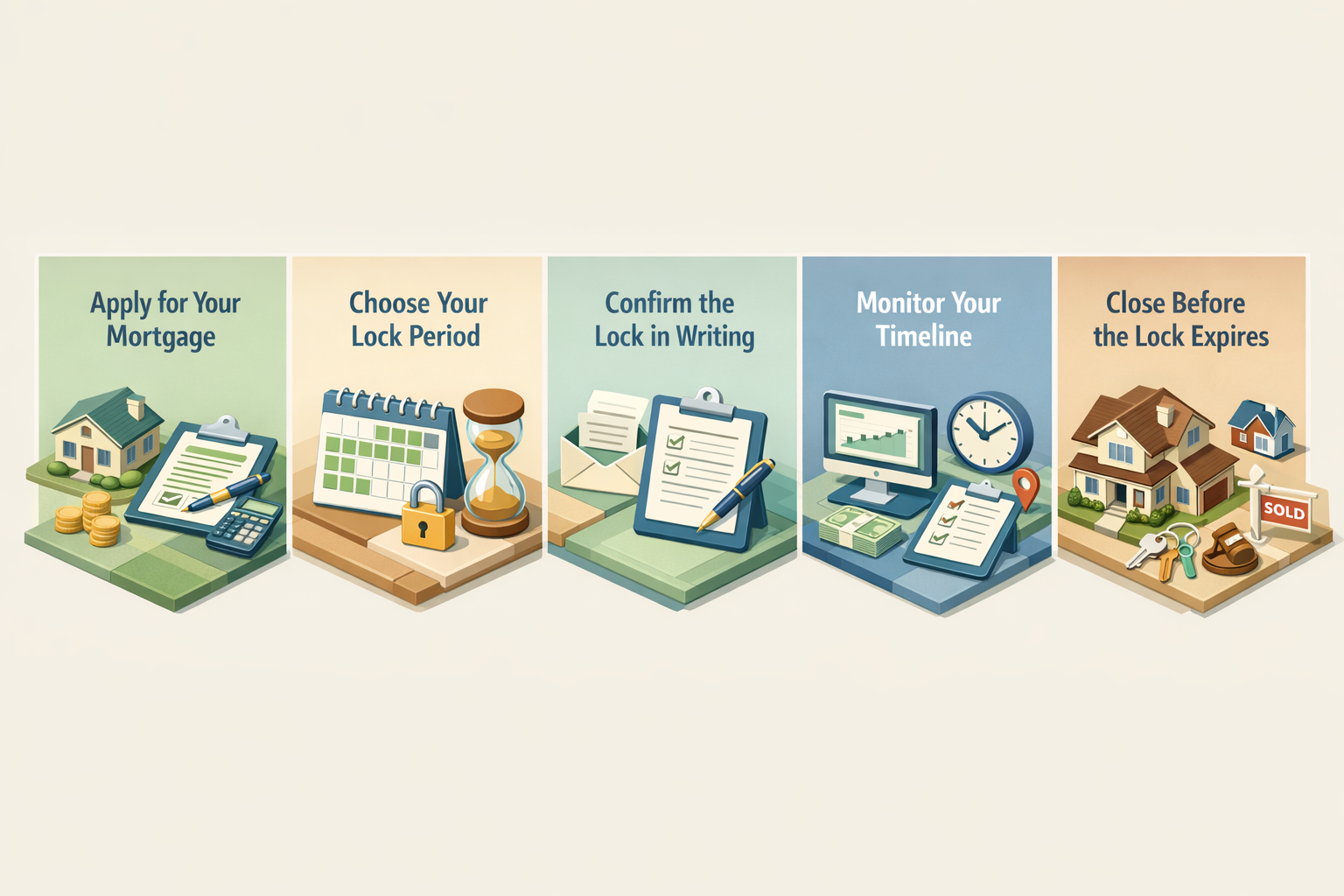
The rate lock process is generally straightforward, but timing matters. Here's a typical sequence of events:
- Step 1 – Apply for your mortgage: Before locking, you'll need to submit a full mortgage application and receive an official Loan Estimate from your lender.
- Step 2 – Choose your lock period: Discuss with your loan officer how long it's likely to take to close your loan. Then select a lock period that comfortably covers that timeline.
- Step 3 – Confirm the lock in writing: A rate lock should always be documented. Ask your lender for a written confirmation that includes the locked rate, the expiration date, and any associated fees.
- Step 4 – Monitor your timeline: Stay in close contact with your lender and real estate agent to ensure the process stays on track. Delays can push you past your lock expiration.
- Step 5 – Close before the lock expires: As long as you close within the agreed window, your locked rate applies to your final loan terms.
Most lenders won't charge a fee for a standard 30-day rate lock, but longer lock periods may come at a cost — either as an upfront fee or a slightly higher interest rates. It's always a good idea to ask your lender to clarify what's included before agreeing to anything.
Key Benefits of Locking In Your Mortgage Rate
The primary benefit of a mortgage rate lock is straightforward: protection from rising interest rates. When rates go up, even a small increase — say a quarter of a percentage point — can translate into hundreds of dollars more per year in mortgage payments. Over a 30-year loan, that adds up quickly.
Beyond cost protection, a rate lock also offers peace of mind. Knowing that your rate is set allows you to focus on other aspects of the home-buying process — inspections, appraisals, moving plans — without constantly refreshing rate charts. That kind of clarity can reduce stress during what's already a complex experience.
For homebuyers on tight budgets, a rate lock can also be essential for accurate financial planning. It removes one major variable from the equation, making it easier to finalize your budget, coordinate with your real estate agent, and prepare for closing costs.
Additionally, if you're purchasing a new construction home with a longer build timeline, some lenders offer extended rate locks — sometimes up to 12 months — that can protect you throughout the entire construction period. These extended locks may carry higher fees, but they could be well worth it depending on the rate environment.
What Happens If Rates Drop After You Lock
This is one of the most common concerns homebuyers have about rate locks: what if rates go down after I lock in? It's a fair question, and the honest answer is that you may miss out on the lower rate — unless your lender offers what's known as a float-down option.
A float-down provision allows you to take advantage of a lower rate if the market drops significantly during your lock period. Not all lenders offer this feature, and those that do may charge an additional fee for it. There may also be conditions attached — for example, the rate would need to drop by a certain amount before the float-down kicks in.
Without a float-down option, a locked rate is a commitment. If market rates fall, your locked rate stays the same. This is why some borrowers choose to float their rate instead of locking — meaning they leave it open to market movement in hopes that rates will improve before closing. However, this strategy also carries risk: if rates rise due to rising interest rates, so does your payment.
The decision to lock or float depends on your risk tolerance, current market conditions, and how quickly you expect to close. Speaking with an experienced mortgage professional can help you evaluate which approach makes more sense for your situation.
Common Mistakes Borrowers Make With Rate Locks
Even with a solid understanding of how rate locks work, borrowers sometimes make avoidable mistakes. Here are a few of the most common ones to watch for:
- Locking too early: If you lock before you've found a home or before your lender has confirmed your loan details, the lock may expire before you close. That could leave you scrambling for an extension — or facing a higher rate.
- Choosing too short a lock period: Underestimating how long the process will take is a frequent issue. Appraisals, title searches, and underwriting reviews can all take longer than expected. It's often better to choose a slightly longer lock period than to risk expiring too soon.
- Not getting the lock in writing: Verbal agreements aren't enough. Always confirm your rate lock with written documentation from your lender.
- Ignoring extension costs: If your lock expires before closing, you'll typically need to pay a fee to extend it. These fees vary but can add real costs to your transaction.
- Assuming the lock protects all loan terms: A rate lock typically covers your interest rate and sometimes your points. It may not protect other loan terms like your closing costs or certain fees. Always read the fine print.
How to Decide When to Lock Your Mortgage Rate
Timing your rate lock is more of a judgment call than a science. There's no perfect moment, and even experienced mortgage professionals can't predict exactly where rates are headed. That said, there are some practical guidelines that may help you decide.
If interest rates have been trending upward and forecasts suggest continued increases, locking sooner rather than later is often a prudent move. On the other hand, if rates appear to be declining or holding steady, you might consider waiting — though this always carries some uncertainty.
Your personal timeline also matters. If you're under contract with a clear closing date in mind, it may make sense to lock as soon as you're comfortable with the rate being offered. If you're still early in the home search, locking may not yet be possible or advisable.
A good mortgage advisor will help you weigh these factors based on your specific circumstances. They can walk you through current market trends, help you evaluate lock period options, and make sure you understand all associated costs before making a decision.
●Conclusion
A mortgage rate lock is one of the simplest and most effective ways to protect yourself during the home-buying process. By securing your interest rate for a defined period, you gain both financial predictability and peace of mind while your loan moves through underwriting and closing. Whether you're a first-time homebuyer or a seasoned real estate investor, understanding how rate locks work — and how to use them strategically — is an essential part of navigating today's mortgage market. If you're ready to explore your loan options and learn more about locking in a competitive rate, connect with a LoanWise mortgage professional today.