
Buying a home is one of the biggest financial decisions most people will ever make. Yet many homebuyers move through the mortgage process without fully understanding who's guiding them — or why that person matters so much. That's where a mortgage loan officer comes in. Whether you're a first-time homebuyer, a homeowner looking to refinance, or a real estate investor expanding your portfolio, knowing what a mortgage loan officer does can help you make smarter, more confident financing decisions. In this article, we'll break down their role, responsibilities, and how to find the right one for your situation.
Understanding the Role of a Mortgage Loan Officer
A mortgage loan officer — sometimes called a mortgage originator or home loan officer — is a licensed lending professional who works directly with borrowers to help them secure financing for a home purchase or refinance. They serve as the primary point of contact between the borrower and the lender, guiding applicants through every step of the mortgage process.
Their responsibilities typically begin at the very first conversation. During an initial consultation, a loan officer will assess your financial situation, explain available loan programs, and help you understand what you may qualify for. From there, they assist with gathering documentation, submitting the loan application, and communicating with underwriters and processors on your behalf.
It's worth noting that loan officers aren't just order-takers. They're advisors. A skilled loan officer will ask the right questions to understand your short- and long-term financial goals, then recommend loan products that genuinely align with those goals — whether that's a 30-year fixed-rate mortgage, an adjustable-rate option, a government-backed FHA or VA loan, or a jumbo product for higher-value properties.
Loan Officers vs. Mortgage Brokers: Key Differences
One of the most common points of confusion for borrowers is the difference between a mortgage loan officer and a mortgage broker. While both help you obtain a home loan, there's an important distinction in how they operate.
A mortgage loan officer typically works for a single lender — such as a bank, credit union, or direct mortgage lender. They can only offer loan products available through that institution. A mortgage broker, on the other hand, works independently and has access to multiple lenders, which may give borrowers a wider range of product options.
Neither approach is inherently better. If you have a straightforward financial profile and want a streamlined experience, working directly with a loan officer at a reputable lender may be ideal. If your situation is more complex — such as being self-employed, having a non-traditional income, or needing a niche loan program — a broker's broader access might be more beneficial.
- Loan Officer: Works for one lender, deeper product knowledge within that institution, often faster communication
- Mortgage Broker: Works across multiple lenders, may offer more competitive rate shopping, useful for complex scenarios
Understanding this distinction helps you approach your home financing journey with greater clarity and purpose.
How Mortgage Loan Officers Are Licensed and Regulated
Mortgage loan officers are not simply salespeople — they're regulated professionals. In the United States, most loan officers are required to obtain a license through the Nationwide Multistate Licensing System, commonly known as the NMLS. This system tracks licensing, background checks, and continuing education requirements across states.
To become licensed, a loan officer typically must complete pre-licensing education, pass a national examination, undergo a criminal background check, and meet credit history standards. Once licensed, they're required to complete ongoing education to keep their license current. This regulatory framework is designed to protect borrowers from unqualified or unethical lending practices.
Loan officers who work for federally chartered banks and credit unions may operate under a different registration process — they're registered rather than licensed — but they're still subject to federal oversight. Regardless of the pathway, borrowers can verify a loan officer's credentials and history through the NMLS Consumer Access website, which is publicly available.
When choosing a mortgage loan officer, it's always a good idea to confirm their NMLS number and check their record for any complaints or regulatory actions. This simple step can give you valuable peace of mind before you trust someone with one of the most significant financial transactions of your life.
What to Expect During the Loan Application Process
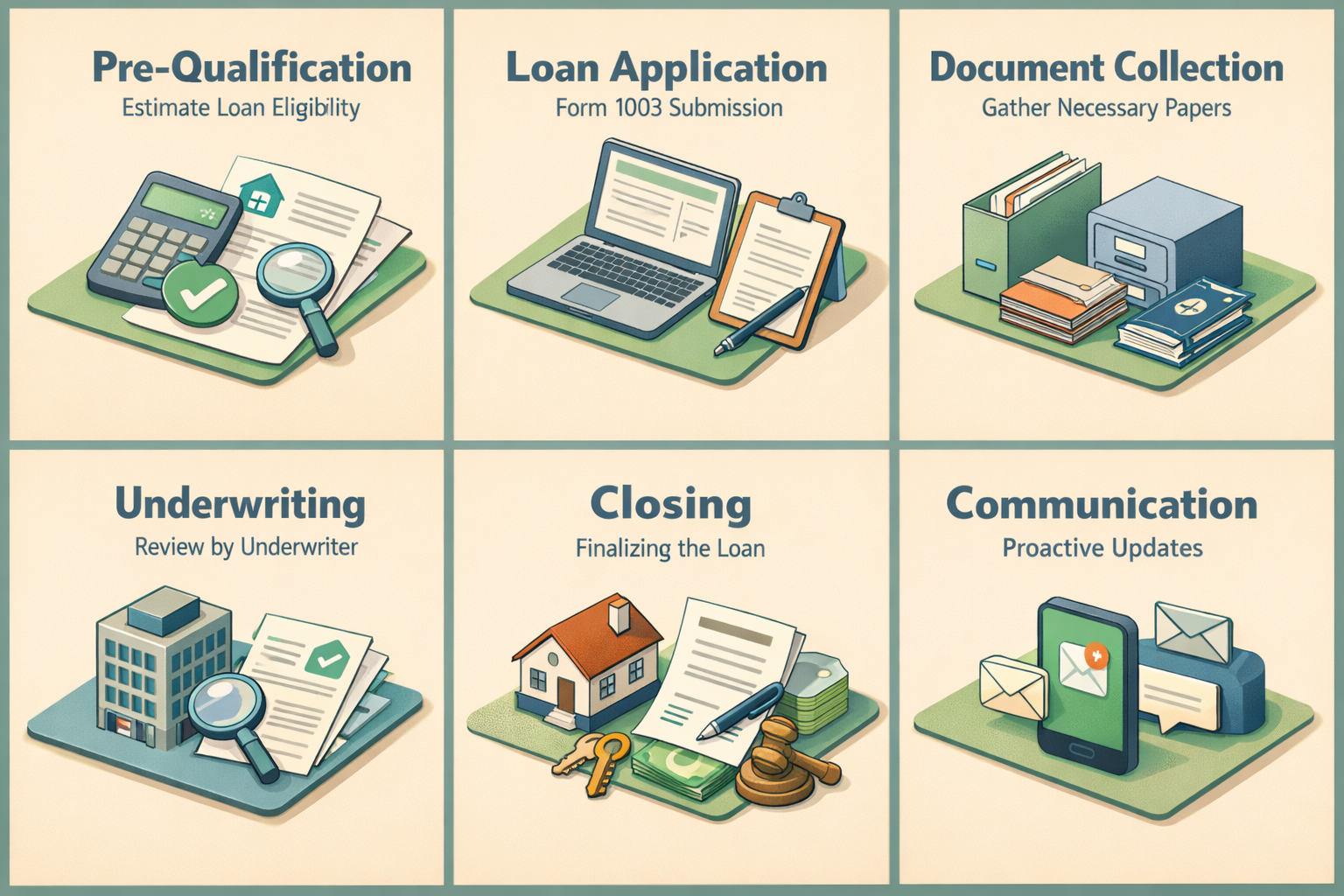
Once you've connected with a loan officer, the process moves quickly. Here's a general overview of what to expect at each stage:
- Pre-qualification or Pre-approval: Your loan officer will review your income, assets, debts, and credit profile to give you an estimate of what you may qualify for. A pre-approval typically involves a more thorough review and carries more weight with sellers.
- Loan Application (Form 1003): You'll formally apply using the Uniform Residential Loan Application. Your loan officer will help you complete this accurately to avoid delays.
- Document Collection: Expect to provide pay stubs, tax returns, bank statements, employment verification, and identification. Your loan officer will create a checklist tailored to your situation.
- Underwriting: Your file is reviewed by an underwriter who determines whether the loan meets the lender's guidelines. Your loan officer will act as your advocate here, responding to any conditions the underwriter requests.
- Closing: Once approved, you'll schedule a closing date. Your loan officer will walk you through the Closing Disclosure, which outlines your final loan terms and costs.
Throughout this process, a good loan officer communicates proactively, sets realistic expectations, and helps you avoid common pitfalls that could delay or jeopardize your loan approval.
How Loan Officer Compensation Works
Understanding how your loan officer gets paid can help you evaluate whether their recommendations are truly in your best interest. Most loan officers earn compensation in one or more of the following ways:
- Lender-paid commission: Many loan officers receive a percentage of the loan amount, paid by the lender. This is built into the pricing of the loan and doesn't typically appear as a separate line item to the borrower.
- Borrower-paid compensation: In some arrangements — often through brokers — the borrower pays the loan officer directly, which may be reflected as origination points on the loan estimate.
- Salary plus bonus: Some lenders, particularly larger banks, pay their loan officers a base salary with performance-based incentives.
Federal regulations under the Truth in Lending Act and the Dodd-Frank Act prohibit loan officers from being compensated based on the terms of the loan — meaning they can't be paid more for steering you into a higher-rate product. However, it's still smart to ask your loan officer upfront how they're compensated and to compare loan estimates from at least two or three lenders before committing. Transparency in this area is a hallmark of a trustworthy professional.
Qualities That Set a Great Mortgage Loan Officer Apart
Not all loan officers offer the same level of service. The best ones combine technical knowledge with genuine client advocacy. Here are some qualities worth looking for:
- Responsiveness: Mortgage timelines are tight. A loan officer who communicates promptly can mean the difference between closing on time and losing a deal.
- Transparency: A great loan officer explains fees, rates, and loan terms clearly — without hiding costs in fine print or pressuring you to move faster than you're comfortable with.
- Product Knowledge: Whether you need an FHA loan, a VA loan, a conventional product, or a non-QM option for self-employed borrowers, your loan officer should be well-versed in the programs available to you.
- Problem-Solving Skills: Credit challenges, appraisal issues, and documentation gaps happen. An experienced loan officer knows how to navigate these hurdles creatively and efficiently.
- Client Reviews and Referrals: Word of mouth remains one of the best ways to find a reliable loan officer. Online reviews and referrals from trusted real estate agents or financial advisors can point you in the right direction.
Taking the time to vet your loan officer before committing can save you significant stress — and potentially thousands of dollars — over the life of your loan.
●Conclusion
A mortgage loan officer is far more than a paperwork processor. They're a knowledgeable guide, a regulatory-compliant professional, and — when you choose the right one — a genuine advocate for your financial well-being. Whether you're purchasing your first home, refinancing to a better rate, or building a real estate investment portfolio, partnering with a skilled and trustworthy loan officer can make the entire experience smoother and more successful. Take the time to ask questions, verify credentials, and compare your options. The right loan officer could be one of the most valuable members of your home buying team.