If you're shopping for a home loan, chances are you've come across the term conventional mortgage more than once. It's one of the most widely used financing options in the U.S. housing market — and for good reason. Conventional mortgages offer flexibility, competitive interest rates, and a range of loan structures that can work for first-time buyers, move-up buyers, and real estate investors alike. But what exactly is a conventional mortgage, and how do you know if it's the right fit for your situation? This guide breaks it all down in plain language so you can move forward with confidence.
Understanding What a Conventional Mortgage Actually Is
A conventional mortgage is a home loan that is not insured or guaranteed by a federal government agency. This sets it apart from government-backed programs like FHA loans, VA loans, and USDA loans, which come with federal protections for lenders. Because conventional loans lack that government backing, lenders typically hold borrowers to stricter qualification standards.
Most conventional mortgages fall into one of two categories: conforming or non-conforming. Conforming loans meet the guidelines set by Fannie Mae and Freddie Mac, the two government-sponsored enterprises that purchase mortgages from lenders and help keep the housing market liquid. Non-conforming loans — often called jumbo loans — exceed those limits and are typically used for higher-priced properties.
Understanding this distinction matters because it affects not just your loan amount, but also your interest rate, down payment requirements, and the overall approval process. Conforming loan limits are updated periodically, so it's worth checking the current figures before you apply.
How Conventional Mortgage Qualification Works
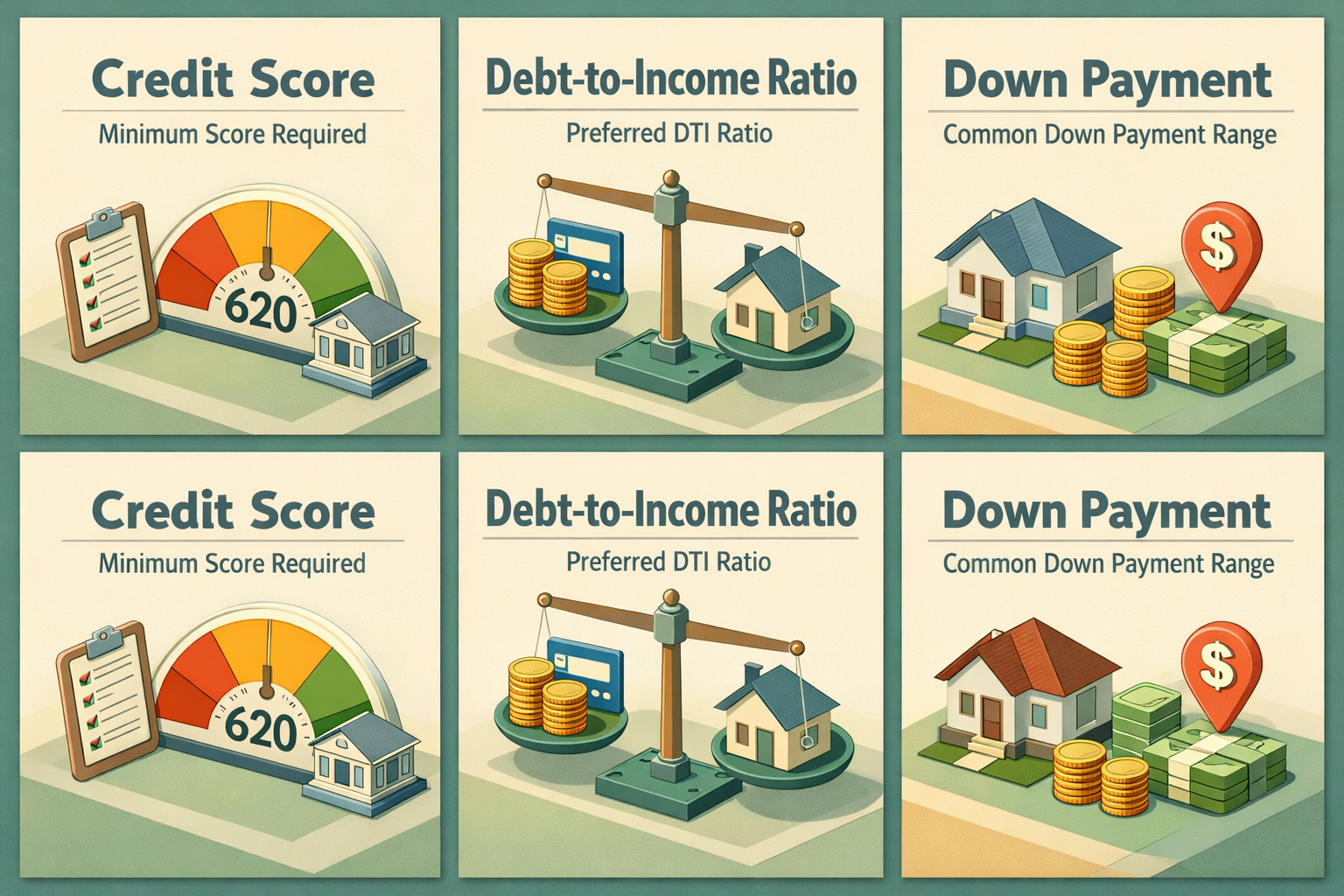
Qualifying for a conventional mortgage generally requires meeting certain benchmarks in three key areas: credit score, debt-to-income ratio (DTI), and down payment. While exact requirements can vary by lender, here's what most borrowers can typically expect:
- Credit Score: Most lenders look for a minimum credit score of around 620 for a conventional loan. However, borrowers with scores of 740 or higher may qualify for the most competitive interest rates.
- Debt-to-Income Ratio: Lenders generally prefer a DTI ratio of 45% or lower, though some may allow up to 50% depending on other compensating factors like strong reserves or a large down payment.
- Down Payment: Conventional loans can require as little as 3% down for eligible first-time homebuyers, though 5% to 20% is more common. Putting down at least 20% allows you to avoid private mortgage insurance (PMI).
It's worth noting that these are general benchmarks. Each lender has its own underwriting guidelines, and some may be more flexible — or more strict — depending on your full financial profile. Working with an experienced mortgage advisor can help you understand exactly where you stand before you apply.
The Role of Private Mortgage Insurance in Conventional Lending
One topic that often surprises homebuyers is private mortgage insurance, or PMI. If you put down less than 20% on a conventional loan, your lender will typically require PMI as a way to protect themselves in case you default. It's important to understand that PMI protects the lender — not the borrower.
PMI is usually added to your monthly mortgage payment and can range based on your loan size, credit score, and down payment amount. The good news is that PMI isn't permanent. Once you've built enough equity in your home — typically reaching 20% of the original purchase price — you can request to have PMI removed. Under the Homeowners Protection Act, lenders are generally required to cancel PMI automatically when your loan balance reaches 78% of the original home value, assuming you're current on payments.
For buyers who want to avoid PMI entirely, strategies like a larger down payment or a piggyback loan (an 80/10/10 arrangement) are sometimes used. Discussing your options with a lending professional can help you find the most cost-effective path for your budget.
Fixed-Rate vs. Adjustable-Rate Conventional Mortgages
Conventional mortgages come in two main interest rate structures, and choosing the right one can have a significant impact on your long-term financial plan.
Fixed-Rate Mortgages
A fixed-rate mortgage keeps your interest rate the same for the entire life of the loan. Whether you choose a 15-year or 30-year term, your principal and interest payment stays consistent every month. This predictability makes fixed-rate loans popular among buyers who plan to stay in their home for many years and want protection from rising interest rates.
Adjustable-Rate Mortgages (ARMs)
An adjustable-rate mortgage starts with a fixed interest rate for an initial period — often 5, 7, or 10 years — and then adjusts periodically based on a market index. ARMs can offer lower initial rates compared to fixed-rate options, which may appeal to buyers who expect to sell or refinance before the adjustment period begins. However, they do carry the risk of higher payments if interest rates climb.
Neither option is universally better. The right choice depends on your timeline, your risk tolerance, and where interest rates are headed — which, of course, no one can predict with certainty.
Conventional Mortgages vs. Government-Backed Loan Programs
It's helpful to compare conventional mortgages with government-backed alternatives so you can make a more informed decision. Here's a quick overview of how these popular loans work:
- FHA Loans: Backed by the Federal Housing Administration, FHA loans allow lower credit scores (sometimes as low as 500 with a 10% down payment) and are popular with first-time buyers. However, they come with both upfront and annual mortgage insurance premiums that can add to your total costs.
- VA Loans: Available to eligible veterans, active-duty service members, and surviving spouses, VA loans require no down payment and no PMI. They're often considered one of the most favorable loan products available — for those who qualify.
- USDA Loans: Designed for eligible rural and suburban homebuyers, USDA loans also offer zero down payment options. Income and location restrictions apply.
Conventional mortgages, by comparison, tend to offer more flexibility in property types and loan purposes. They're often the preferred choice for buyers with strong credit who want to avoid the long-term cost of government-required mortgage insurance — especially since conventional PMI can be removed once equity thresholds are met, unlike FHA MIP in many cases.
Who Benefits Most from a Conventional Mortgage?
While conventional mortgages aren't the right fit for everyone, they tend to work especially well for certain types of borrowers:
- Buyers with solid credit: If your credit score is in the mid-700s or higher, you may qualify for some of the most competitive rates available on a conventional loan.
- Buyers with a sizeable down payment: Those who can put down 20% or more avoid PMI entirely, which can result in meaningful monthly savings.
- Move-up buyers and repeat homeowners: Borrowers who've built equity in a previous home and are purchasing their next property often find conventional financing a natural fit.
- Real estate investors: Conventional loans are commonly used to finance investment properties, including single-family rentals and small multi-unit properties. Government-backed loans often have more restrictions on non-owner-occupied properties.
- Refinancers: Homeowners looking to lower their rate, shorten their loan term, or tap into home equity through a cash-out refinance frequently turn to conventional products.
If you're unsure whether you fit one of these profiles, a licensed mortgage advisor can review your full financial picture and help determine whether a conventional loan — or another program — makes more sense for your goals.
●Conclusion
A conventional mortgage remains one of the most versatile and widely used home financing tools available to buyers and homeowners today. Whether you're purchasing your first home, upgrading to a larger space, investing in rental property, or refinancing an existing loan, conventional financing may offer the combination of competitive rates, flexible terms, and long-term value you're looking for. The key is understanding what lenders expect, knowing your own financial profile, and working with a knowledgeable lending partner who can guide you through the process. Ready to explore your options? Connect with a LoanWise mortgage specialist today and take the next step toward your homeownership goals.