
Owning a seasonal restaurant is rewarding, but it comes with a financial rhythm that most lenders don't automatically understand. When the busy season winds down and revenue slows to a trickle, covering payroll, rent, inventory, and equipment costs can become a serious challenge. That's where SBA loans can make a real difference — offering accessible, government-backed financing designed to support small businesses through tough stretches. But before any lender can say yes, you'll need to come prepared with the right paperwork. Understanding what documents needed for SBA loan for a seasonal restaurant during off-peak months could be the difference between a smooth approval and a frustrating delay. This guide walks you through everything you'll likely need, step by step.
Why Seasonal Restaurants Face Unique Lending Challenges
Lenders evaluating a loan application look for consistent, predictable income. For a seasonal restaurant — whether it's a beachside seafood shack, a ski lodge dining room, or a summer rooftop bar — income is anything but consistent. Revenue may surge during peak months and then fall sharply when the season ends. This pattern can make traditional lenders nervous, even when the business is fundamentally healthy and profitable over the full year.
The SBA recognizes this challenge. Programs like the SBA 7(a) loan are specifically structured to support small businesses with irregular cash flow, including those in the food service and hospitality sectors. Lenders who participate in SBA programs are generally more open to seasonal income patterns, provided that the borrower presents a well-organized, transparent picture of their business finances.
The key is documentation. When a lender can see your full annual revenue cycle — highs and lows included — they can make a more informed, favorable decision. That means gathering records that tell the complete story of your restaurant's financial health, not just a snapshot of your slowest months.
Core Business Financial Documents You'll Need
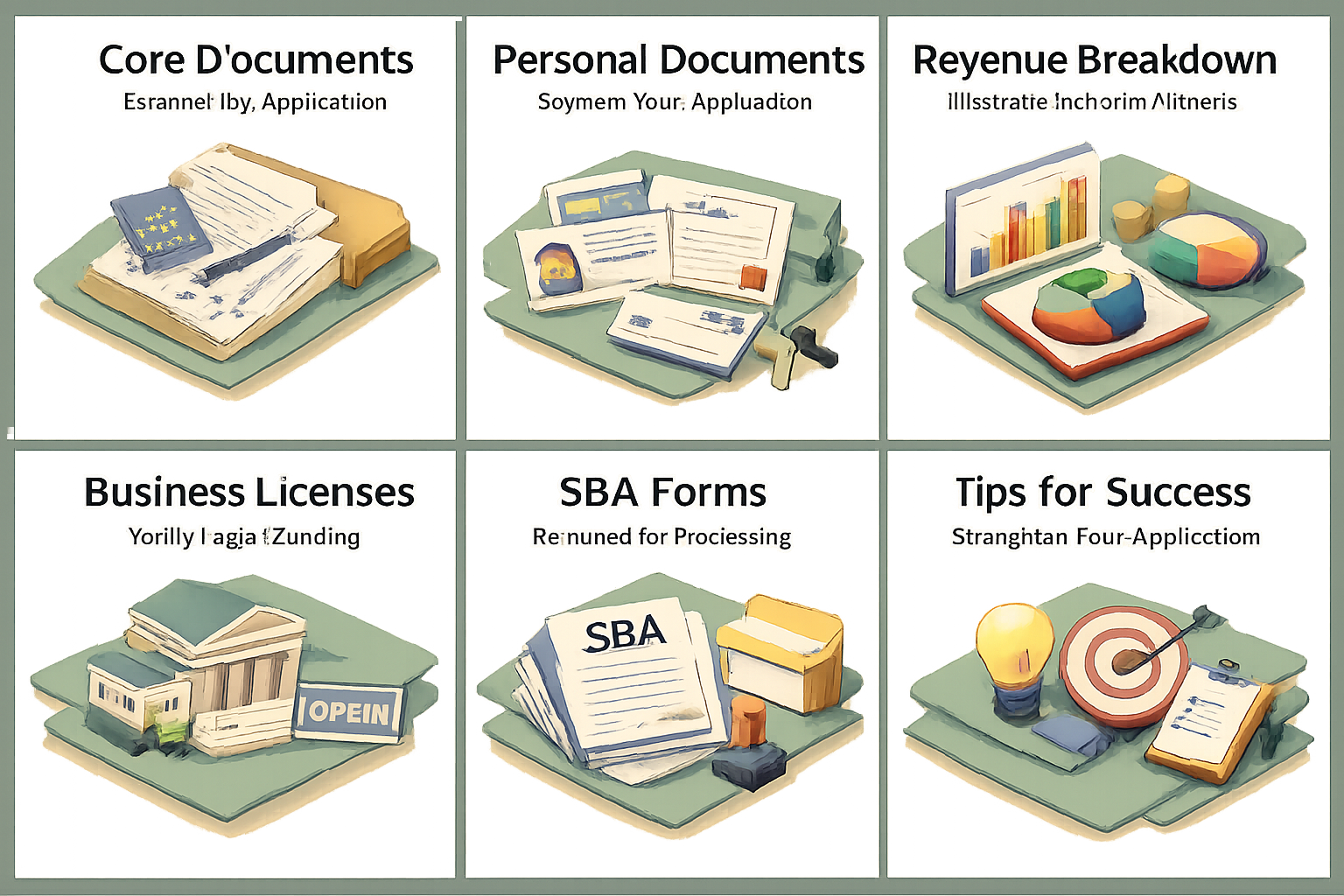
The foundation of any SBA loan application is a solid set of business financial records. For a seasonal restaurant, these documents need to reflect the cyclical nature of your income clearly and honestly. Here's what you'll typically need to prepare:
- Two to three years of business tax returns: These are essential. Lenders want to see your net income over multiple years to understand your average annual performance. For seasonal restaurants, multiple years of returns help smooth out the peaks and valleys.
- Year-to-date profit and loss statement (P&L): This document should be current and prepared by an accountant or generated through reliable accounting software. It shows your income, cost of goods sold, operating expenses, and net profit or loss for the current year.
- Balance sheet: A current balance sheet outlines your assets, liabilities, and equity. Lenders use it to evaluate the overall financial position of your business and whether it can sustain debt repayment.
- Business bank statements: Most lenders will request 12 months of business bank statements. For seasonal restaurants, this range is particularly important — it captures both your high-revenue months and your off-peak periods, giving lenders a full picture.
- Accounts receivable and accounts payable reports: If applicable, these reports show money owed to your business and money your business owes, helping lenders assess short-term financial obligations.
Organizing these documents ahead of time can significantly speed up the review process and reduce back-and-forth with your lender.
Personal Financial Documents That Support Your Application
Because SBA loans are often extended to small business owners who are closely tied to their businesses, lenders will also review your personal financial situation. This is especially true if your restaurant is a sole proprietorship, partnership, or a closely held LLC or corporation. You'll typically need to provide:
- Personal tax returns for two to three years: These give lenders insight into your personal income history and financial stability outside the business.
- Personal financial statement (SBA Form 413): This standardized form lists your personal assets, liabilities, and net worth. It's a required part of most SBA loan applications and must be completed accurately.
- Personal credit report authorization: Lenders will pull your personal credit report as part of the underwriting process. A strong personal credit score — generally above 650 — may improve your chances, though SBA lenders often consider the full picture rather than credit score alone.
- Government-issued photo identification: A valid driver's license or passport is typically required for identity verification.
If your restaurant has multiple owners or partners, each individual with a significant ownership stake — often defined as 20% or more — will generally need to provide these same personal documents.
Seasonal Revenue Documentation: Proving Your Off-Peak Reality
This is where seasonal restaurant owners can set themselves apart. One of the most important aspects of answering what documents needed for SBA loan for a seasonal restaurant during off-peak months involves showing lenders not just that your revenue drops — but why it drops and how your business manages that drop responsibly.
Consider preparing or compiling the following:
- Monthly revenue breakdown by year: A simple spreadsheet or accounting report showing monthly revenue for the past two to three years can powerfully illustrate your seasonal pattern. If your revenue reliably rises and falls on a predictable cycle, this actually builds lender confidence rather than undermining it.
- Reservation records or sales data: Point-of-sale (POS) system exports, reservation logs, or catering booking records can supplement your formal financials and reinforce your seasonal income pattern.
- Explanation letter for seasonal cash flow: Many SBA lenders appreciate — and sometimes require — a written narrative from the business owner explaining the seasonal nature of the business, what drives the off-peak slowdown, and how the loan proceeds will be used to bridge the gap. Keep it concise, factual, and professional.
- Evidence of returning business: If you have customer loyalty data, repeat reservation records, or year-over-year growth trends, include these. They signal business health and customer demand that lenders value.
The more context you can provide around your seasonal revenue cycle, the easier it becomes for a lender to evaluate your true repayment capacity.
Business Ownership and Legal Documents Required
Lenders need to verify the legal standing and structure of your restaurant before funding any loan. These documents confirm that your business is legitimate, properly registered, and operating in compliance with local and state requirements. For SBA loan seasonal restaurant documentation, you'll likely need:
- Business licenses and permits: This includes your food service license, health department permits, liquor license (if applicable), and any local business operating permits. Keeping these current is especially important for seasonal restaurants, which may face renewal deadlines during the off-season.
- Articles of incorporation or organization: Depending on your business structure — LLC, corporation, partnership — you'll need to provide the founding documents filed with your state.
- Operating agreement or partnership agreement: These documents outline ownership percentages and management roles, which are critical for determining who needs to sign loan documents and provide personal guarantees.
- Employer Identification Number (EIN) verification: Your IRS-issued EIN is required for tax and identity verification purposes.
- Lease agreement for your restaurant location: If you rent your space, lenders want to see the terms of your lease, including the remaining duration. A lease that expires soon during your off-season could raise questions about business continuity.
Having clean, current copies of all legal documents ready before you apply can save significant time during underwriting.
SBA-Specific Forms and Lender Requirements
In addition to business and personal financial documents, the SBA itself requires certain standardized forms as part of the loan application process. These forms are consistent across most SBA loan programs, though your specific lender may have additional requirements:
- SBA Form 1919 – Borrower Information Form: This form collects background information about the business and its owners, including any prior bankruptcies, criminal history, or outstanding government debt. Honesty here is essential — SBA lenders verify this information independently.
- SBA Form 413 – Personal Financial Statement: As mentioned earlier, this is required for each owner with 20% or more stake in the business.
- SBA Form 912 – Statement of Personal History: This may be required for certain applicants and addresses character and background information.
- Use of proceeds statement: You'll need to clearly explain how you intend to use the loan funds. For a seasonal restaurant, common uses might include covering payroll during slow months, purchasing inventory ahead of the next season, handling maintenance and renovations during the off-peak window, or refinancing existing higher-cost debt.
Your SBA-approved lender will typically guide you through which forms apply to your specific loan program — whether that's an SBA 7(a) loan, an SBA microloan, or another product. Don't hesitate to ask your lender for a complete checklist early in the process.
Tips for Strengthening Your SBA Loan Application as a Seasonal Restaurant Owner
Gathering the right documents is essential, but how you present your application also matters. Here are some practical strategies that may improve your chances of approval:
- Apply during or just after your peak season: If possible, submitting your application when your bank account reflects strong recent revenue can present a more favorable picture. Off-peak applications can work, but they may require more supporting documentation to address lender concerns.
- Work with an accountant familiar with restaurant businesses: A CPA who understands food service financials can prepare cleaner, more credible financial statements that lenders find easier to evaluate.
- Maintain a separate business bank account: Mixing personal and business finances is a red flag for lenders. Clean, dedicated business banking records make your financial story much clearer.
- Build and protect your personal credit: Since SBA lenders review personal credit, keeping your score healthy year-round gives you an advantage when the time comes to apply.
- Prepare a brief business plan or loan narrative: Even a simple one-page summary of your restaurant's history, seasonal business model, competitive strengths, and plans for loan proceeds can meaningfully support your application.
Understanding what documents needed for SBA loan for a seasonal restaurant during off-peak months is really about showing lenders a complete, honest, and well-organized picture of your business. The more prepared you are, the more confident your lender can be in saying yes.
●Conclusion
Securing an SBA loan as a seasonal restaurant owner is absolutely achievable — but it requires thoughtful preparation, especially when applying during slower months. From core financial statements and personal documents to SBA-specific forms and seasonal revenue breakdowns, each piece of documentation plays a role in building your case. The good news is that SBA loan programs are designed with small businesses like yours in mind, and lenders who specialize in this space understand that seasonal income doesn't mean financial instability. By gathering your records early, working with knowledgeable advisors, and presenting your business story clearly, you'll be in the strongest position possible. Ready to take the next step? Connect with a LoanWise lending specialist today and get expert guidance tailored to your seasonal restaurant's unique financing needs.