
Buying a home is one of the biggest financial decisions most people will ever make, and saving for a down payment can feel like the hardest part. Fortunately, many homebuyers don't have to do it alone. Family members, close friends, or even employers may be willing to help by gifting funds toward a down payment. But when it comes to a conventional mortgage, there are specific rules that govern how gift money can be used. Understanding what are requirements for conventional loan with gifted down payment is essential before you start the application process. This article breaks down everything you need to know — from who can give a gift to how lenders verify the source of funds.
How Conventional Loans Define Gift Funds
Not all money given to a homebuyer qualifies as a legitimate gift under conventional mortgage guidelines. Lenders follow standards set by Fannie Mae and Freddie Mac, the two government-sponsored enterprises that back most conventional loans in the United States. According to these guidelines, a gift is defined as money provided to a borrower with no expectation of repayment. That last part is critical — if the funds come with any obligation to pay the money back, even informally, lenders may classify it as a loan rather than a gift, which changes how it affects your qualification.
This distinction matters because an undisclosed personal loan could increase your debt-to-income ratio and potentially disqualify you from the mortgage. Lenders are trained to look for signs that gift funds are actually disguised loans, so transparency is key. If you're using gift money for down payment conventional loan purposes, make sure both you and your donor understand that the funds must be a true gift — no strings attached.
Who Is Allowed to Give a Gift for a Conventional Mortgage
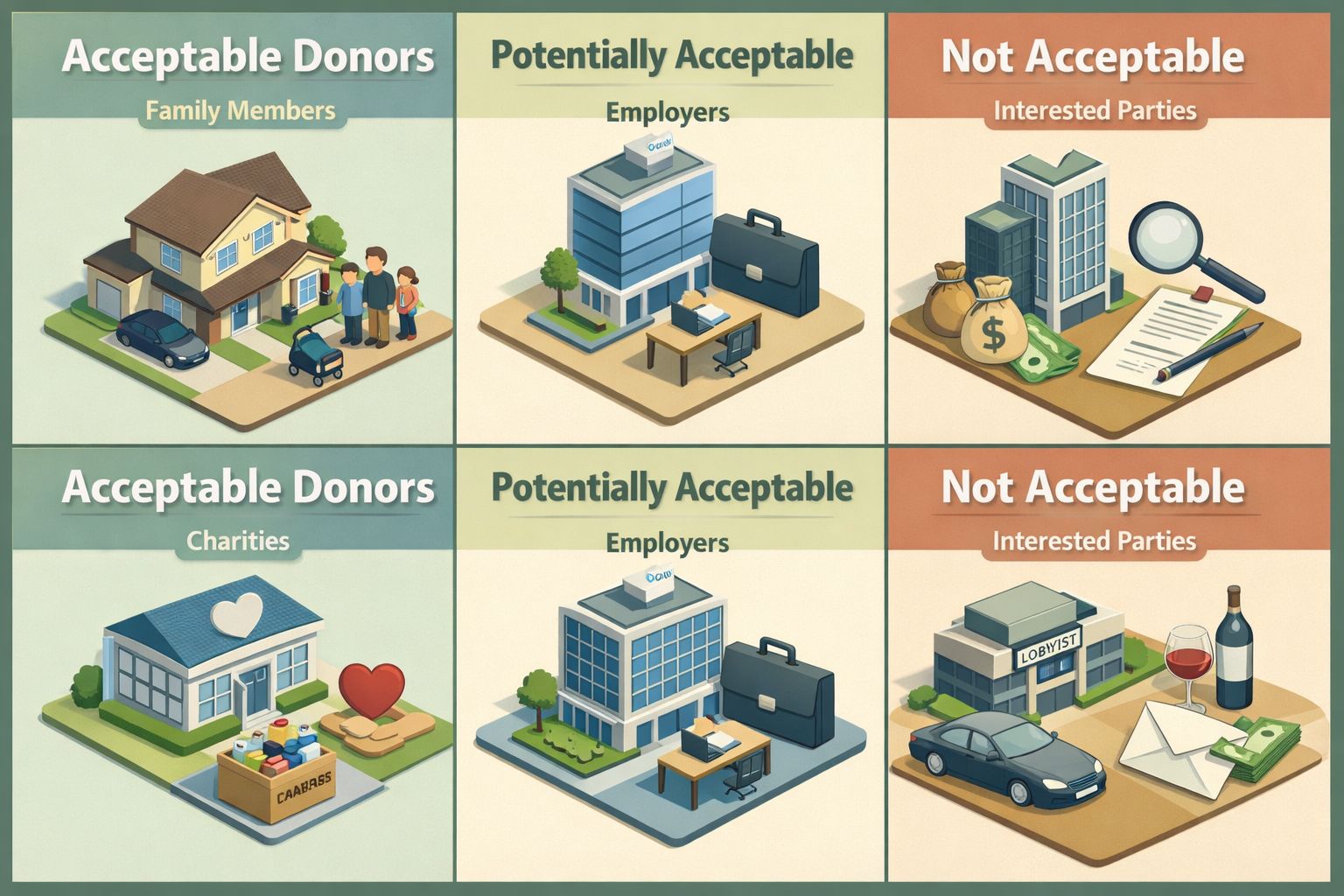
Conventional mortgage gift funds rules are fairly specific about who qualifies as an acceptable donor. Generally, Fannie Mae guidelines allow gifts from a relative, which is broadly defined to include a spouse, child, parent, sibling, grandparent, domestic partner, or any other individual related to the borrower by blood, marriage, adoption, or legal guardianship. Freddie Mac follows similar standards but may have slight variations depending on the loan program.
In some cases, gifts from an employer, labor union, or a charitable organization may also be permitted, though these situations often come with additional documentation requirements. What's typically not allowed is a gift from an interested party to the transaction — such as the home seller, the real estate agent, or the builder — unless the funds are routed through an approved down payment assistance program.
- Acceptable donors: Parents, grandparents, siblings, spouses, domestic partners, and other family members
- Potentially acceptable: Employers or charitable organizations (subject to program-specific rules)
- Not acceptable: Sellers, real estate agents, builders, or other parties with a financial interest in the sale
If you're unsure whether your donor qualifies, it's always a good idea to consult with your loan officer early in the process. Getting clarity upfront can save you from surprises during underwriting.
Down Payment Percentage and Gift Fund Eligibility
One of the most important factors in understanding what are requirements for conventional loan with gifted down payment is knowing how much of your down payment can actually come from a gift. The answer depends largely on how much you're putting down and whether the property will be your primary residence, a second home, or an investment property.
For primary residences, Fannie Mae guidelines generally allow the entire down payment to come from gift funds when the borrower is putting down 20% or more. If the down payment is less than 20%, there may be a requirement that the borrower contribute a certain percentage of their own funds, though guidelines in this area have evolved and some low-down-payment programs may still allow 100% gift funds. It's worth confirming the specific requirements with your lender, as guidelines can vary.
For second homes and investment properties, the rules tend to be stricter. Lenders typically require that the borrower contribute a minimum amount from their own funds, and the proportion of gift funds allowed may be limited. Using gift money for down payment conventional loan purposes on a non-primary residence may require more planning and documentation than a straightforward primary home purchase.
The Donor Letter for Mortgage: What It Must Include
A donor letter for mortgage, sometimes called a gift letter, is one of the most important documents you'll need when using gifted funds. This letter serves as formal written confirmation that the money is a gift and not a loan. Lenders require it as part of the standard underwriting process, and missing or incomplete gift letters can delay or derail a loan approval.
A properly completed donor letter for mortgage should typically include the following elements:
- The donor's full name, address, and phone number
- The donor's relationship to the borrower The exact dollar amount of the gift
- The address of the property being purchased
- A clear statement that the funds are a gift and that no repayment is expected or required
- The donor's signature and the date
Some lenders may also require the borrower to sign the letter as well. It's important to use the exact format your lender or loan program specifies, as requirements can vary slightly between lenders and between Fannie Mae and Freddie Mac guidelines. If you're working with a loan officer, they can often provide a template to ensure nothing is missed.
Documenting the Source of Funds for a Conventional Loan
Beyond the gift letter itself, lenders will typically require documentation to verify the source of funds for conventional loan gift transactions. This is to confirm that the money truly came from the donor and not from an undisclosed third party or a borrowed source. The level of documentation required can depend on how and when the funds were transferred.
If the gift funds have already been deposited into the borrower's bank account, lenders will usually want to see bank statements from both the donor and the borrower showing the transfer. This helps create a clear paper trail. If the funds have not yet been transferred, a bank statement from the donor showing that sufficient funds are available may be required, along with evidence of the transfer once it occurs.
Some lenders may also require a copy of the donor's bank statement to verify that the gifted funds were not themselves borrowed. For example, if a parent's bank account suddenly shows a large deposit right before the gift is made, an underwriter might ask for an explanation. Being prepared with clean, well-documented financial records helps move the process along more smoothly.
Here are common documentation items lenders may request:
- Signed gift letter from the donor
- Donor's bank statement showing the funds and withdrawal
- Borrower's bank statement showing the deposit of gift funds
- Wire transfer confirmation or check copy (if applicable)
Common Mistakes to Avoid When Using Gift Money
Even well-intentioned borrowers can run into problems during the mortgage process if gift funds aren't handled correctly. Here are some of the most common pitfalls to watch out for:
- Accepting cash gifts: Lenders generally cannot verify cash transactions, which makes it difficult to establish a paper trail. It's much better for gift funds to be transferred electronically or by check so there's a clear record.
- Depositing the gift too early or too late: Timing matters. If gift funds are deposited into your account well before your loan application, they may be considered seasoned funds and require less documentation. However, very recent deposits often trigger additional scrutiny. Ask your loan officer about the ideal timing.
- Failing to disclose the gift: Some borrowers worry that disclosing a gift might hurt their application, so they try to conceal it. This is a serious mistake. Lenders are required to source all large deposits, and undisclosed gifts can be flagged as potential mortgage fraud.
- Assuming all lenders have the same rules: While Fannie Mae and Freddie Mac set baseline guidelines, individual lenders may have overlay requirements that are more restrictive. Always confirm the specific rules with your lender.
Avoiding these mistakes can help keep your loan application on track and reduce the risk of delays during underwriting.
●Conclusion
Understanding what are requirements for conventional loan with gifted down payment can make the difference between a smooth home purchase and an unexpected roadblock. Gift funds can be a valuable resource for homebuyers who need help closing the gap between their savings and the down payment required. By knowing which donors are eligible, what the gift letter must contain, and how to properly document the source of funds, you'll be far better prepared to navigate the underwriting process with confidence.
If you're planning to use gift money toward your home purchase, start by having an open conversation with a qualified mortgage professional. They can review your specific situation, confirm which guidelines apply to your loan type, and help you gather the right documentation from the start. At LoanWise, we're here to help you explore your options and find a path to homeownership that works for you. Reach out to our team today to get started.