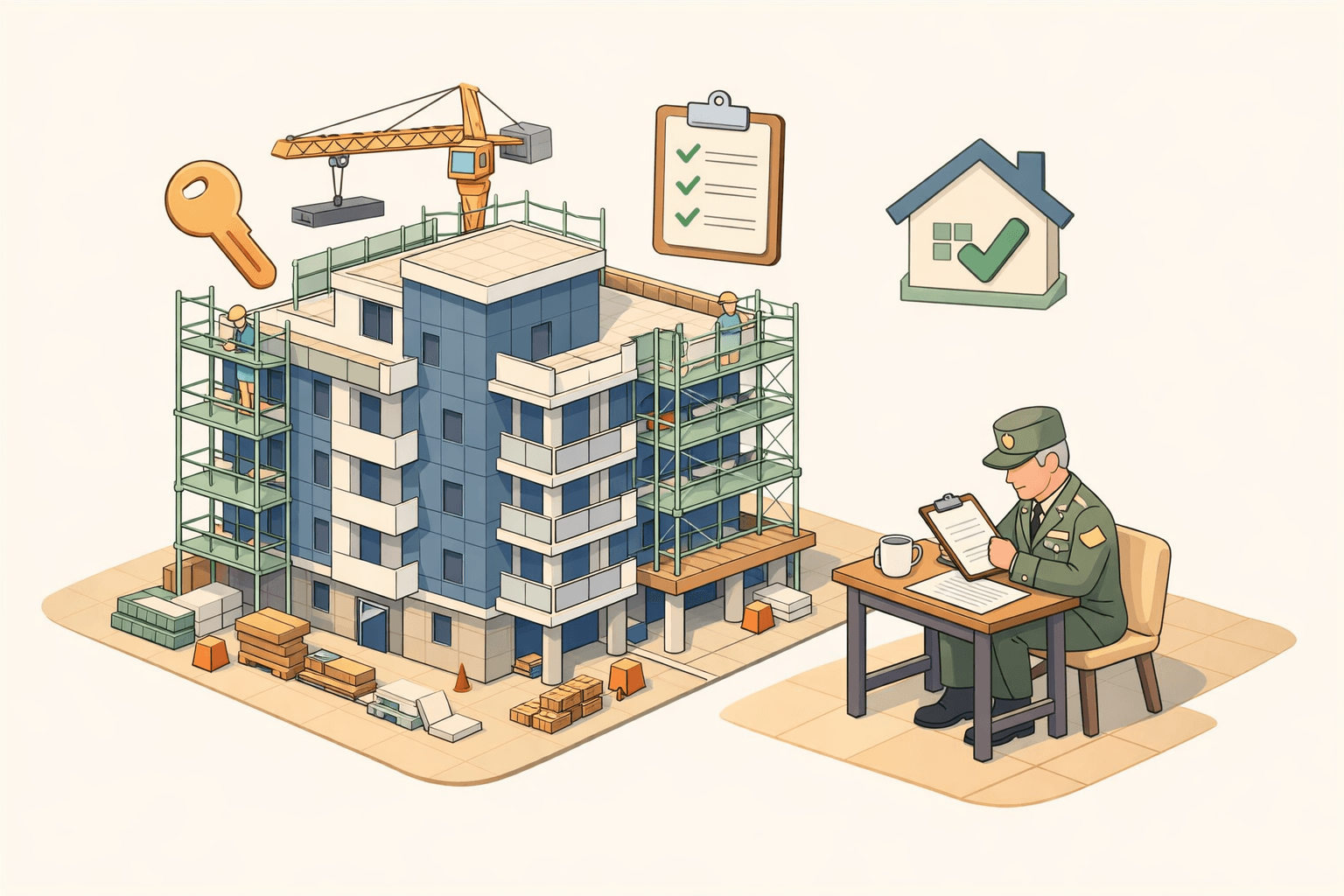
If you're a veteran or active-duty service member eyeing a brand-new condo, you've likely already discovered one of the best financing tools available to you — the VA loan. But even with its powerful benefits, one question tends to stop buyers in their tracks: what are closing costs for VA loan on new construction condo purchases, and how much should you actually budget for? It's a fair question, and the answer involves a mix of VA-specific rules, lender fees, and builder-related costs that are worth understanding before you sign anything. This guide breaks it all down so you can walk into closing day with confidence.
How VA Loan Closing Costs Work Differently Than Other Mortgage Types
VA loans are well-known for requiring no down payment and no private mortgage insurance, but VA loan closing costs are still part of the equation. The key difference is that the Department of Veterans Affairs places firm restrictions on which fees lenders can charge borrowers. This borrower-friendly structure is designed to protect veterans from excessive or predatory charges at the closing table.
Unlike conventional or FHA loans, VA loans operate under what's called the VA non-allowable fees rule. Certain costs — such as attorney fees charged by the lender, real estate broker commissions, and some administrative charges — cannot legally be passed on to the VA borrower. This doesn't mean closing costs disappear entirely, but it does mean the overall fee structure tends to be more transparent and, in many cases, more affordable.
That said, new construction condos introduce an additional layer of complexity. You're not just navigating standard mortgage closing costs — you're also dealing with builder contracts, construction timelines, and condo association requirements, all of which can influence what appears on your final Closing Disclosure.
Breaking Down VA Loan Closing Costs on a Condo Purchase
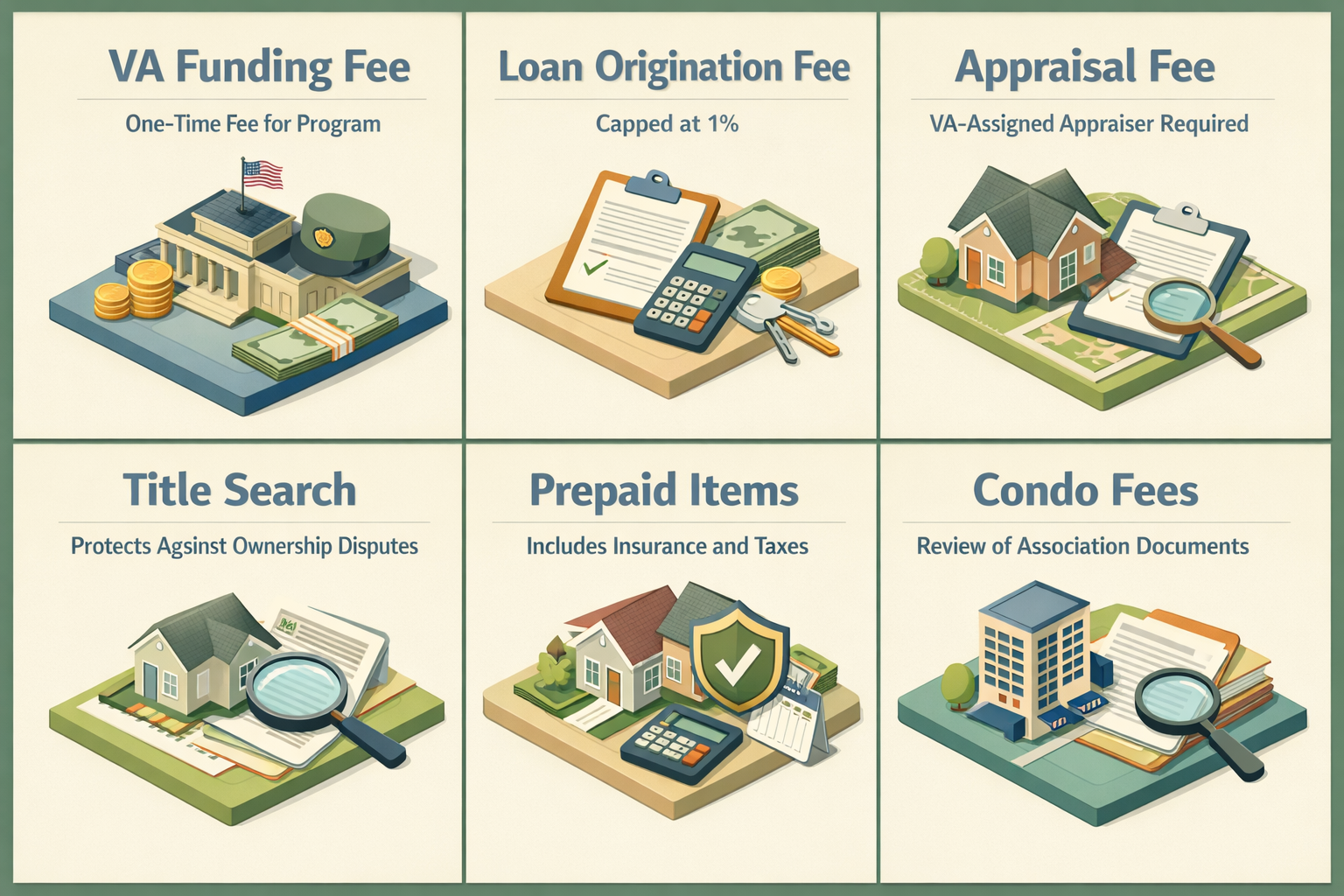
When exploring VA loan closing costs condo purchase scenarios, it helps to think of the fees in two broad categories: those tied to the loan itself and those tied to the property transaction. Here's a closer look at what typically shows up at closing:
- VA Funding Fee: This is the most notable VA-specific cost. It's a one-time fee paid to the Department of Veterans Affairs and helps sustain the loan program for future generations of veterans. The amount varies based on your down payment, whether it's your first VA loan use, and your military service type. Disabled veterans may be exempt from this fee entirely, which can represent significant savings.
- Loan Origination Fee: Lenders may charge an origination fee, but the VA caps this at 1% of the loan amount. This covers the lender's administrative costs for processing and underwriting your mortgage.
- Appraisal Fee: VA loans require a VA-assigned appraiser to assess the property's value and condition. For new construction condos, this process may be slightly more involved, and fees can vary by location and property type.
- Title Search and Title Insurance: These protect both you and the lender against any ownership disputes or title defects. On new construction, title issues are less common, but this cost is still standard.
- Prepaid Items and Escrow Deposits: These include prepaid homeowners insurance, prepaid interest, and initial escrow deposits for property taxes and insurance. These aren't technically fees — they're costs you'd owe regardless of loan type — but they do affect your total cash needed at closing.
- Condo-Related Fees: Some lenders or title companies may charge fees related to reviewing condo association documents, obtaining condo questionnaires, or processing HOA transfer information. These can sometimes be negotiated.
It's worth noting that closing costs on a VA loan typically range somewhere between 2% and 5% of the loan amount, though the exact figure depends on your loan size, location, lender, and the specific property. New construction transactions may skew toward the higher end of that range due to additional documentation and inspection requirements.
The Unique Hurdles of New Construction Condo Approval Under VA Guidelines
Before you can even get to the closing cost conversation, there's a critical step that applies specifically to VA condo financing: the condo project must be VA-approved. This is a requirement that doesn't apply to single-family homes, and it can significantly affect your timeline and sometimes your closing costs if delays occur.
The VA maintains a list of approved condo projects. If the new construction development you're interested in isn't on that list, your lender will need to submit the project for VA approval — a process that may involve gathering substantial documentation from the builder or HOA, including financials, occupancy ratios, insurance certificates, and more. Some lenders charge fees associated with this process, which could appear on your Closing Disclosure.
For new construction specifically, the VA also requires that the property pass a final inspection and that a VA-approved appraiser complete a new construction appraisal. There may be multiple appraisal stages depending on how far along the build is when you apply. Each of these steps adds to your overall cost and timeline, so it's important to factor them into your planning from the start.
Additionally, new construction condos must meet the VA's Minimum Property Requirements (MPRs), which ensure the home is safe, sound, and sanitary. If the builder needs to make repairs or corrections before the VA appraiser signs off, that could affect your closing date and potentially introduce additional costs for re-inspection.
What the VA Won't Let Lenders Charge You — And Why It Matters
One of the most borrower-friendly aspects of VA loan financing is the list of fees that lenders simply cannot charge veterans. Understanding these non-allowable fees helps you identify when something on your Loan Estimate doesn't belong there — and gives you leverage to push back.
Under VA guidelines, lenders generally cannot charge veterans for:
- Loan closing or settlement fees charged by the lender
- Document preparation fees
- Underwriting fees (beyond what's included in the 1% origination cap)
- Attorney fees that benefit the lender
- Notary fees (in most cases)
- Mortgage broker fees
- Prepayment penalties
This doesn't mean these services don't happen — it means the cost must be absorbed by the lender or paid by the seller through seller concessions. On a new construction condo, builders often act similarly to sellers in a resale transaction, and they may be willing to cover certain closing costs as part of the incentive package they offer to buyers. It's always worth asking.
That said, buyer-paid costs like title insurance (in states where the buyer typically pays), recording fees, transfer taxes, and prepaid items are generally still your responsibility. The distinction between what's negotiable and what's fixed can feel subtle, so working with a VA-experienced lender makes a meaningful difference here.
Strategies to Reduce Your Out-of-Pocket Costs at Closing
Even with VA loan protections in place, coming up with several thousand dollars at closing is still a real concern for many buyers. The good news is that there are several legitimate strategies that may help reduce what you owe on closing day.
Negotiate Builder Concessions
On new construction, the builder is often motivated to close deals — especially if units are sitting unsold. Builders may offer to cover some or all of your closing costs as a sales incentive. The VA allows sellers (including builders) to contribute up to 4% of the loan amount in concessions, which can go toward the VA funding fee, prepaid items, and other costs. This is one of the most powerful tools available to you in a new construction transaction.
Finance the VA Funding Fee
Rather than paying the VA funding fee out of pocket at closing, you may be able to roll it into your loan balance. This increases your monthly payment slightly but eliminates one of the largest upfront costs. Many VA borrowers choose this route to preserve their cash reserves.
Shop for Lender Fees
Not all lenders charge the same origination fees, even within the 1% cap. Some lenders may offer lower origination fees or credits in exchange for a slightly higher interest rate, depending on your preferences. Comparing Loan Estimates from multiple lenders is always a smart move before committing.
Ask About Lender Credits
Some lenders offer lender credits that offset closing costs in exchange for a higher mortgage rate. If you plan to sell or refinance within a few years, this trade-off might make financial sense — though it's important to run the numbers carefully before agreeing to any rate adjustments.
What to Expect During the Closing Process on a New Construction Condo
Closing on a new construction condo with a VA loan can take longer than a standard resale purchase. Between the condo project approval process, new construction appraisal requirements, and builder timelines, it's not unusual for the entire process to take several months from application to closing day.
Here's a general sense of what the closing process might look like:
- Pre-Approval: Secure your VA loan pre-approval early, ideally before signing a builder contract. This confirms your eligibility, establishes your budget, and shows the builder you're a serious buyer.
- Condo Approval Check: Verify that the condo project is on the VA's approved list. If it isn't, begin the approval process as soon as possible — this step can add weeks or months to your timeline.
- Appraisal Ordering: Once the build is far enough along, your lender will order the VA appraisal. Be prepared for possible re-inspections if the appraiser identifies items that need correction.
- Review Your Loan Estimate: Within three business days of your application, you'll receive a Loan Estimate outlining projected closing costs. Compare this carefully to the non-allowable fee list and ask questions about anything unclear.
- Final Walk-Through: Before closing, conduct a thorough walk-through of the completed unit to confirm that all agreed-upon features are in place and the home meets your expectations.
- Closing Disclosure Review: At least three business days before closing, you'll receive the Closing Disclosure — the final breakdown of all costs. Compare it to your Loan Estimate and flag any unexpected changes immediately.
Having a VA-savvy real estate agent and an experienced VA lender by your side throughout this process is arguably one of the best investments you can make as a buyer. They'll help you catch errors, negotiate effectively, and navigate the unique documentation demands of new construction.
●Conclusion
Understanding what are closing costs for VA loan on new construction condo purchases requires looking at both the standard VA loan fee structure and the additional layers that come with buying a brand-new condo project. From the VA funding fee and the 1% origination cap to condo project approval requirements and builder concessions, there's a lot to keep track of — but none of it is beyond reach with the right preparation.
Veterans have earned benefits that make homeownership genuinely more accessible, and a new construction condo can be an exciting way to put those benefits to work. The key is going in informed: know which fees are allowed, which aren't, and where you have room to negotiate. If you're ready to explore your VA loan options for a new construction condo, connecting with a lender who specializes in VA financing is the smartest first step you can take.