
Inheriting a rental property can feel like a gift and a puzzle at the same time. On one hand, you've received a valuable real estate asset that could generate ongoing income. On the other, figuring out how that property affects your ability to secure new financing can be confusing. If you're wondering how to qualify for a conventional loan with inherited rental properties, you're not alone. Many homebuyers and real estate investors find themselves in exactly this situation — holding real estate they didn't purchase but still need to account for when applying for a mortgage. The good news is that conventional loans can accommodate inherited rental properties, provided you understand the rules and prepare your documentation carefully.
What Makes Conventional Loans Different from Other Mortgage Programs
Conventional loans are mortgage products that aren't backed by a government agency like the FHA, VA, or USDA. Instead, they typically follow guidelines set by Fannie Mae or Freddie Mac, the two government-sponsored enterprises that purchase most conventional mortgages on the secondary market. Because of this, lenders must adhere to specific underwriting standards when evaluating borrowers.
For real estate investors and property owners with inherited assets, understanding these standards is critical. Conventional loans tend to offer competitive interest rates and flexible terms, but they also come with stricter documentation requirements compared to some government-backed options. Lenders will want to verify income, assets, creditworthiness, and the nature of any existing properties you own — including properties you've inherited.
One important distinction is how lenders treat rental income. Whether a property was purchased or inherited, underwriters will generally look at the same factors: lease agreements, rental history, and whether the income is likely to continue. The inherited nature of the property doesn't disqualify you, but it does introduce specific considerations that borrowers should be prepared for.
How Lenders View Inherited Rental Properties During Underwriting
When you apply for a conventional mortgage for inherited real estate, the lender's underwriter will evaluate the inherited property much like any other investment property you own. The primary concern is how the property impacts your overall financial picture — specifically your debt-to-income (DTI) ratio and your net rental income.
If the inherited rental property carries an existing mortgage or other outstanding obligations, those monthly costs will factor into your DTI calculation. This could limit how much you're able to borrow for a new purchase or refinance. Conversely, if the property generates positive rental income, lenders may allow you to count a portion of that rental income to offset expenses and even strengthen your qualifying income.
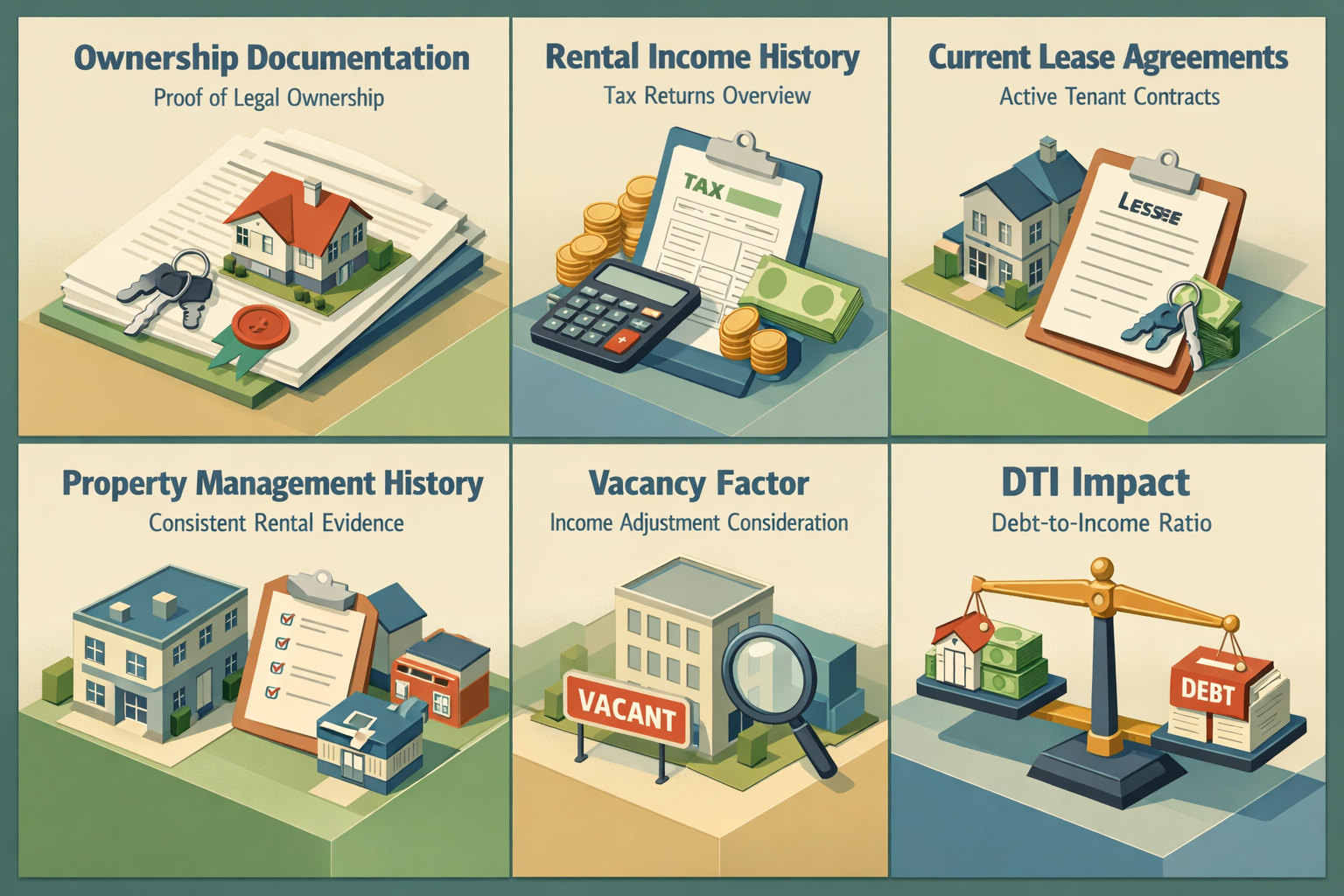
There are a few key factors underwriters typically examine:
- Ownership documentation: You'll likely need to provide probate records, a deed transfer, or estate settlement documents that confirm you legally own or have inherited the property.
- Rental income history: Lenders often want to see prior tax returns, specifically Schedule E, which reflects income and expenses from rental properties.
- Current lease agreements: Active leases signed by tenants help demonstrate ongoing rental income and occupancy.
- Property management history: Evidence that the property has been consistently rented may strengthen your application.
It's also worth noting that lenders may apply a vacancy factor — typically a percentage reduction applied to gross rental income — to account for potential gaps in tenancy. This means the income counted toward your application could be somewhat less than the full rental amount collected.
Credit Score and Debt-to-Income Requirements You Should Know
Qualifying for a conventional mortgage requires meeting baseline credit and income thresholds. While specific requirements may vary by lender, conventional loan guidelines generally call for a minimum credit score, often in the mid-600s range, though borrowers with higher scores tend to receive more favorable terms. If you're carrying multiple properties — including inherited ones — maintaining strong credit becomes even more important.
Your debt-to-income ratio is another major hurdle. This ratio compares your total monthly debt obligations to your gross monthly income. Most conventional loan programs prefer a DTI below 45%, though some automated underwriting systems may approve borrowers with slightly higher ratios depending on other compensating factors such as strong reserves or a high credit score.
Here's where inherited rental properties can either help or hurt your application:
- If the inherited property has a mortgage: The monthly payment will be included in your DTI, potentially pushing the ratio higher.
- If the inherited property is owned free and clear: There's no monthly debt obligation tied to it, which is favorable for your DTI.
- If the property generates net positive rental income: Lenders may allow a portion of that income to count toward your qualifying income, which could improve your DTI ratio.
Because DTI calculations can be complex with multiple properties involved, it's wise to work with a mortgage professional who can model different scenarios before you apply.
Documenting Rental Income from Inherited Properties the Right Way
Documentation is arguably the most important part of learning how to qualify for a conventional loan with inherited rental properties. Lenders need a clear paper trail that shows the property is yours, that it generates income, and that the income is stable enough to be relied upon.
The most commonly required documents include:
- Two years of federal tax returns: Schedule E will show rental income, deductible expenses, depreciation, and net profit or loss from the property. Lenders typically average the net income over two years.
- Current signed lease agreements: These help verify existing tenants and rental rates.
- Bank statements: Showing rent deposits provides additional proof that income is being received regularly.
- Proof of ownership: This may include a recorded deed, letters testamentary, probate court documents, or a trust agreement depending on how the property was transferred.
If you inherited the property recently and don't yet have two years of rental history under your name, lenders may work with what's available. In some cases, a professional appraisal that includes a rent schedule — known as a Form 1007 or 1025 depending on the property type — may be used to estimate fair market rent when a documented rental history is limited.
Being proactive about gathering these documents before applying can significantly speed up the underwriting process and reduce the likelihood of last-minute surprises.
The Role of Reserves and Asset Documentation in Strengthening Your Application
When a borrower owns multiple properties, lenders often require proof of financial reserves. Reserves are liquid assets — such as savings, money market accounts, or retirement funds — that demonstrate your ability to cover mortgage payments if rental income temporarily drops or an unexpected expense arises.
For investment properties and scenarios involving inherited rental real estate, reserve requirements can be more substantial than for a standard owner-occupied home purchase. Lenders may require anywhere from a few months to six months or more of mortgage payments held in reserve, though exact requirements depend on the number of properties financed and the specific loan program guidelines.
Inherited assets can sometimes help here. If you inherited cash, investment accounts, or other liquid assets alongside the property, these could potentially be used to meet reserve requirements. However, you'll need to document the source of those funds, which may require estate documents or inheritance statements.
Strong reserves signal to lenders that you're financially stable and less likely to default during a vacancy or maintenance emergency. This can be a meaningful compensating factor if your DTI is on the higher end or if your rental income history is shorter than lenders typically prefer.
Common Challenges Investors Face and How to Address Them
Even well-prepared borrowers can run into obstacles when applying for a conventional mortgage for inherited real estate. Understanding common challenges in advance can help you navigate the process more smoothly.
Title and ownership complications: Inherited properties sometimes come with unclear title history, outstanding liens, or shared ownership among multiple heirs. Before applying for a conventional loan, it's a good idea to work with a real estate attorney to resolve any title issues and ensure the deed reflects clear, sole ownership — or a properly documented shared ownership arrangement if applicable.
Negative rental income on tax returns: Real estate investors often use depreciation and expense deductions to reduce taxable rental income on their returns. While this is a legitimate tax strategy, it can make it appear that your rental property is operating at a loss — even when cash flow is positive. Lenders will typically use the Schedule E figures, which means a tax-efficient rental property could actually reduce your qualifying income. Speaking with a mortgage professional before tax season may help you understand the tradeoff.
Property condition issues: Inherited properties may have deferred maintenance or structural concerns. Conventional loans typically require properties to meet minimum condition standards during the appraisal process. If the inherited rental property doesn't meet those standards, it could affect your ability to use it as collateral or factor its income into your application.
Financing limits based on number of financed properties: Conventional loan guidelines typically cap the number of financed properties a single borrower can hold. If you already own several mortgaged properties and have inherited another, this could affect your eligibility for certain conventional programs. Some lenders specialize in financing for investors with larger portfolios and may offer alternative paths forward.
Steps to Take Before Applying for a Conventional Loan
Preparation is the key to a smoother mortgage approval process. Here are practical steps to take before submitting your conventional loan application when you own inherited rental properties:
- Review your credit report: Check for errors or outstanding collections that could lower your score. Addressing these early gives you time to dispute inaccuracies and potentially improve your credit standing before the lender pulls your report.
- Organize your rental documentation: Pull together your tax returns, lease agreements, bank statements showing rent deposits, and all estate or probate documents related to the inherited property.
- Calculate your DTI: Add up all your monthly debt obligations — including any mortgage on the inherited property — and compare that figure to your gross monthly income. This gives you a realistic sense of where you stand before the lender does the math.
- Speak with a mortgage professional early: A loan officer experienced with investment property financing can review your full financial picture and identify potential issues before they become roadblocks. They can also help you understand which loan programs may be best suited to your situation.
- Resolve any title or legal issues: Work with an estate attorney to ensure the inherited property's title is clean, the deed is properly recorded, and any outstanding liens or heirship disputes are resolved.
- Build or verify your reserves: Know what liquid assets you have available and whether they'll satisfy lender requirements for your specific loan scenario.
Taking these steps thoughtfully can put you in a much stronger position when the lender begins their review.
●Conclusion
Navigating the mortgage process with inherited rental properties takes some extra planning, but it's entirely achievable with the right preparation. Understanding how to qualify for a conventional loan with inherited rental properties comes down to organizing your documentation, knowing how lenders evaluate rental income and debt obligations, and working with professionals who understand investment property financing. Whether you're looking to purchase a new home, expand your real estate portfolio, or refinance an existing property, inherited rental assets don't have to be a barrier — they can actually become an advantage when presented correctly. At LoanWise, our team is ready to help you evaluate your options and build a smart path forward. Reach out today to get started.