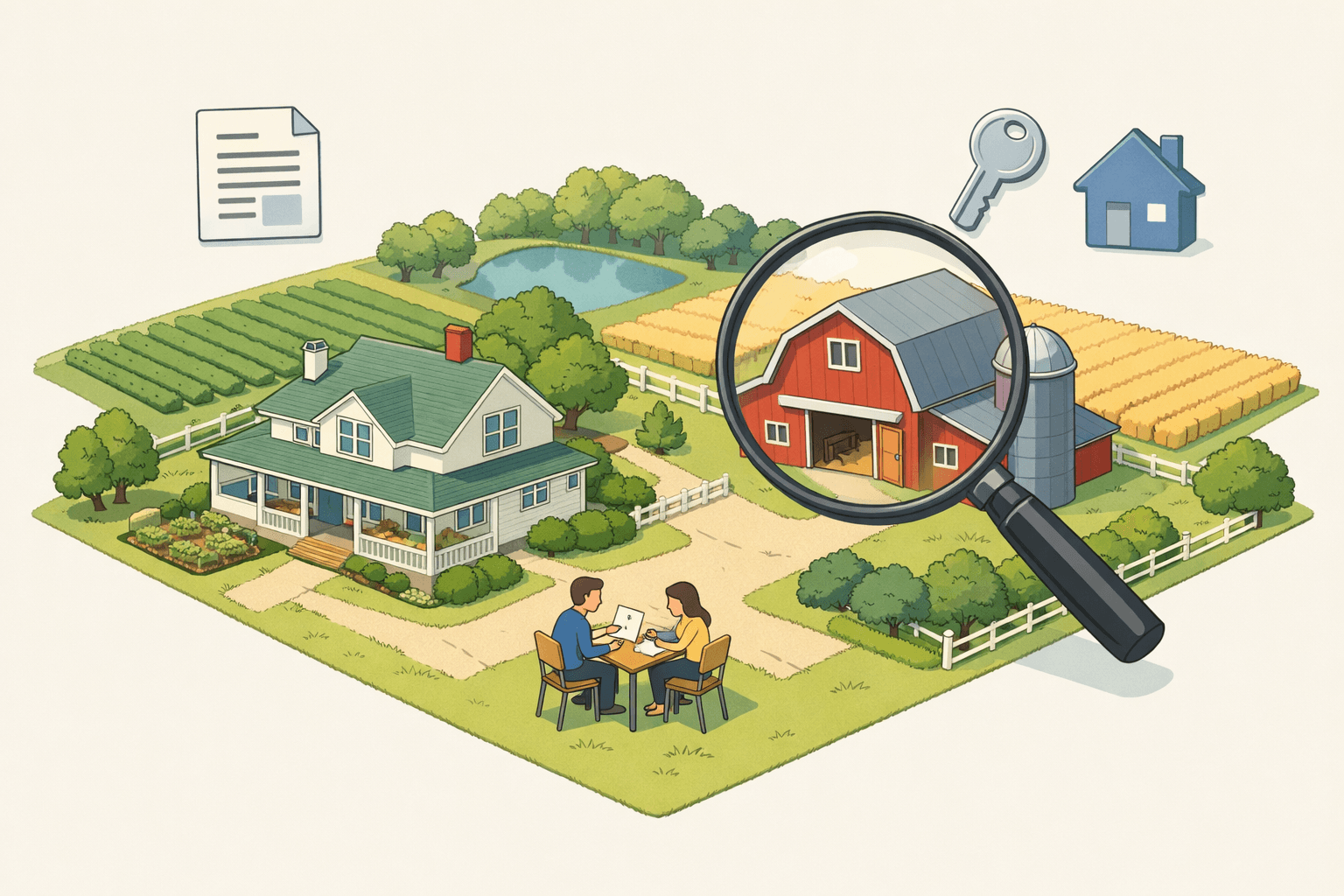
Purchasing a home on acreage with an existing barn is an exciting step — but it also comes with a unique set of financing considerations. If you're exploring government-backed financing, you may have already asked yourself: what are closing costs for USDA loan on property with existing barn and acreage? The answer involves several layers, from standard loan fees to rural-specific costs that many buyers don't anticipate. Understanding these expenses upfront can help you budget more effectively, negotiate smarter, and close on your dream property with fewer surprises.
How USDA Loan Closing Costs Compare to Other Mortgage Types
USDA loans are backed by the U.S. Department of Agriculture and are specifically designed to help borrowers purchase homes in eligible rural and suburban areas. One of their most appealing features is the ability to finance a property with no down payment — but that doesn't mean closing costs disappear entirely.
Closing costs on a USDA loan typically range from 2% to 5% of the loan amount, which is roughly in line with other government-backed programs like FHA and VA loans. However, the composition of those costs may look a bit different, especially when a rural property includes structures like a barn, workshop, or outbuilding on several acres of land.
Standard closing cost components on a USDA loan often include:
- Loan origination fees — charged by the lender for processing and underwriting your loan
- Title search and title insurance — verifies clear ownership and protects against future claims
- Recording fees — paid to the county or municipality to officially document the transaction
- Prepaid items — such as homeowners insurance premiums and prepaid mortgage interest
- Escrow setup costs — funds placed into escrow for property taxes and insurance
- Credit report and flood certification fees — administrative costs tied to loan processing
On top of these, USDA loans carry a guarantee fee structure. There's an upfront guarantee fee — currently set by USDA guidelines — that can be rolled into the loan amount, plus an annual fee charged as part of your monthly payment. These fees help fund the USDA program and are generally lower than FHA mortgage insurance premiums, making USDA loans a cost-competitive option for eligible rural buyers.
Unique Closing Cost Factors for Rural Properties with Barns and Acreage
When you're buying a rural property that includes a barn, outbuildings, and multiple acres of land, your closing cost profile may shift in some meaningful ways. These properties introduce complexities that don't arise with a standard single-family home on a subdivided lot, and lenders — as well as the USDA itself — will scrutinize them more carefully.
Appraisal Complexity and Cost
Appraisals on rural acreage properties can be more expensive and time-consuming than typical residential appraisals. Comparable sales — known in the industry as "comps" — are often harder to find in rural areas, especially for properties with agricultural outbuildings. An appraiser may need to travel farther, spend more time on the property, and apply specialized methodologies to determine a fair market value. As a result, appraisal fees for rural properties with barns and acreage may run higher than the national average for standard homes.
It's also worth noting that USDA appraisers must assess whether the property meets USDA's minimum property requirements (MPRs). The barn and other outbuildings will be evaluated, and if any structure is deemed unsafe or in poor condition, repairs may be required before closing — adding potential costs beyond the standard appraisal fee.
Well and Septic Inspections
Rural properties frequently rely on private wells and septic systems rather than municipal utilities. USDA guidelines typically require that these systems be inspected and deemed functional before loan approval. Well water testing and septic inspections are additional costs that buyers should anticipate. Depending on the region and the complexity of the systems, these inspections could add several hundred dollars to your closing cost total.
Survey Fees for Acreage
A land survey may be required or strongly recommended when purchasing a property with significant acreage. Surveys help define property boundaries, identify easements, and confirm that existing structures — including the barn — are within the property lines. Survey costs can vary widely based on acreage size and terrain, but they tend to be higher for larger rural tracts than for standard residential lots.
USDA Eligibility Rules That Affect Barn and Acreage Properties
Not every rural property qualifies for USDA financing, and properties with barns and working farm features face some specific eligibility considerations worth understanding before you fall in love with a listing.
The "Primarily Residential" Requirement
USDA Single Family Housing loans are intended to finance a primary residence — not an income-producing farm. The agency generally requires that the property be primarily residential in nature. A home on a few acres with a barn used for personal hobby farming or livestock typically meets this standard. However, if the property is classified as a working farm generating significant agricultural income, it may not qualify under the standard USDA Single Family program and might instead need to be evaluated under different USDA or Farm Service Agency (FSA) programs.
Acreage Limitations and Site Size
USDA doesn't set a hard maximum on acreage, but it does require that the land size be typical for the area and not so large that the property is considered a farm rather than a residential site. The appraiser plays a key role here, as they must confirm that the site size is consistent with comparable properties in the same rural market. If the acreage is unusually large relative to neighboring properties, the USDA underwriter may question eligibility or require additional documentation.
Barn Value and Loan Amount
Here's a detail that catches many buyers off guard: USDA loans are designed to finance the home and the land it sits on, but the value attributed to outbuildings like barns may be handled differently. In most cases, the barn's contributory value will be included in the overall appraisal — but it may not be financed separately as a commercial or agricultural asset. Buyers should work closely with their loan officer to ensure the appraised value and loan amount align properly with USDA guidelines.
Breaking Down the USDA Loan Closing Cost Line Items on Rural Acreage Deals
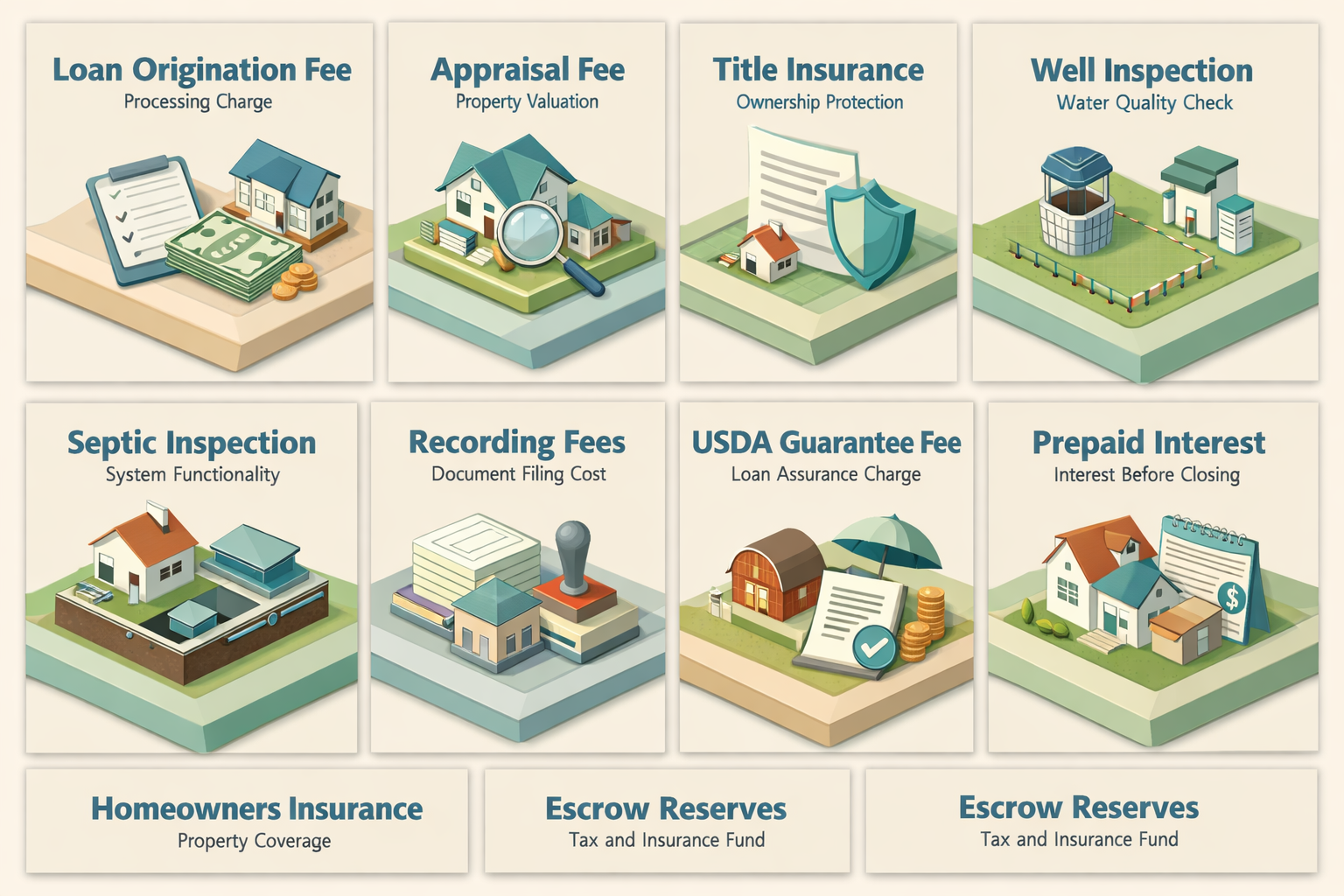
To give you a clearer picture of what to expect, here's a more detailed look at the typical closing cost categories and how they might play out when you're asking what are closing costs for USDA loan on property with existing barn and acreage.
- Loan origination fee: Typically 0.5% to 1% of the loan amount. Some lenders offer no-origination-fee options in exchange for a slightly higher interest rate.
- Appraisal fee: Standard residential appraisals might run a few hundred dollars, but rural and acreage appraisals can be notably higher depending on the property's complexity and location.
- Title insurance (lender's policy): Required by most lenders and calculated as a percentage of the loan or purchase price. Owner's title insurance is optional but recommended.
- Survey: May range from a few hundred to over a thousand dollars depending on acreage, terrain, and local rates.
- Well and septic inspection: Costs vary by region and system type, but budgeting a few hundred dollars for each inspection is a reasonable starting point.
- Recording fees: Typically a modest flat fee charged by the county, but they can vary by jurisdiction.
- USDA upfront guarantee fee: Currently 1% of the loan amount (based on existing program guidelines), which can be financed into the loan rather than paid at closing.
- Prepaid interest: Calculated based on the number of days between closing and the end of the month, multiplied by your daily interest rate.
- Homeowners insurance premium: The first year's premium is typically collected at closing.
- Escrow reserves: Two to three months of property taxes and insurance may be required upfront to fund your escrow account.
When you add these together for an acreage property with a barn, your total closing costs could sit noticeably above the baseline for a standard suburban home. Planning for the higher end of the 2%–5% range — and possibly a bit beyond due to rural-specific fees — is a prudent approach.
Strategies to Reduce Out-of-Pocket Closing Costs on a USDA Rural Loan
The good news is that USDA loans offer several built-in and negotiable options that may help reduce the amount of cash you need to bring to closing. Here are some of the most effective strategies rural homebuyers can explore.
Roll Closing Costs Into the Loan
If the appraised value of the property exceeds the purchase price, USDA guidelines may allow you to finance a portion of your closing costs into the loan amount. This is a significant advantage for buyers who are cash-light but credit-qualified. Your loan officer can help you determine whether this option is available based on the appraisal outcome.
Negotiate Seller Concessions
USDA loans permit seller concessions — where the seller agrees to cover a portion of the buyer's closing costs. In a motivated seller's market, especially for rural properties that may have been sitting on the market, negotiating seller-paid closing costs could be a realistic option. Concessions are typically capped as a percentage of the purchase price under USDA guidelines, so confirm the current limits with your lender.
Lender Credits
Some lenders offer to cover closing costs in exchange for a slightly higher mortgage interest rate. This arrangement — known as a lender credit — can make sense if you plan to stay in the home long enough to benefit from lower upfront costs, though you'll pay marginally more in interest over time. It's worth running the numbers both ways with your loan officer.
Shop for Third-Party Services
USDA guidelines generally allow borrowers to shop for certain third-party services, such as title companies and settlement agents. Getting multiple quotes for title insurance and settlement services could save you a meaningful amount, particularly on higher-value rural acreage transactions.
What Lenders Look for When Financing Barn and Acreage Properties Under USDA Guidelines
Lenders who originate USDA loans understand that rural properties come with nuances that standard suburban homes don't. When your purchase involves a barn and acreage, here's what underwriters will likely focus on during the approval process.
Property Condition and Safety Standards
The USDA requires that the property meet minimum property requirements related to safety, structural soundness, and functionality. The barn will be evaluated as part of the overall site assessment. If the barn shows signs of structural deterioration, the underwriter may require repairs or a repair escrow before the loan can close. Cosmetic issues are typically less of a concern than functional or safety-related deficiencies.
Flood Zone Status
Rural acreage properties — particularly those near streams, rivers, or low-lying areas — may be partially or fully located in a FEMA-designated flood zone. If any part of the improved property falls within a special flood hazard area, flood insurance will be required, adding to your ongoing monthly costs. A flood certification fee is typically charged at closing to verify this status.
Income and Credit Qualification
USDA loan eligibility includes both property requirements and borrower income limits. USDA loans are means-tested, meaning your household income must fall within the program's limits for your county. Credit standards are also applied, and while the USDA doesn't mandate a strict minimum credit score at the program level, most approved lenders have their own overlay requirements. A credit score of 640 or higher is commonly cited as a practical threshold for streamlined processing, though some lenders may work with lower scores through manual underwriting.
●Conclusion
So, what are closing costs for USDA loan on property with existing barn and acreage? They're a combination of standard loan fees, rural-specific inspection and survey costs, USDA guarantee fees, and property-related expenses that reflect the unique nature of acreage transactions. While the 2%–5% range provides a useful starting estimate, buyers purchasing rural properties with outbuildings should budget on the higher side and anticipate line items that simply don't apply to typical suburban purchases.
The encouraging news is that USDA loans remain one of the most accessible and affordable paths to rural homeownership. With no down payment requirement, competitive interest rates, and flexible options for managing closing costs, they're genuinely well-suited for buyers pursuing land, livestock facilities, and a more spacious lifestyle. Working with a knowledgeable lender who has experience with USDA loan closing costs on rural property — including barn mortgage costs — will help you navigate the process with confidence and clarity. If you're ready to take the next step, connect with a LoanWise loan specialist today to explore your USDA financing options.