Buying a home in a rural area is an exciting goal, and the USDA loan program makes it more accessible than many people realize. But when you add a fixer-upper with a few acres of land into the picture, the financing details can get a bit more layered. One of the biggest questions buyers ask is: what are closing costs for USDA loan on fixer upper with acreage? The answer depends on several factors — from the loan type you choose to the condition of the property and the size of the land. In this guide, we'll walk you through everything you need to know so you can plan your purchase with confidence.
Understanding How USDA Loans Work for Rural Properties
The USDA loan program, backed by the U.S. Department of Agriculture, is designed to help low-to-moderate income borrowers purchase homes in eligible rural and suburban areas. One of its most attractive features is the ability to finance a home with zero down payment. That's a significant advantage, especially when you're eyeing a property with both a home that needs work and several acres of land.
There are two main USDA loan types relevant to homebuyers: the USDA Guaranteed Loan (Section 502 Guaranteed) and the USDA Direct Loan (Section 502 Direct). Both programs have specific eligibility requirements related to income, location, and property condition. The guaranteed loan is issued by approved private lenders and backed by the USDA, while the direct loan comes directly from the government and typically targets very low-income applicants.
When it comes to fixer-uppers, the USDA also offers the Section 504 Repair Program and allows certain renovation costs to be rolled into the loan under specific conditions. However, not every lender offers USDA renovation financing, so it's important to shop around and ask the right questions early in your search.
Properties with acreage add another layer of consideration. The USDA does allow purchases of land with a home, but the primary purpose of the property must be residential. If the acreage is considered to have significant agricultural income potential, it may affect eligibility. Lenders and USDA underwriters will typically evaluate whether the land's value is proportionate to the home's value.
What Are Closing Costs for USDA Loan on Fixer Upper with Acreage
So, what are closing costs for USDA loan on fixer upper with acreage? In general, USDA loan closing costs tend to fall in a range similar to other government-backed loans — often estimated between 2% and 5% of the loan amount, though the exact figure will vary based on the lender, property location, and loan size. For a rural fixer-upper with acreage, there may be additional fees that increase this total compared to a standard move-in-ready home purchase.
Here's a breakdown of the most common closing cost components you might encounter:
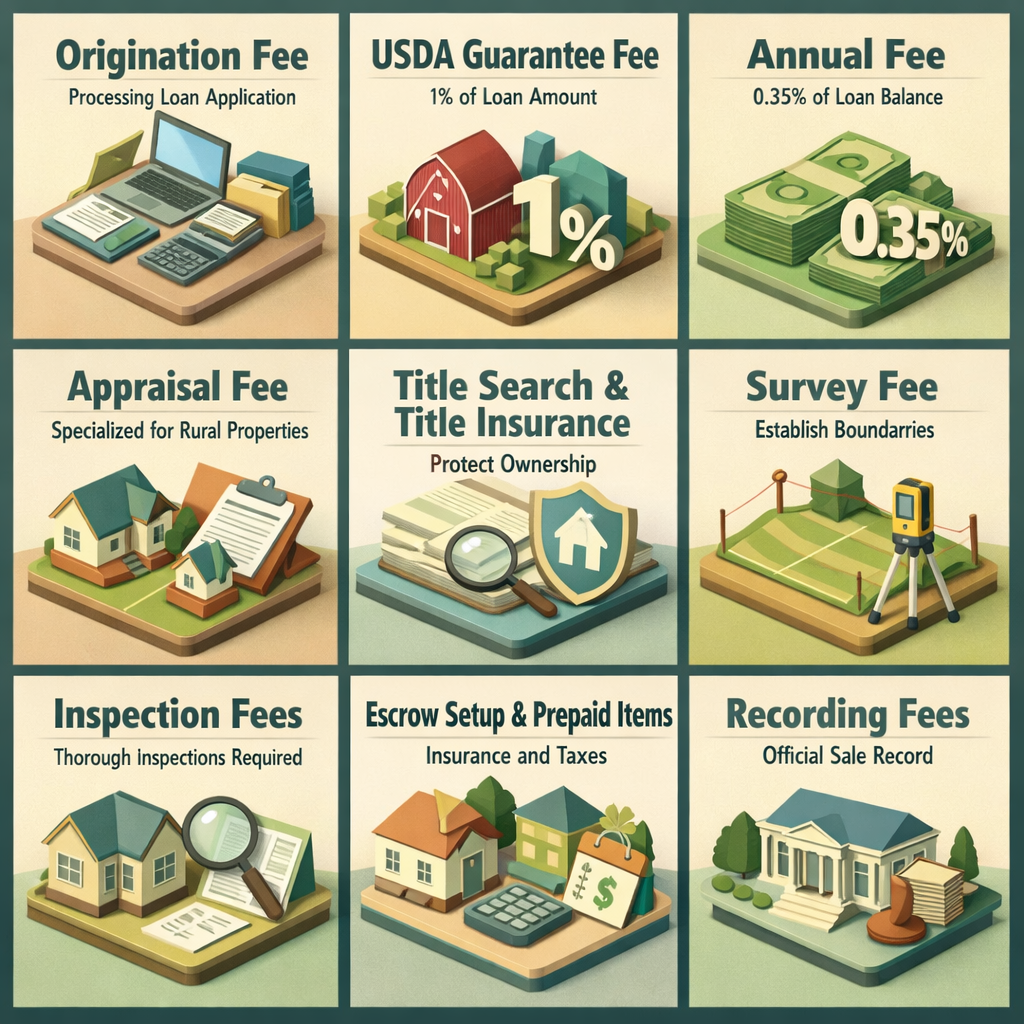
- Origination Fee: Charged by the lender for processing your loan application. This can vary widely between lenders.
- USDA Guarantee Fee: The upfront guarantee fee is typically 1% of the loan amount, and it can often be rolled into the total loan balance rather than paid at closing.
- Annual Fee: A recurring annual fee of approximately 0.35% of the remaining loan balance, similar to mortgage insurance on FHA loans.
- Appraisal Fee: USDA loans require a specialized appraisal. For properties with acreage, appraisals may take longer and cost more due to the complexity of valuing rural land.
- Title Search and Title Insurance: These protect both the lender and you from ownership disputes. Rural properties with large land parcels may have more complex title histories.
- Survey Fee: For properties with multiple acres, a land survey may be required or strongly recommended to clearly establish boundaries. This adds to your upfront costs.
- Inspection Fees: Fixer-uppers typically require more thorough inspections — including general home inspection, pest inspection, well and septic inspection if applicable, and possibly a roof or structural inspection.
- Escrow Setup and Prepaid Items: These include homeowners insurance premiums, property taxes, and prepaid interest due at closing.
- Recording Fees: Charged by the local county or municipality to officially record the sale.
When you combine the complexity of a fixer-upper with the added requirements of an acreage property, closing costs could trend toward the higher end of that typical range. Budgeting carefully and requesting a Loan Estimate from your lender early in the process is strongly recommended.
How Renovation Financing Affects USDA Loan Closing Costs on Rural Properties
If you're purchasing a fixer-upper through the USDA program, you may be wondering whether renovation costs can be wrapped into the loan. The answer is: it depends on the loan structure and lender participation. Some lenders offer USDA renovation loans or work with programs that allow for limited repair financing, while others may require that the home meet minimum property standards before closing.
The USDA Section 504 program offers repair loans and grants to eligible very-low-income homeowners, but this is typically for existing USDA borrowers rather than purchase transactions. For purchase loans, some lenders may allow a small repair escrow to be held at closing to cover minor repairs after the fact. However, significant structural work, major system replacements, or large-scale renovations are generally harder to finance through a standard USDA purchase loan.
It's worth noting that USDA loan closing costs for rural property renovation scenarios may include additional line items:
- Renovation Contingency Reserve: Some lenders require a contingency reserve — often 10% to 15% of renovation costs — to be set aside within the loan for unexpected project overruns.
- Consultant or HUD Advisor Fee: If a specialized renovation loan product is used alongside or instead of a USDA product, there may be fees for a renovation consultant or HUD-approved advisor.
- Additional Inspections Post-Renovation: Some programs require a final inspection once repairs are completed, adding another cost to consider.
Borrowers interested in combining USDA financing with a renovation strategy should speak with a knowledgeable mortgage professional early in the process. Understanding which programs are available in your area — and which lenders participate — can make a significant difference in your total financing costs.
Unique Cost Factors When Buying Acreage with a USDA Loan
Properties with significant acreage introduce a set of cost considerations that don't typically apply to standard suburban home purchases. Whether you're buying five acres or fifty, here are the factors most likely to influence your closing costs and overall loan approval:
Land Appraisal Complexity
Appraising rural land with a home on it is more involved than appraising a neighborhood property. Appraisers need to find comparable sales — often called comps — that include similar land and home combinations in the same general region. In rural areas, comparable sales can be scarce, which may require the appraiser to expand the search radius or use different valuation methods. This complexity can increase the appraisal fee.
Well and Septic System Requirements
Many rural properties with acreage rely on private wells and septic systems rather than public utilities. USDA loans have specific requirements related to the functionality and safety of these systems. You'll likely need a well water test and possibly a septic inspection before the loan can close. If either system fails inspection, repairs may be required prior to closing — adding both cost and time to the process.
Flood Zone and Environmental Considerations
Larger parcels of land are more likely to include areas in a designated flood zone. If any portion of the property falls within a FEMA flood zone, you may be required to purchase flood insurance, which adds to your ongoing costs and could affect your loan terms. Environmental assessments are less common but may be required in certain circumstances.
Access and Easements
Rural properties sometimes have shared driveways, utility easements, or limited road access. Lenders and the USDA may require documentation that the property has legal, all-weather access to a public road. If access is via a private road, a road maintenance agreement may be required — and this could add to title and legal costs.
Ways to Reduce Out-of-Pocket Closing Costs on a USDA Rural Property Loan
One of the great advantages of the USDA loan program is its flexibility around closing costs. While you can't eliminate them entirely, there are several strategies that may help reduce what you pay at the closing table:
Seller Concessions
USDA guidelines allow sellers to contribute toward the buyer's closing costs. In a buyer-friendly market, or when purchasing a fixer-upper that's been sitting on the market, there may be room to negotiate seller concessions as part of the purchase agreement. This can significantly reduce your upfront cash needs.
Rolling the Guarantee Fee Into the Loan
As mentioned earlier, the USDA upfront guarantee fee — typically around 1% of the loan amount — can be financed into the loan rather than paid at closing. This is one of the most straightforward ways to reduce your day-of closing expenses.
Lender Credits
Some lenders offer lender credits in exchange for a slightly higher interest rate. This means the lender covers some or all of your closing costs, and you repay that credit indirectly through a modestly higher rate over the life of the loan. Whether this makes sense depends on how long you plan to stay in the home.
Gift Funds
USDA loans may allow the use of gift funds from family members or other approved sources to cover closing costs. Documentation requirements apply, so be sure to discuss this option with your lender ahead of time.
Down Payment Assistance Programs
While USDA loans require no down payment, some state and local programs offer closing cost assistance grants or second liens that can help cover remaining upfront costs. Eligibility varies by location and income, so research what's available in your target rural area.
Property Eligibility and Minimum Standards for Fixer-Uppers
Not every fixer-upper will qualify for USDA financing, and this is an important point for buyers to understand before falling in love with a property. The USDA requires that financed properties meet minimum property standards to ensure they are safe, sanitary, and structurally sound at the time of closing.
This means that a home with major structural issues, a failing roof, significant electrical or plumbing problems, or other serious deficiencies may not be eligible for a standard USDA purchase loan until those issues are corrected. In some cases, this can be negotiated into the purchase contract by requiring the seller to make repairs before closing. In others, an escrow holdback for minor repairs may be arranged.
For buyers specifically targeting fixer-uppers, it may be worth exploring whether a USDA renovation loan product — offered by select lenders — could be the right fit. Alternatively, buyers could look at combining a USDA loan with other financing tools to address renovation needs after purchase.
When it comes to acreage, the USDA's guidelines generally cap the amount of non-residential land included in the financed property, and the land must be considered typical for the area. Properties where the land value significantly outweighs the home value may face scrutiny during underwriting. Working with an experienced rural mortgage lender can help you navigate these nuances before submitting an application.
●Conclusion
Understanding what are closing costs for USDA loan on fixer upper with acreage requires looking at the full picture — from standard lender fees and government guarantee costs to the unique expenses that come with rural land, renovation potential, and aging home systems. While closing costs can add up, the USDA loan program's built-in advantages — including no down payment and the ability to finance the guarantee fee — make it one of the more cost-friendly paths to rural homeownership.
The key is preparation. Request a detailed Loan Estimate from your lender, factor in property-specific costs like surveys, well and septic inspections, and appraisal complexity, and explore every available strategy to reduce what you owe at the closing table. At LoanWise, our team is here to help you work through the details and find a financing path that fits your goals. Reach out today to connect with a knowledgeable lending professional who understands rural property financing inside and out.